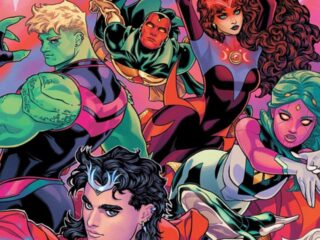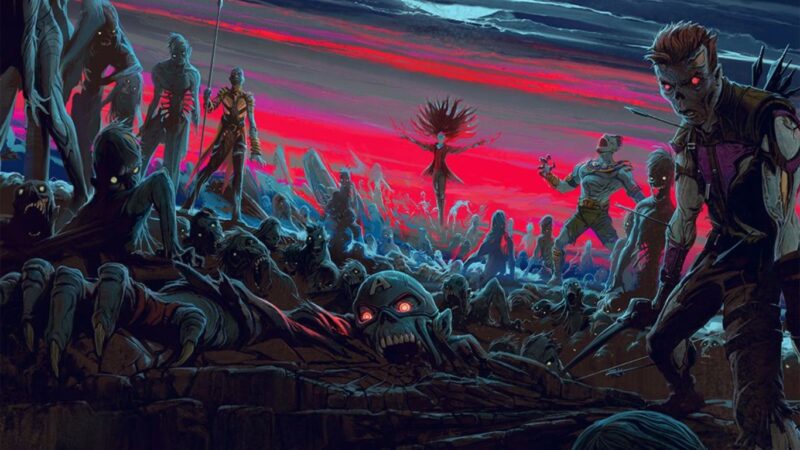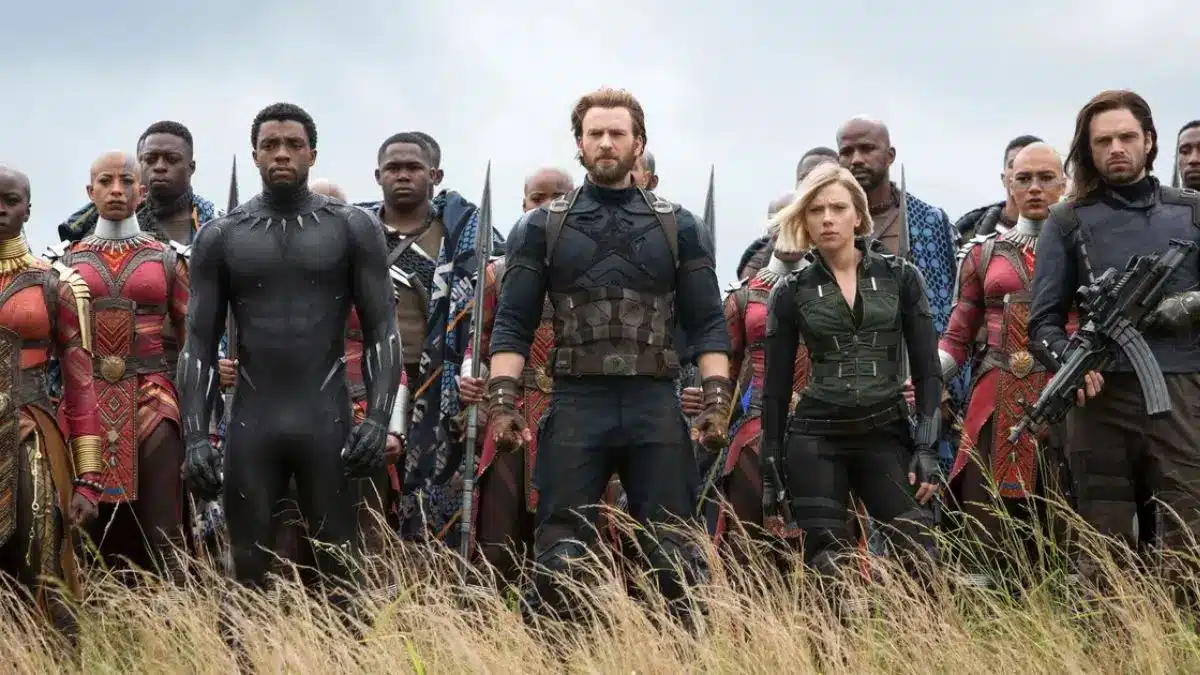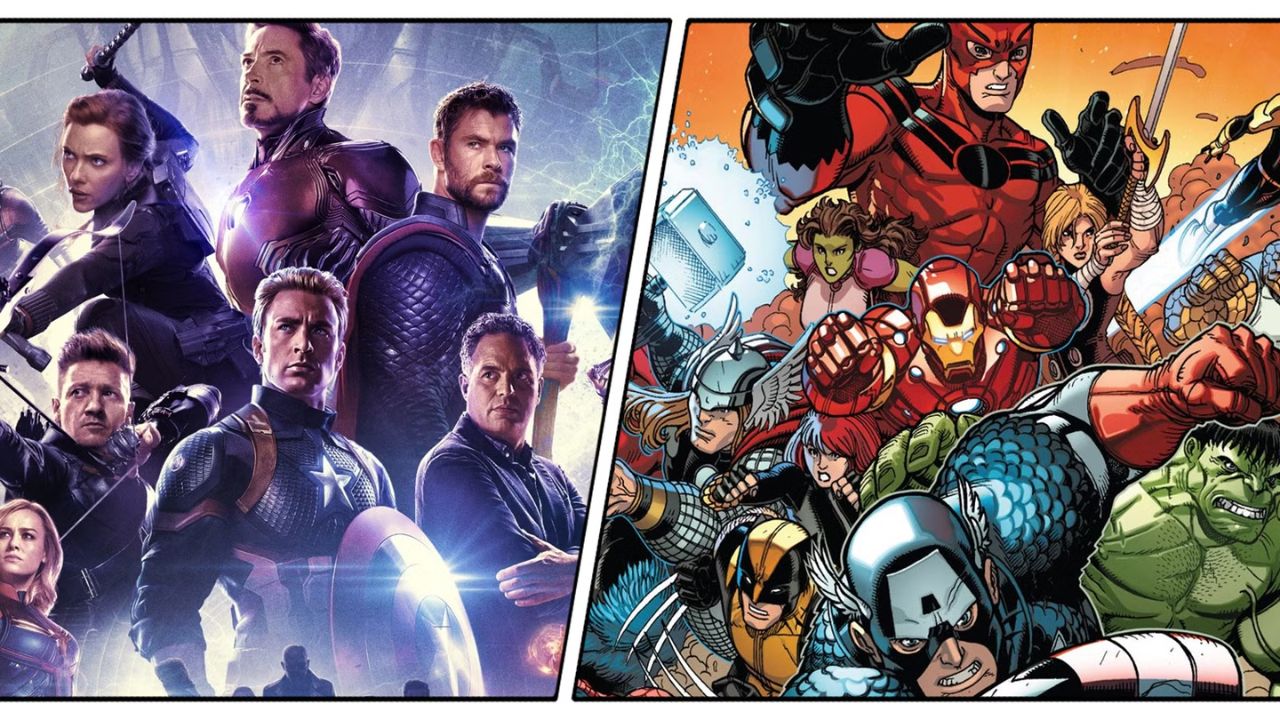
There is a particular kind of argument that never really ends — one where both sides are right, and both sides are wrong, depending on which page you’re on. The debate between Marvel Comics and the Marvel Cinematic Universe as storytelling engines is exactly that kind of argument. Ask a longtime comics reader and they’ll say the MCU flattens characters, trades complexity for crowd-pleasing moments, and wraps everything up too neatly. Ask someone whose first Marvel experience was Iron Man in 2008, and they’ll tell you Robert Downey Jr. made Tony Stark feel more human in two hours than any comic book they ever cracked open. Here’s the honest truth: they’re both right. But they’re also talking about two fundamentally different things. The real question isn’t which is better — it’s better at what, and for whom.
The Case for Comics
Eighty Years is a Long Time to Grow Up
Marvel Comics, founded in 1939 and supercharged through the 1960s by Stan Lee, Jack Kirby, Steve Ditko, and a rotating cast of brilliant collaborators, gave its characters something that cinema almost structurally cannot: time without resolution. Peter Parker doesn’t get a satisfying three-act arc. He gets decades of loss, failure, triumph, and reinvention, with no final curtain. That open-endedness is, paradoxically, where the depth comes from.
Think about what Marvel Comics has done with Tony Stark across his publication history. At various points he has been a weapons manufacturer racked with guilt, a recovering alcoholic (one of comics’ most unflinching portrayals of addiction in David Michelinie and Bob Layton’s “Demon in a Bottle”), a government stooge, a villain-adjacent autocrat in Civil War, a man literally replaced by a younger, healthier version of himself, and a father trying to balance heroism with fatherhood in the Infamous Iron Man era. He has died and been reborn. He has been right and been catastrophically wrong. No single MCU film — or even the full arc from 2008 to 2019 — touches that range.
Comics don’t give characters happy endings. They give them history — and history, unlike a three-act structure, is messy, contradictory, and endlessly more interesting.
The medium also allows for something cinema rarely affords: multiple, simultaneous, contradictory versions of a character existing at once. The Steve Rogers of Ed Brubaker’s run — brooding, war-worn, morally torn — shares a publishing universe with a lighter, quippier Captain America in other titles. Different writers bring different truths out of the same character, and readers accept this not as inconsistency but as range. Comics have always understood that a person isn’t just one thing.
Continuity as Emotional Architecture
One of comics’ hidden superpowers is the weight of continuity. When Gwen Stacy died in The Amazing Spider-Man #121 (1973), it didn’t just break Peter Parker for an arc. It broke him for the rest of his publication life. That loss became load-bearing architecture — every subsequent relationship Peter forms, every time he hesitates before letting someone in, carries the weight of that bridge. Readers who have followed years of that story feel the full force of it in a way that a two-hour film simply cannot manufacture.
Wolverine’s backstory, revealed painstakingly over years by writers like Chris Claremont, Barry Windsor-Smith, and later Greg Rucka and Paul Jenkins, accumulated into something staggering — a man so old and scarred by history that his defining trait wasn’t his claws, but his exhaustion. That’s the kind of layered, patient portraiture that only serialized storytelling can produce.
The Case for the MCU
Emotional Clarity in a Crowded Room
And yet. When Steve Rogers says “I can do this all day,” and you’ve watched him say it as a 90-pound kid getting beaten in an alley in Brooklyn, and now he’s saying it to his time-displaced, future-corrupted self — the moment lands with a precision and economy that comics, for all their space and time, rarely achieve. That’s filmmaking doing what it does best: collapsing meaning into a single image, a single line.
The MCU’s great achievement isn’t merely that it adapted Marvel characters — it’s that it gave them coherent, emotionally legible arcs in a medium that demands you earn your audience’s tears in under two and a half hours. That is an extraordinarily difficult craft problem, and the MCU, at its best, solved it beautifully.
Tony Stark’s arc from Iron Man to Endgame is tightly constructed in a way his comics counterpart’s arc is not. Because Kevin Feige and his team could plan, because they knew roughly where they were going, they built Tony’s story with callbacks and through lines that reward viewers who watch carefully. The arc reactor embedded in his chest, the PTSD spiraling into his obsessive armor-building in Iron Man 3, the “protect everyone” impulse that makes him clash with Steve in Civil War — every piece feeds into that final snap. That’s a kind of intentional, coherent tragedy that serialized comics, beholden to editors and sales figures and writer changes, almost never manage.
The MCU proved that a shared cinematic universe could be emotionally coherent — that you could build twenty-two films toward a single cathartic moment and have it actually work. That’s not a small thing.
Wanda Maximoff: The MCU’s Crowning Achievement
If there is one character whose MCU treatment arguably outpaces her comics counterpart, it’s Wanda Maximoff. In the comics, Wanda has been many things — a villain, a hero, a tragedy, a punchline — but her story has been fragmented across so many hands that it often lacks cumulative weight. House of M, for all its ambition, was undone quickly, and Wanda herself was sidelined for years after.
The MCU’s Wanda, built meticulously across multiple films and then given center stage in WandaVision, is something different. Elizabeth Olsen plays a grief so specific and recognizable — the denial, the magical thinking, the way we build walls around our most unbearable losses — that the character transcended source material. Her arc from refugee to Avenger to grieving woman who can’t let go to, finally, something terrifying in Multiverse of Madness is one of the MCU’s most complete portraits of a person being swallowed by pain.
Character Studies

The Same Souls, Different Mirrors
Perhaps the most illuminating way to understand this debate is to look at specific characters side by side — not to declare a winner, but to see what each medium draws out.
Tony Stark
Iron Man · Genius · Billionaire · Philanthropist
- In the Comics
A decades-long battle with alcoholism, moral compromise, and the guilt of arming the world. “Demon in a Bottle” remains one of comics’ bravest arcs — unflinching about addiction without the comfort of a clean resolution.
- In the MCU
A tightly controlled eleven-year arc from self-serving weapons dealer to self-sacrificing father. RDJ’s performance added texture the page never had; the ending earned every tear. Intentional storytelling at its finest.
Thor Odinson
God of Thunder · Son of Odin · King of Asgard
- In the Comics
Jason Aaron’s run — where Thor is deemed unworthy and a woman (Jane Foster) lifts Mjolnir — is one of Marvel’s most profound meditations on what makes a hero. The mythic scope is unmatched.
- In the MCU
Ragnarok and Endgame transformed Thor from noble statue to genuinely human figure — grief, failure, and a beer gut included. Taika Waititi found something in the character that years of solemn comics never had: humor as a gateway to pathos.
Loki Laufeyson
God of Mischief · Agent of Asgard · The Trickster
- In the Comics
Al Ewing’s Agent of Asgard gave Loki one of Marvel’s richest arcs — a character literally trying to rewrite his own story, aware that destiny wants him to be a villain. Metafictional, heartbreaking, brilliant.
- In the MCU
Tom Hiddleston turned a secondary villain into one of cinema’s most beloved characters. The Loki Disney+ series finally gave him the self-examination arc he deserved — a character learning that the lies he tells others are nothing compared to the ones he tells himself.
Magneto
Max Eisenhardt · Erik Lehnsherr · Master of Magnetism
- In the Comics
The definitive Marvel villain-with-a-point. Chris Claremont’s Magneto — a Holocaust survivor who refused to let his people become victims again — is one of comics’ most morally complex antagonists. His shifts between villain and reluctant hero never feel cheap because his grief is so foundational.
- In the MCU
As of this writing, the MCU hasn’t truly reckoned with Magneto yet. His absence is arguably the MCU’s biggest character development gap — the X-Men franchise under Fox captured fragments of his depth, but the MCU still has the full story left to tell.
Different Depths, Different Waters
Comics Win
Complexity Without Resolution
Comics can let characters stay broken, stay complicated, stay morally gray — because there’s no ending required. This produces richer, stranger, more difficult portraits of people.
MCU Wins
Emotional Catharsis
Cinema’s formal structure — setup, conflict, resolution — produces emotional payoffs that serialized storytelling rarely achieves. The MCU at its best makes you feel the weight of an arc landing.
Comics Win
Reinvention and Risk
Comics have let characters die, be replaced, be redeemed, be corrupted, and be fundamentally reimagined across creative teams. The range of what Marvel has done with its characters in print is simply staggering.
MCU Wins
Universal Accessibility
The MCU brought these characters to billions of people who would never read a comic. In doing so, it introduced a generation to ideas — about identity, power, sacrifice, and belonging — that comics had held for decades.
The Problem of Canon
One area where comics both win and lose simultaneously is canonicity. Because Marvel Comics has no fixed canon — different writers contradict each other, retcons are common, and “What If?” scenarios blur endlessly into mainline continuity — characters are free to be interpreted widely. But this same quality means there is no single authoritative portrait of any character. The Steve Rogers of one writer is not the Steve Rogers of another. Readers must assemble their preferred version themselves, like a mosaic made of decades of competing tile-work.
The MCU, by contrast, has a tightly managed canon (at least through Phase 3). What happens in the films is what happened, period. This constraint produces coherence — but it also means there is a ceiling on how many directions a character can move. Once the MCU Tony Stark died, he was done. Comics Tony has died and come back more times than we can count. Neither approach is superior in the abstract; they simply serve different needs.
The Gender Problem in Both
Any honest assessment of both Marvel Comics and the MCU has to reckon with how both have historically treated women characters. Comics’ track record is famously troubled: female characters introduced, killed, sidelined, or defined entirely by their relationship to male heroes are a near-constant through the medium’s history (see: the “Women in Refrigerators” critique). The MCU was slow to center its female characters — Black Widow waited over a decade for a solo film — and Captain Marvel and Eternals received mixed receptions that often seemed disproportionate to their actual quality.
That said, recent years have seen both mediums make genuine progress. G. Willow Wilson’s Ms. Marvel (Kamala Khan) is arguably one of the best origin stories either medium has produced in the past twenty years. The MCU’s portrayal of Wanda, Shuri, and Nebula represent some of the richer female arcs in either universe. Progress, if uneven, is real.
The Philosophical Split
What Are We Really Arguing About?
Underneath all the specific comparisons, the Marvel Comics vs. MCU debate is really a debate about what we want from character — and from stories generally.
Comics ask us to live with characters. To follow them through their inconsistencies, their retcons, their moments of pettiness and grandeur. Comics reward patience, familiarity, and a tolerance for incompleteness. They are, at their best, like old friendships: full of history you can’t fully summarize, and richer for it.
Cinema asks us to be moved. To feel, in a compressed and structured window of time, the full weight of a journey. The MCU at its best is a masterwork of emotional engineering — it builds toward catharsis with the deliberateness of a playwright. It is designed to land. And it does.
You don’t choose between them. You need them both. Comics give you the deep water; the MCU gives you the beautiful, terrifying moment of breaking the surface.
The uncomfortable truth is that if you have read the comics, the MCU often feels reductive. If you haven’t, it often feels like the fullest, most complete versions of these characters you’ve ever encountered. Both reactions are valid. They are telling you something true about the relationship between depth and accessibility, between the slow work of years and the efficient work of two and a half hours.
What Comics Can Learn From the MCU
It would be easy to treat this as a one-directional conversation — comics as the original, the MCU as the simplified adaptation. But the MCU has genuinely expanded what’s possible for these characters, and comics have noticed. The comics versions of Thor and Loki, for instance, have been influenced by the warmth and sibling complexity that the films brought to the relationship. Characters like Kamala Khan and America Chavez were created in the MCU era and bear some of its DNA: they’re more accessible, more emotionally legible, more conscious of needing to earn a reader’s investment quickly.
The influence runs both ways, and that cross-pollination has been good for the shared mythology on the whole.

The Verdict
Neither Wins. Both Matter.
Marvel Comics has better character depth — eighty years of storytelling have produced portraits of extraordinary complexity, contradiction, and range that cinema simply hasn’t had time to replicate. The MCU has better character arcs — coherent, intentional, emotionally satisfying journeys built with the discipline of a closed narrative form.
If you want to understand who these people are at their fullest — read the comics. Claremont’s X-Men. Brubaker’s Captain America. Aaron’s Thor. Fraction’s Hawkeye. These are not lesser versions. They are the deep versions.
If you want to feel these characters — if you want to cry when Tony Stark snaps his fingers, or cheer when Cap lifts Mjolnir — the MCU knows exactly where to put the knife.
The real answer is that you don’t have to choose. The characters are big enough to hold both. That, perhaps, is Marvel’s greatest achievement of all.
Both are love letters to the same heroes. Read them both.