We don’t go to stories to feel safe. We go to feel alive — and nothing makes a story more alive than a villain who genuinely terrifies us, challenges us, and, in the quiet moments after the credits roll, makes us wonder: Was he entirely wrong?
The Problem with Evil
Why Most Villains Fall Flat
Think about the last villain who truly unsettled you. Not just someone threatening enough to create tension, but someone who invaded your thoughts — whose logic, however warped, you found yourself reluctantly following. If you’re searching for that memory, you already understand the problem: genuinely memorable villains are rare.
Most fictional antagonists are cardboard cutouts in dark clothing. They exist as obstacles, as engines of conflict, as the reason the hero needs to be heroic. They want power, or destruction, or revenge, and they want it with a scowling single-mindedness that makes them feel less like people and more like weather events — forces to be survived, not understood.
The instinct behind this is understandable. A clear, uncomplicated evil makes the hero’s moral path easier to follow. But it also makes the story smaller. When we reduce villainy to simple monstrousness, we lose the very thing that makes dark storytelling valuable: the chance to look at something genuinely wrong and trace its roots back to something recognizably human.
The greatest villains in comics, literature, and film refuse this simplicity. They insist on being understood, even when — especially when — they cannot be excused.
The Architecture of Menace
The Seven Qualities That Separate a Great Villain from a Forgettable One
After examining antagonists across nearly every genre and medium — from Shakespeare’s Iago to the Joker, from Hannibal Lecter to Nurse Ratched, from Judge Holden to Thanos — certain patterns emerge. Great villains are not simply “evil done well.” They are built from specific, identifiable qualities that compound on each other.
- A coherent worldview, however wrong. The villain believes something — deeply, structurally, with an internal logic that holds together. Their actions are not random; they proceed from a set of convictions about how the world works and what it deserves.
- A wound that explains without excusing. There is almost always a backstory that shows us the fracture — the moment something broke. The best stories present this without asking us to forgive it. The wound explains the villain; it does not justify them.
- Genuine capability. A villain who cannot actually threaten the hero is a speed bump, not an antagonist. Great villains are terrifying because they are good at what they do — sometimes frighteningly good.
- A relationship with the hero that matters. The best antagonists are mirrors, shadows, or dark inversions of the protagonist. They reveal something about the hero — and by extension, about us — that the story could not reveal any other way.
- Moments of genuine humanity. A laugh that’s real. A grief that’s unperformed. A kindness, however small or misplaced, that reminds us this person was not always this. These moments are the most unsettling because they close the distance between villain and audience.
- A point of view the story takes seriously. The narrative should not simply dismiss the villain’s perspective. Even when the story ultimately repudiates their logic, it should engage with it — give it its full, uncomfortable weight.
- Consequence and cost. Every action the villain takes should matter. Nothing should feel cheap. The best antagonists leave scars — on the world of the story, on the hero, and sometimes on the reader.
The Mirror Principle
The Villain as a Dark Reflection
The most powerful structural role a villain can play is not opponent — it’s mirror. When an antagonist shares the hero’s origins, their ambitions, their wounds, or their methods, something profound happens: the story stops being about good versus evil and becomes about choice, about the distance between who we are and who we could become.
The best villain is not the darkness the hero fights against — it is the darkness the hero could have become, given slightly different circumstances and slightly worse luck.
— On the Mirror Principle in Narrative
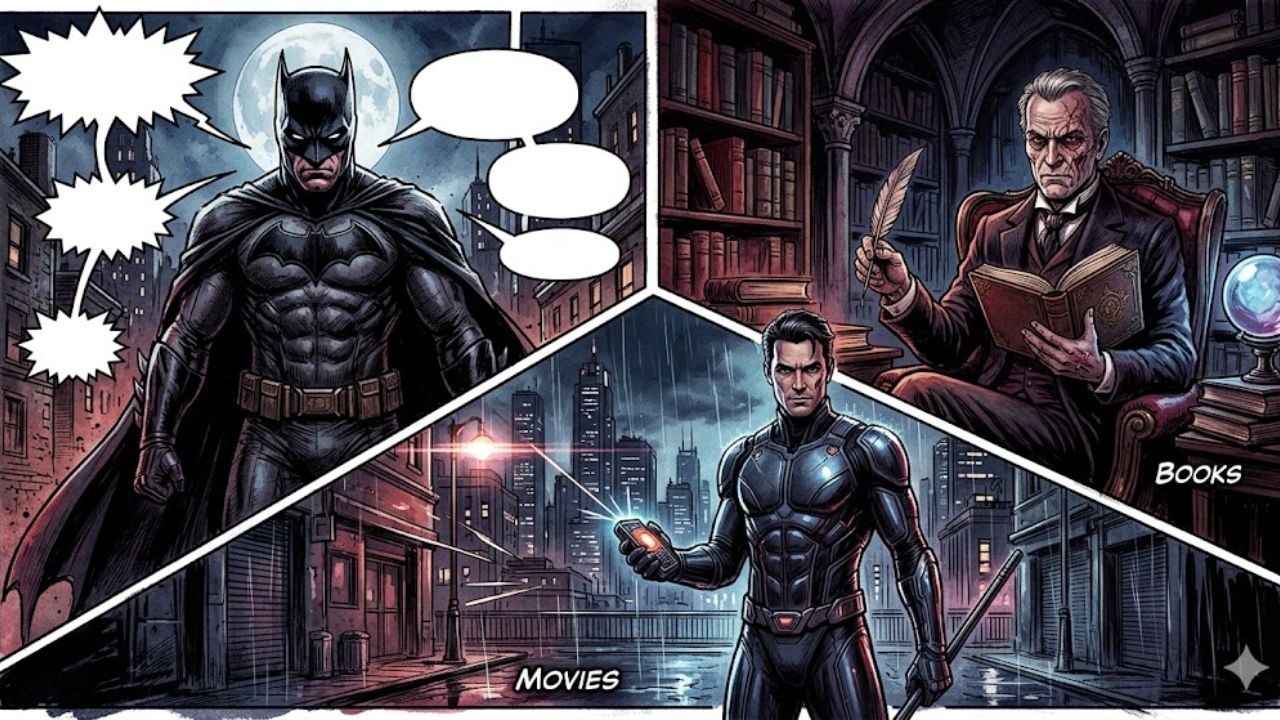
Consider Batman and the Joker. Both are products of a single night of catastrophic violence. Both were shaped into something extraordinary — and extraordinarily dangerous — by that violence. But Bruce Wayne chose to take his grief and build something structured out of it, rule-bound and principled, however brutal. The Joker chose to take the same raw material and burn it all down, to prove that one bad day is all it takes to turn anyone into him.
The Joker is terrifying not because he is strong but because he is an argument — a walking, grinning thesis about human nature. And the story only works because Batman, the protagonist, is living evidence that the argument is wrong. Remove one and you lose the other.
The same dynamic plays out in literature. In Crime and Punishment, Raskolnikov’s intellectual justification for murder is not simply wrong — it is a distorted reflection of real philosophical questions about exceptional individuals and moral responsibility. Dostoevsky takes the idea seriously enough to follow it to its logical conclusion, which is what makes the novel feel like it might collapse under its own moral weight at any moment.

When the mirror is cracked, not broken
Some of the most compelling villain-hero pairings work because the difference between them is not moral fiber but circumstance. Magneto and Professor X believe in almost the same thing — the survival and dignity of mutants — and differ only in method. That difference is enormous in practice, but small enough in principle to make both men comprehensible. You can agree with Magneto’s analysis of human history and still oppose his conclusions. That tension is what makes him endure.
Comics
Magneto
A Holocaust survivor whose hatred of oppression metastasized into the thing he fought. His logic is traceable, his grief is real, and he is almost right — which makes him devastating.
Film
Anton Chigurh
The most frightening screen villain of the 21st century operates like an impersonal force — but one with a philosophy. He believes in fate with a religious conviction, which makes him impossible to negotiate with.
Literature
Hannibal Lecter
He is cultured, perceptive, generous with insight, and genuinely charming. The horror is not that he is alien — it’s that he is, in many ways, the most refined person in the room.
Comics / Film
Thanos
His solution is monstrous and his science is wrong — but his concern, stripped of its conclusion, is coherent. He mourns. He sacrifices. He believes, completely, that he is doing the necessary thing.
The Question of Sympathy
How Much Should We Understand Them?
There is a constant temptation, when writing villains, to make them sympathetic enough that the audience roots for them — and this is both understandable and dangerous. Sympathy is not the goal. Understanding is.
The distinction matters enormously. A sympathetic villain asks for our forgiveness, or at least our approval. An understandable villain asks for nothing — they simply exist, and the story trusts us to follow their internal logic without endorsing it. The former can slide into excusing; the latter demands more from both the writer and the audience.
Nurse Ratched in One Flew Over the Cuckoo’s Nest is a masterclass in this. She is not sympathetic. She is cold, controlled, and genuinely cruel in her methods. But she is understandable — she believes she is helping. She believes that order, compliance, and the suppression of disruption are the paths to health. Her cruelty has an institutional logic that is, in its own perverse way, coherent. That coherence is what makes her frightening, not her viciousness.
Craft Note
The moment a villain becomes merely evil — when their cruelty serves no internal logic, when it exists only to shock — they stop being antagonists and become props. The story loses depth precisely at the moment it reaches for darkness.
The danger of too much sympathy
The risk of the fully sympathetic villain is that the story inadvertently endorses their worldview. If a villain’s logic is too seductive — if the narrative frames their perspective as simply “a different way of seeing” — it can slide into moral equivalence, which is its own kind of dishonesty. The best villain narratives give the antagonist’s worldview its full weight while still, ultimately, interrogating it. They trust the audience to do the work of discernment rather than doing it for them.
There is no formula here, which is part of what makes villain-writing so difficult. It requires the writer to inhabit a perspective they find repugnant and render it faithfully — to understand from the inside how someone arrives at terrible conclusions — while simultaneously maintaining enough authorial perspective to ensure the story is not a celebration of those conclusions.
The Medium Question
How Comics, Books, and Film Build Villains Differently
The mechanics of villainy shift depending on the medium. Each format has its own tools, and the best villain portrayals exploit those tools rather than working around them.
Comics: the long game and the iconography of evil
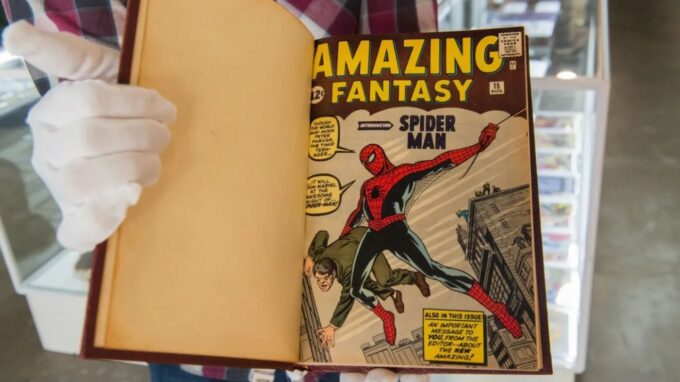
Comics have something no other medium has: decades. A villain who first appeared in 1962 has sixty years of stories layered onto them — retcons, reimaginings, alternate universe versions, moments of redemption that didn’t stick and falls from grace that felt inevitable in retrospect. This accumulation of story creates a kind of depth that cannot be manufactured. Magneto is compelling partly because we have watched him be both monster and hero, and we understand that he is always both simultaneously.
Comics also work in iconography in a way that film and prose don’t. A villain’s visual design carries enormous weight. The Joker’s grin is a symbol. Doctor Doom’s iron mask is a symbol — the rigid, unyielding exterior of a man who cannot tolerate being perceived as vulnerable. These visual shorthands allow comics to communicate character instantly, across dozens of different creative teams, over generations of readers.
Literature: the interior life
Prose has access to something film struggles with and comics rarely attempt: the inside of the villain’s head. Some of the most disturbing villain portrayals in literature work precisely because we are given direct access to their reasoning — and the reasoning is coherent. We follow Humbert Humbert’s self-justifications in Lolita not because Nabokov endorses them but because Nabokov trusts us to recognize them as the elaborate confabulations they are. The horror lies in watching an intelligent, articulate mind construct, brick by brick, a justification for the unjustifiable.
Literature can also sustain a villain across hundreds of pages in a way that forces a depth comics and film can struggle to achieve. A novel has the space to show a villain in ordinary moments, in private moments, in the small revealing gestures that reveal character when the grand speeches are over.
Film: the performance and the unspoken
Great screen villains are inseparable from their performances. Anthony Hopkins is Lecter; Javier Bardem is Chigurh; Heath Ledger — in that specific, irreplaceable, grief-shadowed way — is the Joker. Film gives us access to the face and the body, to the micro-expressions and the pauses, to the physical reality of a person in space. A great villain performance communicates entire inner worlds through a glance, a stillness, a tone of voice that is careful in a way that suggests contained violence.
On Silence
Film's greatest villain tool might be restraint. What Anton Chigurh does not say is more frightening than any monologue. The spaces in a great villain's speech are where the real terror lives.
Film also suffers a particular temptation: the villain monologue. It’s a shortcut — a way of delivering backstory and motivation efficiently. But it tends to flatten villains, to reduce them to their explanations. The most effective screen villains are the ones who don’t explain themselves, or explain themselves partially, or whose explanations are clearly incomplete. Ambiguity, in film, is a feature of great villainy, not a failure to commit.
The Failure Modes
How Villains Go Wrong
Understanding what makes great villains requires equal attention to how they fail. The pathologies of bad villainy are instructive.
The scenery-chewer
This villain exists to be theatrical. Every line is a speech, every entrance is staged, every action is performed for an imaginary audience. Theatricality is not inherently a flaw — the Joker at his best is intensely theatrical — but when the performance is all there is, when there is no interiority beneath the performance, the villain becomes camp. Camp has its pleasures, but it is not the same as menace.
The backstory villain
A villain whose evil is entirely explained by their backstory — who is essentially a trauma response given human form — is not a villain at all, but a victim awaiting a redemption arc. Backstory should complicate a villain, not replace them. The wound is one element of character, not the whole of it. When a story treats the villain’s history as a complete explanation for their present, it accidentally argues that evil is simply misfortune — which is both philosophically suspect and dramatically inert.
The obstacle in a costume
The purely functional villain exists only to be defeated. They have no perspective, no inner life, no sense that they exist when the hero is not looking at them. They are a problem to be solved rather than a person to be understood. Stories built around this kind of villain tend to feel hollow at their center — there is conflict but no stakes, tension but no weight.
The villain who is too easily right
Perhaps the most interesting failure mode: the villain whose diagnosis of the world is so accurate that the story inadvertently endorses their conclusions. When a writer is more convinced by the villain’s perspective than they are willing to admit, the story loses its moral center. This is different from a story that takes the villain seriously — it’s a story that hasn’t done the harder work of testing the villain’s worldview against something.
What It All Means

Why Stories Need Great Villains
We tell stories about villains because we need to. The darkness in fiction is not an escape from darkness — it is a controlled space in which we can examine it, wrestle with it, and emerge with something like understanding.
A great villain does not exist to be defeated. They exist to pose a question the story cannot answer easily. They exist to show us the edge of what human beings are capable of, and to make us confront the uncomfortable distance — which is sometimes very small — between ourselves and that edge.
The best villains stay with us because they refuse to be settled. We leave the theater, or close the book, or set down the comic, and they follow us. We find ourselves arguing with them in the shower. We find their logic surfacing unbidden in moments when we are frustrated with the world. We do not agree with them — but we understand them. And that understanding, that refusal to simply dismiss the darkness as alien and incomprehensible, is one of the most important things storytelling can do.
The hero shows us what we aspire to be. The villain shows us what we have to fight against — not just in the world, but in ourselves. A story with a weak villain has nothing real to say about either.
— The Function of Darkness in Narrative
So if you are writing a villain — in any medium, in any genre — resist the temptation to make them simply monstrous. Give them a logic. Give them a wound. Give them a moment, somewhere, where they almost chose differently. Let the reader feel the weight of what they could have been.
Because the most terrifying thing about a great villain is not what they are. It is the distance between what they are and what they almost were. That distance — hairline thin, impossibly wide — is where the story lives.