
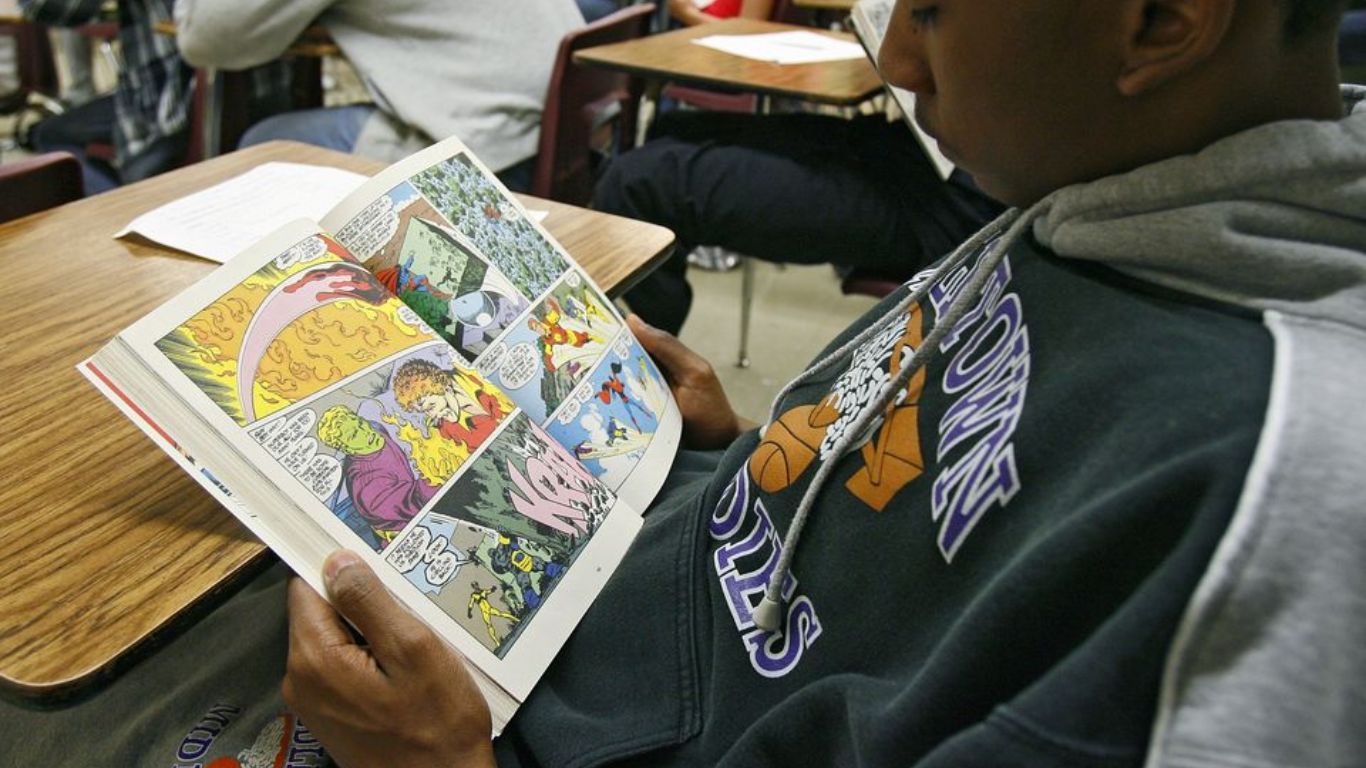
What are graphic novels? They are book-length works of sequential art that tell a complete, self-contained story from beginning to end. Many readers mistakenly classify them as a specific genre, but they actually represent a distinct publishing format that houses everything from historical non-fiction to fantasy epics. The format relies on a unique visual and textual duality, where words and images work together to build the narrative. At Gobookmart, we track the latest releases and break down complex storylines to help readers navigate this growing corner of the literary world.
Understanding this format requires looking past the colorful covers to see how creators structure their narratives. The medium has grown from a niche interest into a major force in global publishing. Readers of all ages now turn to these books for complex character development and immersive world-building. To grasp the full scope of the medium, we must first look at how it differs from traditional prose.
Format versus genre: Defining the graphic novel
A common misconception is that all sequential art falls under the superhero umbrella. In reality, the graphic novel is a format, not a genre. Just like a traditional prose book or a motion picture, this format can contain any type of story. Libraries and bookstores stock these volumes across multiple categories, including memoirs, historical accounts, science fiction, and romance.
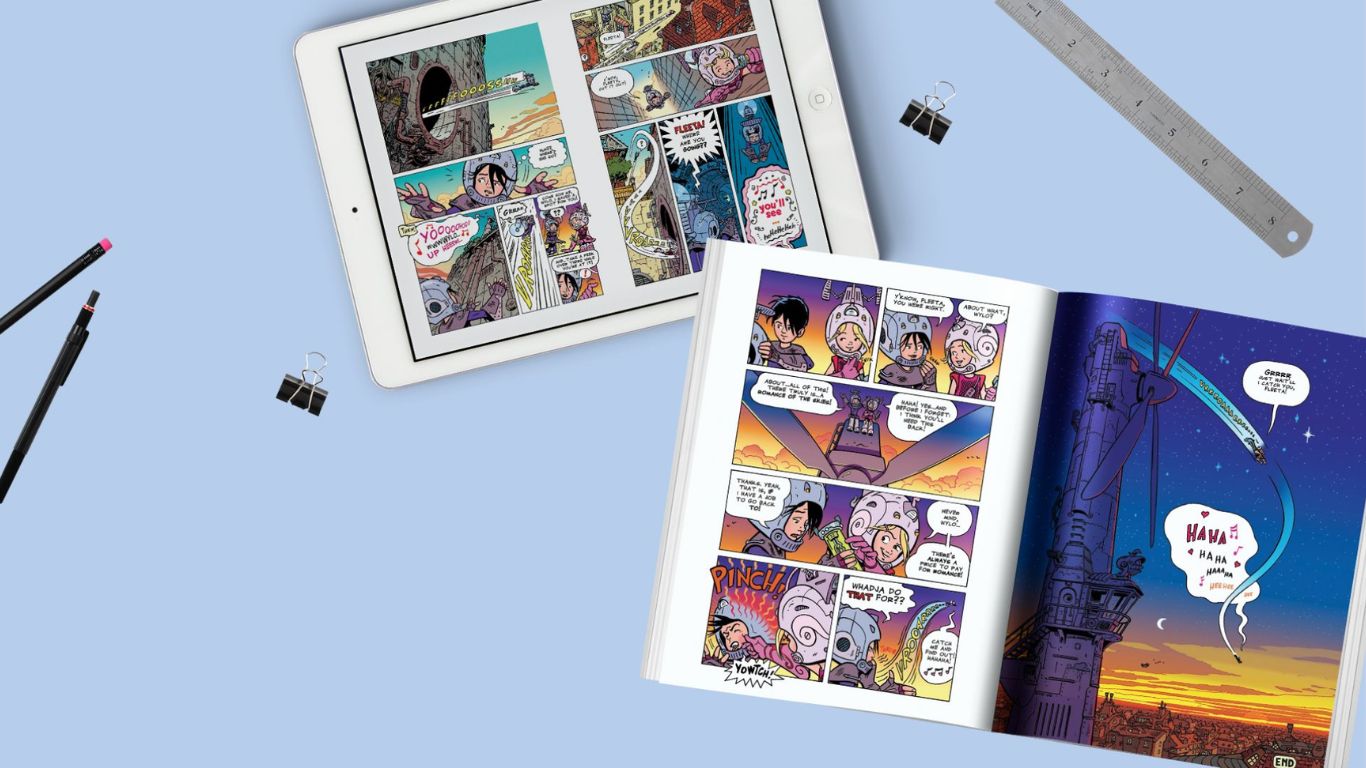
The difference between a graphic novel and a novel comes down to how the creator delivers information. Traditional novels rely entirely on text to build scenes, convey emotion, and advance the plot. Graphic narratives function as two stories in one. They present a textual narrative and a visual narrative placed in juxtaposition. The illustrations are integral to the experience, providing depth and movement rather than just complementing the words.
This structural difference allows creators to pace their stories uniquely. A single page might contain nine small panels to show a rapid conversation, followed by a full-page spread to emphasize a massive revelation. The reader controls the pacing by choosing how long to linger on the artwork before reading the next dialogue balloon. This level of control makes the reading experience highly interactive. As the format gained legitimacy, its history revealed a steady climb toward mainstream acceptance.
The history and evolution of graphic storytelling
The terminology we use today took decades to develop. Fan historian Richard Kyle coined the term “graphic novel” in 1964 in the fanzine Capa-Alpha. However, the concept did not reach the broader public until the late 1970s. Will Eisner popularized the term with his 1978 work A Contract with God. Eisner wanted to distinguish his mature, book-length narrative from the disposable comic magazines sold on newsstands.
The late 1980s brought a massive shift in public perception. In 1986, Art Spiegelman released Maus, a biographical tale of his father’s experiences during the Holocaust, depicting Jews as mice and Nazis as cats. Maus eventually won a Pulitzer Prize, forcing critics to acknowledge the literary weight of the medium. That same year, Frank Miller published The Dark Knight Returns, which reimagined Batman as an aging, cynical vigilante. Shortly after, Alan Moore and Dave Gibbons released Watchmen in 1987. Watchmen deconstructed the superhero mythos with complex political themes and intricate panel layouts.
These three works proved that sequential art could tackle mature themes with the same nuance as traditional literature. Following this boom, publishers began investing heavily in original, book-length projects. If you want to explore the foundation of the medium, you can check out our curated list of graphic novels for everyone’s TBR. The success of these foundational works naturally leads to questions about how they differ from the monthly issues sold in comic shops.
Graphic novels, comic books, and trade paperbacks compared
While both mediums use sequential art, their publishing models and narrative structures differ significantly. Understanding the basic differences between comics and graphic novels helps readers find the exact type of story they want to read.
| Format | Narrative Structure | Length and Binding |
|---|---|---|
| Comic Book | Serialized, open-ended stories | 20 to 32 pages, saddle-stitched (stapled) |
| Graphic Novel | Self-contained, complete narrative | 100+ pages, perfect bound (glued spine) |
| Trade Paperback | Collected editions of serialized comics | Varies, perfect bound |
Comic books are periodicals. Publishers release them weekly or monthly, and a single story arc might take six months to resolve. They often end on cliffhangers to ensure readers return for the next issue. In contrast, a graphic novel tells a complete narrative from beginning to end. You can pick up a standalone volume, read it in one sitting, and experience a fully resolved plot.
Trade paperbacks sit somewhere in the middle. When a comic book publisher finishes a six-issue story arc, they often collect those individual issues into one bound volume. While bookstores frequently shelve trade paperbacks in the same section as original graphic novels, the pacing inside a trade paperback still reflects its serialized origins. You can learn more about these distinctions in our guide to common comic book formats. Regardless of the final printed format, the process of building these visual stories requires intense collaboration.
How creators build graphic narratives
Creating a book-length visual story rarely happens in isolation. While some independent creators write and draw their entire books, the mainstream industry relies on a highly specialized assembly line. The process begins with the writer, who develops the concept and scripts the story. The script details the dialogue, panel descriptions, and overall pacing.
Once the script is ready, the penciler takes over. The penciler translates the written descriptions into visual layouts, deciding camera angles, character expressions, and panel borders. They establish the visual flow of the book. Next, the inker traces over the pencils with black ink. Inkers do more than just trace. They add depth, shadow, and texture to the line art, making the images pop off the page.
The colorist then applies color to the inked pages, setting the mood and atmosphere of each scene. Finally, the letterer adds the dialogue balloons, captions, and sound effects. The letterer must place the text carefully so it guides the reader’s eye naturally across the page without obscuring important artwork. You can read a detailed breakdown of this collaborative pipeline in our article on how graphic novels are made. For those interested in joining the industry, we also offer advice on how to make a career as a graphic novel artist. This complex production process yields a massive variety of stories.
Popular types and categories to explore
Because the medium is a format rather than a genre, readers can find stories tailored to any interest. The market has expanded rapidly over the last two decades, bringing international styles and highly personal narratives to western bookstores.
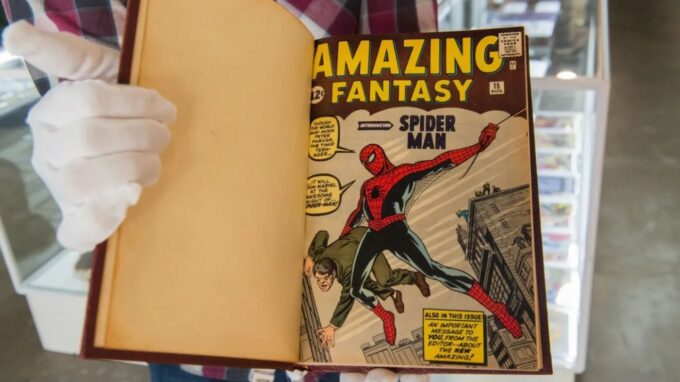
Manga represents one of the largest segments of the market. These Japanese comics are typically serialized first in magazines and then collected into thick volumes. Manga covers everything from high school romances to dark fantasy epics. Superhero stories remain popular in the United States, offering self-contained entry points for characters like Spider-Man or Batman without requiring decades of backstory knowledge.
Perzines and autobiographical works have also carved out a massive audience. Creators use the visual medium to share personal narratives about mental health, family history, and cultural identity. Non-fiction works, including journalism and historical accounts, use the format to make complex subjects accessible. You can see examples of these diverse categories in our roundup of the 10 best graphic novels of 2022. This variety makes the format highly effective in classroom settings.
Educational benefits for modern readers
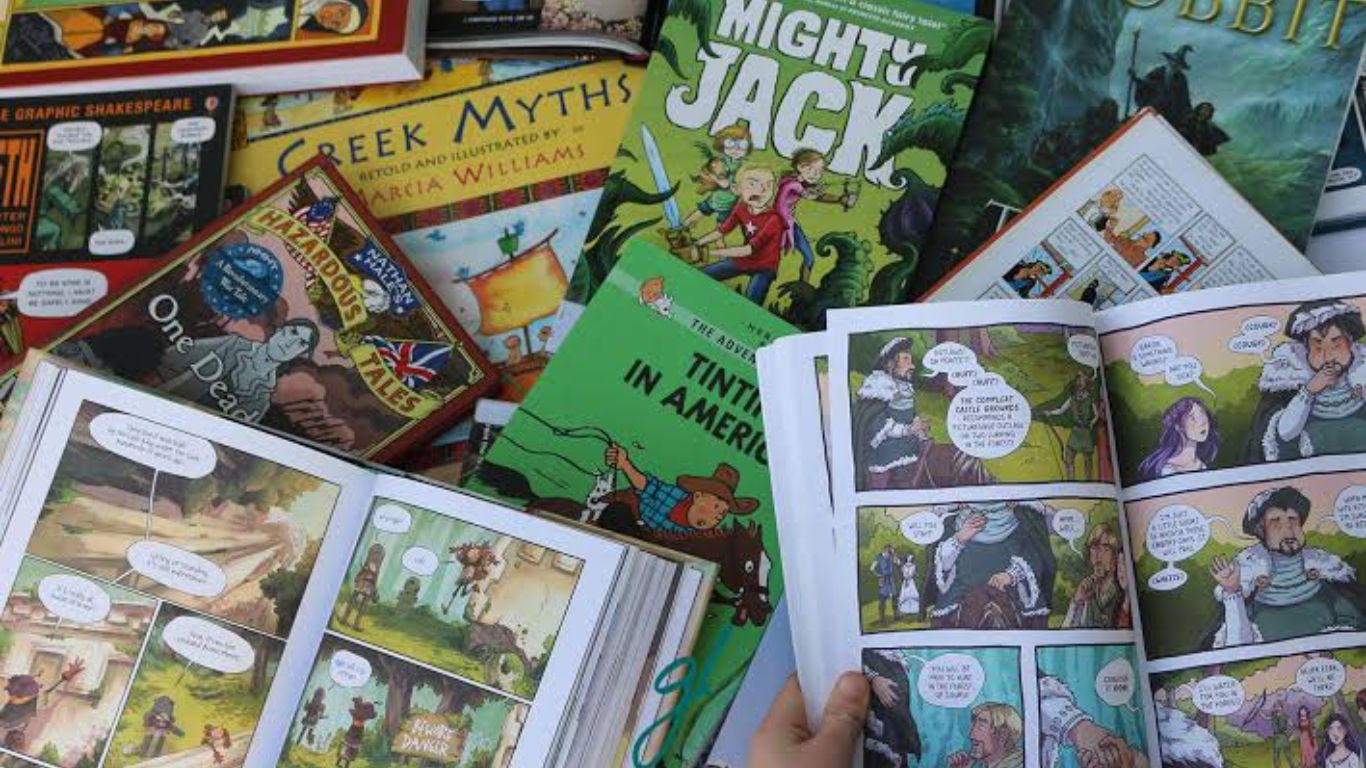
Educators and librarians once dismissed comics as mere entertainment. Today, they recognize the format as a powerful educational tool. The juxtaposition of text and images requires active cognitive engagement. Readers must decode the words while simultaneously interpreting facial expressions, body language, and spatial relationships.
This dual processing makes the format particularly effective for reluctant readers and visual learners. When students struggle with dense blocks of text, visual cues provide context that helps them understand complex vocabulary and narrative structures. You can explore the specific cognitive mechanics in our detailed look at how graphic novels support reading comprehension.
The market data supports this educational shift. According to ICv2, kids’ graphic novels performed exceptionally well recently, rising 5% in unit sales to capture 36% of the total graphic novel category. Furthermore, NielsenIQ data shows that purchases in the UK grew 16% over a five-year period, with under-25s consistently driving the market. We cover more about these advantages in our guide to the importance of reading graphic novels. As the format continues to grow, new readers often have similar questions about its legitimacy.
Frequently asked questions about graphic novels
Are comics real literature?
Yes. The literary merit of a book depends on its narrative depth, character development, and thematic complexity, not its format. Works like Maus and Persepolis are taught in university literature courses worldwide. If you want to explore this debate further, read our editorial answering the question: are comics real literature?
What is the target age group for this format?
There is no single target age group. Publishers release board books for toddlers, middle-grade adventures for young teens, and mature, explicit works intended strictly for adults. You must check the publisher’s recommended age rating or read reviews on Gobookmart to determine if a specific book is appropriate for a certain reader.
Do I need to read single-issue comics first?
No. The primary advantage of this format is that the stories are self-contained. While some books collect previously published single issues, the collected volume is designed to give you the complete story arc in one package. You do not need to hunt down back issues to understand the plot.
Finding your next great read
Understanding what graphic novels are opens up an entirely new way to experience storytelling. They are not just picture books for children, nor are they limited to caped crusaders fighting villains. They are complex, book-length narratives that use sequential art to pace a story, build atmosphere, and convey emotion. Whether you want to read a sweeping historical biography or a fast-paced science fiction thriller, the format offers a unique reading experience that prose alone cannot match. Check our news category regularly to stay updated on the latest releases and find the perfect visual story for your shelf.













Leave a comment