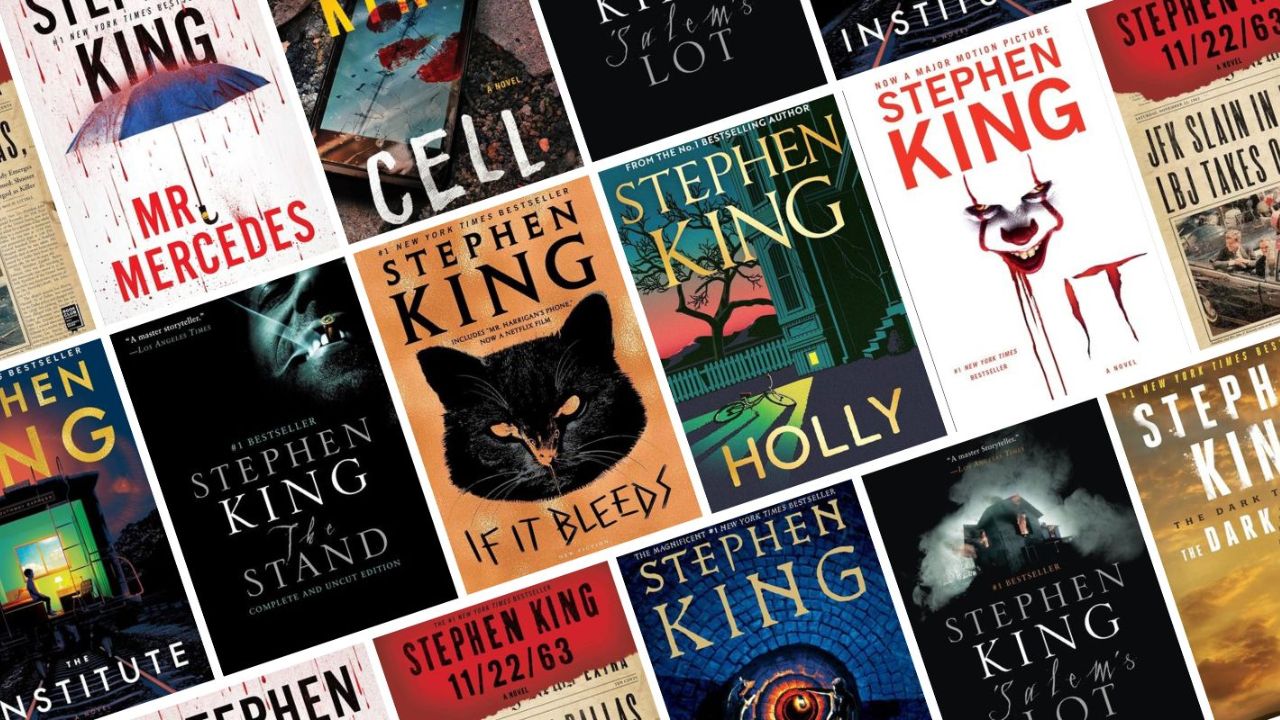
Stephen King has published over 65 novels, hundreds of short stories, and more film adaptations than any author alive. That’s simultaneously thrilling and overwhelming for anyone new to his work. Where do you even begin? The answer depends entirely on what kind of reader you are. King isn’t just a horror writer — he’s a storyteller who happens to operate in the dark. His books are full of small-town America, deeply flawed but lovable characters, childhood nostalgia, and an almost uncanny understanding of what it means to be human. The scary stuff is almost a bonus. Let’s break this down properly.
First, what kind of reader are you?
Before recommending a single book, it helps to figure out what you actually want from the experience. Click on what sounds most like you:
What’s drawing you to Stephen King?
👻 I want to be properly scared. Give me real horror.
📖 I want a gripping story, not necessarily a horror fest.
⏱ I want something shorter to test the waters.
🎬 I’ve seen the movies. Which book should come first?
The top picks for first-time readers
These five books come up again and again as ideal entry points — each for a different type of reader.
⭐ Most recommended
The Shining
1977 · 447 pages
Jack Torrance takes a winter caretaker job at the remote Overlook Hotel. What follows is a masterclass in slow-burn psychological dread. This is arguably the perfect introduction to King at his best.
Best for non-horror readers
The Green Mile
1996 · 536 pages
Set on Death Row in the 1930s, this is more of a supernatural drama than a horror novel. Profoundly moving, emotionally devastating, and utterly unforgettable. Excellent gateway drug.
Best epic adventure
It
1986 · 1,138 pages
A group of childhood friends confronts an ancient, shapeshifting evil in Derry, Maine. It’s long — very long — but it reads fast. A coming-of-age story wrapped in a monster movie. Iconic for good reason.
Best short starter
Carrie
1974 · 245 pages
King’s first published novel. A bullied teenager with telekinetic powers reaches her breaking point. Lean, propulsive, and surprisingly emotional. You can finish it in a weekend — maybe one long Saturday.
Best if you love thrillers
Misery
1987 · 338 pages
A bestselling novelist crashes his car in a blizzard and is “rescued” by his number-one fan. Two characters. One house. Pure claustrophobic tension from start to finish. Almost no supernatural elements.
The bottom line
If you can only pick one, start with The Shining. It has everything that makes King exceptional — dread, character depth, atmosphere, and an emotional core that stays with you long after the last page.

The case for starting with short stories
Here’s a contrarian take: some readers are better served by starting with King’s short fiction rather than his novels. His short story collections — particularly Night Shift (1978) and Skeleton Crew (1985) — are genuinely excellent, and they let you sample his range without committing to a 700-page novel upfront.
Night Shift alone contains the seeds of several major King novels. “Children of the Corn,” “Quitters, Inc.,” and “Sometimes They Come Back” are each compact, vicious little stories that demonstrate why King became the most popular horror writer in history. If you’re the kind of reader who needs to be convinced before committing to a long book, this is your entry point.
Pro tip: If you go the short story route, don't read Night Shift late at night and alone on your first pass. Just — trust us on this one.
A beginner-friendly reading order
If you want a structured path through King’s most essential early work, here’s a solid sequence that builds naturally:
- Carrie — Start here. Short, sharp, and you’ll see where it all began. It’s also a fascinating look at a young writer’s voice before it fully developed.
- The Shining — This is where King became King. The prose is richer, the dread is deeper, and the Overlook Hotel is one of the great settings in American literature.
- Misery — A complete change of pace. No monsters, no supernatural forces — just two people and a room. Proof that King doesn’t need the paranormal to terrify you.
- It — By this point you’ll be ready. The length won’t intimidate you. You’ll know what to expect from King’s style, and you’ll be able to fully appreciate how ambitious this book really is.
- The Stand(uncut edition) — The magnum opus. A post-apocalyptic epic that’s essentially King doing his version of Lord of the Rings. Don’t start here. But once you’re hooked? This is the reward.
Books to avoid as your first King
Not every King book is equally welcoming to newcomers. A few titles, while excellent in context, can be rough starting points:
The Dark Tower series
King himself calls this his magnum opus, and it’s a sweeping, genre-bending fantasy-Western-sci-fi epic. It’s also wildly confusing if you haven’t read any other King first, because the series quietly connects to nearly every other novel he’s ever written. Save this for when you’ve developed a feel for his universe.
Needful Things
A great book, but it rewards readers who already know Castle Rock and its residents from prior novels. First-timers will miss much of the payoff.
Gerald’s Game
Exceptional writing, extremely difficult subject matter. Not the vibe you want for a first date with King’s work.
A note on King’s writing style
One thing that surprises many new readers: Stephen King is funny. Not in a cheap, winking way, but in the genuine, sardonic, blue-collar American way that comes from growing up in Maine and observing people closely for six decades. His books are full of warm, lived-in humor that makes the horror land harder when it arrives.
He’s also an extraordinarily generous writer with his characters. Even minor figures get full inner lives. A gas station attendant might get half a page of backstory. A waitress might have a whole history revealed in the space of a paragraph. This is part of why his books are long — King wants you to know these people before he puts them through hell.
His prose style is conversational and propulsive. He writes how people actually think, not how literary fiction usually presents thought. Some literary critics have always found this lowbrow. Those critics are wrong.
King on his own work: In his memoir On Writing (2000), King describes himself as a "literary illiterate" who just tells stories. Don't believe him. On Writing is also, incidentally, one of the best books about the craft of writing ever published — and a fantastic place to start if you'd rather understand King before diving into his fiction.

Final word: just pick one and go
The single worst thing you can do is spend three weeks reading comparisons online and never actually open a book. Analysis paralysis is real, and it’s especially common with writers who have enormous backlists.
Here’s the simplest possible framework: if you want to be scared, start with The Shining. If you want to cry, start with The Green Mile. If you want a thriller, start with Misery. If you want something short, start with Carrie. If you want the full Stephen King experience, start with It and buckle in.
Any of these choices will do the job. King has a way of finding readers wherever they are and pulling them all the way in. He’s been doing it for fifty years. He’s very good at it.
The Overlook Hotel is waiting. The lights in Derry are flickering. There’s a clown down by the drain on Neibolt Street.
Come on in.