Every civilization that has ever drawn breath has looked up at the sky and asked the same question: Why are we here? The Sumerians answered with Enlil and Inanna. The Greeks answered with Zeus and the Olympians. The Norse answered with Odin and the World Tree. One by one, most of those answers have been archived — reverently studied but no longer lived. Yet a handful of mythological traditions have done something remarkable: they refused to die. They kept breathing, kept evolving, kept gathering worshippers across the millennia, all the way to the morning you are reading this. Which of those living traditions is truly the oldest? That question turns out to be far more fascinating — and far more contested — than a simple date on a timeline.
Why This Question Is Harder Than It Looks
The obvious approach would be to find the religion with the earliest written records and declare it the winner. But that conflates documentation with origin. Writing was invented around 3200 BCE in Mesopotamia, and the myths carved into those clay tablets had been passed orally for centuries before anyone reached for a stylus. When we say a tradition “began,” we are often really saying “this is when someone first wrote it down” — which is not quite the same thing at all.
There is also the question of continuity. A religion can claim ancient roots and yet be substantially reinvented over time. The Christianity practiced in a modern Ethiopian village shares its textual heritage with first-century Jerusalem, but the two experiences of faith are profoundly different. For a mythology to count as continuously practiced, there should be an unbroken thread of living believers, actual ritual, and inherited cosmology — not merely a shared name for the divine.
With those caveats in mind, let us look at the strongest candidates honestly.
The Deep Timeline of Human Religion
~40,000 BCE
Animism and Shamanism emerge
Cave paintings and burial rituals suggest early humans attributed spiritual agency to animals, ancestors, and natural forces — the roots of indigenous belief systems worldwide.
~3000 BCE
Indus Valley Civilization flourishes
Cities like Mohenjo-daro show evidence of ritual bathing tanks, fire altars, and deity figurines that scholars have connected — controversially — to later Hindu practice.
~2000 BCE
Earliest Vedic hymns composed
The Rigveda, the oldest scripture of Hinduism, begins taking shape in the northwestern subcontinent. Its hymns to Agni, Indra, and Varuna are among humanity’s most ancient surviving religious poetry.
~1500–1000 BCE
Zoroaster preaches in ancient Persia
The prophet Zarathustra articulates a dualistic theology of good and evil that would shape Persia, influence Judaism, Christianity, and Islam, and survive into the present day as Zoroastrianism.
~600 BCE
Upanishads and classical Hinduism solidify
Philosophical depth is added to the older Vedic ritual tradition, producing what we now recognize as classical Hindu theology — but built on structures already over a thousand years old.
Three Living Traditions With Ancient Roots
Scholars tend to identify three main contenders when discussing the world’s oldest living religious traditions. Each makes a credible, defensible claim. None of the answers is perfectly clean — but one comes remarkably close.
Strongest Claim
Hinduism
India · ~1,500–3,000+ years of continuous practice · ~1.2 billion living adherents
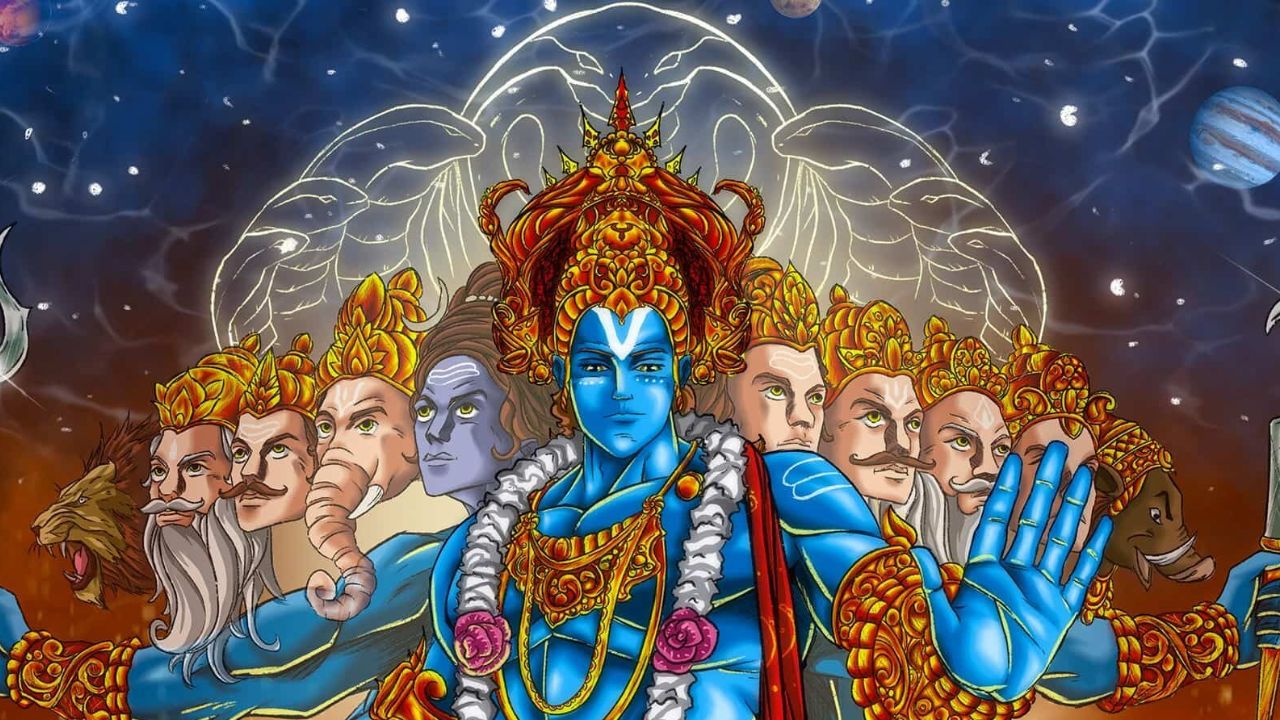
Hinduism is the most credible answer to this question — and also the most difficult one to date cleanly. What we call “Hinduism” today is not a single religion in the Western sense but an enormous, diverse family of beliefs and practices united by shared scripture, cosmology, and ritual culture. Its oldest layer, the Vedic tradition, is documented in hymns that most scholars date to somewhere between 1500 and 1200 BCE — making the Rigveda one of the oldest religious texts still in liturgical use anywhere on earth. Those hymns are still chanted. Not as museum pieces. In living temples, at wedding fires, in morning prayers recited by millions of ordinary people before they start their day.
Close Second
Zoroastrianism
Iran / India · ~1,000–1,500 BCE origins · ~100,000–200,000 living adherents
Zoroastrianism is arguably the most influential small religion in human history. Born in the Iranian plateau sometime between 1500 and 1000 BCE, it gave the world the first clearly articulated theology of a cosmic battle between good and evil — a framework that shaped Judaism during the Babylonian Exile and, through that channel, rippled into both Christianity and Islam. Today, Zoroastrianism is practiced mainly by the Parsi community in India and small populations in Iran, maintaining sacred fire temples that have been burning, some claim, for over a thousand years. Its scriptures, the Gathas, are composed in an archaic dialect of Avestan that pre-dates classical Persian literature.
Oldest by Age
Indigenous and Animist Traditions
Worldwide · ~40,000+ BCE origins · Hundreds of millions of practitioners
If we are asking purely about age, then the shamanic, animist, and nature-spirit traditions of indigenous peoples worldwide are almost certainly the oldest. Australian Aboriginal Dreamtime beliefs, for instance, incorporate astronomical events that geologists and archaeologists have dated to over 10,000 years ago — making them potentially the oldest continuously transmitted oral cosmologies on earth. These are not “myths” in the dismissive sense; they are sophisticated, internally coherent accounts of the cosmos, encoded in story and ceremony, transmitted without interruption across hundreds of generations. The challenge here is that these traditions do not always fit neatly into the word “mythology” as popularly understood — they are better described as living law, ecology, and cosmology merged into one.

Why Hinduism Is the Most Compelling Answer
Let’s linger on Hinduism, because its antiquity is genuinely staggering once you start pulling at the threads. The Rigveda’s hymns were composed by nomadic pastoral people in what is now northwestern India and Pakistan — people who celebrated Agni the fire-god, poured sacred soma at elaborate rituals, and sang of Indra splitting open the cloud-mountains to release the rains. These are not dead metaphors. The sacred fire is still lit at Hindu weddings. Agni is still invoked. The cosmological framework of dharma — the moral and cosmic order that underpins Hindu ethics — is a direct philosophical descendant of the Vedic concept of ṛta, the orderly principle behind the universe, a concept that appears in hymns over three thousand years old.
What is remarkable is not just the age but the texture of that continuity. The Upanishads, composed roughly between 800 and 200 BCE, added profound philosophical depth — wrestling with questions of consciousness, self, and ultimate reality in ways that still feel searingly relevant today. The great epics, the Mahabharata and Ramayana, followed, weaving those metaphysical questions into human drama of extraordinary richness. The Puranas added yet more mythological layers, new gods, new cosmologies, new stories of creation and destruction.
Through all of this, the core held. Brahma, Vishnu, Shiva. The cycles of creation and dissolution. The concept of karma. The spiritual significance of the cow. Sacred rivers. Pilgrimage. Fire ritual. A tradition so vast and adaptable that it absorbed invaders, outlasted empires, and still houses over a billion living believers.
The Vedas are not merely old texts; they are a living river that has been flowing continuously from its source in the deepest antiquity — branching, merging, deepening — and that flows still through every fire-lit altar and every whispered prayer.
— Paraphrase of a recurring scholarly consensus in comparative religion
The Indus Valley Question
Here is where the story gets even more interesting — and more debated. The Indus Valley Civilization, which flourished from roughly 3300 to 1300 BCE in what is now Pakistan and northwestern India, left behind some tantalizing clues. Excavations at Mohenjo-daro and Harappa have unearthed elaborate public bathing structures — possibly ritual in purpose — fire altars, and seal engravings depicting a seated figure in a posture that some scholars associate with later Hindu yogic practice. One famous seal shows a three-faced figure surrounded by animals, which has been interpreted as a proto-Shiva.
The debate is real and unresolved. Critics point out that we cannot read the Indus script, which means we cannot know what those people believed. The visual similarities with later Hindu iconography could be coincidence, or they could represent genuine cultural continuity across a civilizational gap. If the latter is true, then the living roots of Hinduism extend not to 1500 BCE but to 3000 BCE or earlier — making it a tradition now over five millennia in the making.
Even without that contested connection, the documented, textually verified continuity of Hindu religious practice from approximately 1500 BCE to the present day is a span of 3,500 years. No other named, definably continuous religious tradition can match that with comparable documentation and a comparable mass of living practitioners.
What Makes a Religion “Oldest”?
The answer depends on what you mean. Oldest by claimed origin date? Indigenous traditions win easily. Oldest with an unbroken textual and ritual record recognizable to living practitioners? Hinduism is almost certainly the answer. Oldest in terms of founding prophet and structured theology? Zoroastrianism makes a strong case. The question is genuinely fascinating because it forces us to examine what continuity, identity, and belief really mean across the vast stretch of human time.
The Gods Who Didn’t Make It
It helps to appreciate what makes these surviving traditions remarkable by briefly considering the ones that did not survive. Mesopotamian mythology — the pantheon of Anu, Enlil, Inanna, and Marduk — gave us some of the most dramatic religious poetry ever written. The Epic of Gilgamesh predates the Hebrew Bible and anticipates several of its central episodes. And yet, no one today lights a fire for Inanna. No temples to Marduk stand open for worship. The tradition died when the civilizations that carried it died.
Ancient Egyptian mythology lasted for roughly three thousand years, arguably longer than any other single named tradition, but it collapsed with the Christianization of the Roman Empire in the fourth century CE. The last known inscription in Egyptian hieroglyphs was carved in 394 CE. There are neo-pagan revivalist communities today who honor the Egyptian gods, but they are reconstructions — sincere and meaningful, perhaps, but not the same unbroken thread.
The Greek and Roman pantheons had an even more spectacular fall. At the height of Roman power, the worship of Jupiter and Venus was the civic religion of an empire spanning three continents. Today it lives on primarily in literature, art, and the names of our planets. The mythology is preserved with extraordinary richness; the religion is not.
What allowed certain traditions to survive while others crumbled? Part of the answer is demographic — India’s geographic scale and diversity meant no single conquering force could fully erase indigenous spiritual practice. Part of the answer is adaptability — Hinduism’s remarkable capacity to absorb new ideas, new deities, and new philosophical frameworks made it almost impossible to stamp out. And part of the answer is simply that the people who carried these traditions refused, generation after generation, to let them go.
The Quiet Survival of Zoroastrianism
It would be a mistake to move past Zoroastrianism too quickly. This is a tradition that survived the fall of the Achaemenid Persian Empire — the largest empire the ancient world had yet seen — then survived Alexander the Great’s conquest, then survived the Parthian and Sassanid dynasties, then survived the Muslim conquest of Persia in the seventh century CE, when many Zoroastrians fled to India and became the Parsi community we know today. Each of those events was potentially fatal. None of them proved fatal.
The sacred fires in Zoroastrian fire temples are treated with extraordinary reverence — some have been maintained, priests insist, for over a thousand years without ever being fully extinguished. The Gathas, the oldest Zoroastrian hymns attributed to Zarathustra himself, are still chanted in their original archaic Avestan. The tradition is small — the Parsi community in particular has faced demographic challenges, with strict rules around conversion limiting its growth — but it is alive, it is practicing, and its influence on world history has been incalculably larger than its numbers might suggest.
The Dreamtime and the Question of the “Oldest”
Any honest treatment of this subject has to grapple seriously with Australian Aboriginal traditions, because if the question is simply “oldest mythology still practiced,” the answer may well be: Dreamtime cosmology. The evidence is extraordinary. Aboriginal oral traditions contain detailed descriptions of geological events — volcanic eruptions, sea-level changes, the formation of specific landforms — that scientists have now dated to between 10,000 and 37,000 years ago. This is not oral history in a loose sense. This is precise, verifiable, transgenerational transmission of environmental knowledge embedded in myth and ceremony, maintained without writing, across periods of time that dwarf the entirety of recorded history.
The reason this is sometimes set aside in the “oldest religion” conversation is partly a matter of how we define mythology. Aboriginal traditions resist Western taxonomies — they are not neatly separable into “religion,” “law,” “ecology,” and “history,” because they were never conceived as separate things. The Dreamtime is not a mythology in the sense of being a story about the world. It is, for its practitioners, the underlying structure of the world itself. That is a profound distinction, and one that deserves far more respect than the question “oldest religion” typically allows for.

The Answer — and What It Tells Us
If you need a single, defensible answer that will hold up in conversation: Hinduism is the oldest mythology that is still continuously and widely practiced as a living religion today. Its textual record is the oldest among living major world religions, its ritual continuity is documented across at least 3,500 years, and it is actively practiced by over a billion people — not as a curiosity or a reconstruction but as the living spiritual center of their lives.
If you want to be more expansive, and more honest: the indigenous and animist traditions of certain peoples — most dramatically the Aboriginal Australians — carry cosmological knowledge that is orders of magnitude older, transmitted with a fidelity that modern scholarship is only beginning to appreciate. They do not fit neatly into the category we usually invoke when we say “mythology,” which may say more about the limitations of that category than about the traditions themselves.
And if you find yourself fascinated by the question of survival — why these traditions endured when so many others did not — that is perhaps the most interesting thread to pull. Religion persists not because it is immune to history but because it addresses something in human experience that history cannot fully explain away. The Vedic priest chanting the Rigveda at dawn, the Parsi standing before the sacred fire at dusk, the Aboriginal elder singing the songlines of their ancestors across a red desert landscape — each of them is, in some sense, carrying the oldest conversation humanity has ever had with the universe.
That conversation, it turns out, is still very much ongoing.