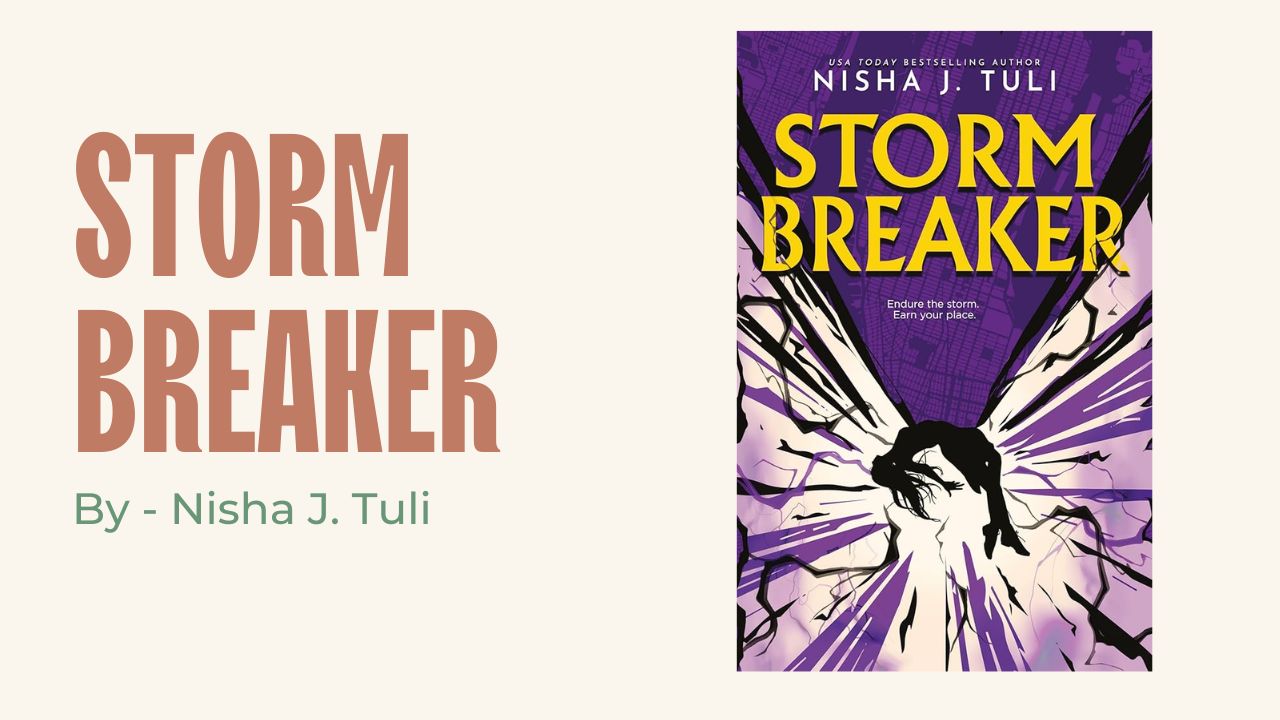
There’s a very specific feeling that Storm Breaker awakens — the kind readers used to get during the golden age of dystopian fiction, when brutal academies, dangerous governments, forbidden powers, and impossible romances ruled bookstore shelves. But instead of merely recreating that formula, Nisha J. Tuli reshapes it into something more emotionally charged and atmospheric.
This is not just another “girl discovers she’s special” story. Beneath the storm-soaked trials and political hierarchies, Storm Breaker is really about control — who has it, who loses it, and what happens when someone refuses to quietly accept the role society assigned them.
A World Built on Fear and Survival
The novel takes place in New Manhattan, a city rebuilt long after environmental collapse destroyed the old world. Society is now divided into powerful Houses that maintain order while controlling access to safety, privilege, and influence.
At the center of the story is Poet Graves, a young woman raised among the elite. Her future appears perfectly planned: prestigious education, political marriage, social status, obedience. But beneath that polished surface lies a dangerous secret — one tied to the deadly storms that haunt this fractured world.
Tuli handles the setting with impressive confidence. The city feels glamorous and oppressive at the same time. The academy structure brings familiar dystopian energy, but the storm mythology gives the book its own identity. Instead of relying solely on futuristic technology or rebellion politics, the novel introduces elemental danger in a way that feels volatile and alive.
Several reviewers compared the atmosphere to The Hunger Games and Divergent, and honestly, the comparisons make sense — though Storm Breaker leans more romantic and emotionally intimate than either.

Poet Graves Is the Kind of Heroine Who Grows on You
Poet is not written as an instantly fearless protagonist. She begins the story constrained by expectations, terrified of exposure, and emotionally boxed in by the people around her. That makes her arc far more satisfying.
What works especially well is how Tuli allows Poet’s anger to slowly surface. It isn’t explosive right away. It simmers underneath conversations, social rituals, and moments of humiliation. By the time she begins challenging the system around her, it feels earned rather than performative.
She also avoids becoming unrealistically perfect. Poet makes mistakes. She hesitates. She misjudges people. Sometimes she frustrates you. But that emotional inconsistency makes her feel human.
The strongest parts of the novel are often the quieter ones — the moments where Poet begins realizing how much of her life has been dictated by fear disguised as tradition.
The Romance Is Slow-Burning and Surprisingly Effective
Rook Athira enters the story carrying the exact kind of dangerous mystery this genre thrives on. He’s an outsider from beyond the city walls, and naturally, Poet is drawn to him despite every warning she’s ever received.
Thankfully, the romance doesn’t rush itself.
Tuli understands that chemistry works better when built through tension rather than instant obsession. Poet and Rook circle each other carefully at first, and their relationship develops through distrust, curiosity, and shared vulnerability.
The dynamic succeeds because both characters are carrying emotional baggage instead of existing purely to fulfill tropes. Rook has secrets. Poet has conditioning she must unlearn. Their relationship becomes compelling because it threatens both of their identities.
Readers expecting heavy spice should know this is much lighter on explicit content than many modern romantasy books. Most reviews describe the romance as upper YA or new adult territory with mild spice rather than anything graphic.
But honestly, the emotional tension works better than explicit scenes would have.
The Academy Trials Bring Back Classic Dystopian Energy
One of the novel’s biggest strengths is pacing.
Once Poet enters Amery Academy, the story rarely loses momentum. The trials, political rivalries, shifting alliances, and constant threat of exposure create an addictive rhythm that makes the book difficult to put down.
The academy itself feels cruel in a believable way. Students are shaped into weapons for a society obsessed with control and survival. Loyalty matters. Weakness is punished. Compassion becomes dangerous.
This is where the book feels closest to classic dystopian fiction. There’s a constant sense that everyone is being watched, evaluated, and manipulated.
At times, the plot can feel slightly predictable — particularly for readers deeply familiar with YA dystopian structures. Some twists are visible before they arrive.
Still, the execution remains entertaining because Tuli keeps the emotional stakes high enough to compensate.
The Storm Magic Is Easily the Coolest Part of the Book
The storms themselves are what elevate Storm Breaker beyond familiar genre territory.
Instead of magic functioning like a clean, organized system, it feels unstable and almost sentient. The storms are feared by society, yet Poet experiences them differently. That contradiction becomes one of the novel’s central mysteries.
Tuli describes these sequences with real cinematic energy. The storms don’t just exist as background worldbuilding; they feel dangerous enough to reshape the emotional tone of entire scenes.
Many romantasy novels introduce magic systems that feel overly technical. Storm Breaker succeeds because its power feels emotional first and logical second.
That choice gives the book atmosphere.
Where the Book Occasionally Struggles
The novel is strongest once the academy storyline fully begins. Early chapters occasionally overload the reader with names, systems, and terminology before emotional investment has fully settled in. Some readers may find the opening slightly dense.
The book also wears its inspirations openly. If you’ve read a large amount of YA dystopian fiction, certain structural beats will feel familiar: elite factions, hidden abilities, oppressive systems, forbidden attraction.
But while the skeleton may feel recognizable, the emotional tone and storm mythology help distinguish it from feeling like a copy.
And importantly, the book remembers something many modern fantasy novels forget: stories are supposed to be fun.
Final Thoughts
Storm Breaker feels like the meeting point between classic dystopian fiction and modern romantasy. It carries the intensity and rebellion of early YA dystopian novels while layering in emotional yearning, elemental magic, and a more mature emotional atmosphere.
Nisha J. Tuli creates a world filled with danger, privilege, manipulation, and longing — but what keeps the novel engaging is its emotional heartbeat. Poet’s story is ultimately about discovering who she is beneath the identity others built for her.
For readers who miss the adrenaline of dystopian academies but want stronger romantic tension and richer emotional stakes, this book lands exactly where it needs to.
It may not reinvent the genre entirely, but it absolutely reminds you why readers fell in love with this kind of story in the first place.
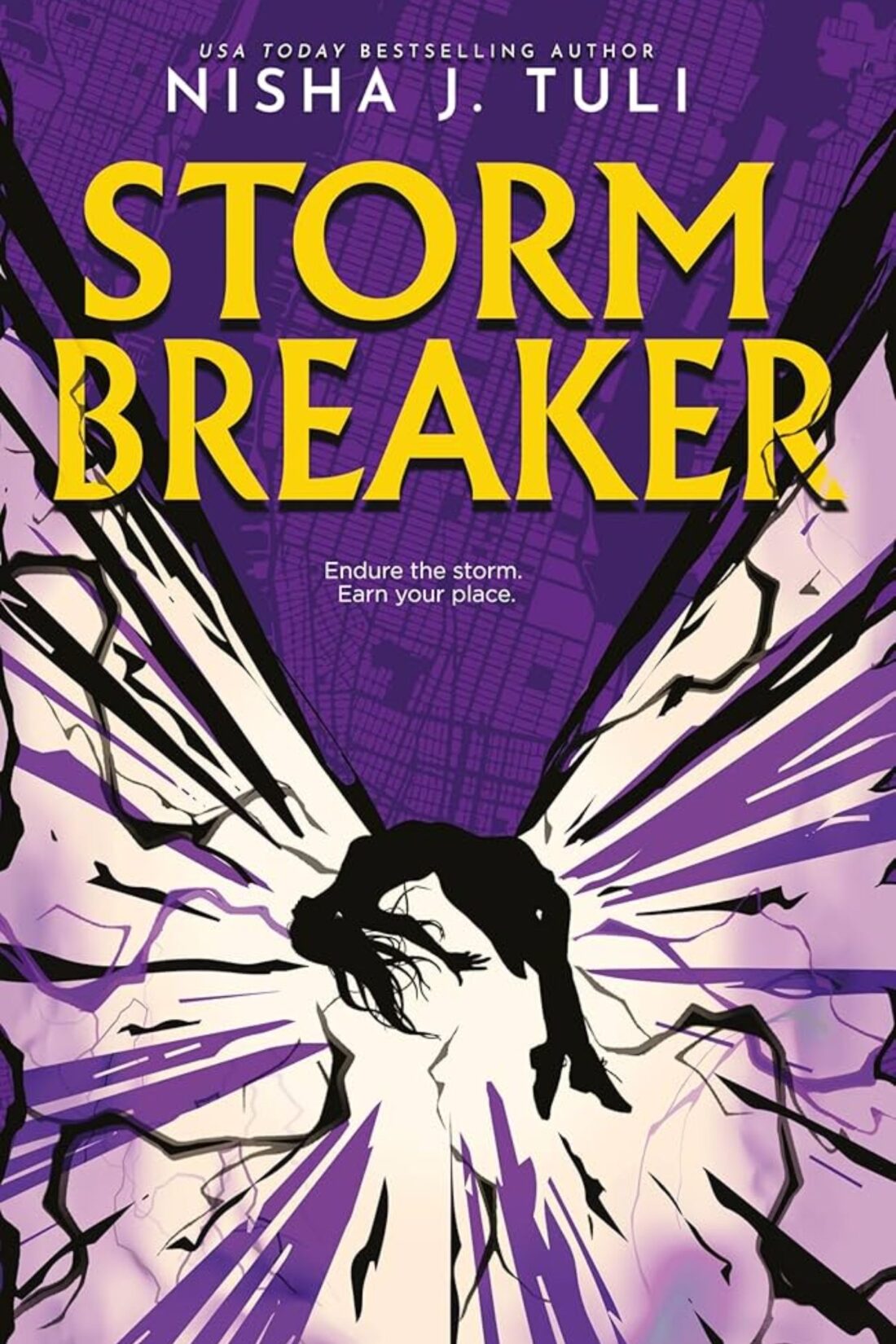
Storm Breaker: Review
Summary
Storm Breaker by Nisha J. Tuli blends dystopian tension with romantasy elements to create a fast-paced and emotionally engaging story. Set in a fractured future ruled by powerful Houses and deadly storms, the novel follows Poet Graves as she uncovers dangerous truths about herself and the world around her. With strong world-building, addictive academy politics, and a slow-burn romance, the book delivers classic YA dystopian energy while still feeling fresh and atmospheric.