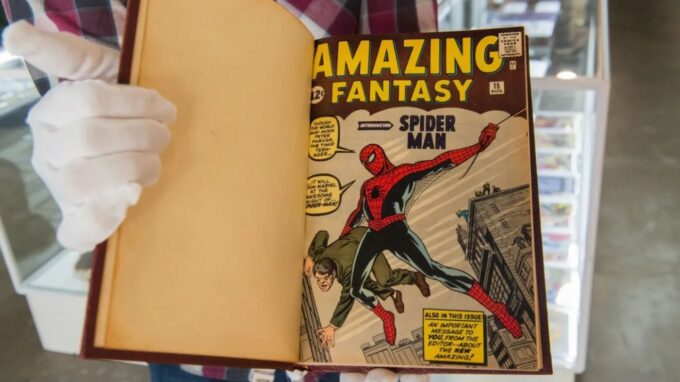
Many readers dismiss horror before they have truly encountered it. In their view, the genre relies on the simplest of tricks: startling the audience, provoking discomfort, and mistaking shock for depth. Horror, they argue, is built on manipulation rather than insight—a collection of shadows, screams, and cheap thrills masquerading as literature.
The criticism is not entirely unfounded. Plenty of horror novels and stories settle for surface-level scares, treating fear as an end in itself. Yet judging the entire genre by its weakest examples is much like dismissing mystery because of formulaic detective stories or rejecting romance because of predictable endings. At its best, horror is not about what leaps from the darkness. It is about what the darkness reveals.
But then there is another category entirely. Books that every serious literary critic agrees are important — important the way Crime and Punishment is important, or Beloved, or Moby-Dick — and yet, if you read them alone at two in the morning, something will shift behind your sternum that you will not be able to name for days. These are the books that scare you without asking permission. Without blood, without monsters, without the machinery of genre.
The question “what is the scariest book still considered literature?” sounds simple. It is not. It requires you to define two moving targets at once. What counts as scared? What counts as literature? Let’s agree on terms: we mean the kind of fear that lingers in daylight, not the kind that fades when you close the book. And we mean books that sit on syllabi, win major prizes, and are discussed in essays rather than dismissed as pulp. With that in mind, here are the strongest contenders — and the one that wins.
The Contenders
Blood Meridian
Cormac McCarthy · 1985
Nihilistic Violence | Philosophical Dread
If you want a book that is almost universally acknowledged as one of the greatest American novels ever written, and that also makes many readers physically put it down and stare at the wall, Blood Meridian is the answer. Cormac McCarthy’s story of scalp hunters on the Texas-Mexico border in the 1840s is not horror in any generic sense — it is a philosophical argument made in blood, and the argument is that violence is not a deviation from human civilization but its true and eternal engine.
The Judge — one of literature’s most terrifying figures — is not a monster in the way Dracula is a monster. He is something worse: he is coherent. His speeches on war and dominion are not ravings; they are delivered with the calm precision of a man who has understood the universe and found it to be exactly what he wanted. He dances. He plays the fiddle. He never sleeps. He will never die. And when he delivers that final pronouncement, the sentence stays in your mind not because it is shocking but because you cannot find the counterargument.
Harold Bloom called this the greatest novel written in English in the latter half of the twentieth century. The scariness of Blood Meridian is purely philosophical — it is the fear that the universe has no moral gravity, and that the most articulate people in it have figured this out.
Beloved
Toni Morrison · 1987
Grief & Haunting Trauma Horror
Toni Morrison’s Pulitzer Prize-winning novel is technically a ghost story. A freed enslaved woman named Sethe is haunted — literally — by the ghost of her dead infant daughter. But reducing Beloved to its supernatural premise would be like describing the ocean as water. The horror in this book is not the ghost. The horror is what made Sethe do what she did, and the horror is that you understand it.
Morrison said she wanted to write about the “interior life” of slavery — what it did not just to bodies but to minds, to the way people loved and were afraid to love. The result is a book where the scariest passages are not the ones involving the supernatural but the ones involving memory: the “Sixty Million and more” to whom the novel is dedicated, the way trauma lives in the body, the way a woman can love a child so much that death feels like the only safety she can offer it.
Beloved is a horror novel in the deepest sense. The monster is American history. And it is not finished yet.
“She is a friend of my mind. She gather me, man. The pieces I am, she gather them and give them back to me in all the right order. It’s good, you know, when you got a woman who is a friend of your mind.”
— Toni Morrison, Beloved
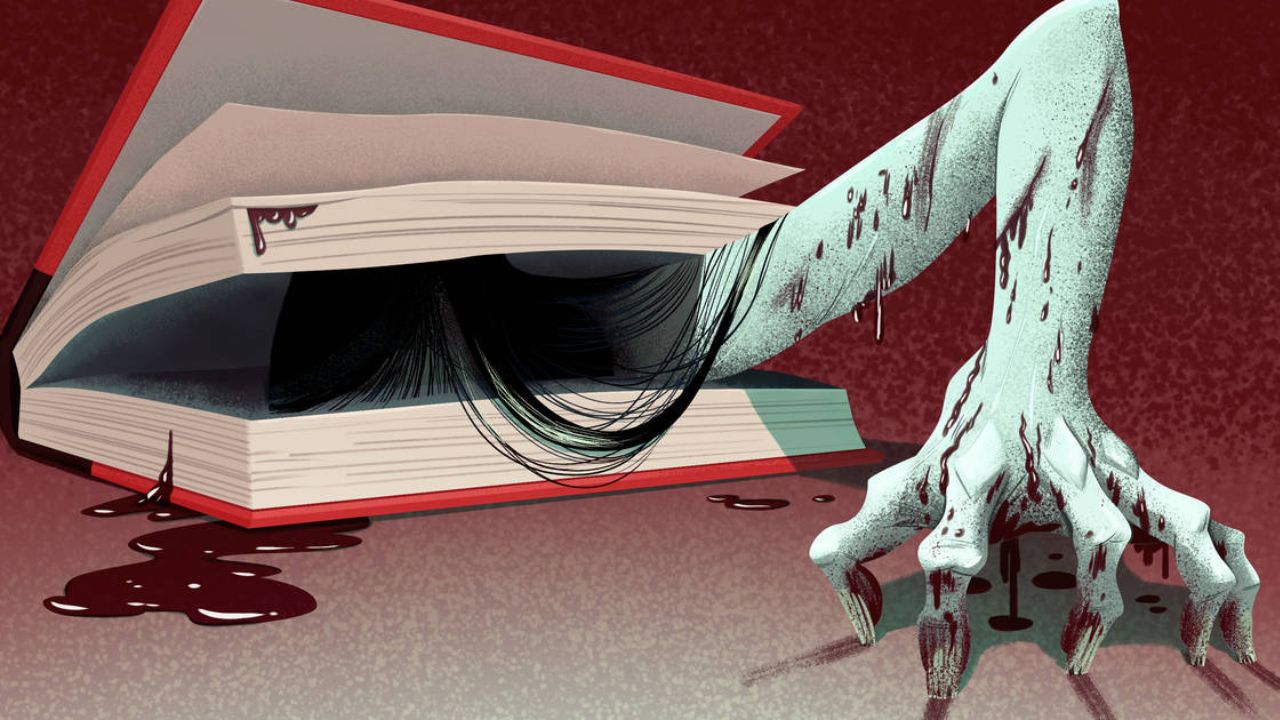
The Haunting of Hill House
Shirley Jackson · 1959
Psychological Horror | Identity Dissolution
No living organism can continue for long to exist sanely under conditions of absolute reality — so opens this novel, in one of the most discussed first paragraphs in American literature. Shirley Jackson’s masterpiece is routinely placed on literary shortlists alongside experimental and modernist fiction, and it belongs there. It is also one of the most psychologically frightening things ever committed to print.
The genius of The Haunting of Hill House is its central ambiguity: you never know whether the house is haunted or whether Eleanor Vance — our protagonist, a repressed, lonely woman escaping a suffocating domestic life — is simply losing her mind in a place that mirrors her interior landscape. Jackson gives you just enough evidence for both readings to terrify you. If the house is real, you fear the house. If Eleanor is imagining it, you fear something far more intimate: the way an unhappy person can mistake the darkness inside them for the darkness outside.
Jackson suffered from agoraphobia, social anxiety, and what today we would recognize as severe depression. She knew what it felt like for your own mind to be an unsafe place. Hill House is that mind, made into architecture.
Never Let Me Go
Kazuo Ishiguro · 2005
Quiet Existential | Dread Body Horror
This is the slow-burn entry — the book that many readers finish and feel fine about, and then, somewhere between closing the cover and making a cup of tea, feel a profound grief they cannot place. Ishiguro’s Booker Prize-shortlisted novel is about children raised at an English boarding school who gradually, softly, discover what they are and what they are for.
The horror of Never Let Me Go is entirely in its tone. Kathy, the narrator, tells the story in the calm, slightly distracted voice of someone sorting through old photographs — this happened, then that happened, and here is the small joy in between. The reader understands the catastrophe long before Kathy articulates it. And the worst part is that Kathy doesn’t rage. She doesn’t rebel. She accepts. And the question Ishiguro leaves hanging — the truly terrifying question — is whether the characters’ passivity is something done to them, or whether it is simply the human condition dressed in different clothes.
We are all, in some sense, never let go. We are all burning through our allocation of time without quite understanding what it is we were given it for.
House of Leaves
Mark Z. Danielewski · 2000
Structural Horror | Spatial Dread
Categorizing House of Leaves is part of the problem — and part of the terror. Is it a novel? A footnote collection? A found-document horror piece? An experimental meditation on the relationship between narrative and space? Yes to all of it. Danielewski’s debut arrived with a cult following that still insists it is one of the most unsettling reading experiences in contemporary literature, and they are not wrong.
The premise — a house whose interior is larger than its exterior, and a family slowly destroyed by what lives in the darkness at the center of an ever-growing labyrinth — is structured so that the book itself behaves like the house. Text runs in different directions. Footnotes spiral into footnotes. Pages go nearly blank. The physical experience of reading it mimics the experience of being in it, and the boundary between the reader’s world and the book’s world becomes genuinely, uncomfortably porous.
Academic and literary critics have taken it seriously as a work of postmodern fiction engaging with the nature of narrative, memory, and architectural space. Horror readers have taken it seriously as the most genuinely frightening novel published in the last thirty years. Both are right.
“What you fear most of all is — fear itself.”
— Shirley Jackson, The Haunting of Hill House
What Makes a Book Scary in a Literary Way?
Before the verdict, it’s worth asking what separates literary fear from generic fear. Genre horror — and there is nothing wrong with genre horror — typically operates through external threat. Something is coming for you. It has teeth, or it walks through walls, or it has been watching from the closet. The mechanism is the body’s alarm system: heart rate, adrenaline, the fight-or-flight response encoded in your nervous system over millions of years. This kind of fear is honest and pleasurable and will not leave you changed in the morning.
Literary fear operates differently. It reaches past the body and into the part of the mind that constructs meaning. It frightens you about things you cannot escape by closing the book — mortality, complicity, the limits of your own sanity, the fragility of love, the indifference of history. You cannot run from these things. They are in the room with you already. Literary horror simply makes you look at them.
All five books above accomplish this. But there is one that does it most completely, most precisely, and in the most inescapable way. And its power lies in the thing it refuses to resolve.
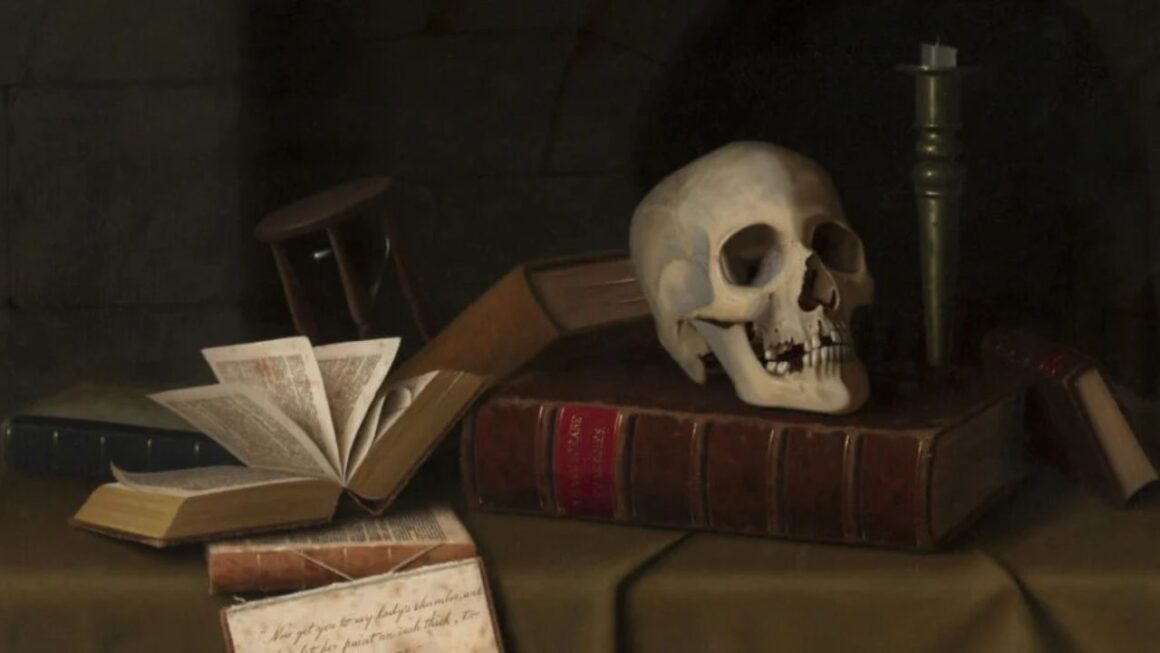
The Answer: Blood Meridian — and Why It Wins
Of all the books on this list, Blood Meridian is the one that most readers will carry longest. Not because of its violence — the violence is almost abstract by the midpoint, the mind mercifully begins to process it as landscape — but because of the Judge. Because of what the Judge means.
Every other book here offers you something to hold onto. Beloved gives you love and memory as counter-forces to horror. Never Let Me Go gives you the quiet dignity of people who accept their fate with grace. The Haunting of Hill House gives you the possibility that the evil is in the house, not in you. House of Leaves is, at its heart, a love story with a labyrinth in the middle.
Blood Meridian gives you nothing. It offers no redemption, no earned grief, no catharsis. The Judge dances at the end, in full possession of the narrative and the universe it describes, and his argument — that war is god, that history is violence all the way down, that the only truth is domination — is never genuinely refuted. McCarthy gives you beauty of prose, yes. Extraordinary beauty. But beauty in the service of a vision that does not blink.
That is the thing that keeps this book on the nightstand at 3 AM. Not what happened in it, but the philosophical position it holds without apology. The fear that the Judge is right. The fear that you cannot prove he isn’t.
A close second — and, perhaps, the more purely literary of the two — is Beloved: a book that performs its horror not through darkness but through love, which is ultimately more frightening because it is closer. You can choose not to go to the frontier. You cannot choose not to love people.