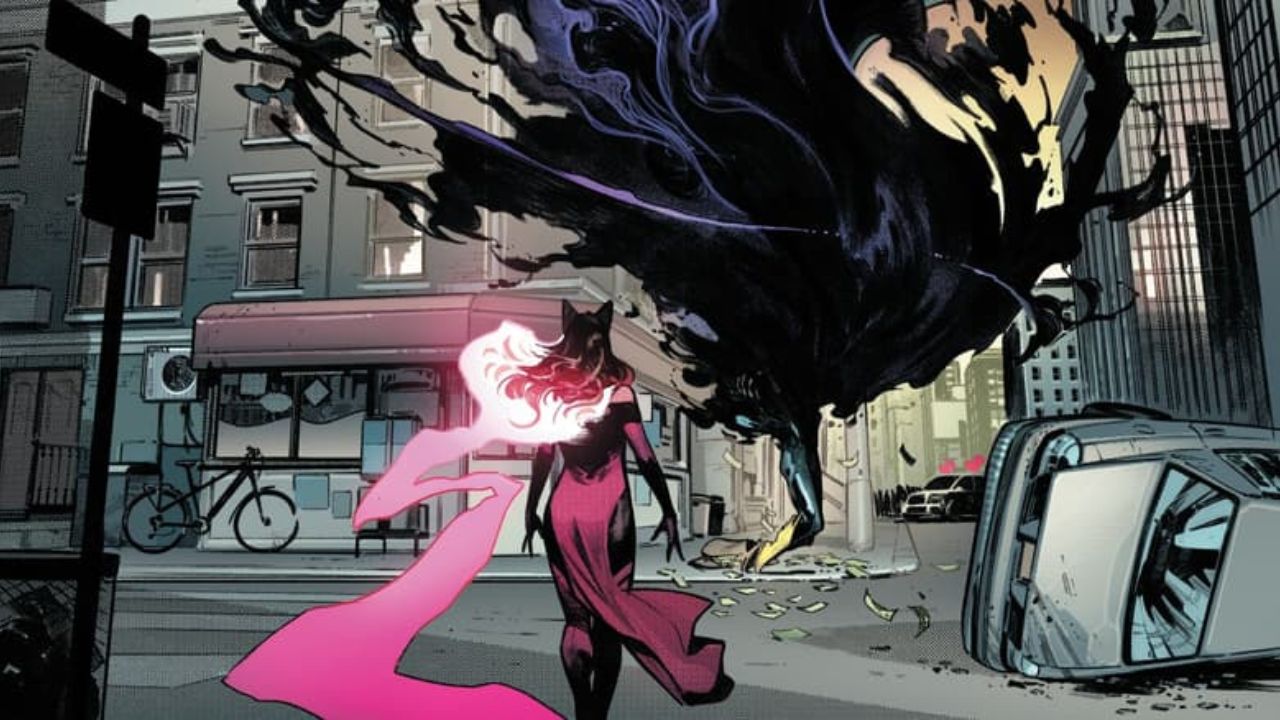
There’s something uniquely unsettling about the Darkforce Dimension. Unlike Marvel’s other cosmic playgrounds — the Quantum Realm, the Dark Dimension, the Negative Zone — the Darkforce doesn’t announce itself with alien civilizations or warring gods. It doesn’t feel like a place. It feels like an absence. A void that breathes. And the more you dig into its history in the comics, the more you realize just how deeply it’s threaded through the Marvel Universe, silently shaping some of its most tragic and fascinating characters. So let’s pull back the curtain on it. All of it.
The Basics: What Exactly Is the Darkforce Dimension?
At its core, the Darkforce Dimension is an extradimensional plane of existence composed almost entirely of a strange, malleable dark energy — referred to simply as “Darkforce.” This energy can be shaped, projected, and channeled by those with a connection to it, manifesting as tendrils of living shadow, portals, force fields, and in the most dramatic cases, a literal pocket universe of absolute darkness that a user can pull others into.
What makes it different from ordinary darkness is that Darkforce is active. It has weight. It has presence. And according to various storylines, it has a hunger of its own — an almost predatory pull on the minds and souls of those who spend too long within it.
The dimension first appeared in Marvel Comics in the early 1970s, though it wasn’t fully named or codified until later. Its significance grew alongside the characters it empowered, eventually becoming a recognized cosmic concept with its own rules, its own dangers, and a surprisingly long list of people who’ve dipped their fingers into it.
The Origin Story: Where Did the Darkforce Come From?
This is where things get genuinely interesting — and a little bit murky, in the way all good cosmic mythology tends to be.
The Darkforce Dimension is believed to be one of the primordial planes of the Marvel Multiverse, predating most of the civilizations and structures that readers would recognize. It exists in parallel to the regular Marvel Universe, accessible through rare dimensional breaches or through the power of specific individuals who serve, knowingly or not, as living conduits between the two realms.
One significant piece of lore connects the Darkforce to the being known as Oblivion — a personification of non-existence and entropy in the Marvel cosmology. The Darkforce Dimension is sometimes described as a fragment or expression of Oblivion’s domain, which would make it less of a “place” and more of a philosophical condition given physical form. That’s a heady concept, and Marvel writers have leaned into it with varying degrees of commitment over the decades.
There’s also a recurring suggestion that the Darkforce is intrinsically connected to death — not in the personified Thanos-worshipping sense, but in the sense of erasure, of the space before light, of the void that predates creation. Characters who draw on it too deeply often find themselves changed in ways that are hard to reverse.
The Inhabitants: Who (or What) Lives There?
The Darkforce Dimension is not entirely empty. That’s the disturbing part.
The Predators Within
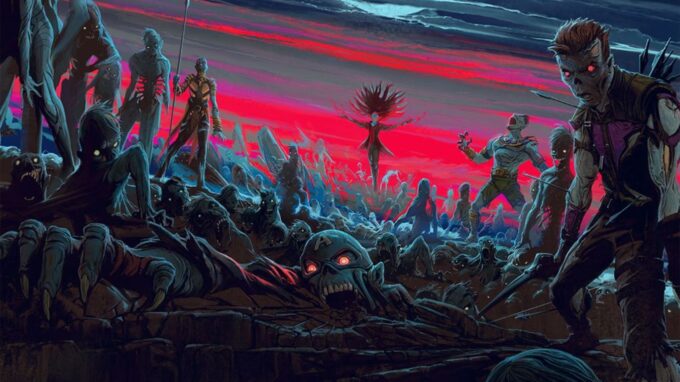
Several storylines have established that the dimension is home to entities — vaguely defined but consistently menacing — that feed on the life force or psychic energy of those who enter. These beings are sometimes described as “Darkforce entities” or shadow predators, and they have a particular interest in people who carry Darkforce energy within them.
This explains a crucial part of Cloak’s character, which we’ll get to shortly. When he opens his cloak and draws people into the Darkforce Dimension, it’s not a neutral experience. Those entities feed on whoever enters. The dimension itself is dangerous in the way that a hungry wilderness is dangerous — it doesn’t hate you, but it will absolutely consume you if given the chance.
Mephisto’s Interest
Mephisto, Marvel’s demonic lord and one of the most persistent forces of evil in the comics, has demonstrated an interest in the Darkforce Dimension on multiple occasions. While it isn’t his domain per se, the dimension’s connection to darkness, entropy, and psychic suffering makes it adjacent to the territory he operates in. Some storylines imply that demonic forces can access or exploit the Darkforce for their own ends, adding another layer of danger to the dimension.
Echoes of the Past
There’s also compelling lore suggesting that the Darkforce Dimension, at certain points in Marvel history, served as a kind of cosmic dumping ground — a place where things that couldn’t be destroyed were hidden. Old weapons, corrupted artifacts, fragments of evil too dangerous to exist in the regular universe. This idea hasn’t been fully explored, but it gives the dimension an archaeological quality, like a haunted attic at the bottom of reality.

The Conduits: Characters Powered by the Darkforce
This is where the Darkforce really earns its place in Marvel lore — through the extraordinary, often heartbreaking characters who carry it.
Cloak (Tyrone Johnson)
If any character is synonymous with the Darkforce Dimension, it’s Cloak. Tyrone Johnson was a young man from South Boston, a teenager on the run in New York City when he and his friend Tandy Bowen were abducted and used as test subjects for a new synthetic drug. The experiment was supposed to kill them. Instead, it did something far stranger.
Tyrone emerged with a body that had become a living portal to the Darkforce Dimension. His form is perpetually cold, perpetually hungry — because the dimension that inhabits him is. His cloak isn’t clothing; it’s the membrane between two worlds, and when he opens it, he reveals a piece of that starless void. People drawn inside experience their worst fears, their deepest guilts, the full psychological weight of their own darkness. And the entities within feed.
What makes Cloak one of Marvel’s most compelling characters is the tragedy at the center of his power. He didn’t choose this. He can’t turn it off. He is permanently tethered to something ancient and hungry, and the only thing that keeps him from being consumed entirely is Dagger — his partner, whose Lightforce energy is the only thing that can nourish him and quiet the void’s appetite. Their relationship is one of Marvel’s great tragic love stories precisely because it is one of mutual survival, not just affection.
Dagger (Tandy Bowen)
Dagger is Cloak’s complement and, in many ways, his salvation. Where he was claimed by the Darkforce, Tandy was infused with Lightforce — a diametrically opposite extradimensional energy that manifests as daggers of psychic light capable of purging toxins, healing, or burning through evil. The two energies are cosmically linked, which is why Cloak and Dagger are cosmically linked.
Their bond runs deeper than friendship or romance (though it’s been both at various points in their history). They are each other’s equilibrium. Without Dagger, Cloak risks being overtaken by the darkness. Without Cloak, Dagger’s light has no anchor to the shadow that gives it purpose. Marvel has played with variations on this dynamic across decades of stories, and it never gets old.
Darkstar (Laynia Petrovna)
One of Marvel’s earliest Russian mutant characters, Laynia Petrovna — codenamed Darkstar — was a member of the Soviet Super-Soldiers and later a reluctant ally of Western heroes. Her mutant ability gave her natural command over Darkforce energy, which she could shape into constructs, use for flight, and project as teleportation portals.
What set Darkstar apart was her intelligence and control. Where Cloak is a conduit — a man containing the Darkforce — Darkstar was a wielder. She could use it as a tool without being consumed by it, at least for a long time. Her story took dark turns, including her death and various resurrections, but she remains one of the most significant Darkforce-powered characters in Marvel history and a pivotal figure in the X-Men’s international roster.
The Shroud
The Shroud is one of Marvel’s more obscure but fascinating Darkforce users. Maximillian Coleridge was a wealthy young man who trained in martial arts in the East, seeking to avenge his parents’ murder. During a ritual involving Kali, the goddess of death, his eyes were destroyed — but in their place, he received the ability to summon total, absolute darkness. Darkforce darkness.
The Shroud operates mostly in street-level crime circles, often overlapping with Daredevil and Spider-Man’s neighborhoods. His power creates genuine, impenetrable blackness that renders conventional vision entirely useless — and in the right circumstances, he can tap into the Darkforce Dimension directly to sense what happens within his shadows. He’s a Batman-archetype filtered through Marvel’s cosmic weirdness, and he deserves far more attention than he typically gets.
Silhouette
Silhouette Chord — former ally of the New Warriors — is another Darkforce conduit, capable of merging with shadows and teleporting through them. Her background is tangled up with Night Thrasher and the criminal underworld, and she’s never quite been used to her full potential, but she represents another angle on what Darkforce empowerment can look like: stealth, speed, and the ability to slip between the visible and the invisible.
Black Light
Monica Rambeau (Captain Marvel, Photon, Spectrum) has a complicated relationship with the Darkforce — not as a user, but as someone whose power over the electromagnetic spectrum puts her in natural opposition to it. But there are other characters who’ve borrowed the Black Light identity, and several villains have wielded Darkforce energy in ways that put them in direct conflict with Marvel’s heroes.
The Rules: How Does the Darkforce Dimension Actually Work?
Over the decades, Marvel writers have established — sometimes inconsistently — a set of principles for how the Darkforce operates.
It Is Cold. This is almost universal. Every character who interacts with the Darkforce comments on its temperature, or rather its lack of one. It doesn’t just look cold; it is cold, in a way that goes beyond physical temperature into something more existential. Entering the dimension, even briefly, leaves people chilled at a soul level.
It Can Be Shaped by Willpower. Darkforce users with strong enough minds can sculpt the energy into constructs — platforms, cages, barriers, tendrils. The stronger the will, the more elaborate and stable the construct. This is why disciplined wielders like Darkstar could use it so effectively, while a compromised or frightened conduit like early-period Cloak had far less control.
It Feeds. The dimension is not passive. It consumes psychic and life energy from those trapped within it. This is not a side effect — it appears to be a fundamental property of the space. Whether this means the dimension is “alive” in any meaningful sense is a question the comics have never definitively answered, but the implication is always there.
Extended Exposure Corrupts. Characters who spend too long immersed in the Darkforce — either by being trapped in the dimension or by relying too heavily on its energy — begin to change. They become colder, more withdrawn, more prone to despair and cruelty. This is one of the most consistent throughlines in Darkforce storytelling: the power is a deal with something you can never fully control, and it always extracts a price.
It Can Be Weaponized. Villains and antiheroes alike have used the Darkforce dimension as a weapon — trapping enemies within it, using its entities as instruments of psychological torture, creating zones of impenetrable darkness in the middle of battle. During Civil War and Secret Invasion storylines, the dimension played significant tactical roles.
The Darkforce and the Superhero Community
The Darkforce Dimension intersects with the broader Marvel Universe in ways that go beyond individual characters.
The Dark Dimension vs. The Darkforce Dimension
These are not the same thing, and the confusion is understandable given the naming. The Dark Dimension is Dormammu’s domain — a sprawling, inhabited realm with its own geography, politics, and conquered worlds, central to Doctor Strange’s mythology. The Darkforce Dimension is something else entirely: older, emptier, more elemental. Strange has encountered Darkforce energy but his primary cosmic conflict is with Dormammu, not with whatever lurks in the Darkforce.
The distinction matters because the two dimensions represent different kinds of darkness. Dormammu’s Dark Dimension is dark like a conqueror’s throne room — there is structure, hierarchy, malevolent intelligence with ambition. The Darkforce Dimension is dark like the deep ocean — vast, indifferent, and consuming.
Secret Invasion and the Darkforce
During the Secret Invasion and its aftermath, the Darkforce became a significant tactical and narrative element. Norman Osborn’s Dark Avengers included several characters with Darkforce connections, and the general atmosphere of paranoia and corruption in that era of Marvel storytelling mapped neatly onto the Darkforce’s thematic territory.
The Initiative and Ongoing Complications
Various storylines throughout the 2000s and 2010s explored the complications that arise when governments and organizations try to study, control, or weaponize Darkforce energy. These don’t always end well — which is something of an understatement. The dimension has a way of resisting instrumentalization, as if it has its own agenda that supersedes whatever humanity is trying to impose on it.
The Darkforce in Other Media
The Darkforce Dimension made its most prominent non-comics appearance in the Marvel’s Cloak & Dagger television series on Freeform (2018–2019), where it was reimagined as a trauma-linked psychic landscape rather than a literal physical dimension. The show used it as a way to explore PTSD, addiction, and systemic injustice through a supernatural lens — which is a legitimate interpretation, given how much the comics use Darkforce as a metaphor for depression, isolation, and the psychological weight of darkness.
The MCU has gestured toward Darkforce energy without fully committing to the concept — various visual effects involving characters like Monica Rambeau and the manipulations of the Convergence in the Marvel shows carry Darkforce-adjacent aesthetics, but the dimension itself hasn’t been centered in a major way.

Why the Darkforce Dimension Matters
Here’s what I think makes the Darkforce genuinely special as a piece of Marvel mythology, beyond the cool visual aesthetic of living shadow:
It’s one of the few cosmic elements in Marvel that operates primarily through character, not through spectacle. The Quantum Realm is about physics. The Dark Dimension is about sorcery and conquest. The Negative Zone is about adventure. But the Darkforce Dimension is about what happens when vulnerable people are given terrible, hungry power and have to figure out how to live with it.
Cloak can’t put down his power. He can’t walk away. Every single day he carries something that wants to consume, and the love story between him and Dagger is essentially a story about two people who found a way to survive what was done to them. Darkstar carries a nation’s worth of expectation and Cold War politics in the form of shadow energy. The Shroud chose his own blinding to gain access to a darkness he can never fully leave behind.
These aren’t heroes who found a ring or got bit by something radioactive and came out unambiguously empowered. These are people for whom power and cost arrived at the same moment, in the same package — and the Darkforce Dimension is the thing they share. The void they carry around like a second skin.
That’s not just good superhero mythology. That’s genuinely good storytelling.
Final Thoughts
The Darkforce Dimension won’t ever be the centerpiece of an Avengers event the way the Infinity Stones or the Celestials are. It’s too interior for that, too closely tied to individual psychology and small-scale tragedy. But in a universe as vast as Marvel’s, that’s actually what makes it so valuable.
It’s a reminder that not all power is clean. Not all gifts are chosen. And some dimensions don’t want to be understood — they just want to be fed.
Next time you see Cloak open his cloak, take a moment before the action continues. Look at what’s inside that darkness.
Something in there is already looking back.