There’s a moment every longtime Marvel reader knows well. You walk into a comic shop, or you scroll through an online pull list, and you realize something has shifted. The names are familiar, sure — Spider-Man, Thor, Captain America — but the faces underneath the masks are not. A Black teenager swings through Brooklyn. A woman with cancer lifts a hammer that gods have dropped. A Muslim girl from New Jersey stretches her arms to catch the bad guys. The logos say Marvel. The costumes say Marvel. But something is genuinely, unmistakably different.
That was the experience of picking up a comic during what Marvel called its “All-New, All-Different” era — and depending on who you ask, it was either one of the most exciting periods in Marvel’s six-decade publishing history, or the moment the wheels started coming off. Both camps, honestly, have a point.
So what exactly was this era? Where did it come from? What worked? What didn’t? And in the cold light of hindsight, what does it mean for Marvel Comics as a whole?
Let’s get into it.
Where It All Started: The Wreckage of Secret Wars
To understand All-New, All-Different Marvel — often abbreviated as ANADM by fans — you need to understand the cataclysm it rose from.
In 2015, Jonathan Hickman concluded an enormous multi-year arc he’d been building across Avengers, New Avengers, and the crossover event Secret Wars. The short version: the Marvel Multiverse collapsed. Universes collided and destroyed each other in events called “incursions.” The main Marvel Universe (Earth-616) and the Ultimate Universe (Earth-1610) crashed into each other, and the result was a single patchwork realm called Battleworld, ruled by an omnipotent Doctor Doom.
When Reed Richards eventually restored the universe at the end of Secret Wars, it wasn’t a one-to-one restoration. The world that came back was subtly, meaningfully different. Miles Morales — who had been the Spider-Man of the now-destroyed Ultimate Universe — was transplanted into the main 616 universe. Characters from both realities now coexisted. The slate wasn’t wiped clean, exactly, but it was… reorganized.
Marvel seized on this narrative opportunity. In February 2015, the publisher announced that following Secret Wars, an entirely new publishing initiative would emerge. By October 2015, somewhere between 60 and 65 titles launched with first issues, all branded under a single bold promise: All-New, All-Different Marvel.
The slogan wasn’t just marketing fluff. It was, in hindsight, a mission statement — and one Marvel seemed genuinely committed to making good on.
The Big Idea: Legacy Heroes and the Diversity Push
The most defining feature of ANADM wasn’t a story. It was a philosophy.
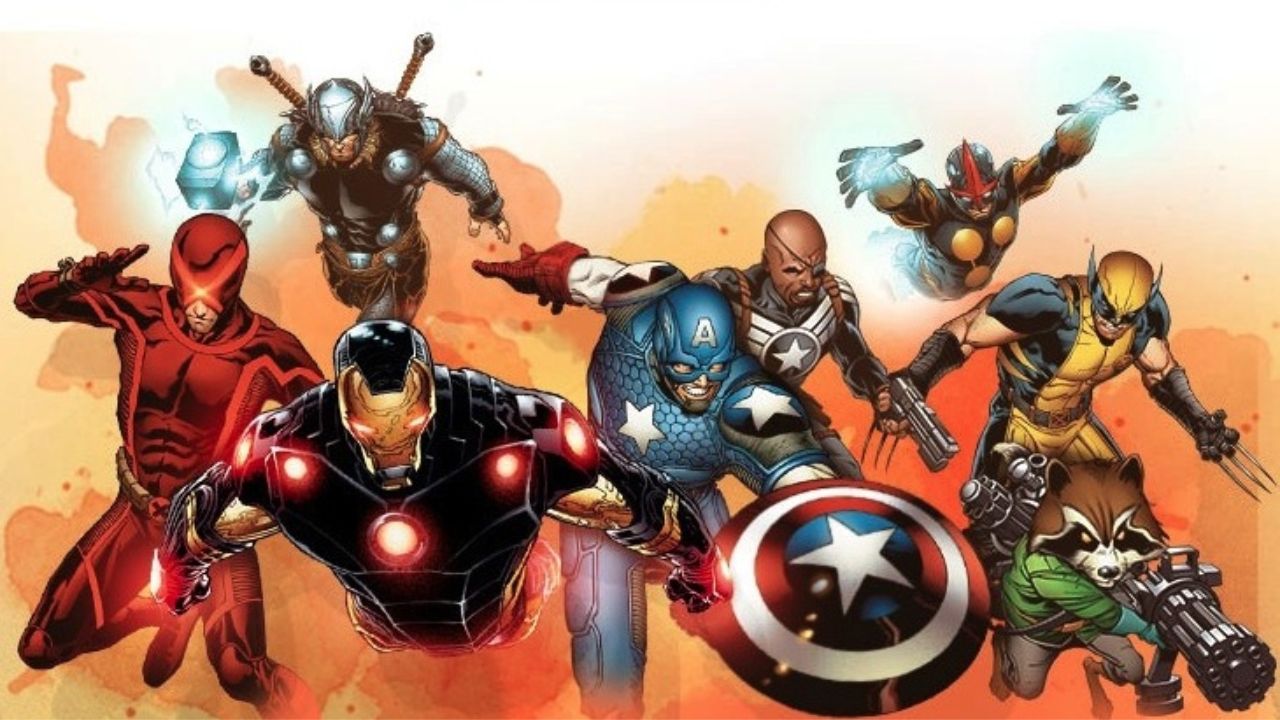
Marvel’s editorial leadership, under the guidance of editor-in-chief Axel Alonso, made a deliberate effort to diversify not just the roster of heroes, but the voices creating those stories. The result was a wave of “legacy heroes” — new characters taking on the mantles of beloved icons — that reshaped what the Marvel Universe looked like on the surface.

The lineup reads like a roll call of faces that would have been almost unthinkable in the Silver Age:
Jane Foster as Thor. One of the most critically beloved storylines of the era, Jason Aaron’s Mighty Thor had the cancer-stricken Jane Foster worthy of Mjolnir, lifting it even as doing so burned away her chemotherapy and brought her closer to death. It was superhero comics doing what superhero comics almost never do — wrestling with mortality in a way that felt genuinely earned rather than gimmicky.
Sam Wilson as Captain America. Steve Rogers was aged and powerless. His longtime partner, Sam Wilson — the Falcon — stepped up to carry the shield. Nick Spencer’s run on Captain America: Sam Wilson leaned into the political dimensions of what it actually means to be a Black man wrapped in the American flag, which made it, for some readers, one of the most resonant Captain America stories in years. For others, it made it divisive almost by design.
Miles Morales as Spider-Man in the main 616 universe for the first time. Miles had already built a devoted following in the Ultimate Universe, but his transplant into the primary Marvel Universe gave Brian Michael Bendis and Sara Pichelli the chance to fully integrate him into the wider hero community — Avengers ties, city-level stakes, and all.
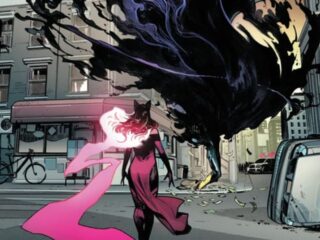
Kamala Khan as Ms. Marvel. Though Kamala had debuted a year earlier in 2014, she truly came into her own during the ANADM era, earning an Avengers team slot and becoming the de facto face of Marvel’s next generation. G. Willow Wilson’s writing made her feel like a complete human being rather than a symbol — a Pakistani-American teenager who loved superheroes as much as the readers did.
Amadeus Cho as the Hulk. The Korean-American genius who had orbited Marvel’s smart-guy tier for years stepped into the green for Totally Awesome Hulk, a title that played the concept for more energy and humor than most Hulk books ever had.
X-23 as Wolverine. Laura Kinney, the female clone of Logan, had always been one of Marvel’s strongest characters on paper but was perpetually in danger of being underused. All-New Wolverine by Tom Taylor gave her a proper ongoing and treated her not as a supporting act but as a headliner — and she delivered.
And those were just the mantle-carriers. New characters populated the margins, too — Moon Girl, Ironheart (Riri Williams, a Black teenage girl building her own Iron Man armor in a dorm room), and the Champions, a team of young heroes who explicitly rejected the world’s older generation of heroes because of how they’d handled Civil War II.
The Best of the Era: When ANADM Really Sang
Here’s the thing about All-New, All-Different Marvel that gets lost in the discourse: at its best, it produced genuinely excellent comics. Not just “commendable for trying” excellent — actually great, read-them-twice, recommend-them-to-anyone excellent.
The Mighty Thor is probably the crown jewel. Jason Aaron had been building toward Jane Foster’s Thor since the original Thor’s unworthiness arc, and the payoff was staggering. Watching Jane die a little more with every issue — the hammer undoing her chemo, her mortal body failing even as her divine one triumphed — was superhero storytelling at a literary level. Russell Dauterman’s art made Asgard look simultaneously ancient and contemporary. This was not a book where a woman picked up Thor’s hammer as a stunt. It was a story about courage and sacrifice that happened to be wrapped in Norse mythology.
Ms. Marvel continued the exceptional quality of Kamala Khan’s original run. G. Willow Wilson’s writing remained the gold standard for what “relatable superhero” could mean — genuinely funny, emotionally honest, and never condescending to either Kamala’s faith or her fandom.
All-New Wolverine was a revelation. Tom Taylor took a character whose entire history had been defined by tragedy and violence, and gave her something unexpected: warmth, humor, and family. The introduction of Gabby (later Honey Badger) — a younger, unabashedly cheerful clone of Laura — was one of the most purely delightful character additions of the decade.
The Ultimates, by Al Ewing with art by Kenneth Rocafort, went in a completely different direction — massive, cosmic, philosophical. A team of Black Panther, Captain Marvel, Blue Marvel, Spectrum, and America Chavez tackling universe-scale problems was the kind of ambitious high-concept book that Marvel rarely committed to sustaining. Ewing’s writing here anticipated the sophistication he’d later bring to Immortal Hulk and Immortal Thor.
Spider-Man (Miles Morales) finally gave Miles room to breathe within the full Marvel Universe, and it worked. Watching him find his place alongside the Avengers — not as Peter Parker’s shadow, but as his own person — was deeply satisfying for the readers who had followed him since the Ultimate days.
Doctor Strange by Jason Aaron and Chris Bachalo was a pleasantly weird book — Ditko-adjacent in its weirdness, but with Aaron’s characteristic mythological brutalism. It played well to fans who thought Marvel magic had gone soft.
These titles weren’t footnotes. They were legitimately good, and several of them have aged better than almost anything else Marvel published in the 2010s.
The Problems: Where ANADM Stumbled
And yet.
All-New, All-Different Marvel also had serious problems — ones that, over time, overshadowed its genuine achievements in a lot of readers’ minds.
Volume overproduction was the original sin. Launching 60+ titles at once created an almost physically exhausting reading experience. Even readers who wanted to engage with the new universe found it financially and logistically daunting. A book that launched with energy and a good creative team could get lost in the noise almost immediately. Retailers struggled to gauge orders, and the market became cluttered. This wasn’t unique to ANADM — Marvel had been guilty of over-publishing for years — but the scale here was unprecedented.
Event fatigue hit hard. The ANADM era barely caught its breath before Civil War II began in 2016, and that crossover cast a long shadow over almost everything running underneath it. When your freshly launched titles are constantly being interrupted by event tie-ins before they’ve even had a chance to establish their own identities, it’s very hard to build the kind of readership loyalty that sustains a comic long-term. A new reader picking up Invincible Iron Man (featuring Riri Williams, who was pushed heavily as the new Iron Man) would often find the story derailed by Civil War tie-in issues before the solo narrative had a chance to earn their investment.
The “legacy hero” approach carried an inherent tension. When Marvel put new characters in classic costumes, it created a messaging problem that the stories themselves couldn’t always solve. Some readers felt that the company was using beloved legacy names as marketing vessels for characters who hadn’t yet earned those names. Others felt the characters were treated as temporary political statements rather than people Marvel was fully committed to. Both complaints had some merit. The frequency with which original characters were aged, depowered, or conveniently sidelined to make room for their replacements felt, at times, less like thoughtful storytelling and more like editorial chess.
The question of authenticity dogged the era. Was Marvel genuinely interested in these characters, or were they primarily vehicles for a diversity mandate that would be walked back the moment sales dipped? That concern wasn’t cynicism without evidence — the original heroes almost always came back, and some of the new characters were quietly shelved when they didn’t immediately generate MCU-level numbers.
The sales numbers told a complicated story. By late 2016, Marvel’s market share was falling. Retailers reported significant drops in Marvel sales heading into 2017, with some stores seeing dramatic declines in Marvel-branded titles compared to the previous year. Marvel’s Senior Vice President of Sales David Gabriel, in a widely reported and widely criticized statement, suggested that retailers were hearing customers say they didn’t want more diversity in their comics. The statement caused an immediate firestorm — not least because many critics pointed out that the sales problems were more plausibly attributable to overproduction, constant line-wide relaunches, and a mountain of event comics that readers were exhausted by. Blaming diversity for a sales problem that had at least a dozen other contributing factors was, to put it charitably, a dramatic oversimplification.
But the controversy illustrated something real: the ANADM era had become ideologically charged in a way that made honest critical assessment nearly impossible. Praise felt like political endorsement; criticism felt like reactionary hostility. Neither camp was engaging fully with the comics on their own terms.
The Sales Controversy and What It Actually Meant
It’s worth spending a moment on the sales question, because it gets distorted in every direction.
The ANADM era did not fail commercially in any simple or absolute sense. Many of its flagship titles — Ms. Marvel, The Mighty Thor, the Miles Morales Spider-Man — performed respectably or better. Ms. Marvel in particular had strong trade paperback sales and was crucial in bringing new demographics of readers into comics shops. These were not books that bombed.
What did happen is that Marvel’s overall market position eroded noticeably during 2016 and 2017, and that erosion coincided with the ANADM era. But it also coincided with an extremely crowded publishing line, a string of major crossover events that created constant disruption, and a broader market contraction affecting the entire comics industry. Retailers at the time consistently pointed to variant covers, constant #1 relaunch issues (which inflated initial orders but damaged long-term sales stability), and event saturation as the primary culprits — not the specific characters carrying the titles.
What the sales conversation exposed was a genuine market insight buried under bad editorial inference: readers are not infinitely elastic in their tolerance for disruption. When you relaunch an entire line simultaneously, flood the market, interrupt every ongoing with event tie-ins, and then relaunch again, you erode confidence. Readers stop trusting that their investment in a new character will be honored. And when the original heroes come back — as they always do — it confirms the suspicion that the new characters were never really going to be permanent anyway.
The Lasting Legacy: What Actually Survived
Here’s the question that cuts through all the noise: a decade later, which parts of All-New, All-Different Marvel are still standing?
More than the era’s critics tend to admit.
Miles Morales is now an A-list superhero. His integration into the main universe during ANADM laid the groundwork for everything that followed — the Champions team, the Spider-Verse films (which made him a household name), a critically acclaimed PlayStation video game that bore his name alone. Whatever reservations readers had in 2015, Miles Morales is now as established a Spider-Man as Peter Parker in popular consciousness. That is an extraordinary achievement, and it grew directly from the ANADM era’s commitment to him.
Kamala Khan has endured as one of Marvel’s genuinely successful new characters, eventually making the leap to the MCU in her own Disney+ series and appearing in The Marvels. She is, by most metrics, Marvel’s most successful new character of the 2010s.
Jane Foster as Thor left a permanent mark on the mythology. She returned as a Valkyrie. She’s embedded in Marvel’s mythology in a way that outlasted her tenure under the hammer. Jason Aaron’s Thor run as a whole — which included the ANADM-era Mighty Thor — is widely regarded as one of the definitive Thor stories in the character’s history.
All-New Wolverine launched Laura Kinney into genuine A-list status. She’s carried multiple ongoing series since and has never been permanently returned to the sidelines.
The Champions — that team of young heroes formed in direct response to the moral failings of the older generation — survived and returned, reflecting an appetite among younger readers for stories about heroes who are explicitly critical of the status quo.
Not everything survived. Some characters launched during ANADM faded quickly. Some of the mantle switches were indeed reversed. But the era seeded the Marvel Universe with characters who have proven genuinely durable — and that’s a better batting average than most publishing initiatives can claim.

So Is It Good?
The honest answer is: it depends which part you’re talking about.
All-New, All-Different Marvel, as a publishing strategy, was flawed in ways that compound over time. The sheer volume of the launch was irresponsible. The reliance on crossover events was corrosive to the individual titles. The mantle-swapping sometimes felt cynical. And the era’s relationship with its new characters was not always as committed as the marketing suggested.
But All-New, All-Different Marvel, as a creative moment, produced some of the strongest comics the publisher has released in the 21st century. The Mighty Thor is great. All-New Wolverine is great. Ms. Marvel is great. The Ultimates is great. These are not asterisked achievements. They’re simply good comics — the kind that hold up, that reward rereading, that would be recognized as excellent regardless of the political temperature surrounding them.
The mistake that got made on all sides was treating the era as a single, unified thing to be either defended or condemned. It was neither. It was a sprawling publishing initiative with dozens of individual creative teams making dozens of individual choices — and the outcomes varied as wildly as you’d expect.
What ANADM asked, underneath all the branding and controversy, was a genuinely important question: Who should be allowed to be a Marvel superhero? The answer it proposed — that the universe should look more like the world actually does — wasn’t wrong. The execution was uneven. The corporate commitment was sometimes shallow. But the question itself was the right one to ask.
The era ended gradually, absorbed first into Marvel NOW! 2.0 following Civil War II, then into Marvel Legacy in 2017, and finally Fresh Start in 2018. The wave broke and receded, as all publishing waves do. But it left something behind.
Miles Morales is still swinging through Brooklyn. Kamala Khan is still embigening. Jane Foster is still in Asgard. Laura Kinney is still one of the most interesting mutants in the X-Men’s orbit.
Maybe that’s the real verdict on All-New, All-Different Marvel. Not whether the initiative succeeded on its own terms — it didn’t, entirely — but whether it changed the landscape it left behind.
It did. And for that, it deserves more credit than it usually gets.