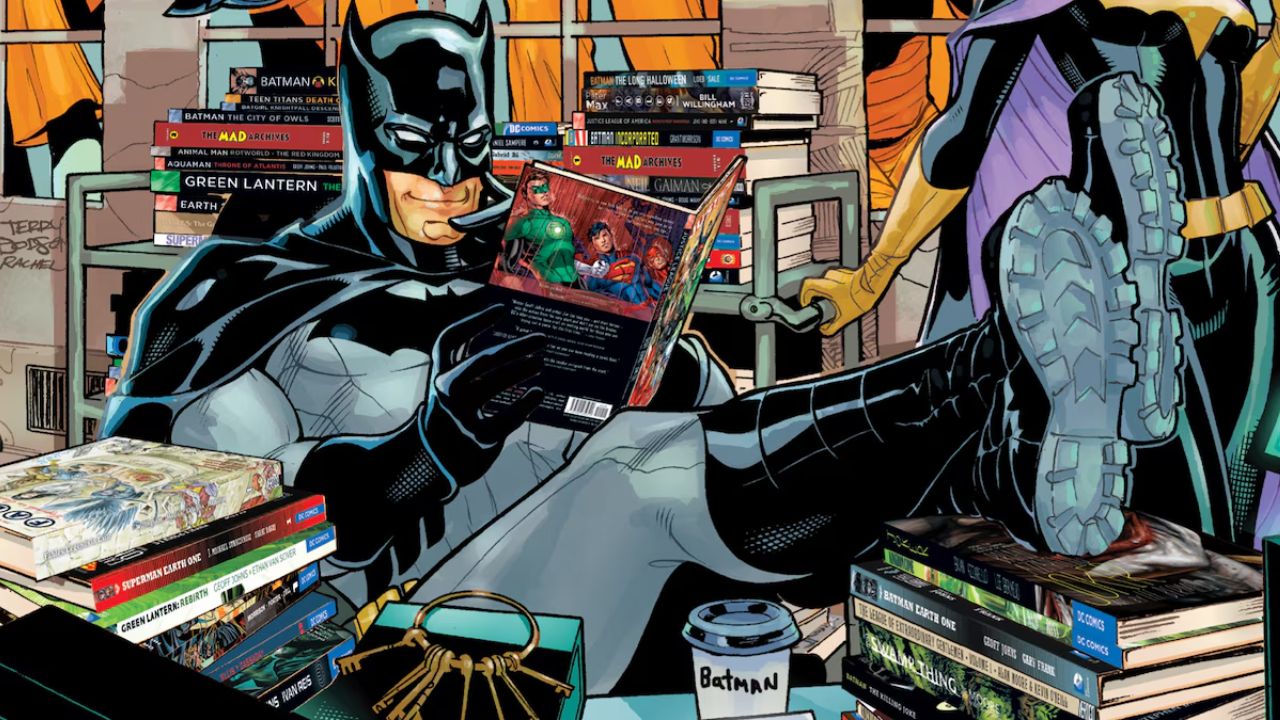
Walk into any local comic book shop on a Wednesday morning and you’ll find a ritual as dependable as sunrise: stacks of fresh-smelling, shrink-wrapped bundles being sliced open by a shop owner who’s been doing this for decades. New comics day. It happens every week, without fail, in thousands of stores across North America and beyond.
What most readers never stop to consider is the elaborate, decades-old industrial machinery humming invisibly behind that Wednesday stack. How does a comic book printed in a facility in Strasburg, Virginia, end up on a shelf in Portland, Oregon — or Tulsa, Oklahoma, or suburban Toronto — precisely on time, every single week? And why does the entire North American market flow through a single company’s warehouse?
The answer is the direct market, a distribution model unlike anything else in retail. It is the backbone of the American comics industry, a system that built the modern comic book shop, sustained superheroes through the lean years of the 1990s crash, and continues to shape — and constrain — what gets made, who can afford to make it, and what survives long enough to reach your hands.
Understanding how it actually works is essential for anyone who wants to understand the comics industry at all. Because nearly everything about the business — pricing, release schedules, market dominance, creator economics, and the stubborn fragility of the whole enterprise — flows from this one foundational infrastructure decision made fifty years ago.
Before the Direct Market: The Newsstand Era
To understand where the direct market came from, you have to understand what it replaced.
For most of the twentieth century, comic books were sold the same way magazines and paperback novels were sold: through a national network of independent news distributors (INDs), regional middlemen who moved periodicals from publishers to newsstands, drugstores, grocery stores, and bus stations. It was a vast, chaotic system. Publishers had almost no control over which titles reached which markets, or how many copies ended up where.
The economics were punishing. Retailers could return unsold copies for full credit, which meant that publishers absorbed all the risk of overprinting. A publisher might ship a hundred thousand copies of an issue and get sixty thousand back. The returned copies were typically destroyed — covers stripped and returned as proof, with the body of the book pulped. Extraordinary waste was simply baked into the model.
Worse, publishers had no reliable way to know which titles were actually selling. Data from the newsstand system was notoriously slow, incomplete, and unreliable. A publisher might not discover that a title was underperforming until months after the fact — too late to course-correct. The whole operation ran on educated guesses and massive inventory buffers.
By the early 1970s, a small but devoted subculture of comic book collectors was emerging — readers who wanted specific back issues, cared about condition, and would travel to find what they wanted. They congregated at comic conventions and wrote letters to small classified ads. They were, in the language of modern retail, a highly motivated, underserved niche. And a few enterprising individuals noticed.
Phil Seuling and the Birth of a New Model
The direct market was not born from a corporate strategy session. It was created by a high school English teacher from Brooklyn named Phil Seuling.
Seuling ran one of the most significant early comic book conventions in the country during the late 1960s and early 1970s, and through that work he cultivated deep relationships with both the collector community and with editorial staff at Marvel and DC. In 1973, he approached the publishers with an unusual proposal: he would buy comics in bulk, at a steeper discount than retailers typically received, and in exchange he would accept the books on a non-returnable basis.
This was the key insight. By taking on the returns risk himself, Seuling could offer publishers something they desperately wanted: guaranteed revenue. Publishers didn’t have to guess at print runs or absorb mountains of returned inventory. They printed what was ordered, got paid, and moved on.
The direct market was, at its core, a risk transfer mechanism. Publishers offloaded the uncertainty of demand onto a middleman who believed — correctly, as it turned out — that he understood the collector market better than anyone.”
Seuling’s operation, Sea Gate Distributors, was the first direct market distributor. He sold primarily to specialty comic book shops — a category that barely existed in 1973 and grew rapidly to meet the new supply channel he had helped create. Within a few years, dozens of regional distributors had copied his model, and the direct market had become a parallel universe of comics retail running alongside the traditional newsstand system.
Throughout the late 1970s and 1980s, the two systems coexisted. But the direct market grew faster, attracted the most devoted readers, and allowed publishers to experiment with content that wouldn’t work on the mass-market newsstand. Comics aimed at older readers, creator-owned work, and genre experiments — horror, science fiction, humor — found their audience through the direct channel in ways that wouldn’t have been possible before.
Key Term: Non-Returnable Sales
The defining feature of direct market economics. When a retailer orders comics through the direct market, those books are purchased outright — they cannot be returned to the distributor for credit. This is in sharp contrast to the newsstand model (and most book retail), where unsold inventory can be returned.
Non-returnability shifts all demand risk to the retailer. It also means retailers must forecast demand months in advance and bear the full cost of any miscalculation. Getting your order quantities right is one of the most consequential skills in comic shop management.

The Rise and Fall of the Multi-Distributor Era
Through the late 1980s and into the early 1990s, the direct market was served by a relatively competitive landscape of regional distributors. Names like Diamond Comic Distributors, Capital City Distribution, Heroes World, and several others competed for retailer accounts across different parts of the country. Retailers generally had relationships with one or two distributors — sometimes more — and could play them against each other on pricing and service.
This competitive structure began to collapse in the mid-1990s during one of the most turbulent periods in American comics history.

The consolidation to a single national distributor was partly accidental and partly a consequence of the economics of distribution at scale. The direct market is fundamentally a logistics business, and logistics businesses tend toward monopoly because the efficiency gains from volume are enormous. Running one giant warehouse and one giant trucking network costs far less per unit than running five competing mid-size operations.
But the consequences for the industry of having a single national distributor were profound, and not always positive.
How the System Actually Works Today
The mechanics of the direct market distribution cycle are, once you understand them, almost elegantly simple — even if the business dynamics are complex. Here is how a comic book moves from a publisher’s decision to a reader’s hands.
Step 1: Solicitations
Approximately three months before a comic is published, the publisher submits a solicitation to the distributor. Solicitations are collected into a monthly catalog — historically a physical publication called Previews in the case of Diamond — that is distributed to retailers. The catalog lists every comic, graphic novel, and related product being offered for that shipping month, along with cover prices, variant editions, and ordering incentives.
Retailers review the solicitations and place their initial orders. This is the moment when a shop owner decides how many copies of every single comic they want to receive in three months. They are making this decision based on: their existing customer base and pull list commitments, their historical sales data for similar titles, any available promotional information, and their gut instinct about the market.
They are doing this, it bears repeating, three months in advance, for every title, without being able to return unsold copies. The forecasting challenge is immense.
Step 2: FOC (Final Order Cutoff)
Roughly one month before the ship date, retailers reach what is called the Final Order Cutoff, or FOC. This is the last opportunity to adjust order quantities up or down before the publisher sends the book to press. It is one of the most important dates in the direct market calendar.
FOC has become increasingly critical as publishers have leaned into it as a marketing moment. Retailers who discover pre-release buzz about a particular issue — a surprise guest character, a key plot development revealed in advance solicitation text, strong early reviews — will use the FOC window to increase their orders. Publishers and retailers sometimes coordinate FOC campaigns to generate pre-release excitement.
Why FOC Matters for Independent Publishers
For larger publishers like Marvel and DC, the FOC bump can be the difference between a modest and a strong debut. For independent publishers, FOC orders are often determinative of whether a title survives at all.
Publishers set their print runs based on the orders they have in hand. If an independent book doesn’t hit a minimum threshold by FOC, the publisher may cancel the print run entirely — leaving retailers (and readers) without the book. This is why pre-ordering from specialty shops is not just appreciated by independent creators but is genuinely the difference between a book existing and not existing.
Step 3: Print and Ship
After FOC, the publisher finalizes the print run — typically adding a small overage above orders to cover damage, retail display copies, and any modest reorder demand — and sends the files to the printer. Comics are printed on high-speed offset presses, saddle-stitched (stapled), and palletized for shipment.
The books travel from the printer to the distributor’s central warehouse. In Diamond’s case, this was a massive facility in Sparks, Maryland, capable of receiving, sorting, and shipping millions of units per week. The warehouse operation receives shipments from hundreds of publishers simultaneously, sorts and consolidates them into retailer-specific orders, packages them for freight shipping, and dispatches them to arrive at shops on Tuesday night for Wednesday opening.
Step 4: Freight to Shops
The distributor ships consolidated weekly boxes to retailers. A shop might receive a single large box or dozens of individual parcels depending on the size of their weekly order. The shipment will contain not just comics but also trade paperbacks, graphic novels, statues, accessories, and other merchandise — everything ordered through the distributor’s catalog.
Retailers receive their shipment, check it against an invoice (damage and missing items can be claimed), sort and bag individual copies for pull list customers, price and rack the remaining inventory for walk-in sales, and open for business on Wednesday.
| Stage | Who Acts | Timing | Key Risk / Decision |
|---|---|---|---|
| Solicitation | Publisher submits to distributor | ~3 months out | Setting cover price, variant strategy |
| Initial Order | Retailer orders from catalog | ~10 weeks out | Forecasting demand with no returns |
| FOC Window | Retailer adjusts quantities | ~4–5 weeks out | Acting on early buzz or reviews |
| Print Run | Publisher sends to printer | ~3–4 weeks out | Setting final print quantity |
| Warehouse Sort | Distributor receives & consolidates | ~1 week out | Accurate fulfillment at volume |
| Freight Delivery | Carrier delivers to shops | Tuesday | On-time delivery, damage prevention |
| New Comics Day | Retailer sells to readers | Wednesday | Managing foot traffic and pull lists |
The Economics: Who Gets What
Understanding the financial flows in the direct market requires grasping how margins are structured — and how thin they can be for the participants closest to the end reader.
The standard industry discount structure has varied over the years but follows a general pattern. The publisher sets the cover price (the number printed on the comic), which represents the full retail value. From that number, discounts are taken at each stage of the chain:
~40%
Retailer discount off cover
~10–12%
Distributor margin
~48–50%
Publisher revenue share
6–10%
Creator royalties (if any)
These numbers are approximations — actual terms vary significantly depending on publisher size, exclusive deals, volume tiers, and negotiated arrangements. Larger retailers can sometimes negotiate deeper discounts from distributors based on order volume. Publishers with more leverage can negotiate better terms. The numbers shift constantly.
What doesn’t shift is the fundamental arithmetic problem facing retailers: a 40% discount off cover sounds generous until you factor in the cost of running a physical retail business. Rent, utilities, labor, insurance, credit card processing fees, shrinkage — together they can easily consume most of that margin. Many comic shops operate on extremely thin margins and are kept alive by ancillary revenue: back issue sales, gaming products, collectibles, and merchandise that carries higher margins than new comics.
The comic book shop is not, by the economics of the direct market, a particularly good business. It is, by the passion economics of its owners and customers, one of the most resilient small retail formats in America.”
The variant cover phenomenon of the past two decades is partly a response to these margin pressures. Publishers offer incentive variants — alternate cover editions available only if a retailer orders a certain multiple of the standard cover — which allow retailers to acquire potentially higher-value collectible items while also inflating their orders of the standard edition. A retailer who orders 25 copies of a standard cover to unlock a 1-in-25 incentive variant is gambling on reselling that variant at a multiple of cover price. When it works, it meaningfully improves per-unit economics. When it doesn’t, the shop is sitting on 24 extra copies of a book that didn’t sell.

The Monopoly Problem — and What’s Changing
For nearly three decades, Diamond Comic Distributors held an effective monopoly on direct market distribution in North America. No meaningful competitor emerged. The company leveraged exclusive agreements with the major publishers and the sheer efficiency of its scale to remain the singular chokepoint in the supply chain.
The monopoly had consequences. Retailers had no competitive leverage on shipping rates, damage policies, or service issues. Publishers had no alternative distribution channel to threaten Diamond with in negotiations. Small and independent publishers sometimes found themselves deprioritized — their books less prominently featured in the catalog, their shipments less carefully managed — without any meaningful recourse.
The COVID-19 pandemic in 2020 proved to be the structural break that decades of industry frustration could not produce. When Diamond suspended all new releases in April 2020 — shutting off the supply of new comics to every retailer in the country simultaneously — Marvel and DC recognized the systemic risk of single-point-of-failure distribution. Both publishers announced they would begin working with alternative distributors.
Penguin Random House, the publishing giant that already distributed graphic novels and trade paperbacks through the book trade, took on distribution of Marvel’s periodical comics. DC signed with Lunar Distribution, a new company created specifically for that purpose, and later added additional partners. A third new entrant, PRH Publisher Services, expanded into comics distribution.
The result, by the mid-2020s, is a more complex but arguably healthier distributor landscape. Diamond still exists and still distributes many independent publishers, but it no longer holds the absolute monopoly it once did. Retailers now manage relationships with multiple distributors — adding operational complexity but also restoring some competitive tension to the system.
The Pull List: The System’s Hidden Infrastructure
No discussion of direct market mechanics is complete without acknowledging the pull list, which is simultaneously the shop’s most important customer service tool and a foundational piece of its demand forecasting infrastructure.
A pull list (sometimes called a subscription or hold list) is an arrangement between a customer and a shop: the customer specifies which titles they want reserved each week, and the shop sets aside exactly that many copies when new comics arrive. The customer then visits — weekly, biweekly, or monthly — to pick up and pay for their reserved items.
From the shop’s perspective, pull lists are almost pure information. They represent known demand — orders that will convert to sales with near certainty, without requiring the retailer to guess. A shop that knows half its customers have the same title on pull list can order that title with confidence. The pull list data, in aggregate, is the most reliable market research the retailer has.
This is why many shops actively encourage readers to maintain active pull lists, even offering small discounts to incentivize the arrangement. The reader gets convenience and the assurance that their book will be held; the shop gets demand visibility that makes ordering significantly less risky.
Digital Pull Lists and Platform Disruption
The rise of digital comics platforms — ComiXology (now folded into Amazon’s Kindle ecosystem), Marvel Unlimited, DC Universe Infinite — created a competing distribution channel that entirely bypasses the direct market. Digital comics are sold directly from publisher to reader, with no distributor, no retailer, and no non-returnable risk.
Day-and-date digital releases (where a comic is available digitally on the same Wednesday it hits physical shops) were initially controversial in the industry, as many retailers feared digital would cannibalize physical sales. The evidence has been mixed — some readers do shift to digital; others use digital as a discovery mechanism before buying physical. The tension between print and digital economics remains one of the defining unresolved questions in comics retail.
Independent Publishers: Surviving the System
The economics of direct market distribution are designed, largely by historical accident, to favor publishers with large, reliable, consistent volume. The system’s ordering cadence, minimum thresholds, warehouse handling, and catalog placement all benefit publishers who can guarantee steady throughput. This structurally disadvantages small and independent publishers.
Consider the math from an independent perspective. A new publisher launching a debut series in the direct market might receive initial orders of two to three thousand copies. After distributor and retailer discounts, the publisher’s net revenue per copy might be less than a dollar on a $4.99 cover price. On two thousand copies, that’s roughly $2,000 in revenue against which must be set the cost of writing, art, coloring, lettering, printing, shipping, and marketing the book — costs that typically run into the tens of thousands of dollars for a professional-quality production.
The direct market, at small print runs, is not economically viable as a standalone revenue model. Independent publishers survive through a combination of strategies: Kickstarter and crowdfunding campaigns that fund production before distribution (and often deliver directly to backers without a distributor in the loop at all), digital-first releases that lower the barrier to reaching readers, trade paperback collections that are sold through the book trade at higher volume, and creator savings from page rate compression or self-financing.
The emergence of crowdfunding — particularly through Kickstarter — has been genuinely transformative for independent comics. A successful Kickstarter campaign can fund a print run, validate market demand, build a reader community, and generate enough revenue to make direct market distribution of subsequent volumes economically viable. Many independent publishers now use Kickstarter as a first-window distribution channel before bringing books into the direct market for ongoing availability.
The Book Trade: A Parallel Universe
It would be a significant omission to discuss comics distribution without acknowledging that a parallel distribution system — the book trade — has grown enormously in importance and now shapes the market in ways that would have been unimaginable twenty years ago.
The book trade is the same distribution channel that moves novels, nonfiction, and children’s books from publishers through wholesalers (primarily Ingram and Baker & Taylor) to bookstores like Barnes & Noble, independent booksellers, and online retailers including Amazon. Unlike the direct market, the book trade operates on a returnable basis — booksellers can return unsold inventory for credit. Print runs and unit economics are entirely different.
Graphic novels and manga have always sold reasonably well through the book trade. But the past decade has seen book trade manga sales explode to the point where they dramatically outpace direct market manga sales. Titles like My Hero Academia, Demon Slayer, and Jujutsu Kaisen sell enormous quantities through Barnes & Noble, Target, and Amazon — venues with no presence in the direct market at all. The readers buying these titles are largely not visiting comic shops.
American publishers have increasingly recognized the book trade’s importance and are structuring their publishing programs accordingly — sometimes prioritizing collected editions designed for bookstore shelves over monthly single issues designed for the direct market. This shift has significant implications for the economic centrality of the direct market and the long-term viability of the monthly serialized format that the direct market was built to serve.
The direct market built modern American comics. But it may not be where the future of comics is being built — and the industry is only beginning to reckon with what that means.”

What the System Gets Right — and What It Doesn’t
The direct market has real virtues. It created a dedicated retail channel staffed by knowledgeable enthusiasts who could evangelize for comics in ways that generic retail never would. It enabled publishers to reach a concentrated, passionate audience with minimal waste. It supported the development of the graphic novel as a format by providing a distribution channel willing to stock and display them. It has survived market crashes, cultural shifts, and a global pandemic.
But the system’s structural problems are serious and well-documented. The non-returnable model transfers enormous risk to retailers, forcing conservative ordering that systematically undersupplies demand for breakout titles while leaving shops holding unsold copies of underperformers. The three-month solicitation lag between ordering and publication means that publishers and retailers are always operating on stale information. The monthly serialized format, optimized for the direct market cadence, is an awkward fit for many story types — and many readers simply wait for collected editions rather than buying individual issues at all.
The monopoly (or near-monopoly) distribution structure has suppressed innovation in logistics, pricing, and retail support for decades. The fact that the single largest comics market in the world operated for nearly thirty years through a single distributor, with no competitive pressure on that distributor to improve service, lower costs, or develop new retail tools, is extraordinary — and not in a good way.
Perhaps most fundamentally, the direct market serves its existing audience very well and new audiences very poorly. The casual reader who wanders into a comic shop on a Thursday — not a Wednesday, when the new books arrive — finds a confusing environment with no obvious entry points, a wall of bagged and boarded back issues priced for collectors, and a rack of current titles that assumes substantial prior knowledge. Converting new readers is hard in this environment. The book trade, Amazon, and digital platforms are far better at discoverability for the uninitiated.
Where Things Stand Now
The direct market of the mid-2020s is more complex, more competitive at the distribution level, and under more structural pressure than at any point in its history. Monthly single-issue sales volumes are a fraction of their 1990s peak. Thousands of shops that existed at the height of the speculator boom are gone. The readers who remain are older, on average, and the industry has struggled for decades to build meaningful new readership at the periodical level.
At the same time, the overall market for comics content — defined to include graphic novels, manga, digital, and licensing — is larger than it has ever been. More people are reading comics in more formats across more platforms than at any point in history. The audience exists. The challenge is that much of that audience is being served by channels and formats — manga tankobon, digital subscriptions, collected graphic novels in bookstores — that do not flow through the direct market at all.
The comic shop, and the direct market system that supplies it, remains important. It is where the most devoted readers congregate, where the culture of comics is most alive, where the weekly ritual of new comics day gives the medium its unique relationship with time and anticipation. It is not, however, the whole of the industry it once was — and the gap between the culture it represents and the economics it can sustain is one the industry has not yet figured out how to close.