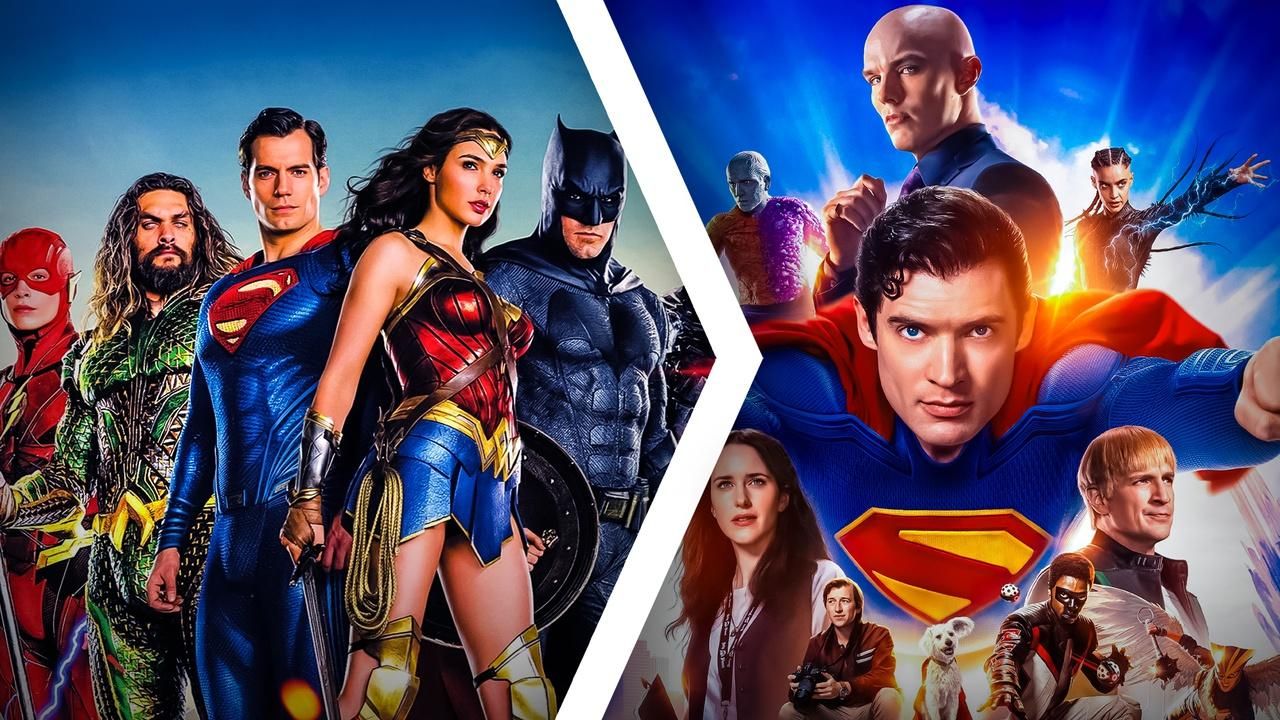
When Warner Bros. announced in late 2022 that James Gunn and Peter Safran would co-chair a newly structured DC Studios, it wasn’t just a creative shuffle. It was an admission. The old model — the DCEU as fans knew it — had run its course. Films like Man of Steel, Batman v Superman, and even the divisive Justice League had left an uneven legacy: passionate defenders, exhausted detractors, and a studio that couldn’t quite make up its mind what DC movies were supposed to feel like.
But before we talk about where things are going, it’s worth pausing to understand where they came from. The story of DC’s cinematic and comics reinvention spans over a decade, multiple reboots, and some genuinely fascinating creative decisions — some brilliant, some baffling. Let’s dig in.
The Old Universe: What Was the DCEU, Exactly?
The DC Extended Universe officially kicked off in 2013 with Zack Snyder’s Man of Steel. The intent was clear: give DC a connected cinematic universe modeled loosely on what Marvel had been building since 2008. In theory, this made sense. In practice, DC took a very different road.
Where the MCU leaned into color, wit, and accessibility, Snyder’s vision was operatic and somber. Superman wasn’t the bright, hopeful farm boy from Smallville — he was a troubled, almost reluctant god grappling with his place in a world that feared him. The visuals were stunning. The tone was heavy. And audiences split almost immediately.
Batman v Superman: Dawn of Justice (2016) doubled down on that vision. It introduced an older, brutally cynical Bruce Wayne and crammed what felt like three films’ worth of setup into one. The theatrical cut left critics cold, though Snyder’s later four-hour director’s cut earned something closer to admiration — a testament to how differently the same material can land depending on its context and completeness.
“The old DCEU was never lacking in ambition. What it lacked was a consistent voice — films pulling in opposite directions, studios second-guessing directors, and audiences never quite knowing what to expect.”
— Editorial Analysis
Wonder Woman (2017) was the franchise’s first real breath of fresh air. Patty Jenkins brought warmth, clarity, and genuine emotional resonance — qualities the DCEU had been starved of. It proved the universe could produce something crowd-pleasing without sacrificing substance.
Then came the infamous theatrical Justice League (2017), notoriously reshaped by Joss Whedon after Snyder’s departure following a family tragedy. The tonal whiplash was jarring. Characters felt inconsistent. Superman’s digitally removed mustache became a meme. The film grossed far less than expected, and the cracks became impossible to ignore.
Between 2018 and 2022, the DCEU grew stranger and more fragmented. Aquaman leaned gleefully campy. Shazam! was essentially a comedy. Birds of Prey was neon-punk chaos. The Suicide Squad (Gunn’s first DC film, notably) was proudly R-rated and irreverent. Each film felt like it belonged to a different franchise. There was no unifying tone, no coherent mythology building quietly underneath. The DCEU had become less a universe and more a collection of loosely affiliated movies that happened to share some character names.
A Timeline of Transition
2013
Man of Steel — The DCEU Begins
Zack Snyder’s dark, operatic Superman relaunch sets the tone for a grittier DC. Divided critics, but built a devoted following.
2016
Batman v Superman & the Snyder Divide
The theatrical cut is panned; the 2021 “Snyder Cut” is re-evaluated. The universe’s identity crisis goes public.
2017
Wonder Woman Gives Fans Hope
Patty Jenkins delivers the franchise’s most universally praised film — lighter, warmer, genuinely moving.
2017–2022
The Fragmented Middle Years
Aquaman, Shazam!, Birds of Prey, The Suicide Squad, Black Adam — no coherent vision, but occasional brilliance in isolation.
Oct 2022
Gunn & Safran Take the Helm
Warner Bros. announces a new DC Studios leadership. The message is clear: a new universe is coming.
Jan 2023
“Chapter One: Gods and Monsters” Announced
Gunn reveals the first slate of the new DCU — a fully planned, interconnected universe starting fresh from a unified creative vision.
2025–onward
The New DCU Launches
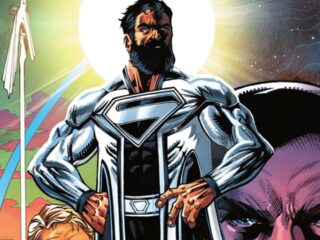
Superman (2025) marks the true beginning of Gunn’s vision — a new Clark Kent, a new tone, and a new promise to fans.

The Comics Side: The New 52 and What Came After
While the film side of DC has garnered the most recent attention, it’s worth remembering that DC’s identity crisis started — and was perhaps most dramatically expressed — in its comics. In September 2011, DC Comics made one of the most sweeping decisions in comic book history: the New 52.
The entire line was rebooted. All 52 ongoing titles relaunched with issue #1. Continuity was collapsed, simplified, and in some cases erased entirely. Characters were aged down. Long-running relationships were undone — most famously, the marriage of Clark Kent and Lois Lane was dissolved, and decades of Wally West’s history as the Flash were quietly set aside. The goal was accessibility: reduce the intimidating wall of back-issues, bring in new readers, modernize the mythology.
The results were genuinely mixed. Some titles thrived — Scott Snyder’s Batman run produced some of the finest superhero storytelling in years, introducing the Court of Owls mythos and crafting a Gotham that felt ancient and dangerous in equal measure. Jeff Lemire’s Animal Man was strange, beautiful, and heartbreaking. Geoff Johns’ Justice League launched with genuine energy.
But much of what the New 52 stripped away had represented decades of emotional investment. Fans who had grown up with Barbara Gordon as Oracle, with Tim Drake as Robin, with the Hal Jordan and Barry Allen friendship at the core of the DCU — they felt the loss acutely. Accessibility for new readers had come at the cost of depth for old ones.
DC Rebirth (2016): An Apology in Comic Form
The correction came in 2016 in the form of DC Universe: Rebirth #1, written by Geoff Johns. It was remarkable — a 80-page special that read less like a superhero story and more like a love letter to the audience DC had hurt. The issue acknowledged, within the text itself, that something precious had been taken from the DC Universe. That joy, legacy, and continuity had been deliberately erased. Wally West returned from a limbo nobody wanted to admit existed, and his tearful reunion with Barry Allen landed as one of the most genuinely emotional moments in mainstream comics in years.
Rebirth didn’t wipe the New 52 away — it wove the pre-Flashpoint history back in, acknowledging that both eras could coexist. More importantly, it signaled a philosophical shift: darkness for its own sake was out. Hope, legacy, and emotional resonance were back in.
Worth Knowing
The current comics continuity — Dawn of DC, launched in 2023 — continues the direction set by Rebirth, with a renewed emphasis on legacy characters, mentorship dynamics, and stories that treat optimism as a form of strength rather than naïveté.
What Actually Changed in the New DCU
Let’s get specific. When James Gunn and Peter Safran announced their new DC Studios slate in January 2023, a few things became immediately clear about how the new universe would differ from the old one.
Old DCEU
Tone: Grim Mythology
Gods walking among a fearful humanity. Moral ambiguity as default. Spectacle over accessibility. Superman as burden-bearer, Batman as avenger.
New DCU
Tone: Hopeful & Human
Superheroes as genuine idealists. Stories grounded in character before plot. Superman as an emblem of goodness, not existential weight.
Old DCEU
Structure: Reactive
Projects greenlit and restructured in response to MCU’s success. No single creative authority. Directors often at odds with studio notes.
New DCU
Structure: Planned
Gunn and Safran designed the full arc before a single film rolled. Every TV show and film fits a pre-designed mythology. One vision, one plan.
Old DCEU
Casting: Star-Led
Ben Affleck, Henry Cavill, and Gal Gadot as big-ticket draws. IP recognition via familiar faces and director auteur brands.
New DCU
Casting: Character-First
David Corenswet as Superman — a fresh face chosen for fit over fame. Long-term commitment over bankable star power.
Old DCEU
Legacy: Complicated
Defined by passionate Snyder fandom, studio interference controversies, and a timeline that grew increasingly convoluted.
New DCU
Legacy: Being Written
Still early days. But the foundational philosophy — coherence, optimism, planned storytelling — gives it a structural advantage its predecessor never had.
Character by Character: Who Changed the Most?
Perhaps the most tangible way to understand the shift is to look at how specific characters have been reimagined — not just recast, but fundamentally reconceived.
Superman / Clark Kent
Old
A reluctant god. Henry Cavill’s Clark is haunted, uncertain — a man struggling with the burden of power in a world that doesn’t trust him. His defining act in Man of Steel is snapping a villain’s neck.
New
David Corenswet’s Clark is cheerful, idealistic, and unabashedly kind. Gunn’s Superman is a character who genuinely believes in people. The warmth isn’t weakness — it’s the point.
Batman / Bruce Wayne
Old
Affleck’s Batman is an aging, embittered vigilante who brands criminals and keeps a gun handy. Brilliant as a portrait of a broken man — but far from the detective-strategist fans expected.
New
The new DCU Batman (Andy Muschietti’s iteration) promises a more classic interpretation — still dark, but with the detective intelligence and moral code restored to prominence.
Lois Lane
Old
Amy Adams’ Lois was capable and warm, but her storylines were often subordinated to Clark’s existential arc. In the wider DCEU she remained underused.
New
Rachel Brosnahan’s Lois is reportedly more front-and-center — a journalist with her own convictions and storylines that don’t revolve solely around Clark’s identity crisis.
Green Lantern Universe
Old
Mostly absent. The 2011 Ryan Reynolds film (pre-DCEU, technically) poisoned the well. The DCEU never meaningfully developed its Green Lanterns.
New
Green Lantern Corps gets a proper HBO series treatment in the new DCU, with Lanterns positioned as one of the universe’s key cosmic pillars from the start.
The Elephant in the Room: The Snyder Fandom
It would be intellectually dishonest to discuss the old-to-new transition without acknowledging the passionate community that formed around Zack Snyder’s vision. The #RestoreTheSnyderVerse movement wasn’t simply nostalgia — it was a genuine artistic argument. Snyder’s films, whatever their commercial fortunes, had a coherent mythological ambition. His use of slow motion, his operatic scoring choices, his fixation on sacrifice and divinity — they were deliberate.
The release of the Zack Snyder’s Justice League in 2021 on HBO Max validated much of what defenders had argued. It was longer, stranger, and more fully realized than the theatrical cut. It won over some critics who had dismissed Snyder’s DCEU entirely. And then — in what felt like a particular cruelty — it arrived just as Warner Bros. was quietly signaling that the whole universe was being wound down.
For fans invested in that vision, the pivot to Gunn’s DCU isn’t just a creative change. It’s the definitive closing of a door that many had spent years trying to hold open. That grief is real, and it’s worth naming clearly before moving on to talk about what’s next.
“Gunn’s instinct seems to be that Superman’s greatest power isn’t invulnerability — it’s the willingness to be vulnerable. To be seen caring. That reframing alone marks a fundamental departure from what came before.”
— On the New DCU’s Creative Philosophy
What the New DCU is Actually Trying to Do
Reading Gunn’s interviews and the early materials from DC Studios, a few consistent themes emerge that define the new universe’s goals.
1. Optimism as a creative choice, not a compromise
The old DCEU sometimes felt like it was embarrassed by the inherently hopeful nature of its characters. Superman and Batman are, at their core, figures who believe in people. The new DCU seems to embrace that rather than apologize for it. Gunn has spoken explicitly about wanting his Superman to be kind — and to let that kindness be a form of strength. It’s a simple reorientation with enormous implications.
2. Television as equal storytelling, not a tie-in afterthought
One of the most significant structural changes is how the new DCU treats its TV component. The old DCEU had shows on the CW (the Arrowverse) that technically existed in a separate universe and HBO Max shows that remained largely disconnected from the films. In the new DCU, Creature Commandos, Waller, Lanterns, and other series are considered canonical, equal parts of the overarching story. Characters from the shows will appear in films and vice versa. It’s a genuine multimedia universe in a way the DCEU never quite managed to be.
3. Long-term character arcs over immediate payoff
Gunn’s plan is structured around an eventual confrontation with a cosmic-level villain, with individual films and shows each contributing a piece of a larger puzzle. This is familiar territory in the post-MCU landscape, but DC has never executed it with this degree of pre-planning. The risk is rigidity — tying too many creative decisions to a fixed roadmap. The potential reward is the kind of slow-burn storytelling that makes individual stories feel like they matter in ways beyond their own runtime.
Also in the mix
The new DCU has also been notable for its Elseworlds label — a designation for stories like Joker: Folie à Deux and the upcoming The Batman Part II that exist outside the main continuity. This gives DC flexibility to pursue darker, more auteur-driven projects without compromising the tone of the main universe. It's a smarter structural choice than the old approach, which tried to force wildly different tonal registers into a single canon.

Comics vs. Cinema: The Parallel Reboots
Here’s something worth noting: the comics and cinematic reboots, though separate in execution, have rhymed thematically in interesting ways. DC’s comics universe, after the New 52’s overreach, returned to legacy and hopefulness with Rebirth. DC’s cinematic universe, after the DCEU’s tonal overreach, is similarly returning to accessibility and optimism with Gunn’s new slate.
In both cases, the lesson seems to be the same: dark is not inherently deep, and accessible is not inherently shallow. The New 52’s best material often embraced ambition and emotional complexity without sacrificing readability. Rebirth’s best work was hopeful without being saccharine. The hope for the new DCU is that it can thread the same needle.
There’s also a continuity lesson embedded in both transitions. The New 52 tried to erase the past; Rebirth tried to honor it while moving forward. The new DCU hasn’t erased the DCEU exactly — it’s treating it as a separate timeline, something that happened but doesn’t need to be canonized or condemned. It’s a graceful sidestep, if it holds.
Final Thoughts
Where Does This Leave Us?
The honest answer is: cautiously hopeful. The old DCEU produced some genuinely great films — Wonder Woman, The Suicide Squad, even Snyder’s four-hour cut of Justice League — alongside some spectacular miscalculations. It was a universe built without a blueprint, patched together in response to circumstances rather than shaped by a coherent creative vision. It produced art and chaos in roughly equal measure.
The new DCU has the blueprint that the old one lacked. It has a clearer creative philosophy: hope, character, legacy, connection. It has leadership with demonstrated skill — Gunn’s track record with the Guardians of the Galaxy proves he understands how to make flawed, strange characters feel genuinely lovable. And it has, critically, the willingness to be patient.
What it doesn’t have yet is proof. Superman hasn’t landed yet. The full shape of the universe hasn’t revealed itself. We’re still at the beginning. But beginnings, handled well, are where everything that matters gets decided. And for the first time in a long while, the DC Universe’s beginning feels intentional.
That’s not nothing. For fans who’ve been watching since 2013, it might even be everything.