For millions of kids, the 1990s were when they first discovered Marvel Comics. For the industry itself, it was something far more complicated. The decade that opened with record-shattering sales and unbridled creative ambition closed with bankruptcy filings, reader exodus, and a company barely recognizable from what it once was. The 1990s weren’t just a bad era for Marvel. They were the most controversial era — a period so loaded with contradictions, so packed with both genuine greatness and spectacular failure, that comic fans are still arguing about it three decades later. Here’s why.
The Bubble That Was Always Going to Burst
To understand the controversy, you have to understand the gold rush.
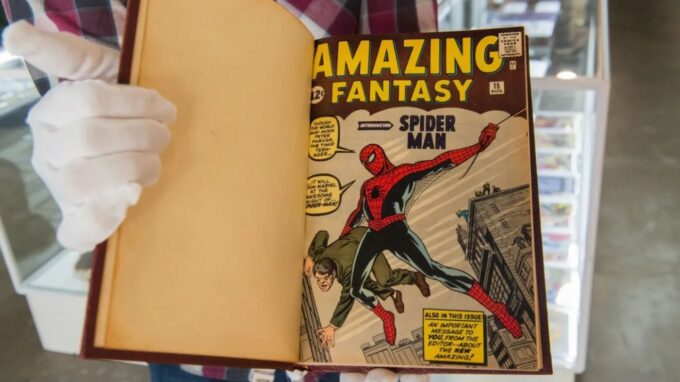
In the late 1980s, something strange happened: comic books became investments. Speculators — many of them with no real love for the stories inside — started buying multiple copies of the same issue, sealing them in plastic, and waiting for their value to climb. The logic made a certain surface-level sense. A copy of Amazing Fantasy #15, the first appearance of Spider-Man, could sell for thousands of dollars. Surely, if you bought enough of today’s “key issues,” you’d have a fortune waiting in your longbox.
Marvel and its competitors fed this frenzy enthusiastically. First printings were followed by second printings, variant covers, polybagged editions with trading cards or holograms or certificates of authenticity. The message was clear: scarcity equals value. The irony, of course, is that they were manufacturing scarcity while simultaneously printing millions of copies. There was nothing rare about a foil-covered #1 issue when every comic shop in the country had a stack of them.
Sales numbers in this era were genuinely staggering. X-Men #1 in 1991, drawn by Jim Lee and written by Chris Claremont, sold over eight million copies — a record that still stands as the best-selling single comic issue of all time. Spider-Man #1, illustrated by Todd McFarlane, moved nearly three million. These weren’t just popular comics. They were cultural events.
But the foundation was rotten. The moment ordinary readers — not speculators, but the people who actually read the things — started to notice that these “valuable” issues weren’t appreciating, the dominoes began to fall. By the mid-1990s, comic shop owners who had ordered massive quantities of variants were left holding inventory nobody wanted. Stores closed by the hundreds. The collector market cratered. And Marvel, which had leaned into the speculation bubble so hard it had practically become the bubble itself, suddenly found itself in serious trouble.

The Artists Who Changed Everything — For Better and Worse
Before the crash, though, something genuinely exciting was happening on the page.
The late 1980s had introduced a new generation of artists who drew comics like nobody had drawn them before. Todd McFarlane’s Spider-Man moved with a kinetic, web-dripping energy that made earlier interpretations look stiff. Jim Lee’s X-Men had a muscularity and dynamism that felt almost cinematic. Rob Liefeld brought a bombastic, hyper-charged style to New Mutants and then X-Force that teenage readers responded to viscerally, even if critics found it anatomically baffling.
These artists weren’t just popular. They were superstars — the first time in comics history that the artists’ names on the cover could sell more copies than the characters inside. And they knew it.
In 1992, seven of Marvel’s top creators — McFarlane, Lee, Liefeld, Jim Valentino, Marc Silvestri, Erik Larsen, and Whilce Portacio — walked away from the company in one of the most dramatic creative departures in publishing history. They founded Image Comics, a creator-owned alternative where they kept the rights to their work. The move was a direct rebuke of Marvel’s work-for-hire model, in which the company owned every character and concept its freelancers created.
The controversy here cuts multiple ways. On one hand, the Image founders were right. The work-for-hire system had historically allowed publishers to exploit creators, and the artists were pioneering something genuinely important about creator rights. Jack Kirby, who co-created the Fantastic Four, Thor, the X-Men, and the Avengers, had spent decades fighting Marvel for recognition and compensation. The Image walkout was, in part, his vindication.
On the other hand, Image’s early output was — to put it charitably — more visually impressive than narratively coherent. McFarlane’s Spawn had dark, gorgeous imagery and almost impenetrable plotting. Liefeld’s Youngblood was famously derided for its artwork (the jokes about characters with no feet, pouches everywhere, and impossible physiques persist to this day). The claim that creators needed freedom to tell better stories was somewhat undercut by comics that prioritized style so aggressively that story became almost incidental.
And Marvel? Losing seven of its most commercially powerful artists in a single year was a wound it spent the rest of the decade trying to recover from.
The Clone Saga: A Case Study in Editorial Chaos
If you want a single story arc that encapsulates everything controversial about 1990s Marvel, look no further than the Spider-Man Clone Saga.
It began in 1994 with a genuinely interesting premise: the return of a character from the 1970s, Ben Reilly, who was a clone of Peter Parker. The story was meant to be a relatively contained arc that would rejuvenate Spider-Man comics after years of what editors felt was creative stagnation. It was supposed to last roughly a year.
It lasted nearly three.
What followed was one of the most convoluted, contradictory, fan-alienating storylines in mainstream superhero comics history. The arc went through multiple creative teams, each of whom had different visions for where the story was going. At one point, editorial decided to make Ben Reilly — the clone — the “real” Peter Parker and have the original retire. Peter Parker, the character readers had followed for thirty years, was to be written out of his own books.
The fan response was furious. Letters poured in. Sales declined. The creative teams kept changing. Subplots were introduced and abandoned. A villain named Judas Traveller was built up as a major threat and then quietly forgotten. Every few months it seemed like someone in editorial had a new idea that contradicted the last one.
Eventually the whole thing was reversed, retconned, and apologized for. In later years, several of the editors and writers involved gave remarkably candid interviews acknowledging that the saga was a creative and commercial disaster driven largely by editorial interference, corporate pressure, and a fundamental lack of coherent planning.
What makes the Clone Saga controversial rather than merely bad is that there’s a real debate about what it could have been. The core idea — questioning the identity of one of fiction’s most beloved characters, exploring what it means to be real — had genuine philosophical depth. Under different circumstances, with editorial stability and a unified creative vision, it might have been remembered as one of the great Spider-Man stories. Instead, it’s the cautionary tale Marvel writers use to this day when discussing the dangers of writing by committee.
Onslaught and the Heroes Reborn Disaster
If the Clone Saga was the low point for Spider-Man, the Onslaught crossover and the subsequent “Heroes Reborn” initiative was the low point for Marvel’s core Avengers titles — and arguably for the company’s editorial credibility.
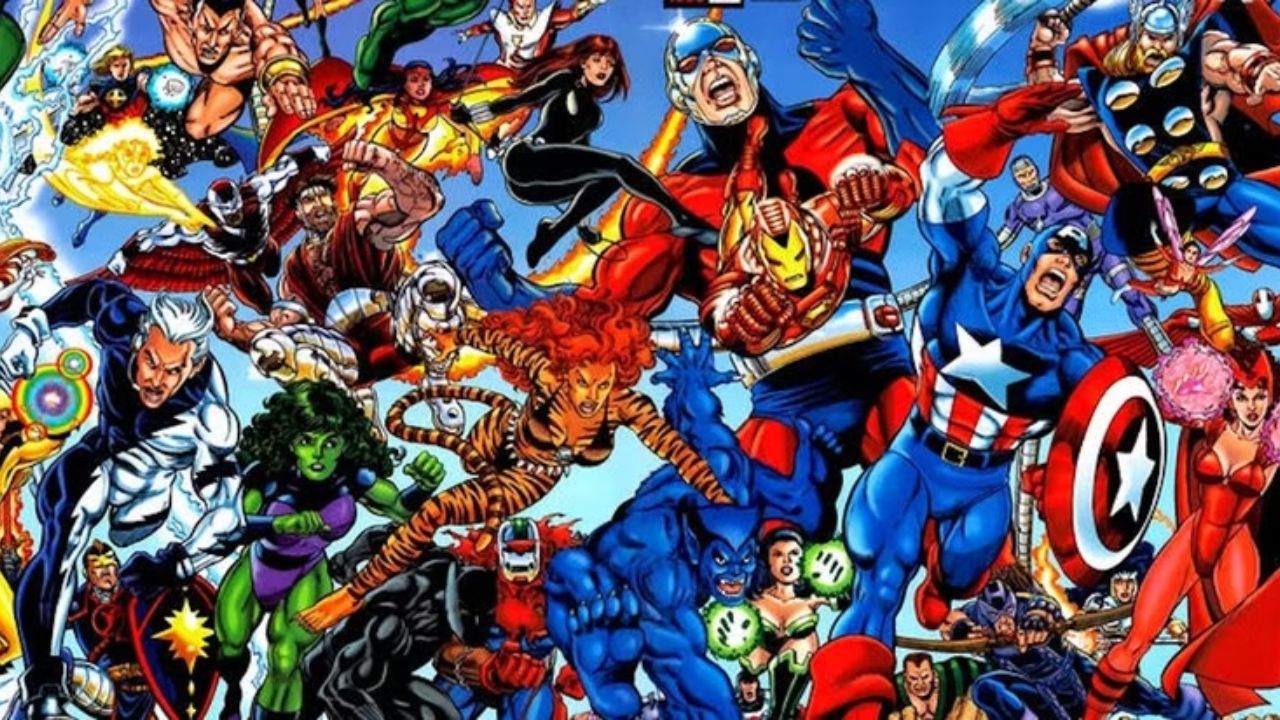
Onslaught was a massive 1996 crossover event in which a psychic entity born from the darkest impulses of Professor X and Magneto threatened all of existence. The story culminated in the apparent deaths of the Avengers and the Fantastic Four — characters like Captain America, Iron Man, Thor, and the Hulk — who sacrificed themselves to stop the villain.
Marvel then did something extraordinary: it handed those characters over to Image founders Jim Lee and Rob Liefeld to relaunch. The “Heroes Reborn” line placed Marvel’s cornerstone characters in a new universe, ostensibly to reinvigorate them. The result was, almost universally, considered a catastrophe. The rebooted characters felt hollow, their decades of history stripped away in service of a continuity nobody asked for. Liefeld’s Captain America run became infamous for its awkwardness, and he was eventually fired mid-storyline.
One year later, Marvel quietly brought the characters back in a storyline called “Heroes Return,” and almost nobody pretended Heroes Reborn had been a good idea. What it represented, though, was something genuinely alarming: Marvel was so creatively and financially desperate that it had outsourced its most iconic characters to freelancers, hoping that name recognition alone would paper over the problems.
The Bankruptcy and What It Meant
In December 1996, Marvel Entertainment filed for Chapter 11 bankruptcy protection.
This wasn’t just a business failure. For readers who had grown up with these characters, it felt like something more personal — a confirmation that the 1990s had genuinely broken something. The company that gave the world Stan Lee and Jack Kirby’s universe of flawed, human heroes; that published Steve Englehart’s Avengers and Frank Miller’s Daredevil and Chris Claremont’s X-Men; that had survived cancellations and distribution problems and industry downturns for decades — that company was bankrupt.
The causes were multiple and intertwined. The speculation bubble collapse had devastated retail. The departure of Image’s founders had cost Marvel its biggest artistic draws right when it needed them most. A disastrous business deal with financier Ron Perelman had saddled the company with debt. The Heroes Reborn experiment had failed. Readers who had discovered comics in the early 1990s were dropping the hobby in large numbers.
There were lawsuits between various factions. There were hostile takeover attempts. At one point it was genuinely unclear whether Marvel would survive in any recognizable form.
It did survive, of course — and eventually thrived in ways that would have seemed like fantasy in 1997. But the bankruptcy was the decade’s darkest punctuation mark, and it’s impossible to talk about 1990s Marvel without reckoning with it.
What the Decade Got Right (And People Forget This Part)
Here’s where the story gets complicated again, because the 1990s weren’t uniformly bad. Not even close.
While the mainstream books were stumbling, Marvel’s editorial offices were also producing some genuinely exceptional work. Kurt Busiek and Alex Ross’s Marvels (1994) was a breathtaking piece of storytelling — a painted, achingly beautiful look at the Marvel universe through the eyes of an ordinary man. It reminded readers why these characters mattered in the first place, and it did so without a single foil cover or polybagged variant.
Mark Waid’s run on Captain America brought real emotional intelligence to a character who had become difficult to write in the post-Cold War landscape. Warren Ellis and Tom Raney’s Excalibur, and later Ellis’s Thunderbolts contributions, brought sharp wit and genuine narrative invention to B-list corners of the Marvel universe.
And then there was Kurt Busiek’s Thunderbolts — arguably the decade’s most cleverly conceived Marvel comic. The premise was a genuine surprise: a team of new heroes who turned out, in the final pages of the first issue, to be the Masters of Evil in disguise. What followed was a nuanced exploration of redemption, identity, and heroism that felt completely at odds with the era’s reputation for empty spectacle.
The decade also produced Generation X, which blended teenage drama with superhero action in ways that felt fresh, and Deadpool — introduced in the pages of Rob Liefeld’s New Mutants in 1991 — who began his evolution from generic mercenary to the fourth-wall-breaking cultural phenomenon he’d eventually become.
The point is that the 1990s were not a creative desert. They were a decade of extremes — spectacular lows and underappreciated highs existing simultaneously. The controversy isn’t that everything was bad. It’s that the bad was so loud, and often so commercially successful in the short term, that it drowned out what was quietly excellent.

The Legacy We’re Still Arguing About
Three decades on, the arguments about 1990s Marvel haven’t really settled. They’ve just evolved.
There are readers who defend the era passionately — who argue that the sensory overload and visual bombast of Jim Lee and Todd McFarlane at their peak was genuinely exciting, that the speculation era’s excesses don’t erase the genuine joy of those comics for the kids who read them. There are critics who see the 1990s as proof of what happens when commerce colonizes creativity completely, when publishers treat readers as speculators rather than storytellers treat readers as audiences.
Both are right. That’s what makes it controversial rather than simply bad.
The decade also laid groundwork that would shape Marvel’s future in ways nobody anticipated. The Image exodus forced Marvel to eventually reconsider how it treated its talent. The bankruptcy forced a restructuring that, ultimately, led to the licensing deals and eventual studio that became Marvel Studios. Without the humbling of the 1990s, there might not have been the discipline and creative seriousness that characterized the early 2000s resurrection — Brian Michael Bendis’s Daredevil, Grant Morrison’s New X-Men, Joe Quesada’s editorial leadership.
You cannot get to the Marvel Cinematic Universe — the most commercially successful entertainment franchise in history — without first going through the wreckage of the 1990s. The crisis forced the company to find out what it was actually for.
Why It Matters
We tell stories about corporate failures and creative disasters as cautionary tales, but the 1990s Marvel story is more than that. It’s a portrait of an entire medium at a crossroads — of what happens when art meets speculation, when creator rights collide with corporate ownership, when the desire to give people what they want overwhelms the harder work of figuring out what they need.
The kids who grew up on those foil covers and polybagged variants are in their thirties and forties now. Many of them look back with complicated feelings — nostalgia for the excitement of those spinner racks, embarrassment at the Liefeld anatomy jokes, genuine affection for the characters that managed to shine through even the decade’s worst excess. That combination of love and frustration, of this mattered to me and also it was kind of a mess — that’s the authentic emotional texture of the 1990s Marvel experience.
No other era in the company’s history produces that exact mixture of feelings. No other decade simultaneously reached the highest sales peaks and the deepest commercial valley. No other stretch of years contains both the best-selling single comic of all time and a corporate bankruptcy.
That’s what makes it the most controversial era. Not just the mistakes — every era has those. But the scale. The ambition. The wreckage. And buried underneath it all, if you know where to look, the actual good stuff that somehow survived anyway.