There is a particular kind of reader who treats books like museums — moving through them quietly, touching nothing, leaving no trace. They return each borrowed copy pristine, their own shelves lined with unblemished spines. I used to be that reader. I genuinely believed that writing in a book was a form of vandalism, a small act of desecration against something sacred. Then someone handed me a secondhand copy of David Foster Wallace’s Infinite Jest — margins crammed with pencil, pages flagged with folded corners and cryptic asterisks — and I understood, for the first time, what it actually means to have a conversation with a book.
That copy changed how I read. Not because of Wallace’s text, but because of the unknown reader before me — the arguments they scrawled, the passages they underlined twice and then crossed out, the single word written in the margin at a pivotal moment: yes. Here was proof that reading was never meant to be a passive act. It was always supposed to be a dialogue.
A note worth keeping →
"The book you read and the book you annotate are two entirely different objects. One passes through you. The other becomes part of you."
Your Brain on Margins
There is a real cognitive reason annotation works, and it goes deeper than just “taking notes helps you remember things.” When you read passively, your brain is essentially in receive mode — words enter, impressions form, and most of it begins evaporating the moment your eyes move on. Psychologists call this the generation effect: information you actively produce is remembered far more reliably than information you simply consume.
The act of writing a margin note — even something as simple as a question mark or a circled word — forces your brain to shift gears. You are no longer receiving; you are responding. That micro-decision to mark something, to translate a vague reaction into language, creates a second encoding of the idea. It anchors the passage to a moment, a feeling, a thought you were having at 11pm with a cup of tea going cold on the nightstand. That context, ridiculous as it sounds, becomes part of how you remember.
Neuroscientists studying active recall have found that the effort of retrieval — of trying to put something in your own words — strengthens memory traces more than repeated passive exposure. Writing in your book’s margins is, in miniature, exactly this. Every time you annotate, you are making the book harder to forget.
Reading without annotating is like having a conversation where you never speak. You might follow everything perfectly — and retain almost none of it.

The Slow Art of Noticing
One of the quieter gifts of annotation is what it does to your pace. Speed reading is largely a myth when it comes to retention — the human comprehension system doesn’t actually work like a scanner — but slow reading is a practice almost anyone can cultivate. And nothing slows you down like keeping a pencil in your hand.
When you’re ready to annotate, you read differently. You become alert, the way you’re alert when walking somewhere you’ve never been before. You notice things. A novelist’s sentence that turns on a single unexpected word. A philosopher’s argument that quietly assumes the very thing it’s trying to prove. A line of poetry that shouldn’t work but somehow does. These things were always there. You just weren’t looking.
There’s also something about the physical act of underlining — the drag of a pencil, the slight resistance of the page — that creates presence. You cannot underline a sentence on autopilot. Your hand demands that your mind be somewhere in the vicinity. In an age when nearly every screen we own is engineered to fracture attention, this is not a small thing.
Slow down & see more
Annotation makes you read deliberately. A pencil in hand acts like a gearshift — it locks you into a lower, more noticing speed.
Generate, don’t just receive
Active note-making triggers the generation effect, turning passive consumption into durable memory.
Build a thinking record
Your annotations are a dated log of how your mind was working. Revisit a marked-up book from five years ago — you’re meeting a past self.
Create your own index
A quick symbol system in the margins becomes a searchable map of the book’s ideas, far faster than hunting for a half-remembered passage.
On Making the Book Yours
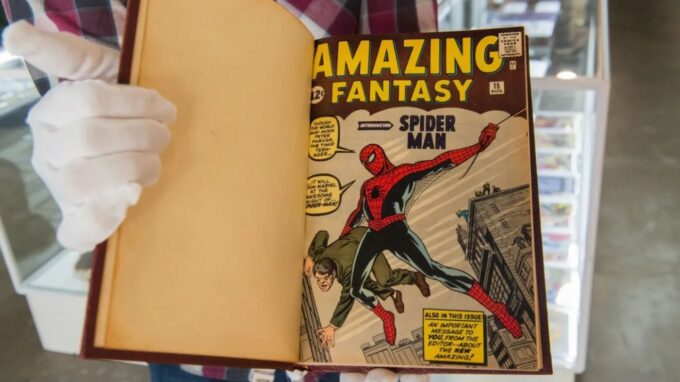
There is a term in literary studies — marginalia — for the notes left in the margins of manuscripts and books across history. Scholars study these not merely as curiosities but as genuine intellectual artefacts. The annotations that Darwin left in his copies of books he was reading during the development of evolutionary theory are, in places, as illuminating as anything he published. Keats’s marginalia in his copy of Shakespeare shows a mind in vivid, argumentative conversation with the text. Mark Twain’s annotated books are a masterclass in snark deployed as critical method.
These weren’t incidental scribblings. They were thinking made visible. And you don’t need to be Darwin or Keats for the same principle to apply. Every time you write in your own book, you are doing exactly what they were doing: making your reading a record of your mind in motion. A book you have annotated is no longer just that author’s book. It is a collaboration. It belongs, in some genuine sense, to you.
This is why annotating feels transgressive at first, especially for readers who were taught that books are objects of reverence. But reverence for the physical object and reverence for the ideas inside it are different things — and sometimes they work against each other. A pristine, untouched copy of a great book might be beautiful to look at. An annotated copy might be ugly. It is also, almost certainly, better understood.
Personal note →
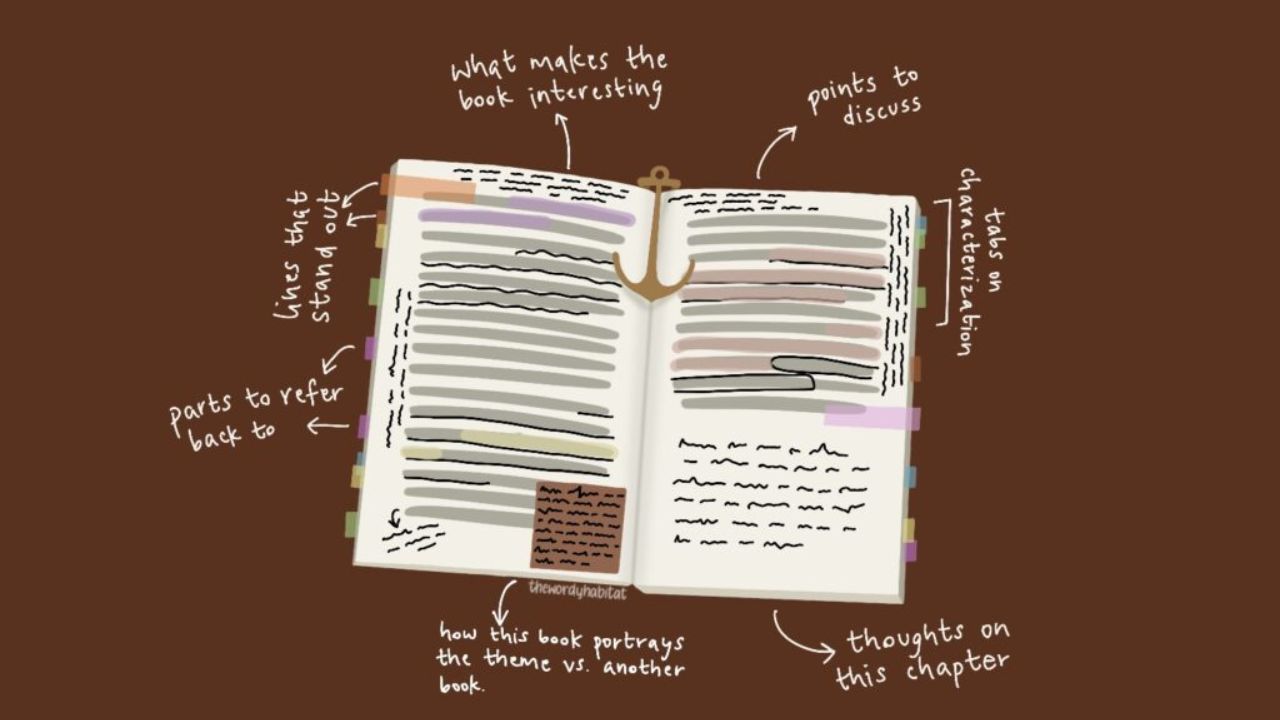
I now keep a simple code: a star for passages I want to return to, a question mark for things I'm skeptical of, a bracket around passages that feel structurally important. Three symbols. It's enough.
The Second Reading That Never Ends
Here is something that took me years to understand: a book you’ve annotated is never fully finished. When you return to it — six months later, five years later, on a completely different kind of morning — you encounter a conversation already in progress. Your past self left you a map. And what’s strange and moving about this is that the map reveals not just the book, but the reader who was reading it.
I own a copy of Simone Weil’s Waiting for God that I first read at twenty-three and have returned to twice since. Three sets of annotations, three different handwritings — though mine throughout — and three different versions of what felt important, what felt confusing, what felt true. The first reading is underlining things because they sound profound. The second reading is arguing with the first. The third reading is something quieter: a kind of recognition. That arc, visible in ink, is a record of years of living and thinking. No digital highlight, no app-based note, preserves it quite the same way.
There’s also a practical case for annotating if you are a writer, student, or anyone who works with ideas: annotated books become searchable by intuition. You rarely forget that you marked something. You flip, you scan, your eye catches the dense cluster of pencil on page forty-seven, and you’re back in the right neighborhood. The book becomes a physical index of your own thinking — something no search bar has yet managed to replicate.
The person you are when you reread an annotated book is always in conversation with the person you were when you first read it. That’s not a metaphor. The evidence is right there in the margins.

How to Begin (If You Haven’t Already)
The most common objection I hear from reluctant annotators is some version of: But I don’t know what to write. This is, I think, exactly backwards. The point is not to arrive at the book with something to say. The point is to let the book give you something to respond to — and then respond. Trust the reaction before the argument. A simple vertical line in the margin means this mattered. A circled word means interesting choice. You are not writing a review. You are writing a trace.
Start with a pencil — always pencil, for its mercy in allowing second thoughts. Write something small. Argue with a sentence. Ask a question the author doesn’t answer. Draw an arrow connecting a passage on page twelve to something that echoes it on page ninety. Let the system grow organically around your own reading habits, your own curiosity, your own particular way of getting stuck or surprised.
Buy your own copies of books you mean to read seriously. This is a real commitment, but it is also a real return. A book you can write in is a book you can think with. The difference between the two is something you have to experience to properly believe — but once you do, reading without a pencil will feel like driving with one hand tied behind your back.
✦ ✦ ✦
Annotation is not a study technique. It is not a productivity hack. It is, at its best, a form of intellectual hospitality — welcoming the author's ideas into your own interior and showing them around, questioning, agreeing, pushing back, making space.

The books that have mattered most to me are the ones I can barely read for all the pencil. They are marked-up, dog-eared, cracked at the spine. They look a little ruined. They are, in every way that counts, more alive than the day I bought them.

Pick up a pencil. Open a book. Begin the conversation.