There’s a version of this story that’s easy to tell. You say “DC did a reboot, readers came back, problem solved.” But that version misses almost everything that actually matters. The story of DC Rebirth is really a story about what happens when a company loses sight of why people loved its characters in the first place — and what it takes to find that love again. To understand Rebirth, you have to understand what preceded it. And to understand that, you have to go back about five years and sit with something uncomfortable: The New 52 was not a failure. It was, in many ways, a success. And that’s precisely what made it such a problem.
The World Before — What The New 52 Got Wrong
In August 2011, DC Comics did something radical. They canceled every single title in their lineup and relaunched with 52 new #1 issues, all set in a freshly rebooted continuity. The New 52 was born — and for a moment, it worked beautifully.
Sales shot up. New readers came in. Books like Justice League, Batman, and Animal Man were genuinely excellent. Scott Snyder and Greg Capullo’s Batman run during this period is still considered one of the greatest Batman stories ever told. Nobody can take that away from it.
But underneath the sales figures, something was quietly going wrong. The New 52 had a philosophy problem, and it was baked right into its aesthetic DNA: everything had to feel hard, modern, and “realistic.” Legacy was treated as baggage. Optimism was treated as naivety. Characters who had been defined by warmth, humor, or simple heroism were retrofitted with dark backstories, grimmer motivations, and costumes that seemed designed by someone who had never seen joy.
The New 52 — What Went Wrong
Wally West, the beloved Flash who had been DC’s most wholesome legacy character for decades, was virtually erased — replaced by a version of Barry Allen who was significantly more brooding.
Superman lost his marriage to Lois Lane, his warmth was stripped back, and he was given a relationship with Wonder Woman that, while not without fans, felt like it had been focus-grouped rather than felt.
The Teen Titans became a book about teenagers who mostly seemed to dislike each other, which somewhat missed the point of the Teen Titans.
Legacy heroes — the concept of mentors passing torches, of younger generations inheriting the mantles of icons — was largely set aside in favor of a universe where everyone started from scratch.
The emotional throughline that had always made DC special — this sense of hope, of heroes who genuinely believed in people, of a universe where goodness was aspirational rather than ironic — kept getting submerged under darker and darker waters.
By 2014 and 2015, the sales numbers had dipped again. More critically, the conversation online had shifted. People weren’t just saying the books were bad. They were saying the books felt wrong. That’s a different kind of problem entirely.
Enter Geoff Johns — The Architect of Memory
Geoff Johns is, to put it plainly, one of the most consequential writers in the history of DC Comics. His runs on Green Lantern, Flash, JSA, and Teen Titans are foundational texts for a certain generation of DC readers. What made him remarkable wasn’t just craft — it was a specific talent for honoring the past while making it feel electric and immediate.
Johns was given the task of figuring out what came next. And what he produced, after months of quiet work, was a single 80-page special: DC Universe: Rebirth #1, released on May 25, 2016.
“This isn’t a reboot. This isn’t a relaunch. This is a story about rediscovering what DC Comics was always supposed to feel like — and figuring out who stole that feeling in the first place.”
The Philosophy Behind Rebirth
That last part wasn’t a metaphor. Johns embedded a genuine mystery into the Rebirth issue — a mystery about who had tampered with DC’s timeline. The answer, which would unfold over the following years in the story Doomsday Clock, was one of the most audacious swings in mainstream comics history. But we’ll get there.

The Issue That Changed Everything — A Story About Wally West
If you want to understand why DC Universe: Rebirth #1 hit the way it did, you have to understand what Wally West meant to a certain generation of fans.
Wally wasn’t just the Flash. He was the Flash for many readers — the character who inherited Barry Allen’s mantle after Barry’s iconic death in Crisis on Infinite Earths and proceeded to grow into one of the most beloved heroes in DC history. He got married. He had twins. He struggled with insecurity and overcame it. He was, by almost any metric, the archetypal legacy character: someone who started in a mentor’s shadow and became something greater than what came before.
The New 52 had erased him. And nobody had really addressed that. Until Rebirth.
DC Universe: Rebirth #1 is, at its core, a story about Wally West trying to return from the Speed Force — a dimension of pure energy that he’s been trapped in, forgotten, invisible. He goes to person after person, trying to anchor himself back to reality by being remembered. And person after person, he slips away. They don’t remember him. He’s been erased from their lives.
The issue builds to a scene between Wally and Barry Allen. Barry doesn’t remember him. Wally accepts it. He gives what amounts to a eulogy for himself — one of the most quietly devastating monologues in superhero comics — and then begins to fade. And then Barry grabs his hand.
“Wally,” Barry says. “I remember.”
There are people who cried at that. There are longtime comics readers — people who have read thousands of issues and thought they were past that — who will tell you they teared up at a panel of one fictional man grabbing another fictional man’s hand. That’s not sentiment for its own sake. That’s a writer who understood exactly what he was doing and executed it with surgical precision.
Why That Scene Worked

The scene worked on two levels simultaneously. On the surface, it was about Barry remembering Wally. But subliminally, it was DC Comics acknowledging its own readers. We remember. We remember what you loved. We know we lost it. We want it back.

This is the kind of thing that can't be manufactured in a boardroom. It required a writer who had genuine emotional investment in the material — and it landed because readers could feel that investment.
What Rebirth Actually Changed — The Line-Wide Philosophy
The Rebirth initiative wasn’t just one comic. It was a signal — a directive that rippled out across the entire DC line. Each series was relaunched under the Rebirth banner, and each creative team was asked to lean into what made their characters beloved rather than away from it.
The results were striking.
Superman Found His Heart Again
Peter Tomasi and Patrick Gleason’s Superman run during Rebirth is often cited as one of the best Superman comics of the modern era. It had a simple premise: Clark Kent is a father. His son Jon is discovering his powers. What does it mean to raise a child to be a hero? The book was warm, funny, and full of wonder — all things that Superman had been denied for years. It also brought back the Clark and Lois relationship, which had been dissolved in the New 52, to the relief of virtually everyone.
Batman Reached for Something New
Tom King’s Batman run during Rebirth was more divisive, but it was at least ambitious in a way that reflected the Rebirth spirit. King asked a question nobody had really asked before: what does Bruce Wayne actually want? His answer — that Bruce had proposed to Selina Kyle, that he was reaching for a life rather than just a mission — was controversial but genuinely interesting. The book was willing to let Batman be emotionally vulnerable in ways that felt new.
The Flash Became Joyful Again
Joshua Williamson’s Flash run brought Wally West back properly, gave Barry Allen a clear emotional direction, and made the book feel like a celebration of speed and possibility again. The Speed Force became fun to read about. That sounds simple. It hadn’t been simple for a while.
Hal Jordan and the Green Lantern Corps
The Green Lantern corner of the DC Universe — which had been increasingly tangled and dense — was streamlined and given room to breathe. The book focused on what Lanterns do: they protect people. That refocusing sounds obvious in retrospect. It needed to be stated.
A Brief Timeline — The Road Through Rebirth
- 2011 – The New 52 Launches
52 #1 issues. Massive sales spike. A fresh start — but at the cost of decades of accumulated character development and legacy storytelling. - 2014 – Convergence
A line-wide crossover event widely considered a creative low point. DC begins quietly evaluating what’s next. - May 2016 – DC Universe: Rebirth #1
Geoff Johns’ 80-page special drops. Wally West returns. The DC Universe begins to remember itself. Sells out multiple print runs. - 2016–17 – The Rebirth Wave
Relaunched titles across the line. Superman, Batman, Wonder Woman, Flash, Green Lanterns, Hal Jordan — all given new direction rooted in legacy and hope. - 2017 – The Button
A Batman/Flash crossover teasing the larger mystery seeded in the Rebirth issue — the Comedian’s button from Watchmen, found in the Batcave. The crossover with Alan Moore’s universe deepens. - 2018–19 – Doomsday Clock
Geoff Johns and Gary Frank’s epic 12-issue series reveals the full picture: Doctor Manhattan had been subtly altering DC history, and Superman must face him. One of the most ambitious comics of the decade.
The Watchmen Connection — The Most Audacious Bet in Comics
Here’s where Rebirth gets genuinely strange — and genuinely fascinating.
Johns embedded a mystery at the heart of the Rebirth issue: someone had been tampering with DC’s timeline. Someone had stolen years from the heroes’ lives. And in the final pages, the evidence points to Watchmen. Specifically, to Doctor Manhattan — the god-like being from Alan Moore and Dave Gibbons’ 1986 masterpiece.
The implication was staggering. DC was suggesting that the grimdark turn of the New 52 era wasn’t just a creative decision — it was, within the fiction, an act of cosmic interference. A being of incalculable power had reached into the DC Universe and drained it of hope, of love, of legacy. And the heroes, slowly, were going to fight back.
This is the kind of meta-fictional move that either works brilliantly or collapses under its own audacity. Whether you think Doomsday Clock stuck the landing is genuinely subjective — it’s a book that polarizes even its admirers. But the audacity of the gesture was extraordinary. DC was holding up a mirror to its own history and asking: what does it mean to choose darkness? What do we lose when we stop believing in hope?
“Doctor Manhattan represents a philosophy: that existence is meaningless, that human connection is an illusion, that power renders empathy obsolete. Superman is the counterargument. And in a strange way, so is Rebirth itself.”
Reading Doomsday Clock as Cultural Commentary
The Characters at the Heart of It All
Rebirth wasn’t built on big events. It was built on characters — specifically, on remembering who these characters were at their best.
⚡
Wally West
The emotional center of the entire Rebirth initiative. His return was the promise made and the promise kept — the signal that DC remembered what it had forgotten.
🦸
Superman
Returned to warmth, humor, and fatherhood. Clark Kent became a dad and the book became the best it had been in years. Hope made visible.
🦇
Batman
Allowed to want something beyond the mission — to reach for love, for a life. Controversial, but emotionally honest in a way the character needed.
⭐
Lois Lane
Restored to her proper place as Clark’s wife and equal. The Clark/Lois relationship had been the emotional backbone of Superman for decades — and it returned.
🌊
Aquaman
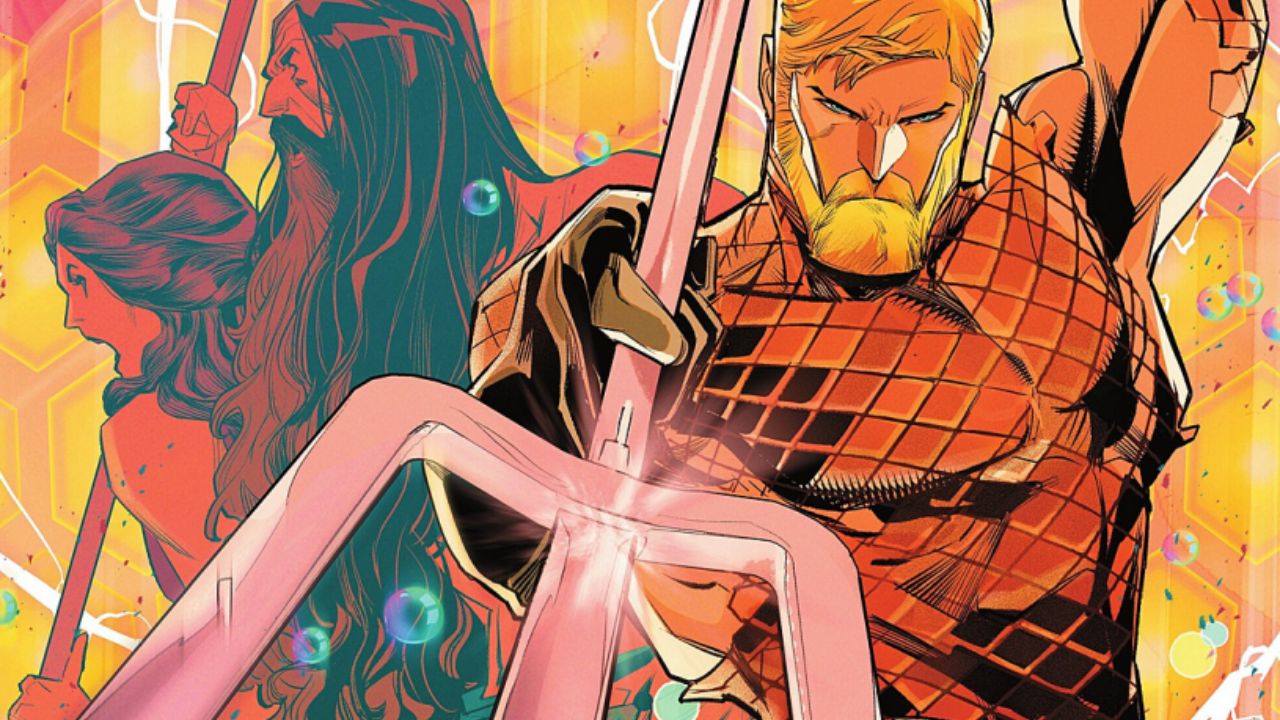
Dan Abnett’s run made Arthur Curry genuinely compelling — a king navigating politics, war, and identity. Perhaps the most quietly excellent book of the Rebirth era.
💚
Green Lanterns
New Lanterns Jessica Cruz and Simon Baz provided accessible entry points while the core mythology was streamlined and made exciting again.
Did It Actually Work? The Honest Assessment
Yes. And also: it’s complicated.
In terms of critical reception, Rebirth was a genuine resurgence. The books were reviewed better, discussed more enthusiastically, and recommended more frequently. The Rebirth era produced a cluster of genuinely great comics — Tomasi’s Superman, Williamson’s Flash, Abnett’s Aquaman, Tynion’s Detective Comics — that represent a high-water mark for DC in the 2010s.
In terms of sales, the results were more mixed over the long run. The initial Rebirth launches sold exceptionally well. But comics has structural challenges that go beyond line-wide philosophy, and by 2018 and 2019, DC was already beginning to layer new initiatives on top of Rebirth, somewhat diluting its clarity of purpose. Heroes in Crisis, a divisive crossover event in 2018, significantly dented the goodwill that had been carefully built up.
But here’s the thing about measuring Rebirth’s success only by sales figures: it misses what Rebirth actually accomplished. It proved that DC readers didn’t want darker or grimmer. They wanted meaningful. They wanted to care. They wanted to believe in the heroes — not ironically, not cynically, but genuinely. And for a few years, DC gave them that.
What Rebirth Actually Proved

Hope is not a weakness in superhero fiction. It's the entire point. Characters who believe in people, who choose goodness not because it's easy but because it's right, who carry the weight of the world and still manage to smile — those characters resonate. They always have.

Rebirth didn't discover this truth. It just remembered it. And sometimes, remembering something you already knew is the most important creative act of all.
The Legacy of Rebirth — What Came After
DC has gone through several initiatives since Rebirth — DC Nation, DC Year of the Villain, Infinite Frontier, and eventually Dawn of DC. Each one has drawn, in varying degrees, on the lessons of Rebirth.
Infinite Frontier, in particular, felt like a direct philosophical heir. It took the Rebirth idea — that DC’s universe should be expansive, inclusive of its own history, and rooted in optimism — and expanded it further. Under this banner, multiple Earths coexisted, legacy characters thrived, and the universe felt genuinely alive with possibility.
But Rebirth itself remains the clearest statement of purpose. It’s the moment when DC decided what it stood for. And even if subsequent initiatives have sometimes obscured that statement, it never quite disappeared.
The industry also took note. When Rebirth landed, it renewed a conversation across mainstream comics about whether darker and grittier was actually what readers wanted — or whether it was simply what publishers had assumed readers wanted. That conversation is still ongoing, but Rebirth made the counterargument in a way that was impossible to dismiss.

Why It Still Matters
We’re now nearly a decade removed from DC Universe: Rebirth #1. And people still talk about it. That scene between Barry and Wally gets shared online regularly. New readers discover the Rebirth-era books and recommend them enthusiastically. Collected editions sell steadily.
That longevity tells you something. DC Universe: Rebirth #1 wasn’t just a good corporate strategy document. It was — and this matters — a good comic. A genuinely moving piece of storytelling that understood what comics are capable of when they’re working at their best.
Comics have always had this duality: they’re commercial products produced on deadline by overworked creators for volatile markets, and they’re an art form capable of genuine emotional resonance, the kind that lodges in your memory and doesn’t leave. Rebirth leaned hard into the second half of that duality. And that’s rare enough to be worth celebrating.
Whatever DC does next — and they’ll always do something next — the blueprint that Rebirth established remains valid. Remember what made people love these characters. Trust that love. Tell stories worthy of it. That’s not complicated advice. It’s just, apparently, surprisingly hard to follow consistently.
Rebirth Didn’t Save DC With a Gimmick. It Saved DC By Remembering.
Every era of superhero comics has its own version of the same crisis: the suspicion that audiences have grown too sophisticated for sincerity, that darkness equals depth, that optimism is for children. Rebirth was DC’s answer to that suspicion — a firm, emotionally intelligent, narratively sophisticated refusal. It made the case, in the most persuasive way possible, that hope is not a childish thing. It’s a radical thing. And it’s always been what DC Comics, at its very best, was about.
One man grabbed another man’s hand and said I remember. And for a lot of readers, that was enough. That was more than enough. That was everything.