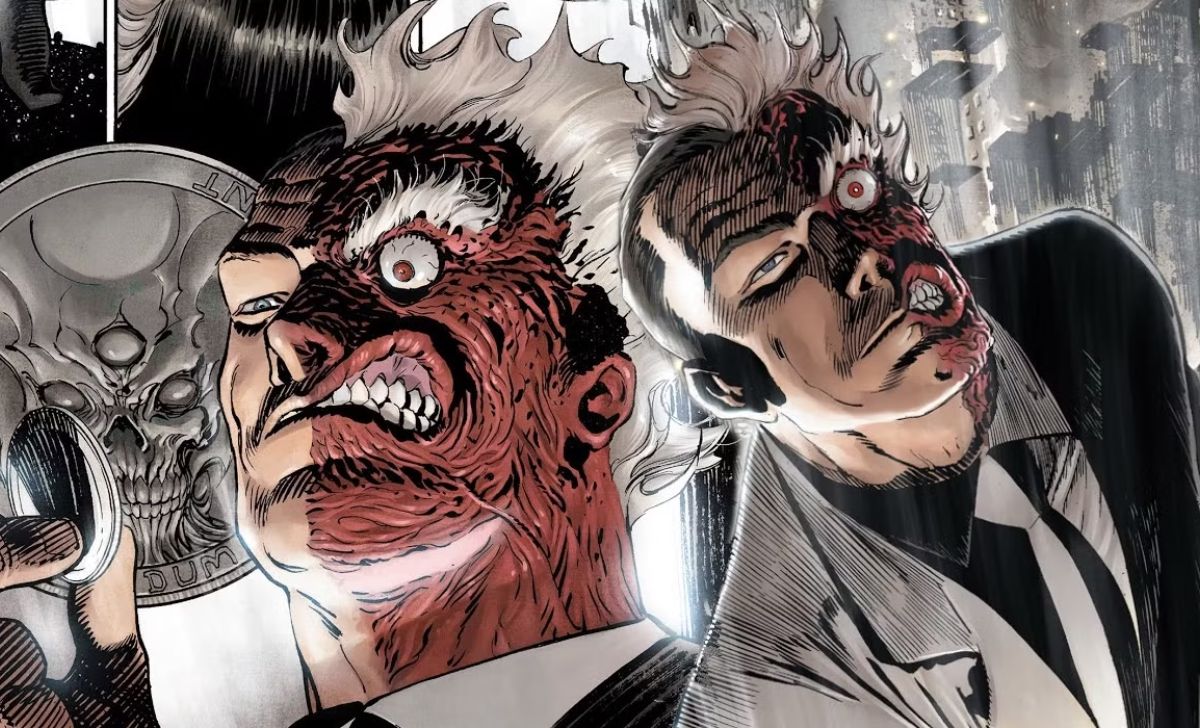
The origin of Two-Face in DC Comics is one of the most compelling and tragic stories in Batman’s extensive rogues’ gallery. Harvey Dent, once Gotham’s celebrated district attorney, fell from grace in a shocking, psychologically rich transformation that became a template for many subsequent comic book villains. The evolution of Two-Face weaves together themes of duality, justice, trauma, and fate—making his backstory essential reading for any fan of Batman or classic comics.
The Creation of Two-Face
Two-Face was birthed in the Golden Age of comics, created by Bob Kane and Bill Finger, who together were also the minds behind Batman himself. Kane drew inspiration from the 1931 film adaptation of Dr. Jekyll and Mr. Hyde, seeking to explore the duality within human nature, while the visual and psychological aspects were designed to stand out as a new kind of supervillain. Two-Face made his explosive debut in Detective Comics #66, published in August 1942, an era when most comic stories consisted of standalone tales. Two-Face’s introduction was one of the first to be told as a multi-part arc, instantly making him a significant figure in Gotham’s criminal underworld and a lasting adversary for Batman.
Harvey Dent: Gotham’s Shining Star
Harvey Dent—originally named Harvey Kent in his very first appearances—was Gotham’s golden boy. Handsome and brilliant, his nickname “Apollo” referenced his extraordinary looks. As the city’s district attorney, he earned respect as a courageous fighter against organized crime. Yet, Gotham’s corruption constantly placed him under pressure, and only a close-knit alliance with Batman and Commissioner James Gordon allowed him to take on the criminal empires threatening the city’s peace.
The Birth of Two-Face: Acid and Fate
Dent’s tragic transformation into Two-Face occurred during the trial of infamous mob boss Sal Maroni (sometimes spelled Moroni in later comics). Dent, determined to serve justice, presented Maroni’s lucky two-headed coin as evidence in court. In a moment of rage and desperation, Maroni hurled acid at Dent’s face. Batman, who was present, tried to deflect the attack but could not prevent the left side of Harvey’s face from being horrifically burned.
The physical trauma was swift and irreversible, but it was the psychological impact that truly birthed Two-Face. Harvey became fixated on his ravaged appearance and the dual nature of his scarred face, feeling as though he’d lost half of himself. Society’s reaction, filled with horror and revulsion, only deepened his sense of alienation. Alienated and in pain, he developed an obsession with duality, justice, and chance.

The Coin, Duality, and Descent
Dent’s descent into criminality was symbolized by Maroni’s two-headed coin. After the attack, Harvey scarred one side of the coin and began making all major decisions by flipping it. The logic was brutal and simple: if the coin landed on the heads (unscarred) side, he would act for good or show mercy; if on the tails (scarred) side, he would give in to his criminal urges. This dichotomy reflected his fractured mind, splitting Harvey Dent, the defender of justice, from Two-Face, his malicious alter ego. The Modern Age of Comics further developed this characterization, presenting Harvey as also struggling with dissociative identity disorder—his psyche battered by childhood abuse and the unbearable weight of Gotham’s corruption.
The storyline that introduced Two-Face in 1942’s Detective Comics #66 cemented him as a tragic figure. His crimes immediately began revolving around the number two: twin robberies, dual henchmen, and heists with a double-edged motive. At times, his good side would arise, doing unexpected acts of kindness, only for the evil side to return stronger than before.
Major Story Arcs and Evolution
As decades passed, DC Comics revisited and expanded on Two-Face’s origin. The most significant reinterpretation arrived with the 1990 story “The Eye of the Beholder,” which explored Harvey’s fragile mental state even before the acid attack. Here, his psyche is shaped by an abusive father, making the acid attack a final, devastating blow that shatters his already delicate mind.
The post-2011 New 52 reboot reimagined his transformation: this time, Dent found himself at odds with the McKillen crime family after becoming district attorney. Following tragic losses and betrayals, Erin McKillen attacked him at home, murdering his wife Gilda and scarring Harvey with acid, thus giving rise to Two-Face in a new, even darker context. In this version, Two-Face also learns Batman’s secret identity, amplifying his role as a perpetual threat to Gotham.
Two-Face’s Impact: Tragic Dimensions and Enduring Appeal
What makes Two-Face so enduring among Batman’s rogues is not just his unique look but the profound sadness and moral complexity he represents. Once a hero, his fatal flaw was his desire for absolute justice—a desire that, when corrupted, led to his downfall. Dent’s story is a mirror for Batman himself, a warning of what Gotham’s darkness can do even to those with the best intentions.
Two-Face’s inner conflict, his unpredictable coin flips, and the potential for redemption (or relapse) keep him at the heart of some of Batman’s greatest stories. In his best portrayals, Harvey’s tragedy is that his battle is not simply between hero and villain, but between the two halves of his own nature.
Legacy and Adaptations
Two-Face has transcended comics, appearing in numerous adaptations. From Billy Dee Williams’ brief tease in Batman (1989), Tommy Lee Jones’ outlandish take in Batman Forever (1995), to Aaron Eckhart’s intense, tragic portrayal in The Dark Knight (2008), the character has been reimagined for nearly every generation. Animated shows and video games continue to use him as a threat, peer, and dark reflection for Batman and Gotham.
The story of Two-Face, then, is not just a tale of a villain’s rise, but an exploration of fate, chance, and the fine line separating justice from vengeance. Each retelling adds new layers to his personality, ensuring that every time Harvey Dent flips his coin, the outcome is never inevitable—but always compelling.

Key Highlights
- Created by Bob Kane and Bill Finger, debuted in Detective Comics #66 (August 1942), originally as Harvey Kent.
- Disfigured by acid thrown by mob boss Sal Maroni, leading to his obsession with duality and his use of a scarred coin to make decisions.
- Representation of dissociative identity disorder and deep psychological trauma, particularly in modern reinterpretations.
- Central themes: fate, duality, the corruption of justice, chance versus choice.
- Frequent, memorable reappearances across comics, television, film, and games—reinforcing his status as one of Batman’s most nuanced and tragic adversaries.
Two-Face’s origin is a story of promise turned to tragedy, and through each new debut and retelling, Harvey Dent continues to captivate readers as Gotham’s most conflicted fallen hero.