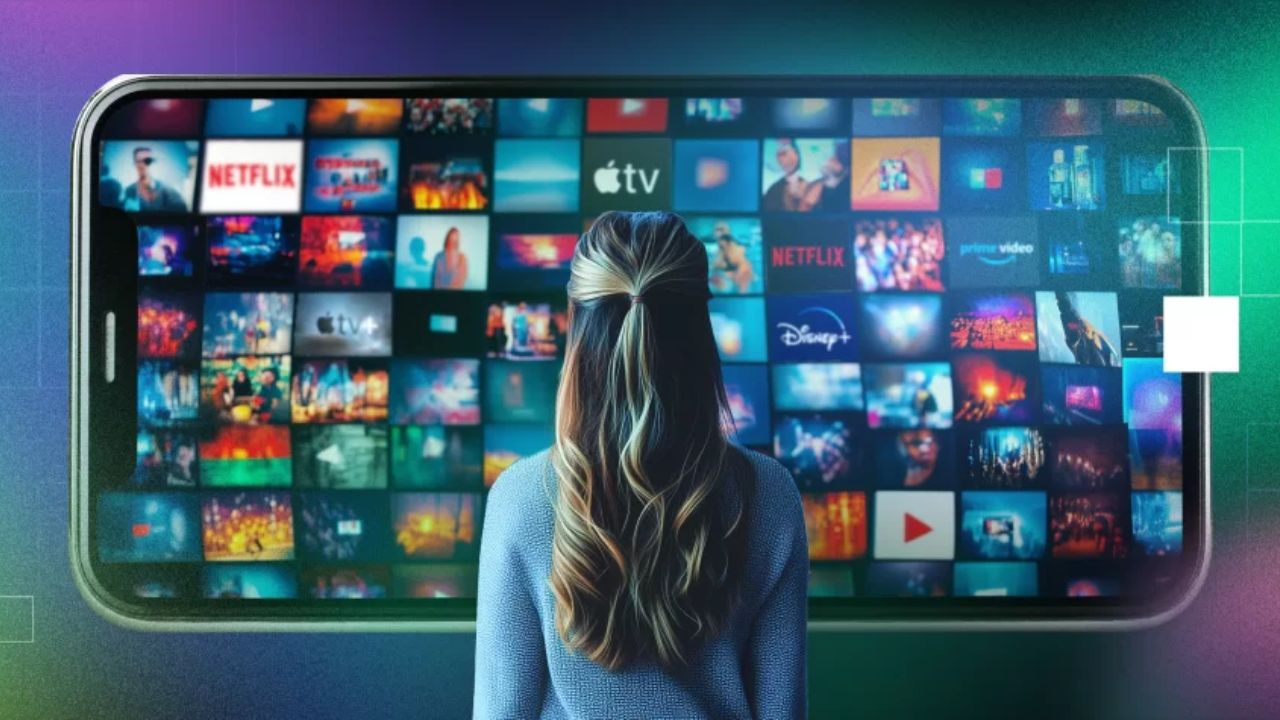
For years, the streaming industry operated on a simple gospel: subscribers hate ads. The entire premium model was built around that belief. Pay more, skip the commercials, enjoy uninterrupted bliss. It was clean, logical, and — as it turns out — increasingly wrong.
Recent data is surfacing a counterintuitive truth: viewers on ad-supported tiers are now spending roughly 16% more time on streaming platforms than their ad-free counterparts. Not slightly more. Not comparably more. Meaningfully, measurably, consistently more.
That number should stop every streaming executive, media buyer, and content strategist in their tracks. It’s not a rounding error. It’s a signal.
First, Let’s Understand What’s Actually Being Measured
When we say “time spent,” we’re talking about total session duration — how long a viewer stays active on a platform during a given sitting or over a given week. It captures binge depth, content discovery, re-watches, and browsing behavior.
The 16% gap isn’t the result of a single study done on a Tuesday afternoon. It’s a pattern emerging across multiple platform analytics reports, third-party measurement firms, and advertiser-facing data disclosures from major streamers including Peacock, Paramount+, Max, and Disney+. The consistency of the trend across platforms with wildly different content libraries and user demographics makes it hard to dismiss as noise.
So what’s driving it?
Reason #1: The Psychology of the “Earned Break”
There’s a well-documented cognitive phenomenon called reactance — the human tendency to resist when we feel our freedom is being constrained. Ironically, ad-free viewing can trigger a subtle form of it. When there’s nothing stopping you from watching forever, the experience can begin to feel aimless. The absence of interruption removes a natural pacing mechanism.
Ad-supported viewers, on the other hand, experience something closer to the classic television model: built-in micro-breaks every 15 to 25 minutes. These pauses serve as psychological permission slips. I’ll watch one more episode after this break. The ad becomes a reset rather than a punishment, lowering the friction of committing to more content.
It sounds paradoxical, but the break makes continuing easier.

Reason #2: Price Anchoring Changes Who’s in the Room
Ad-supported tiers are typically priced 40–60% lower than premium plans. That pricing structure doesn’t just attract budget-conscious viewers — it fundamentally changes the composition of the audience.
Lower price points bring in:
- Casual and exploratory viewers who weren’t previously subscribers at all
- Younger demographics (18–34) who prioritize access over experience purity
- Multi-platform households where streaming is ambient, running in the background during meals, exercise, or commutes
These viewer profiles have naturally higher raw watch-time potential. They’re not necessarily more engaged per minute — they’re simply watching in more contexts and for more hours in the day. The ad tier didn’t make them watch more; it let them in the door at all.
Reason #3: Content Discovery Loops Are Longer
Premium subscribers often arrive with a specific title in mind. They’ve heard the buzz, they subscribe, they watch, they cancel or stay dormant until the next big release. Their viewing is intentional but episodic.
Ad-supported viewers behave differently. Because the cost of keeping the subscription active is lower, there’s less pressure to extract maximum value from each session. This leads to more ambient browsing — scrolling through recommendations, sampling episodes, watching older library content with no particular agenda.
That browsing behavior is time-consuming in the best way for platforms. Every recommendation click, every “let’s see what this is,” every accidental rediscovery of a show from three years ago adds minutes and hours to the session total. The platform’s discovery algorithm has more at-bats, and it converts more of them.
Reason #4: The Ad Experience Itself Has Evolved
Let’s be honest about what “ads on streaming” meant in 2020: it meant the same 30-second spot repeated four times per break, with jarring volume spikes and zero relevance to what you’d been watching. Of course viewers recoiled from that.
But 2024–2025 ad-supported streaming is a materially different product. The leading platforms have invested heavily in:
- Frequency capping that prevents the same ad from appearing more than twice per session
- Contextual and behavioral targeting that surfaces ads with actual relevance to the viewer
- Interactive ad formats — pause ads, shoppable overlays, QR integrations — that feel native rather than intrusive
- Shorter ad loads (often 4–5 minutes per hour vs. traditional TV’s 16–18 minutes)
When ads don’t feel like punishment, the calculus changes. Viewers who might have previously paused, rage-quit, or abandoned a session now sit through the break without losing momentum. The ad experience has cleared the bar from “tolerable” to, increasingly, “fine.”
Reason #5: Bundling and the Default Tier Effect
Several major platforms have restructured their tier offerings to make ad-supported the default starting point — not a downgrade. Disney+, for example, has repositioned its ad tier as the standard entry point, with the ad-free version framed as a premium upgrade rather than the baseline.
When ad-supported is the default, a large portion of new subscribers never consciously “choose” it. They simply start watching. This cohort includes high-engagement viewers who would have historically been premium subscribers but hadn’t thought deeply about the distinction. Their behavior on ad-supported tiers skews the data upward significantly.
The lesson: defaults are powerful. When the friction of upgrading is optional rather than mandatory, many highly engaged viewers simply stay where they land — and watch a lot.
Reason #6: Connected TV and the Living Room Shift
Mobile viewers tend to be distracted, multitasking, and quick to exit. Connected TV (CTV) viewing — on smart TVs, Roku devices, Apple TV, and gaming consoles — correlates with longer, more committed sessions.
Here’s the critical overlap: ad-supported streaming over-indexes significantly on CTV. The living room screen is where families gather, where background TV plays for hours, where someone puts something on and just… stays. CTV viewers on ad-supported platforms average dramatically longer sessions than mobile premium subscribers.
As CTV continues its ascent — now accounting for the majority of streaming hours in the U.S. — ad-supported tiers are riding that wave disproportionately. The 16% engagement gap is partly a story about devices and living rooms, not just economics and psychology.
What This Means for Advertisers
If you’re still treating ad-supported streaming like a discount media buy — a place to dump remnant inventory at reduced CPMs — you’re misreading the room entirely.
Ad-supported streaming viewers are:
- More attentive, thanks to lower ad load and better targeting relevance
- More time-spent, meaning more opportunities for frequency and recall across a session
- More diverse, skewing toward audiences that premium-only campaigns systematically miss
- More open to discovery, browsing actively rather than executing a narrow content agenda
The brands building presence on these tiers now are buying share in a highly engaged, growing audience segment before the market fully prices it in. The CPM gap between ad-supported streaming and traditional linear TV still exists in many categories. That gap is closing — and fast.

What This Means for Platforms
The 16% figure isn’t just an advertiser story. It’s an existential reframing for platform strategy.
If ad-supported viewers are spending more time on platform, that means:
- Greater lifetime value per subscriber when ad revenue per hour is properly monetized
- Higher retention potential, since habitual viewers are harder to churn
- More data generation for recommendation engine training, which compounds over time
- Greater library utilization, meaning sunk content costs are distributed across more viewing hours
The platforms that once saw ad-supported tiers as a necessary concession to the price-sensitive market are now recognizing them as their most strategically important growth engine. The race to build premium ad inventory — to make the ad-supported experience genuinely excellent — has become the central competitive battleground in streaming.
The Myth That Needed Busting
The idea that viewers universally hate ads was never quite as true as the industry assumed. What viewers hate are bad ads — repetitive, irrelevant, disruptive ads that break the spell of good content without offering anything in return.
When the ad experience is thoughtfully designed, when the content is compelling, and when the price makes the value proposition undeniable, viewers don’t just tolerate the model. They lean in.
The 16% time-spent advantage isn’t happening despite the ads. In some ways, it’s happening because of everything the ad-supported model required platforms to get right: lower prices, lighter ad loads, better targeting, and a user experience built for retention rather than extraction.
Conclusion: The Conventional Wisdom Was Wrong
Streaming’s ad-supported tier started as a compromise — a way to retain subscribers who couldn’t justify the full price. It has quietly become something more significant: the format that watches longest, engages most consistently, and grows fastest.
For advertisers, this is the most important media buy story of the next three years. For platforms, it’s the business model pivot that will separate the survivors from the also-rans. For the industry broadly, it’s a reminder that consumer behavior is more nuanced — and more interesting — than the simple stories we tell ourselves about it.
Viewers are spending 16% more time on ad-supported tiers. The only real question left is: what are you going to do with that information?