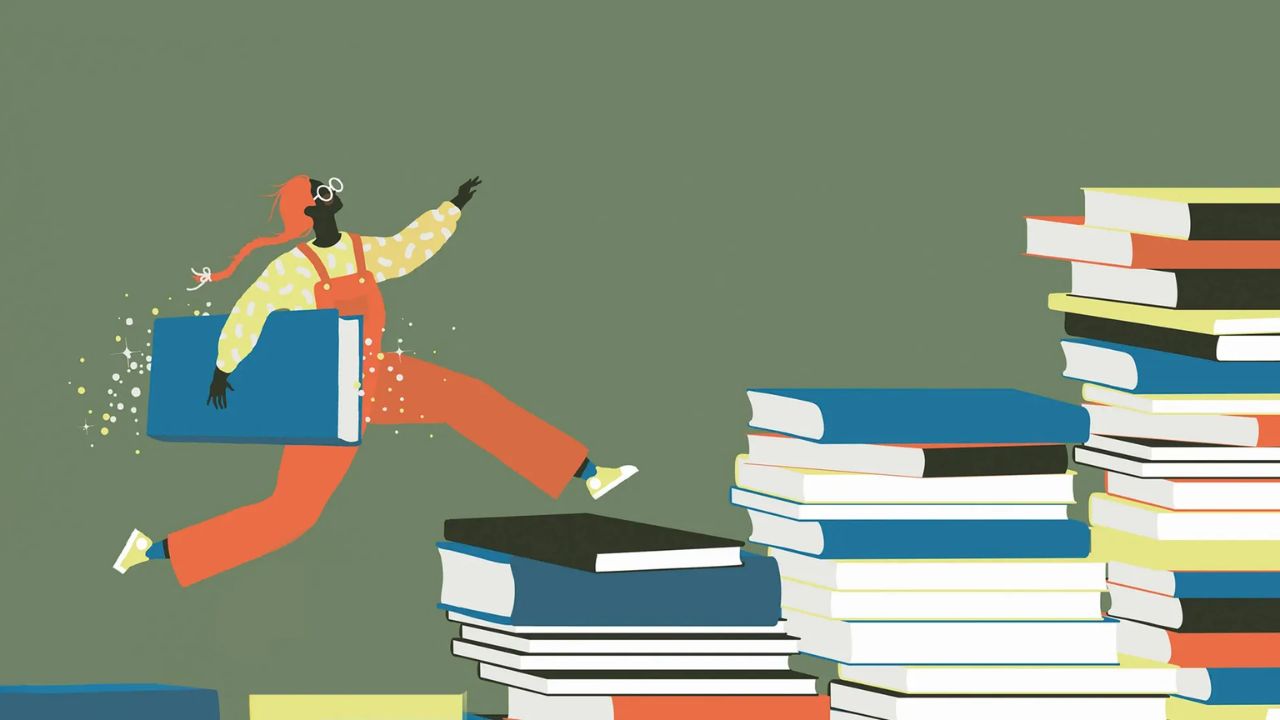
There is a book on your nightstand you’ve been meaning to finish since November. Maybe it’s dog-eared on page 47. Maybe it’s still in the wrapper. Either way, it sits there every night as a small, quiet accusation — and you tell yourself the same thing you told yourself last Tuesday: I’ll read when things slow down.
Things won’t slow down. That’s not pessimism — it’s just the shape of a modern life. But here’s what I’ve come to believe after years of trying every productivity trick in the book (yes, including audiobooks at 2.5x speed): reading more isn’t about finding time. It’s about making different decisions with the time you already have.
“You don’t need more hours. You need to stop treating reading like a reward you haven’t earned yet.”

Stop waiting for a long stretch of quiet
Most people read in one of two modes: deeply, for hours at a time, or not at all. That all-or-nothing thinking is the real enemy. The truth is that fifteen minutes in the morning before you check your phone, twenty minutes on a lunch break, ten minutes while dinner cooks — these fragments add up to something real.
A page here, a chapter there. Fifteen minutes a day, over a year, translates to roughly twelve books. Not because you’re rushing. Because you’re consistent.
Try this

Put your book on your pillow each morning. You'll see it every night — and the physical reminder does more than any app notification ever will.

Have a book in every room (and every bag)
Friction is the enemy of habits. If reading requires you to find the right book in the right place at the right moment, you simply won’t do it. But if there’s always something to read wherever you happen to be sitting — kitchen table, couch, bathroom, bag — the habit finds you instead of the other way around.
This doesn’t mean buying dozens of copies. It means having one physical book in progress, one on your phone for when you’re out, and maybe one on your tablet or e-reader for bed. Your future self, stuck in a waiting room for forty minutes, will thank you.
Audit your dead time honestly
We all have it — the idle minutes that disappear into scrolling, waiting, commuting, or sitting in lobbies. None of these feel like “reading time.” They don’t have to. That’s exactly the point.
A subway ride. The ten minutes you wait for a meeting to start. The queue at the pharmacy. Add up your dead time for a single week and you might find an hour or two you didn’t know you had. The phone makes it invisible. A book makes it yours.
“Dead time isn’t wasted time. It’s unscheduled time. And unscheduled time is the best reading time there is.”
Read what you actually want to read
This sounds obvious. It isn’t. Many people who “can’t find time to read” are actually failing to finish books they feel they should read — the dense classic, the important nonfiction, the one everyone’s talking about — rather than books they’d genuinely love. Obligation is a terrible reading companion.
Give yourself permission to read for pleasure without apology. The fastest way to read more is to read books that make you want to skip dinner. Genre fiction, narrative nonfiction, short story collections, graphic novels — it all counts. The point is to build the habit, and the habit only builds when the reward is real.
The 50-page rule

Give any book 50 pages. If you're not hooked by then, abandon it without guilt. Life is too short for books you're enduring. Nancy Pearl's variation: subtract your age from 100 and that's your page limit. The older you get, the less time you owe a bad book.
Make peace with audiobooks
There is a persistent, slightly snobbish debate about whether audiobooks “count.” They do. Full stop. Your brain processes narrative the same way regardless of the delivery mechanism — and some books are genuinely better listened to. Memoirs read by their authors, novels with full casts, history with a great narrator: these can be revelations.
Audiobooks are for the time that can’t be reclaimed any other way: the commute, the workout, the dishes, the walk. They’re not a replacement for reading — they’re a supplement that fits into the cracks of a day where a physical book simply can’t go.
Protect the first and last fifteen minutes of your day
If you can do nothing else from this list, do this. Before you reach for your phone in the morning, read for fifteen minutes. Before you close your eyes at night, read instead of scrolling. That’s thirty minutes a day that most people currently give to algorithms designed by people who would rather you didn’t read.
The morning session is especially powerful. Your mind is fresh, the world hasn’t piled on yet, and you’re setting an intention for what matters. Reading first thing is one of the quietest acts of self-determination available to you.
The one swap that changes everything

Charge your phone outside the bedroom. The book replaces the phone on the nightstand. That single change is responsible for more reading habits than any app, tracker, or reading challenge ever invented.

Keep a reading list — but don’t worship it
A good reading list is a menu, not a prescription. Use it to capture recommendations the moment they reach you — from friends, reviews, conversations — so you’re never standing in a bookstore with a blank mind. But don’t let the list become another thing you’re behind on.
The best lists have room for serendipity: the book you picked up because the cover was beautiful, the one pressed into your hands by a stranger on a train, the one you found buried in a box at a garage sale. Some of the best books you’ll ever read aren’t on any list yet.
Join something — even loosely
You don’t need a formal book club with wine and a schedule (though if that’s your thing, wonderful). You just need some light social accountability. A friend who texts you about what they’re reading. A corner of the internet — a community, a newsletter — where books are discussed as though they matter, because they do.
Humans are social creatures. We read more when we have someone to talk to about what we’re reading. And the conversation that follows a good book is one of the finer pleasures available to us.
∗ ∗ ∗
You don’t need to read fifty books this year. You just need to read the next page. Then the one after that. The hours will come — not because life got quieter, but because you decided books were worth stealing time for. They are.