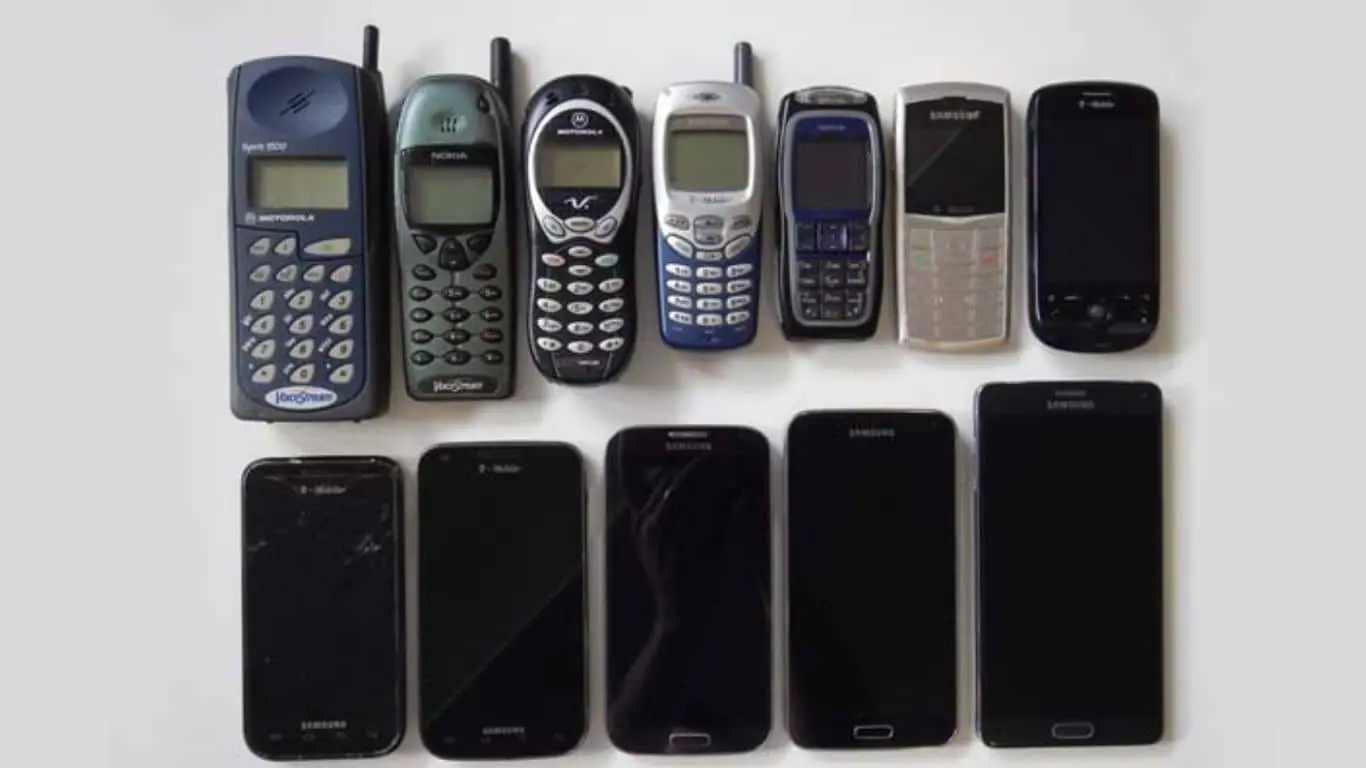
The journey of smartphones from bulky, basic devices to today’s sleek, multifunctional powerhouses is a fascinating tale of technological advancement and cultural integration. This evolution reflects not only the rapid pace of innovation in telecommunications but also changing consumer demands and lifestyle adaptations. Let’s explore the milestones in the ‘Evolution of Smartphones: From Brick to Pocket Powerhouse’, highlighting how they’ve transformed from mere communication devices into integral components of our daily lives.
Evolution of Smartphones: From Brick to Pocket Powerhouse
The Dawn of Mobile Communication

The advent of mobile communication can be traced back to the early 1980s, a time when telecommunications underwent a monumental shift with the introduction of the first mobile phones. These devices, often referred to as “brick phones” due to their bulky and cumbersome design, represented a breakthrough in communication technology.
The Motorola DynaTAC 8000X, released in 1983, is a quintessential example of this era. Weighing nearly 2 pounds and offering a mere 30 minutes of talk time, it was a marvel of its time, enabling users to communicate wirelessly while on the move. However, its limited functionality and high cost meant that mobile phones were still seen as luxury items, accessible only to a select few.
The Introduction of Digital and the Rise of 2G

The transition from analog to digital technology in the early 1990s marked a significant milestone in the evolution of mobile communication. The launch of the second generation of mobile phones, commonly known as 2G, introduced digital communication standards like GSM (Global System for Mobile Communications), laying the foundation for the modern era of mobile connectivity.
With the adoption of digital technology, mobile phones became more efficient and reliable, offering clearer voice calls and improved battery life. Additionally, 2G paved the way for SMS (Short Message Service) text messaging, a feature that would revolutionize interpersonal communication and become an integral part of the mobile experience.
The Convergence of Mobile and PDA: The Birth of the Smartphone

The term “smartphone” was first coined to describe devices that combined the functionalities of a mobile phone and a PDA (Personal Digital Assistant). One of the earliest examples of a smartphone is the IBM Simon, introduced in 1994. Although primitive by today’s standards, the IBM Simon featured a touchscreen interface and a suite of applications for managing contacts, emails, and calendar appointments.
While the concept of a smartphone was still in its infancy, the IBM Simon laid the groundwork for the integration of mobile communication with computing capabilities, foreshadowing the transformative impact that smartphones would have on society in the years to come.
The Internet Goes Mobile: 3G and the App Revolution

The early 2000s witnessed a paradigm shift in mobile communication with the introduction of third-generation (3G) technology. This era was characterized by the widespread adoption of high-speed internet access on mobile devices, enabling users to browse the web, send emails, and stream multimedia content on the go.
The launch of the iPhone by Apple in 2007 and the opening of the App Store in 2008 further revolutionized the mobile landscape, giving rise to the app ecosystem. Suddenly, smartphones were not just communication devices but powerful computing platforms capable of running a myriad of third-party applications, from games and social media to productivity tools and entertainment apps.
The Smartphone Ecosystem Expands: Android Enters the Scene

The launch of the Android operating system by Google in 2008 marked a significant milestone in the evolution of smartphones. Unlike proprietary operating systems like iOS, Android was open-source, allowing manufacturers to customize and adapt it to their hardware specifications. This open approach democratized smartphone technology, leading to a proliferation of devices across different price points and form factors.
Moreover, the availability of the Android Market (later rebranded as Google Play) provided users with access to a vast array of apps, further fueling the growth of the smartphone ecosystem. With Android, smartphones became more accessible and customizable, catering to a diverse range of consumer preferences and needs.
4G and Beyond: The Era of High-Speed Connectivity

The rollout of fourth-generation (4G) LTE networks in the late 2000s and early 2010s brought about a new era of mobile connectivity. 4G technology offered significantly faster internet speeds and lower latency, enabling seamless streaming of high-definition video, online gaming, and real-time communication.
Smartphones became more than just communication devices; they were now portable entertainment centers, business tools, and personal assistants, capable of managing a wide array of tasks from navigation to online shopping. The ubiquity of 4G connectivity transformed the way we interacted with our devices, paving the way for new experiences and applications that were previously unimaginable.
The Future Is Now: 5G and the Integration of AI

As we enter the era of fifth-generation (5G) wireless technology, the future of smartphones promises even greater connectivity and innovation. 5G networks offer unprecedented speeds and lower latency, enabling real-time communication, augmented reality experiences, and seamless connectivity across a myriad of devices.
Moreover, smartphones are increasingly integrating artificial intelligence (AI) capabilities, enhancing user experiences through personalized assistance, advanced computational photography, and optimized device performance. With 5G and AI, smartphones are poised to become even more integral to our daily lives, serving as the central hub for managing our digital interactions, entertainment, and productivity.
Also Read: Apple Vision Pro is a game changer in the world of Augmented Reality