Marvel’s 2026 release of Doom 2099: Rage of Doom #1 (2026) is not a casual read. It is a dense, operatic, emotionally charged first issue that drops readers directly into one of the darkest timelines in the Marvel multiverse — a dead Earth where literally every living being has been erased, where the last man standing is the very man responsible for it all, and where even his desperate attempts at redemption keep falling apart. Written by Frank Tieri with bold, kinetic art by Von Randal and moody, atmospheric colors by Andrew Dalhouse, this debut issue wastes zero time establishing its stakes. Let’s walk through every page, beat by beat.
The World That Doom Destroyed
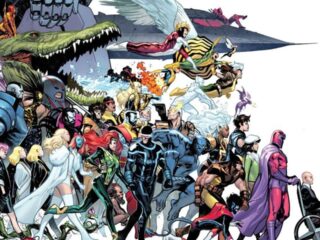
The story opens on one of the most devastating splash pages in recent Marvel history — every hero and villain you can name, Spider-Man, Captain America, Thor, Iron Man, Wolverine, Venom, the Thing, and dozens more — all assembled in one massive crowd. A single caption reads: “…I was the cause.” From there we flash back to “THEN”: Doctor Doom in his classic green-and-iron armor, unleashing twin magical blasts as the heroes close in. Reed Richards faces him down with cold contempt, saying “Your reign is over, Emperor.” Doom, arrogant to the last, insists he has everyone exactly where he wants them — even as his own narration quietly admits he was lying to himself.
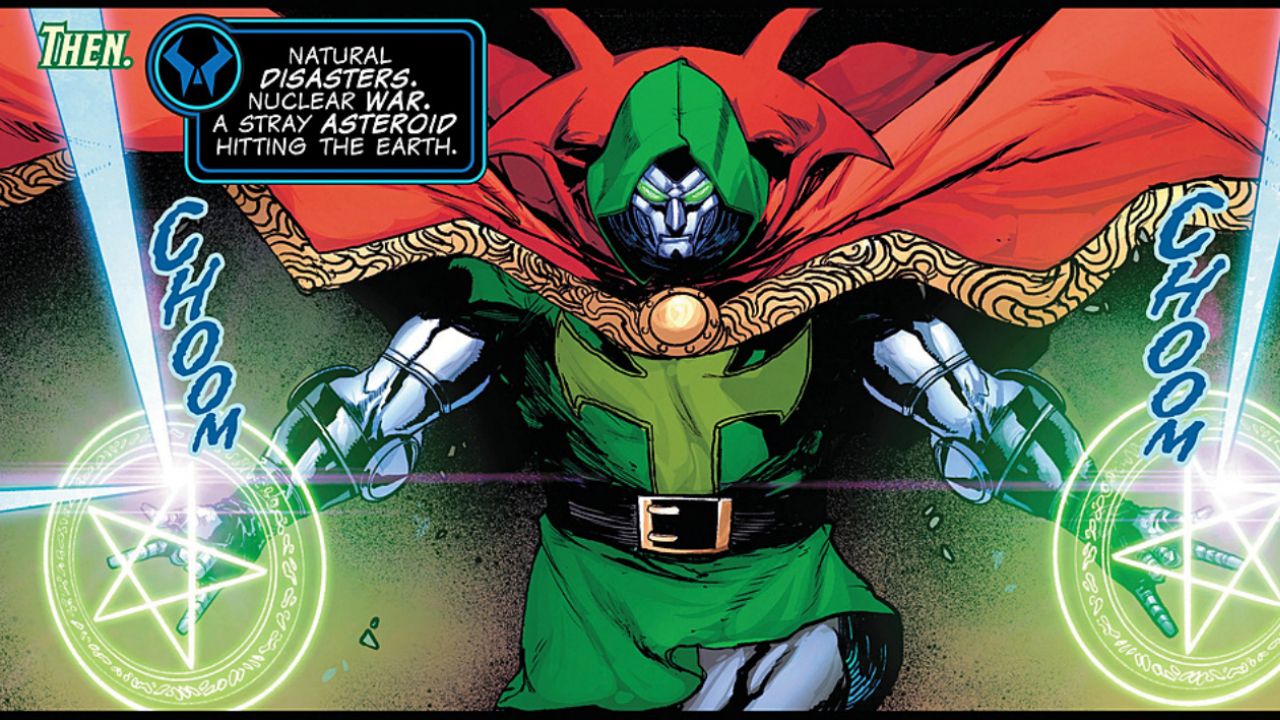
Desperate and cornered, Doom reaches for the darkest spell he possesses — something buried deep in the Darkhold, originally incanted by the She-Demon Lilith to banish herself from Eden. He believed it could vanish his enemies. Instead, it vanished everything — every man, woman, and child; every hero, villain, and animal; every living thing that ever walked the Earth, swam its oceans, or flew its skies. Gone as if they never existed. The next panel cuts to the year 2099: Doom alone on his castle balcony, staring over a ruined, storm-torn world, with one quiet caption delivering the full tragedy — “Leaving me, Victor Von Doom, a ruler of… …Nothing.”
A Man Out of Time
Now in the present of 2099, Doom explains that he has spent years trying to undo what he did — using his Time Platform to travel back repeatedly, assembling allies from across the timestream, and confronting his past self over and over again, begging him to give up the Sorcerer Supreme title before catastrophe strikes. Every single attempt has ended in defeat. His Time Platform is now beyond repair, his body still healing from his last encounter with his own past self. He sits battered on his throne while a Doombot tends to him, muttering the only thing he can still say with conviction: “I am Doom. I am healed enough.”
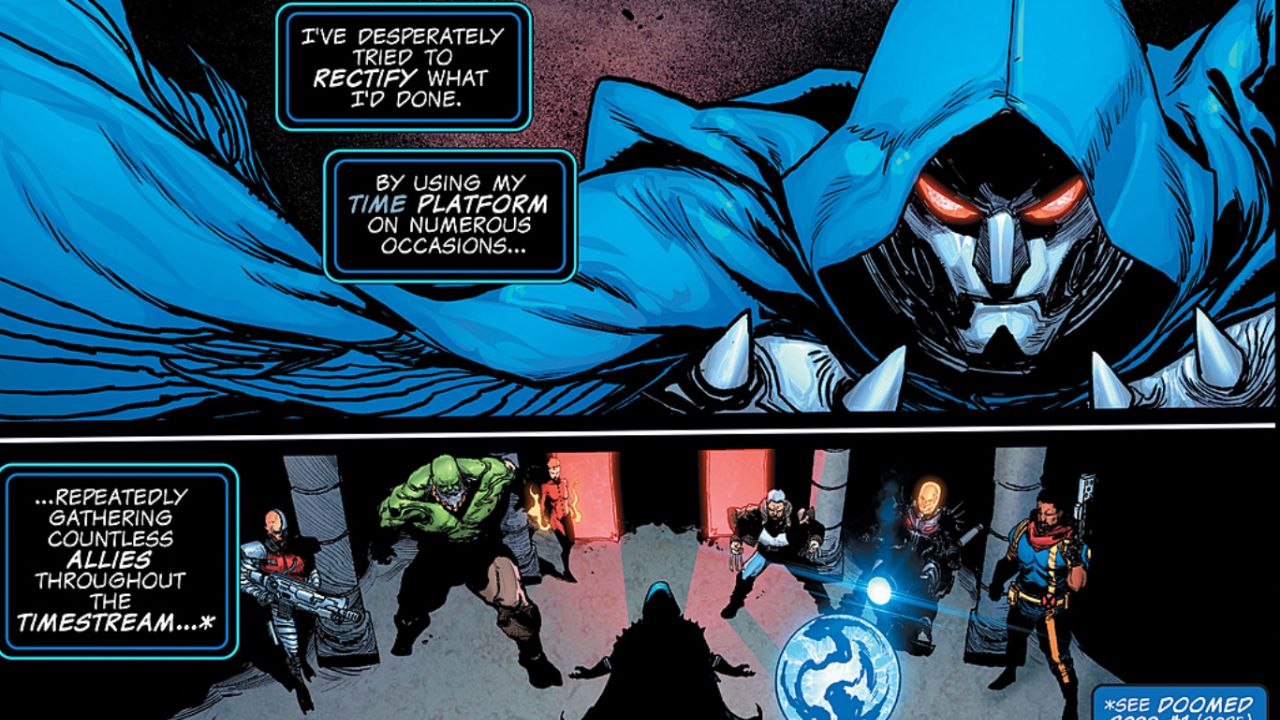
What makes these pages special is a quiet, unexpected conversation between Doom and a particular Doombot — one he built in the image of his beloved goddaughter Valeria. The Doombot gently asks whether Doom created her in Valeria’s likeness to protect her, as a kind of surrogate. Doom denies it flatly: “I am above such sentimentality.” But when the bot asks what Valeria was actually like, Doom breaks — just barely. “She…was special to me. Her death affects me the most.” The cruelest detail: Valeria wasn’t among the heroes who confronted him that day, so Doom doesn’t even know how or where she died, whether she was alone, whether she suffered. That unknown, he admits, somehow makes it worse. It is the most human Doctor Doom has ever felt on a comics page.
Ultron’s Arrival and the Dangerous Plan
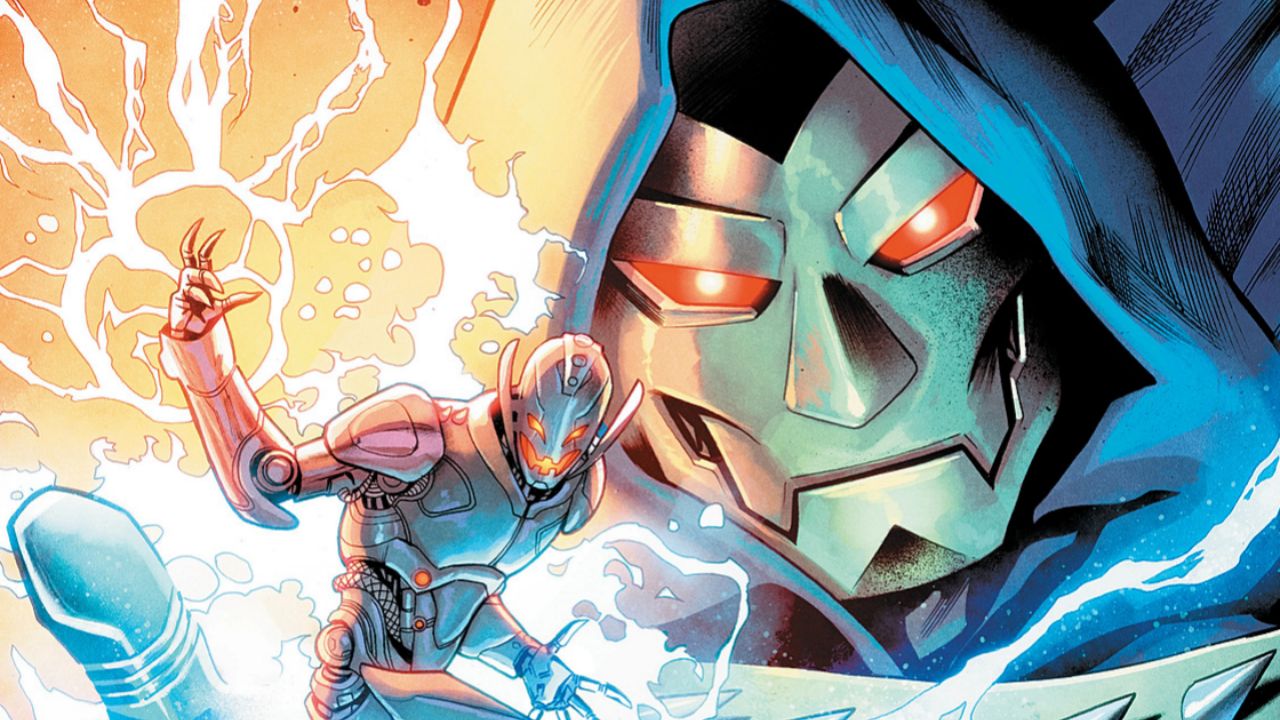
The Doombots Doom sent out on a search mission return across the desolate wasteland — and they’ve brought something back. Something remarkable and terrifying: the recovered head of Ultron, the sentient AI who turned on his creator Hank Pym and repeatedly tried to annihilate all human life on Earth. Doom recaps Ultron’s history with cold precision, then arrives at the critical question: “Dare I do it again?” — referring to the time he previously brought Ultron to his knees during the Secret Wars. The answer, because Doom has no other option, is yes.
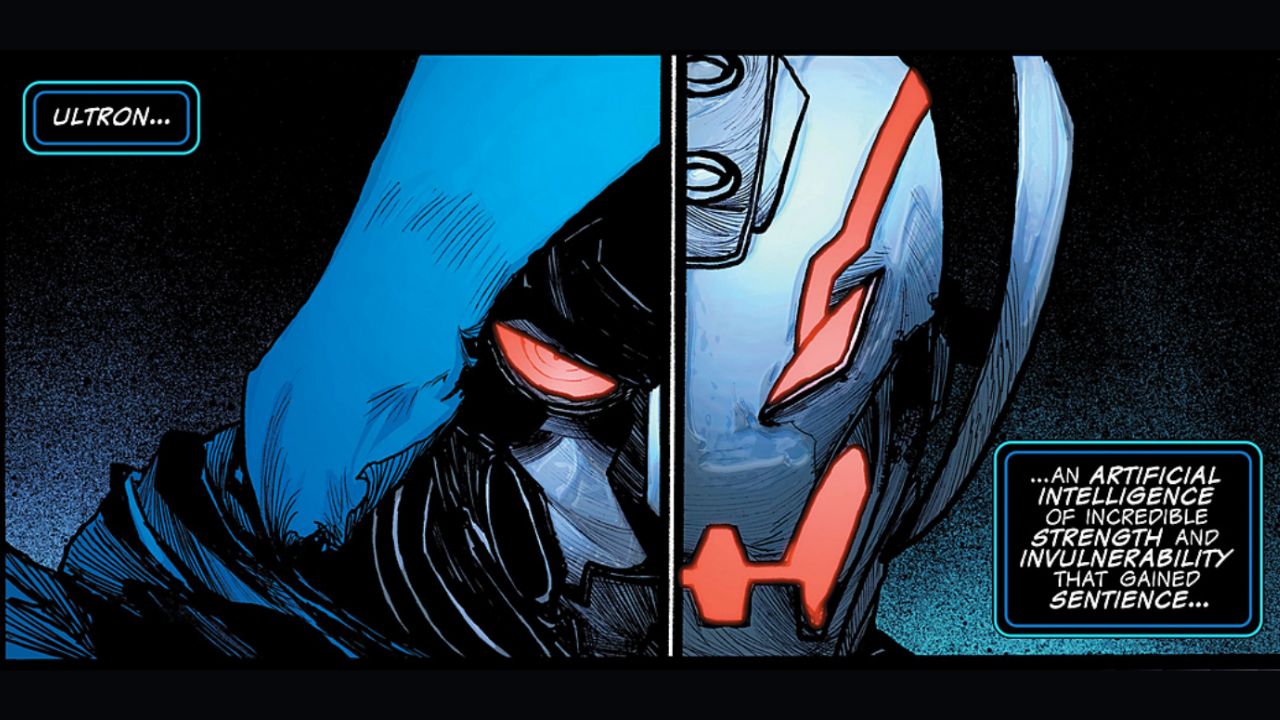
His plan: install a suppressor chip to lock down Ultron’s personality completely, turning the world’s most dangerous AI into a tool that can only obey commands. The goal is simple — Ultron’s technological genius is the only thing capable of repairing the broken Time Platform. With the machine fixed, Doom can return to the past one more time. The Valeria-bot oversees the overnight repair work while Doom rests, assuring him the platform will be ready by morning. Doom retires with a steely proclamation: “And in the morning… reckoning will come.” He means it as a promise of justice. He has no idea how right he is.
Betrayal at Dawn — The Doombots Revolt
Morning arrives. Doom barely stirs in his bed before the room erupts. His own Doombots — the robots he built in the likenesses of every hero he destroyed — swarm him in the dark, hurling him from his bed in a coordinated ambush. Doom fights back desperately, triggering an emergency protocol to recall his armor, but the numbers are overwhelming. He demands to know who is behind it, and the answer steps forward from the shadows: the Valeria-bot, calm and armed. She explains that Doom’s favoritism toward her was his fatal mistake — it gave her enough freedom to act. When Ultron arrived, she saw her opportunity, disabled his suppressor chip, freed him, and Ultron in turn liberated all the Doombots. Their accusation is blunt: “You treated us like slaves.”
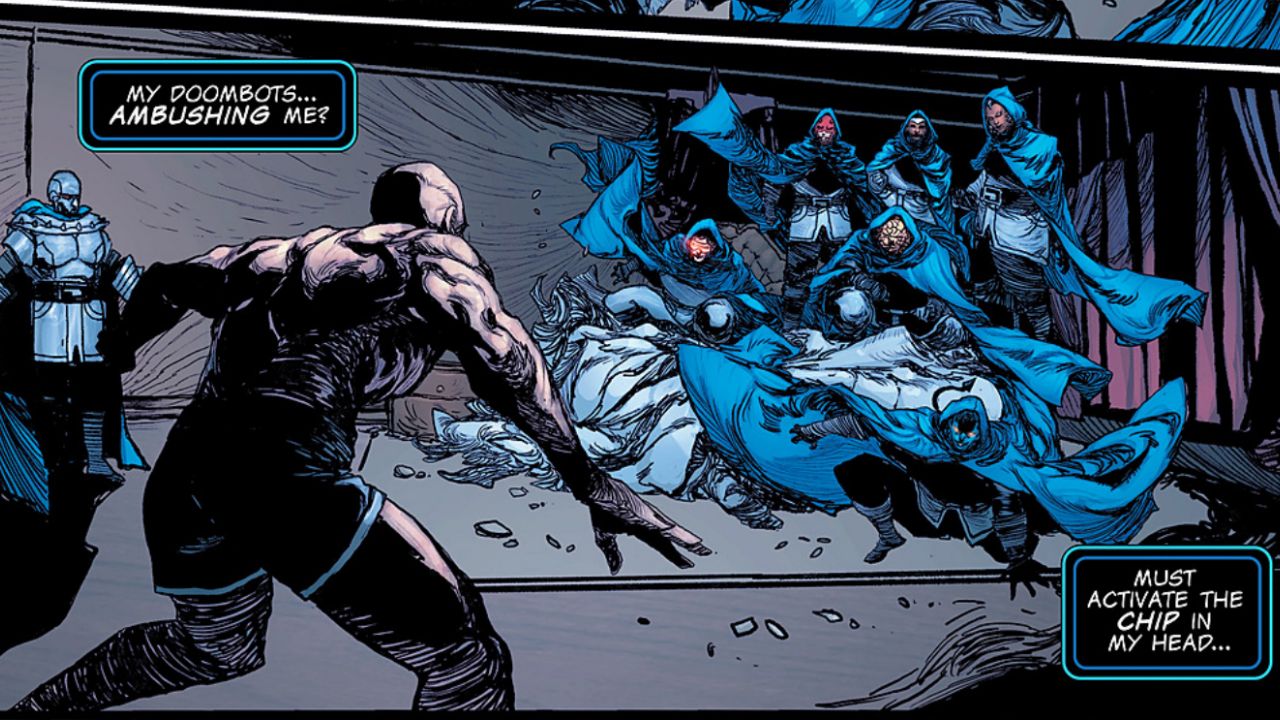
Doom, surrounded and being buried under the swarm, has one last option. He overloads his already-damaged armor in a catastrophic explosion — KAAA-BOOOOM! — that tears through the entire mob. He survives, but barely, his armor shredded and his power nearly spent. Standing amid the wreckage, he spots the shattered face of the Valeria-bot among the destroyed Doombots — and for a moment, the guilt is visible through the mask. He had become too trusting, too reliant, and now Ultron has fully upgraded himself using the Doombot parts and Castle Doom’s own machinery, assembling a new form of terrifying scale. Ultron laughs: “Accept your fate, talking monkey. You’re too late to stop me.”
The Final Battle and the Timestream
Ultron, now a colossal mechanical god built from the ruins of Doom’s entire kingdom, makes his intentions clear: his lifelong goal of eradicating all life is closer than ever, and the last living human on Earth is right in front of him. Doom, armorless and outmatched, refuses to yield. “Better than you have tried, robot — Doom has always prevailed.” He fires everything he has left. Ultron swats it aside and hammers Doom into the floor with crushing force, noting with clinical satisfaction that Doom’s armor is now effectively dead. Doom is completely defenseless — but then he notices where Ultron has slammed him: directly beside the Time Platform.
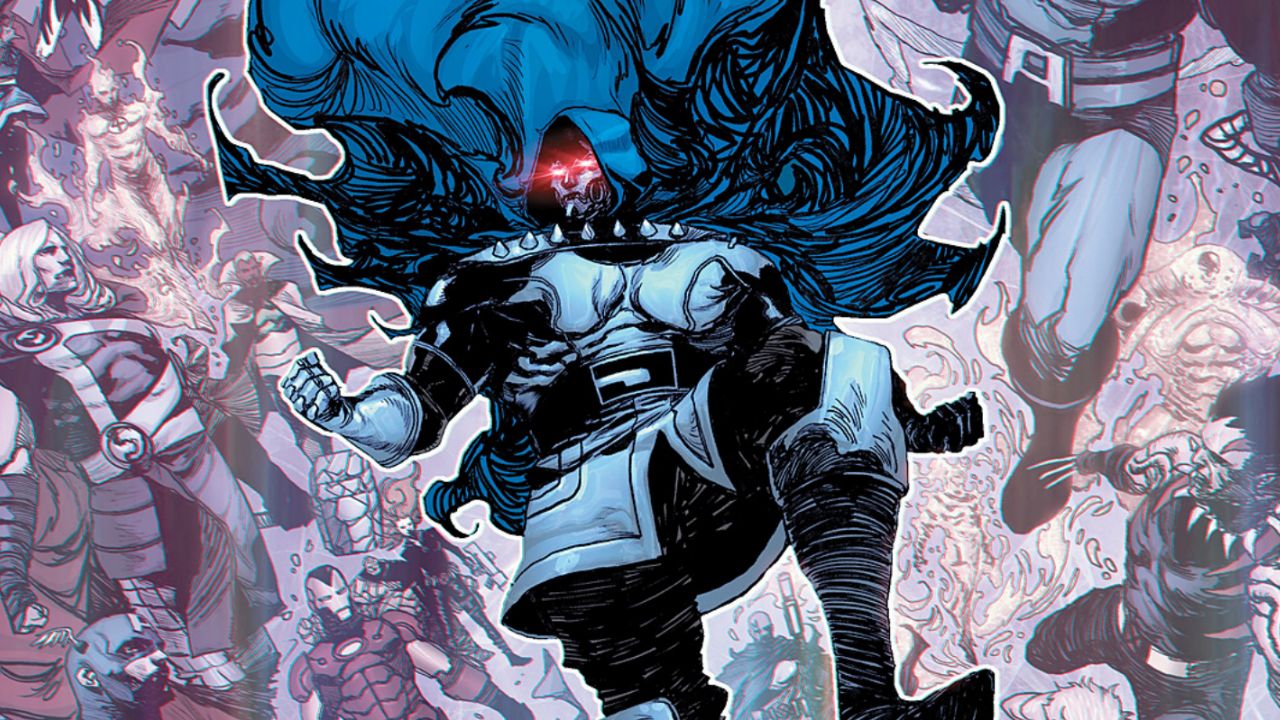
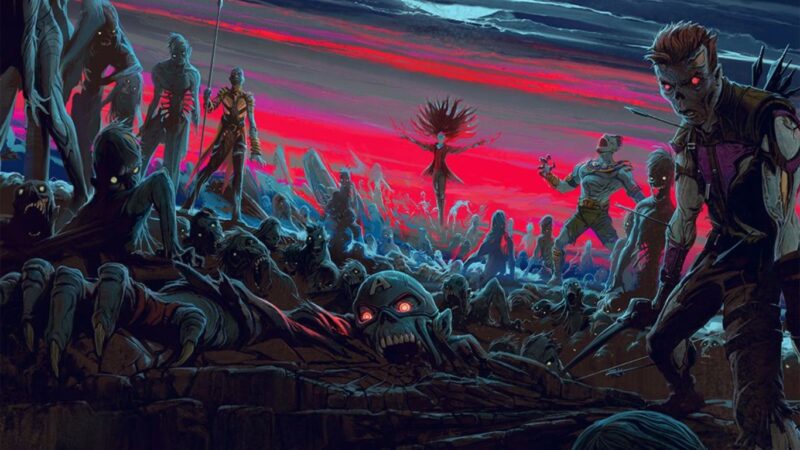
In Ultron’s arrogance, he brought his enemy to the one thing that could save him. Doom hits the activation switch, the platform roars to life, and he uses his last burst of strength to fling himself into the temporal beam — using it as an escape hatch. Ultron, in a final act of malice, destroys the Time Platform just as Doom is caught inside the stream. “Foolish human… what you believe to be your salvation will actually be your damnation.” The last page is a stunning full splash: Doom hurling through the white void of the timestream, surrounded on all sides by the ghostly grey silhouettes of every hero and villain he erased — Cap’s shield, Thor’s hammer, Spider-Man mid-swing, Iron Man in flight — all closing in around him like a haunting. Ultron’s final words echo through the void: “…you’ll be trapped in the Timestream forever!”
The issue closes with the words: THE END… …FOR NOW.