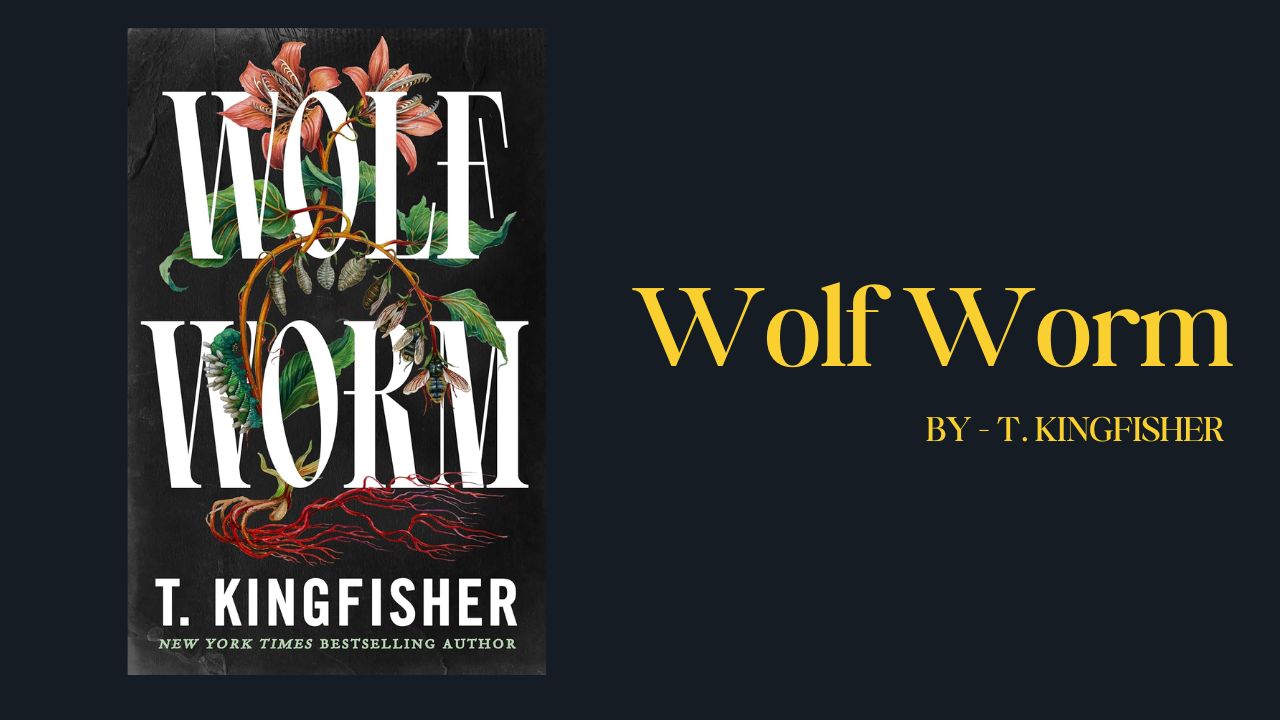
There are horror novels that aim to scare you, and then there are those that quietly burrow in—settling somewhere uncomfortable and refusing to leave. Wolf Worm by T. Kingfisher belongs firmly to the latter category. It’s not just a story you read; it’s one you feel, sometimes a little too vividly.
Set in 1899, the novel follows Sonia Wilson, a scientific illustrator struggling to survive in a world that barely tolerates women in science. When she accepts a position working for the reclusive Dr. Halder in rural North Carolina, it feels like a lifeline. Naturally, it isn’t.
What begins as a quiet, almost hopeful relocation gradually unravels into something far more grotesque—and far more fascinating.
The Story: Gothic Horror with a Biological Bite
At its core, Wolf Worm is a Southern Gothic tale, steeped in isolation, decay, and whispered warnings about the woods. Sonia arrives at Halder’s estate expecting long days sketching insects. Instead, she finds unease baked into the walls—and something deeply wrong lurking beyond them.
Animals behave strangely. Locals speak of “blood thieves.” The previous assistant has vanished without explanation. And Halder’s research? It’s not just obsessive—it’s monstrous.
Kingfisher builds the horror patiently. For much of the novel, nothing overtly terrifying happens. Yet everything feels off. That’s the trick: dread accumulates in small, almost mundane details until it becomes suffocating.
And when the horror finally reveals itself, it’s not supernatural in the traditional sense—it’s biological. Parasitic. Intimate. The kind that makes your skin itch just thinking about it. Reviews repeatedly highlight the “body horror” and insect-driven terror as both compelling and deeply unsettling.

Sonia Wilson: A Quietly Compelling Protagonist
Sonia is not your typical horror heroine. She isn’t fearless or impulsive. She’s observant, anxious, practical—and that’s precisely what makes her work.
Kingfisher leans into her profession as an illustrator, using it to shape how she sees the world. Sonia notices textures, patterns, and details others would ignore. That attention to detail becomes both her strength and her curse, especially when confronted with things no one should have to observe up close.
Her struggles also feel grounded in reality. As a woman navigating a male-dominated scientific field, her opportunities are limited, her credibility fragile.
This grounding makes the horror more effective. Sonia isn’t just fighting something monstrous—she’s fighting for agency in a world already stacked against her.
The Horror: Beautiful, Revolting, and Unforgettable
Let’s be clear: if you’re uncomfortable with insects, parasites, or anything that involves things crawling under skin, this book will test you.
Kingfisher doesn’t shy away from the grotesque. In fact, she leans into it. The horror is vivid, tactile, and often nauseating—but strangely compelling. Readers frequently describe it as “gross in the best way,” the kind that makes you wince and keep reading anyway.
What elevates it, though, is the balance. The novel isn’t relentlessly bleak. There’s humor here—dry, understated, and perfectly timed. There’s warmth too, especially in Sonia’s interactions with the few people she trusts.
That contrast—between the cozy and the horrific—is where Kingfisher truly excels. One moment you’re settling into a quiet domestic scene; the next, you’re recoiling.
Atmosphere and Setting: The Woods Feel Alive
The North Carolina setting isn’t just a backdrop—it’s an active presence. The woods feel heavy, watchful, almost sentient in their silence.
Kingfisher captures the humidity, the stillness, the sense of being cut off from the world. It’s the kind of place where rumors take root easily—and where those rumors might not be wrong.
This slow, immersive atmosphere is what allows the horror to land so effectively. By the time things escalate, you’re already trapped in the same suffocating environment as Sonia.
Themes Beneath the Horror
Beyond the insects and gore, Wolf Worm is quietly exploring deeper ideas:
- The cost of scientific ambition – How far is too far in the pursuit of knowledge?
- Isolation and power – What happens when brilliant minds operate without oversight?
- Gender and credibility – Sonia’s struggles reflect a broader historical reality.
- The horror of the natural world – Not supernatural, but something disturbingly real.
Some readers even argue that the true horror isn’t the creatures—it’s the human willingness to exploit them.
Pacing: A Slow Burn That Pays Off
This isn’t a fast-paced horror novel. The first half moves deliberately, almost gently. Kingfisher takes her time establishing character, setting, and tone.
For some, this may feel slow. But it’s intentional.
Because when the story finally tightens its grip, it does so with precision. The slow build makes the later revelations hit harder, sharper, and far more memorably.
Final Verdict: Who Should Read This?
Wolf Worm is not for everyone—and it doesn’t try to be.
You’ll likely enjoy it if you:
- Love gothic, atmospheric horror
- Appreciate character-driven storytelling
- Can handle (or even enjoy) visceral, insect-based horror
You might want to avoid it if:
- You’re deeply uncomfortable with parasites or body horror
- You prefer fast-paced, plot-heavy horror
Closing Thoughts
T. Kingfisher has a rare talent for blending the unsettling with the oddly comforting. Wolf Worm is a perfect example of that balance—a novel that invites you in with warmth and wit, only to confront you with something deeply, viscerally wrong.
It’s not just scary. It’s invasive.
And long after you’ve finished reading, you may find yourself scratching at your skin, wondering if the story really let you go—or if it’s still there, quietly burrowing.