

The prevailing assumption in narrative production—that the chronological consumption of a story necessitates a chronological creation—is a teleological fallacy that often impedes creative output and diminishes the emotional resonance of the final work. Increasingly, professional writing practices challenge this model, advocating for approaches such as Write the Scenes You Feel Like Writing First, where authors begin with moments that feel immediate, vivid, and creatively urgent.
In the professional sphere of literary composition, the movement toward non-sequential or impulse-driven drafting is supported by both cognitive psychology and historical authorial success. By prioritizing scenes that are “emotionally alive” or “white-hot” with inspiration, the practitioner leverages the brain’s natural associative tendencies, bypassing the executive friction that often leads to writer’s block and the notorious “muddle in the middle” of long-form manuscripts.
This report examines the systemic advantages of non-linear drafting, the neurochemical mechanisms of the flow state, and the structural methodologies required to successfully synthesize fragmented scenes into a cohesive, high-impact narrative.
Cognitive Foundations of Impulse-Driven Drafting
The efficacy of writing scenes out of order is fundamentally rooted in the neurobiology of the flow state. First identified by Mihaly Csikszentmihalyi, the flow state, or “optimal experience,” is characterized by an intense, energized focus where the practitioner becomes fully immersed in the activity, losing track of time and external distractions. In this state, the brain often experiences “transient hypofrontality,” a temporary downregulation of the prefrontal cortex. Since the prefrontal cortex is responsible for self-monitoring, logical sequencing, and the “inner critic,” its suppression allows for a more intuitive, creative, and rapid generation of prose.
When a writer forces a linear progression, they frequently encounter “bridge-building” segments—transitional scenes that are functionally necessary but emotionally inert. These segments require high levels of executive function, which can pull the writer out of the flow state and into a state of cognitive strain or boredom. By contrast, skipping to a scene that is “begging to be written” allows the author to maintain the dopamine loops associated with discovery and emotional satisfaction.
| Composition Mode | Cognitive Mechanism | Neurochemical Driver | Impact on Momentum |
| Linear Drafting | Logical Sequencing (Prefrontal Cortex) | Serotonin (Stability/Persistence) | High friction; risk of stagnation in transitions |
| Non-Sequential Drafting | Associative Discovery (Hypofrontality) | Dopamine (Reward/Motivation) | Low friction; sustained creative “heat” |
| Bridge Building | Executive Problem-Solving | Cortisol (Stress/Analytic Pressure) | High cognitive load; frequent cause of blockage |
| Impulse Drafting | Emotional Resonance | Endorphins (Flow/Euphoria) | High velocity; captures vivid sensory detail |
The Intensity Meter and Emotional Temperature
A core principle of professional narrative construction is the “intensity meter.” Nathan Bransford observes that even if a narrative bounces around in time, its underlying dynamics should deepen as the novel unfolds, with the highs getting higher and the lows getting lower. Writing scenes out of order allows the practitioner to write at the “emotional temperature” of the story rather than the chronological one. This ensures that the emotional peaks—the scenes of greatest conflict, revelation, or transformation—are captured while the author’s understanding of the character’s “emotional wound” is at its most acute.
The practice of writing key scenes first acts as a diagnostic tool for the story’s heart. If an author can successfully draft the climax or a pivotal turning point, they have effectively established the “North Star” for the entire project. This provides a goal to work toward, making the writing of the preceding “bridge scenes” more purposeful and less aimless. Instead of wondering what happens next, the author is tasked with the more focused engineering problem of determining what must happen for the character to reach the already-drafted emotional destination.
Historical Precedents and Authorial Case Studies
The history of high-level literary achievement is replete with examples of non-linear composition. Vladimir Nabokov, perhaps the most famous practitioner of this method, utilized hundreds of index cards for each novel. Nabokov’s approach was entirely non-linear; he would “pick out a bit here and a bit there” until the “pattern of the thing” was clear, filling in the gaps of the manuscript as if completing a mosaic. This allowed him to maintain a fluid sense of the story’s architecture, rearranging cards to optimize thematic layering and dramatic irony before any definitive sequence was established.
Diversity of Method: From Nabokov to Atwood
While Nabokov used cards, Margaret Atwood describes her process as writing “random snippets of dialogue or later chapters” as they occur to her, often starting with the last paragraph first. For Atwood, the plot and character are integrally connected, and writing out of sequence allows the environment for character growth to manifest naturally. Similarly, Isabel Allende begins her novels on January 8th of every year, working without an outline and following her instinct, which often involves characters taking the story in unexpected directions. She treats the first draft as a “lying-in-fiction” period where the story unfolds in spite of her, often requiring extensive reordering in the second draft to find the true narrative arc.
| Author | Medium/Tool | Sequential Logic | Philosophical Approach |
| Vladimir Nabokov | 3×5 Index Cards | Purely Non-Linear | The story is a pattern to be filled in |
| Margaret Atwood | Random snippets/MS Word | Non-Linear Snippets | Discovery through character action |
| Isabel Allende | Direct Computer/Instinct | Intuitive Meander | Giving order to the chaos of life |
| Neil Gaiman | Longhand Fountain Pen | Associative Flow | “Put one word after another” (associative) |
| Katherine Applegate | Small spaces/Fragmented | “Cherry-picking” | Focus on “the frustrated poet” |
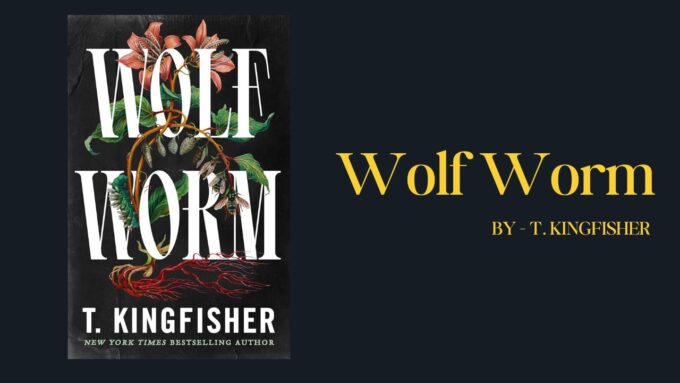
| T. Kingfisher | Word Document | Non-Linear Plopping | Writing connective tissue at the end |
The prevalence of this method among Nobel Prize winners and best-selling authors suggests that the “chronological draft” is often a hinderance to the “spontaneous prose” required for authentic, vivid storytelling. As Neil Gaiman notes, the main rule of writing is that if it is done with enough assurance, the author is allowed to do whatever they like—including writing the story in the order it needs to be written, rather than the order it will be read.

Strategic Advantages: Sustaining Momentum and Deepening Character
One of the most significant hurdles in long-form writing is the loss of momentum during the second act. Linear writers often find themselves “wallowing in the middle,” struggling to connect a strong opening to a distant ending. Non-sequential drafting solves this by allowing the author to “skip to the good parts”. While some critics argue this is like eating dessert before broccoli, professional practitioners argue that if a scene is “boring to write, it is boring to read”. Skipping a difficult scene is not an act of avoidance but a strategic pivot that gives the subconscious mind time to resolve the plot problem while the conscious mind continues to produce high-value prose elsewhere.
Character Discovery and the MACE Quotient
Writing high-interest scenes first—often the climactic conflicts—allows for deeper character discovery. By seeing how a character reacts under extreme pressure in a future scene, the author gains insights into their “most intensely felt goal” or “emotional wound”. These insights are then “reverse-engineered” into earlier scenes to create a more cohesive and believable character arc.
The “MACE quotient” (Milieu, Ask, Character, Event) provides a framework for ensuring that even fragmented scenes contribute to the overall story structure. In a non-sequential draft, the author can ensure that each piece contains its own reward, even if its final position in the timeline is unknown. This leads to a richer narrative experience where each scene functions as a “complete story unit” packed with conflict, complexity, and change.
| Element | Definition | Application in Non-Linear Drafting |
| Milieu | The world/setting the character enters/leaves | Developing setting details in isolation to avoid info-dumps |
| Ask | The question or mystery driving the plot | Setting up mysteries in later scenes to reverse-engineer clues |
| Character | The internal growth and transformation | Discovering the “end state” to better track early motivations |
| Event | The external plot points and actions | Writing “disasters” in any order to find the best pacing |
The Mechanics of Connectivity: Writing Connective Tissue
The primary challenge of the non-sequential method is “stitching” the disparate scenes together into a seamless whole. T. Kingfisher and others describe this final stage as “writing connective tissue”. Once the major “tentpole” scenes are in place, the writer must build the “interior wall studs” or “seams” that hold the patchwork narrative together.
Bridge-Building vs. Sequel Construction
In narrative theory, specifically the work of Dwight Swain, the transition between scenes is often referred to as a “sequel” or a “bridge”. A bridge scene functions as a transition that manages time lapses or movement between locations. Effective bridge building involves:
- Logical Progression: Ensuring each segment naturally leads into the next, even if they were written months apart.
- Transitional Elements: Using character reflection, dialogue, or sensory details to weave scenes together without jarring interruptions.
- Emotional Pacing: Varying tension to create “peaks and valleys,” ensuring the reader has time to digest high-intensity moments.
For writers of the “novella-in-flash” form, this connectivity is akin to a “crazy quilt,” where scrap-like compositions are linked to form a layered narrative arc. The process is improvisational; the story arc often “dawns on one” in the process of experimenting with the order of the fragments.
Structural Integrity: Retrospective Outlining and Organization
To prevent the chaos inherent in writing out of order, the practitioner must employ “retrospective outlining”. This technique involves finishing the impulsive draft and then creating an outline based on what was actually written to identify gaps, redundancies, or logic holes. This is essentially the reverse of the traditional “snowflake method,” where one starts with a premise and expands. In the non-sequential workflow, the “snowflake” is grown by subdividing high-intensity fragments into smaller, more detailed scenes until the book is done.
Tracking Progress in a Non-Linear Workspace
Organization is the “anchor” that prevents the author from getting lost in their own non-chronological story. Professional workflows often include:
- Spreadsheet Mapping: Using Excel or Google Docs to track every scene’s function, POV, and timeline position.
- Functional Scene Labels: Naming scenes by their narrative role (e.g., “First Major Loss,” “Trust Breaks”) rather than chapter numbers.
- The “What I Know So Far” Note: A living document that tracks character realizations and plot developments that emerge during non-sequential drafting.
- Visual Cues: Using magenta highlighting or specific formatting to mark unfinished areas or where the last session ended.
| Organizational Tool | Primary Function | Advantage for Non-Sequential Drafting |
| Scrivener | Document-based corkboard | Allows for easy “shuffling” of scenes and chapters |
| Excel/Spreadsheets | Chronological vs. Narrative mapping | Visualizes the “web of tension” and identifies plot gaps |
| Functional Labeling | Identifying scene purpose | Facilitates structural reorganization based on theme |
| Bookend Notes | Contextual “Before/After” summaries | Ensures causality remains intact when jumping timelines |
| Mind Mapping | Non-linear associative brainstorming | Helps explore subplots and character contradictions |
Structural Sophistication: Managing Time Shifts and Suspense
The final product of a non-sequential drafting process often benefits from a non-linear narrative structure. By presenting events out of order, the writer can create a “sense of mystery and intrigue,” compelling the reader to “piece together the puzzle”. This method engages the reader’s intelligence, moving them from a passive consumer to an active participant in the story.
Dramatic Irony and Information Release
One of the primary advantages of non-linear storytelling is the creation of dramatic irony. When a future development has already been revealed, it adds a layer of “terror, angst, or comedy” to the present-day scenes. For example, if it is known that a character will eventually fail, every small victory they achieve in an earlier timeline is imbued with poignant tragedy.
To execute this effectively, the author must carefully control the flow of information. This involves:
- Anchoring Each Timeline: Ensuring each era has a “primary genre” feel and distinctive atmosphere.
- Clear Time Markers: Using dates, headlines, or sensory details (like a specific photograph) to signal temporal shifts to the reader.
- Internal Arcs: Developing strong internal arcs within each timeline so they feel as if they are “pointing forward” even if the story is jumping backward.
The Risks of Non-Linear Narrative Structures
While liberating for the writer, non-linear structures present risks of reader confusion and diminished tension if revelations are timed poorly. Key pitfalls include:
- Diminished Momentum: If a flashback is too long or “info-dumpy,” it can derail the “intensity meter” of the present-day plot.
- Consistency Breaches: Changing a character’s traits in a future scene without updating the preceding scenes in revision.
- Lost Tension: Giving away a major “twist” too early, which can sap the stakes of the remaining story.
Psychological Resilience and the Autotelic Experience
The “autotelic” nature of the creative process—where writing is pursued for its own reward—is often best served by following one’s impulse. Forcing a linear path often activates the “inner censor,” leading to a state of “anguish” in the garret that many writers believe is necessary but which often produces “dull, stale writing”.
By contrast, non-sequential drafting encourages “taking risks” and “making discoveries”. As Neil Gaiman suggests, one should “get the bad stories out of your pen” and “laugh at your own jokes,” trusting that the revision phase is where the “trainwreck” first draft is “polished into a grand turd”.

Overcoming Perfectionism through Fragmentation
Perfectionism is a “HUGE obstacle” that often manifests as an inability to move past the first line or chapter. Non-sequential drafting breaks this paralysis by allowing the author to treat the manuscript as a collection of “manageable tasks”. By focusing on “one powerful, amazing scene” at a time, the author can build a “hundred” such scenes, eventually resulting in a complete novel.
Trusting one’s revision skills is paramount. The more a writer trusts themselves to catch “mistakes or weak points” in the next draft, the more secure they feel in “being in the flow” during the current one. As Stephen King and others note, the second draft equals the first draft minus ten percent; the goal of the first draft is simply to “get it down on paper”.
Synthesis of Best Practices for Non-Sequential Composition
For the professional writer, the transition to non-sequential drafting involves a series of methodological shifts designed to maximize creative output while maintaining structural coherence.
- Identify High-Energy Entry Points: Instead of starting at Chapter One, identify the three to five scenes that define the story’s “emotional heart” and draft those first.
- Establish Narrative Handrails: Use a “hazy notion” of a few waypoints or a “vague idea of a possible ending” to keep the impulsive writing from drifting into irrelevancies.
- Draft for Emotional Accuracy, Not Logical Precision: In the first draft, focus on “truth in fiction”—the core emotions of the scene—rather than the precise logic of how the character arrived there.
- Use “Micro-Outlines” for Bridging: When the high-interest scenes are finished, create small outlines for the “bridge” segments, focusing on “what needs to happen” to resolve the cause-and-effect chain.
- Rigorous Chronological Reconciliation: In the final phase, use a “Temporal Log” or master spreadsheet to ensure that character knowledge and timeline events are consistent across all fragments.
The choice between linear and non-linear drafting is ultimately a choice between “executive discipline” and “creative momentum”. While the former offers a sense of orderly progress, the latter—by prioritizing the scenes that the author feels like writing—taps into the visceral energy that makes for unforgettable literature. By honoring the brain’s desire for associative discovery, the author ensures that their work is built upon a foundation of genuine inspiration rather than the “forced labor” of chronological compliance.