There’s a kind of guilt that comes with this admission. Loving books is supposed to be the more sophisticated position — the original vision, the author’s exact words, the unadulterated imagination. And yet, for a growing number of readers, certain TV adaptations don’t just live up to the source material. They surpass it. Not as a failure of literature, but as a triumph of a different kind of storytelling. This isn’t a debate about which medium is superior. It’s an honest look at why, sometimes, the camera finds something the page simply couldn’t.
The Weight of Invisible Labor
Reading is a partnership. The author provides words; the reader fills in everything else — the exact color of a character’s eyes, the weight of a pause in conversation, the smell of rain in a particular city. This collaborative imagination is one of fiction’s great gifts. But it’s also, quietly, a kind of work.
Some readers arrive at a book carrying the exact emotional toolkit a story demands. Others don’t, and that’s not a failure — it’s simply human. A war novel asks you to conjure sounds, chaos, fear, and grief from blank pages. A TV adaptation shows you the mud on the soldiers’ boots. Neither experience is lesser; they are genuinely different experiences of the same story.
For readers whose inner cinema isn’t perfectly calibrated to a particular story’s world, the screen offers an entry point that is richer, more immediate. Characters who felt vague or flat on the page can suddenly become magnetic people when embodied by the right actor. Worlds that were hard to visualize — especially those with dense mythology, unusual geography, or specific historical textures — become inhabitable.
"The Expanse" is a perfect example. Daniel Abraham and Ty Franck's novels are dense with technical detail and political complexity. The TV series stripped away some of that density and, in doing so, made the emotional core of the story far more accessible — without losing its intelligence.

When Adaptation Becomes Editing
Not every book is perfectly written. This is not an insult — it’s the nature of publishing. Novels sometimes carry the weight of their own drafts: subplot detours that went nowhere, side characters introduced and abandoned, pacing that sags in the middle because the author was still finding the story while writing it. Readers loyal to the text carry all of this willingly, filling the gaps with affection.
A skilled screenwriter, adapting that same novel, functions as a second editor — one with the luxury of hindsight and the ruthlessness that hindsight allows. They can cut the third act meandering. They can collapse two minor characters into one compelling figure. They can find the story’s spine and expose it cleanly.
This is what happened with Big Little Lies. Liane Moriarty’s novel is an enjoyable read with a genuinely surprising mystery, but the television adaptation — helmed by Jean-Marc Vallée with a screenplay by David E. Kelley — made structural and tonal choices that sharpened the story considerably. The show found a visual language for the novel’s themes of secrets and surfaces that the prose never quite articulated. The result felt more intentional than its source.
Worth considering
This isn't about the book being bad. It's about adaptation as an act of interpretation — the same story, re-examined through a different lens, can reveal things even the author didn't know were there.
The Gift of Casting
There are performances that permanently reshape how we understand a character. Bryan Cranston’s Walter White. Carrie Coon’s Nora Durst. Olivia Colman’s anything. When a great actor inhabits a literary character, they don’t replace your imagination — they hand you something more nuanced than what any description could provide.
Books describe behavior and thought. Acting communicates something harder to name: presence, contradiction, the specific texture of a person’s loneliness or joy. It operates in the gap between what a character says and how they hold their body when they say it. This is emotional information that prose, however brilliant, can only approximate.
Some characters feel incomplete on the page — not because the writer failed, but because they were always meant to be completed by performance. They were waiting for a face, a voice, a particular hesitation before speaking. When the right actor arrives, readers sometimes feel something unexpected: recognition. That’s who she always was. I just didn’t have the words for it.
Interiority vs. Intimacy
One of the novel’s genuine superpowers is access to a character’s interior life. We can live inside a mind, hear every doubt and digression, understand why someone does something even as they do it badly. This is something film and television struggle with — they must externalize everything, translate thought into behavior, make the invisible visible.
But here’s the flip side: interiority can also create distance. When we know everything a character thinks, we can lose the feeling of discovering them. There is intimacy in mystery. A character we observe — whose motivations we read in glances and gestures rather than expository thoughts — can feel more real than one we fully inhabit, because real people are, ultimately, opaque to us.
Television adaptations that strip away first-person narration and internal monologue often make characters feel less explained and therefore more human. We lean forward. We interpret. We disagree with each other about what that look meant. The story becomes collaborative in a different way than reading — not imagination filling in description, but collective interpretation of observed behavior.
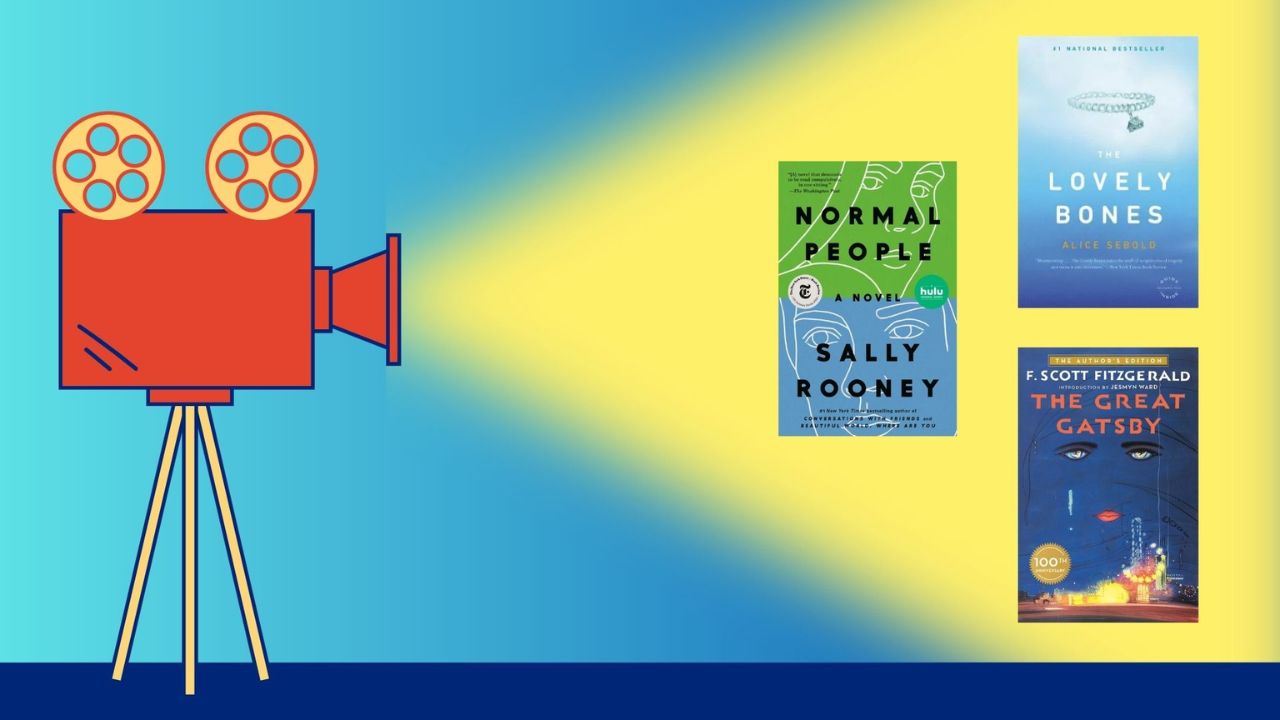
This is one reason "Normal People" works so beautifully as a series. Sally Rooney's prose is luminous, but her characters' inner lives are so fully articulated that the novel can feel airless in places. The BBC/Hulu adaptation gave Connell and Marianne room to breathe — to be watched rather than explained — and the result was electrifying.
Time, Space, and Immersion
A long-running television series can do something no single novel can: it can spend time. Not the compressed, carefully rationed time of fiction, where scenes and years can be collapsed into a sentence — but real, accumulated duration. An eight-episode season can linger on a meal, return to the same conversation from three different angles, let a silence run ten seconds too long.
For some stories, this extended immersion is transformative. A character’s grief, rendered across six hours of television, carries a different weight than grief conveyed in fifty pages. The audience has lived with these people. They have sat with them through three seasons of bad decisions and missed chances. When the climax arrives, it lands differently because the relationship between audience and character is older, stranger, more complicated.
Books, by contrast, are always trying to earn your next hour. They are aware of their competition — your phone, your fatigue, your other books — and the good ones use every sentence to keep you present. This tension produces extraordinary prose. It also means that some stories, some emotional territories, are better suited to a medium that can afford to simply wait.
When the World Needs to Be Built, Not Imagined
Fantasy and science fiction present a specific case. World-building on the page is an extraordinary art — but it places demands on the reader that not everyone is equally equipped to meet. When Tolkien describes the architecture of Minas Tirith across several pages, readers who love that kind of immersion are transported. Readers who find it laborious simply aren’t, and no amount of literary appreciation changes that neurological reality.
Television world-building works differently. It is immediate and total. The moment the camera pans across a created world, every viewer shares the same image. The mountain exists. The city is real. This collective, simultaneous experience of a fictional world has its own power — the power of a shared dream, something that no book, however beloved, can replicate.
This doesn’t make visual world-building superior. It makes it different. And for many book fans, discovering that a world they struggled to fully visualize has been rendered with love and craft on screen isn’t a disappointment — it’s a gift.
The honest truth
Preferring an adaptation isn't a sign that you don't love books. Often, it's a sign that you love stories — in whatever shape they take, through whatever medium delivers them most fully to you.
Both Can Be True
The fierceness with which some readers defend the primacy of the source novel often has less to do with the novel itself and more to do with the experience of first encounter — the privacy of it, the way that story belonged only to you before it belonged to everyone. There is something irreplaceable about meeting a world alone, in silence, at your own pace.
But stories are not diminished by being shared. A great story doesn’t have a single correct form — it has energy, ideas, emotional truth that can survive and even flourish through transformation. The best adaptations don’t replace books. They send people back to them, and they bring new people in.
So if you’ve finished a season of television and found yourself thinking, quietly, that you preferred it to the book you read first — give yourself permission to feel that without shame. You’re not betraying the author. You’re honoring what they made: a story strong enough to live more than one life.