
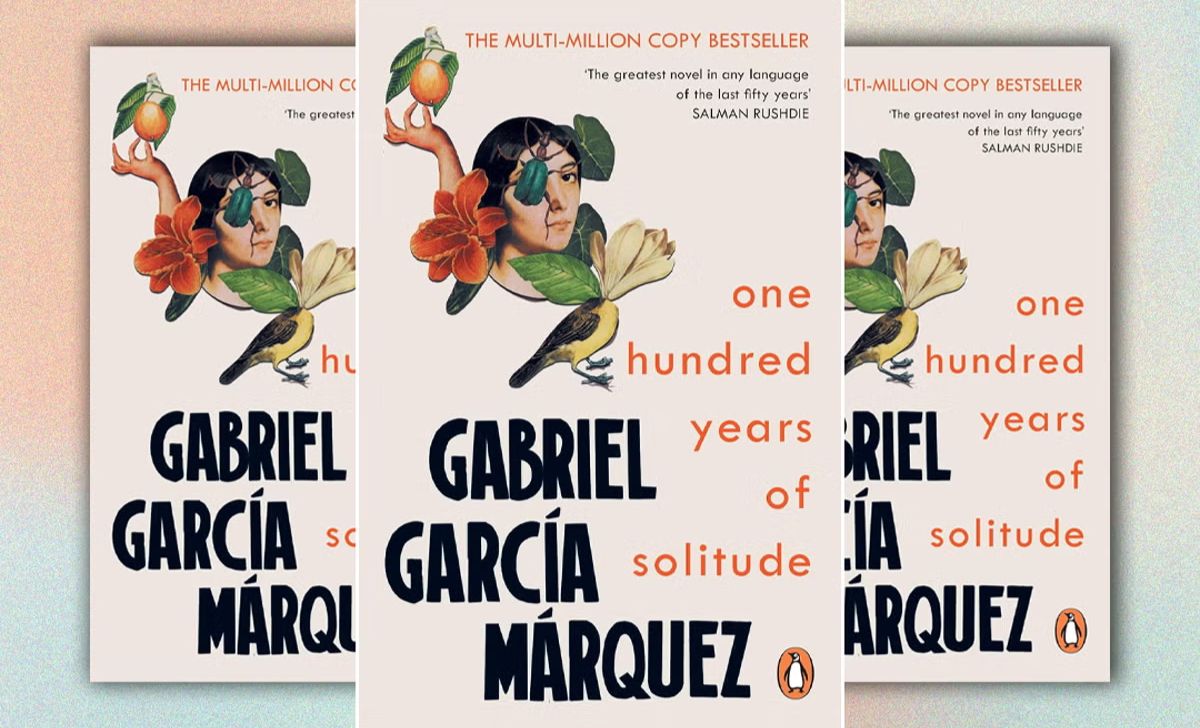
One ordinary drive to Acapulco in 1965 turned into a literary earthquake. Gabriel García Márquez suddenly pulled his car off the road, told his wife to take care of the family’s money for a while, and drove back home. In his head, one sentence had lit up and would not let him go — a line that, when expanded, became One Hundred Years of Solitude. What followed was eighteen months of work that produced one of the most imaginative and influential novels of the 20th century — a book that remade how the world sees Latin America.
How a Sentence Became a World
Writers sometimes wait for a spark; García Márquez got a small explosion. That single image — a man remembering an afternoon when his father took him to discover ice — unfolded into a family saga so dense it could contain whole countries. Instead of treating that first line as an epigraph, he built everything around it: a village, a bloodline, and a rhythm of history that reads less like a straight road and more like a looped recording.
He didn’t write a neat, linear historical novel. He let the sentence breathe and accrete: characters arrived, left, returned as ghosts, made the same mistakes as their grandparents, and sometimes floated out of the narrative quite literally. Eighteen months later the novel existed — sprawling, strange, and impossible to ignore.
Seven Generations in a Single Breath
At the center sits the Buendía family and the village of Macondo. Over seven generations we watch the family rise, fracture, fall into absurdity, and try to begin again. The cast balloons — lovers, soldiers, itinerant gypsies, mechanics, botanists — and García Márquez never pauses long enough to name them all twice. Instead, he arranges scenes like beads on a string: intense romances, political skirmishes, failed businesses, and the kind of personal obsessions that haunt families for decades.
The story contains uncanny images that readers remember long after they close the book: a mechanic trailed by a cloud of yellow butterflies, a woman who gently floats away from her chores, and elders whose memories tether the present to the past. Those images don’t function as interruptions; García Márquez treats them as everyday facts, which gives them their power.
Magical Realism: The Ordinary Strange
One Hundred Years of Solitude sits as one of the defining works of magical realism. That phrase describes a style in which the supernatural enters the text without fanfare and the mundane attains the flavor of the uncanny. Here, an apparition receives the same narrative tone as a harvest failure; a funeral and a rain of tiny yellow flowers can share a page and a reader accepts both.
Magical realism doesn’t mean the book refuses political or historical truth. On the contrary: by folding the surreal into daily life, García Márquez exposes how bizarre and tragic human history can be when told plainly.
Macondo as Mirror: A Village and a Continent
Macondo begins as an isolated, almost mythic place. Over time it opens to the world — missionaries, modern inventions, and foreign capital arrive — and each new contact brings both novelty and corrosion. That exposure culminates in scenes that mirror grim events from Latin American history: corporate exploitation, violent suppression of dissent, and massacres that echo real tragedies.
The American fruit company that plants itself on the land and later becomes the site of mass violence recalls a specific, horrible episode in regional history. García Márquez layers the local myth with national memory: he uses magic to make history feel inevitable and yet intimately human.
Family Stories, Politics, and Personal Memory
García Márquez did not invent Macondo out of thin air. He drew it from his childhood home in Aracataca and from the stories of his family. His maternal grandfather fought in Colombia’s Thousand Days War and told battle stories that shaped the author’s sense of politics and grievance. His grandmother, full of superstition and local lore, taught him to accept strange happenings as part of daily life.
Those two legacies — the soldier’s political memory and the grandmother’s supernatural realism — fuse in the novel. The result is fiction that reads like oral history: full of tall tales, repeating motifs, and the conviction that family memory can stand in for a nation’s archives.

Time That Bends and Names That Repeat
One of the novel’s most disorienting devices is its treatment of time. Events do move forward — children are born, wars are fought — but time also loops. Many Buendías share names and mannerisms, and generations seem to mimic the errors of their predecessors. Prophecy and déjà vu weave into political recurrence: the same revolts recur, the same ideologies fail, and, crucially, characters rarely learn from their ancestors’ mistakes.
That cyclical sense of history functions like a warning and a lament. García Márquez shows how systems — social, economic, familial — can trap people into patterns that feel impossible to break.
Corporations, Massacres, and the Price of Progress
When the fruit company arrives, Macondo’s transformation accelerates. Prosperity arrives alongside exploitation; modernity brings infrastructure and a police presence that grows brutal. The company’s suppression of striking workers in the book mirrors a real historical massacre, and García Márquez uses that echo to indict the machinery of profit and foreign intervention.
These passages make the novel more than a fever dream: they root magical images in concrete, political consequences.
From That Drive to a Nobel Prize
The novel’s global effect was enormous. It propelled Latin American writers to the fore and helped define a literary “boom” that changed world literature. In 1982, the Nobel Committee honored García Márquez’s achievement — an acknowledgment not just of a single novel but of a voice that reframed how story could carry history.
García Márquez himself reflected on his region’s long cycles of violence and injustice while still insisting on the possibility of change. He insisted, in speeches and interviews, that literature could imagine different futures — ones where people decide their own fates and where a “second chance” becomes feasible.
Why Read It Now?
If you approach One Hundred Years of Solitude, expect a book that refuses to sit politely on a single shelf. It’s family chronicle, political allegory, and love story all at once. It rewards patience and active reading: names and incidents recur; motifs repeat; the novel keeps paying out like an inheritance.
Read it when you want a book that combines the intimacy of a family album with the sweep of history. Read it when you want to be unsettled — not by cheap shocks, but by the slow accumulation of human choices that feel both inevitable and tragic. And read it when you want to experience a style of storytelling that insists the strange is part of everyday life.
























Leave a comment