

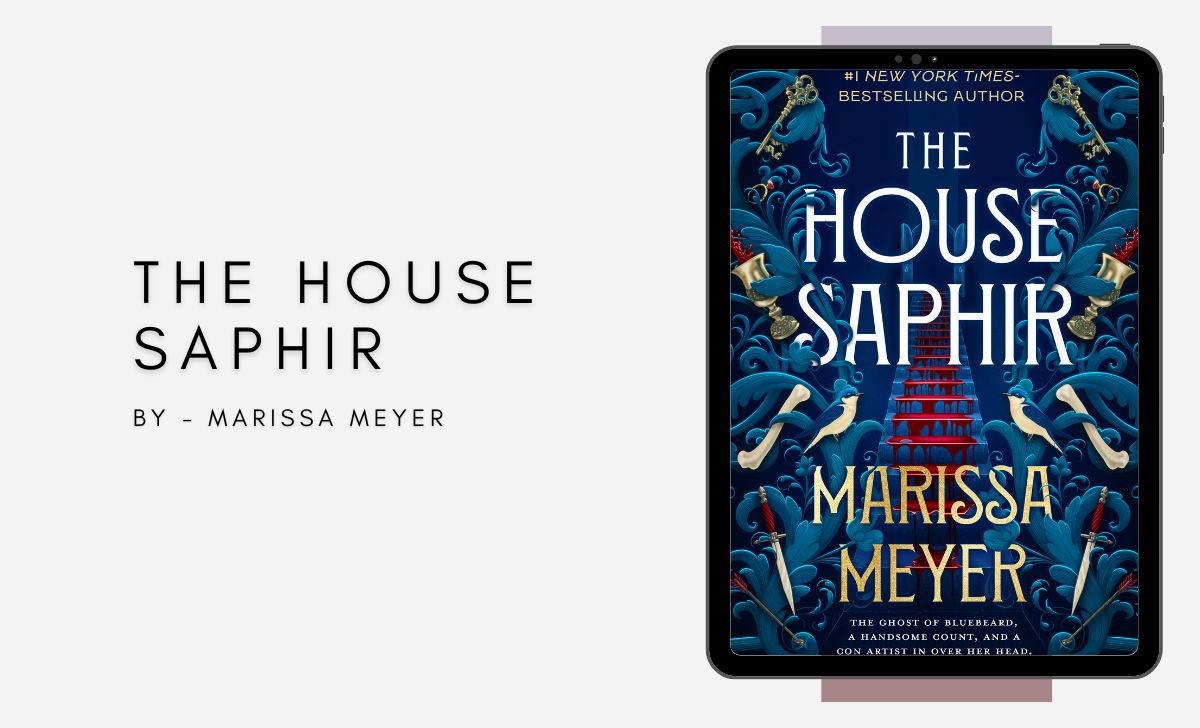
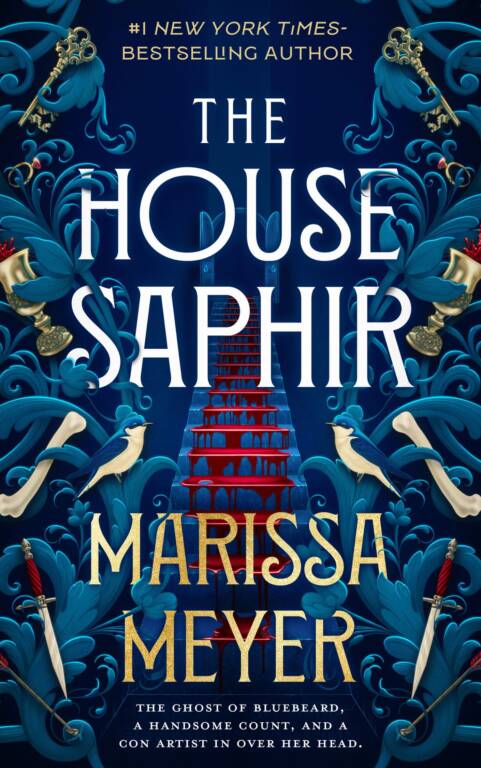
Marissa Meyer’s The House Saphir arrives as a smart, atmospheric twist on a centuries-old folktale — a book that pairs the hush-and-creak thrills of a murder mystery with the warmth and romantic tension of a modern romantasy. If you like your fairy-tale retellings wrapped in fog, hidden rooms, uneasy inheritances and characters who are equal parts clever and damaged, this one will likely sit nicely on your shelf. The novel leans into the Bluebeard legend but reshapes it for readers who want both spooky suspense and an emotional throughline about trust, family, and what we’ll gamble to claim our own stories.
Plot summary — what actually happens (without major spoilers)
Mallory Fontaine makes a living from illusion. She and her sister Anaïs run tours of the infamous House Saphir — the scene of the grisly Saphir murders a century earlier — and sell small (mostly fake) charms to customers who want a scrap of witchcraft. Mallory is not a full-blooded witch in any reliable sense; she can see ghosts, and that half-truth fuels the show she and Anaïs put on. When Armand Saphir, the current heir, arrives with a job: rid the house of its ghosts, or at least make peace with whatever haunts it, Mallory takes the job for the pay. But soon, murder and old family secrets resurface. As Mallory investigates, she has to decide who she is willing to trust — including the taciturn, complicated Armand — and whether the danger around the house is truly supernatural, or disturbingly human. Themes of deception, legacy, and longing thread through a plot that moves from stage-managed hauntings to tangible peril.
Characters: voice, agency, and chemistry
Mallory is the book’s beating heart: wry, self-aware and, crucially, flawed in ways that make her human rather than heroic. She lies to survive, she embellishes to pay bills, and yet she has a moral core that makes her choices resonate. Anaïs provides an effervescent counterpoint, the kind of sister who elevates Mallory’s schemes while still serving as a reminder of what warmth and loyalty look like. Armand Saphir is written with brooding restraint — equal parts resentful heir and wounded romantic lead — and the slow-burning chemistry between him and Mallory is handled with a light hand (there’s no rush to insta-love; trust and suspicion collide first). Secondary characters, from townsfolk who profit off the Saphir legend to spectral figures from the mansion’s past, populate the story in ways that amplify the main duo’s development. Overall, Meyer uses her ensemble to deepen both the mystery and the emotional stakes.
Tone and worldbuilding: witchy, local, immediate
Meyer’s prose favors atmosphere over overwrought description. The House Saphir itself functions as more than a setting — it is a character: layered, secretive and full of rooms that keep their own memories. The world blends French-inflected folklore (the Bluebeard root story is explicitly referenced) with small-town economies built on legend tourism. The result is immersive without being heavy: candlelit rooms, theatrical tours, and the everyday hustle of two sisters trying to keep their business afloat. The magical elements are treated pragmatically, which makes the moments where the uncanny creeps through even more effective. Readers who prefer their fantasy with a pulse of realism — where spells are rare and money is needed for groceries — will find the balance appealing.
Pacing and structure: how the mystery unfolds
The book alternates near-instantaneous payoffs (a convincing scare here, a confession there) with slower structural reveals. Early chapters establish Mallory’s cons, her rapport with Anaïs, and the Saphir house’s infamy; the middle section expands into investigative territory, where red herrings and familial histories pile up; the final act tightens: secrets are exposed, loyalties tested, and the central danger becomes urgent. Meyer manages a pleasing blend of chapters that read quickly and those that invite you to re-evaluate what you thought you knew. The result is a page-turner that still leaves room for character moments to breathe.
What works — and what might not for some readers
What works: character chemistry, atmospheric setting, and a clever reimagining of Bluebeard’s core elements. Mallory’s voice — sly, human, and occasionally self-critical — anchors the book and keeps the reader invested even when the plot leans into genre beats. Meyer’s experience with retellings shows: she honors the old tale while making choices that feel fresh.
What might not work: readers seeking gothic horror with full-tilt dread may find The House Saphir too light; the tone often tilts toward romantasy and cozy mystery rather than grim horror. Also, if you prefer purely autonomous heroines who don’t rely on emotional attachment arcs, the romantic subplot (and Mallory’s internal negotiation over trust and vulnerability) might not land as cleanly for you.
Final verdict: who should read it?
If you love reimagined fairy tales that pair murder-mystery beats with romantic tension and a wry, capable heroine, The House Saphir is made for you. It’s an especially strong pick for readers who appreciated Meyer’s earlier retellings — because it captures her knack for balancing whimsical lore with modern emotional stakes — while also appealing to anyone who enjoys atmospheric YA/adult crossover fantasy with an investigative spine. For a cozy evening with a lamp, a mug, and the delicious temptation to peek into the next locked room, this book delivers.