
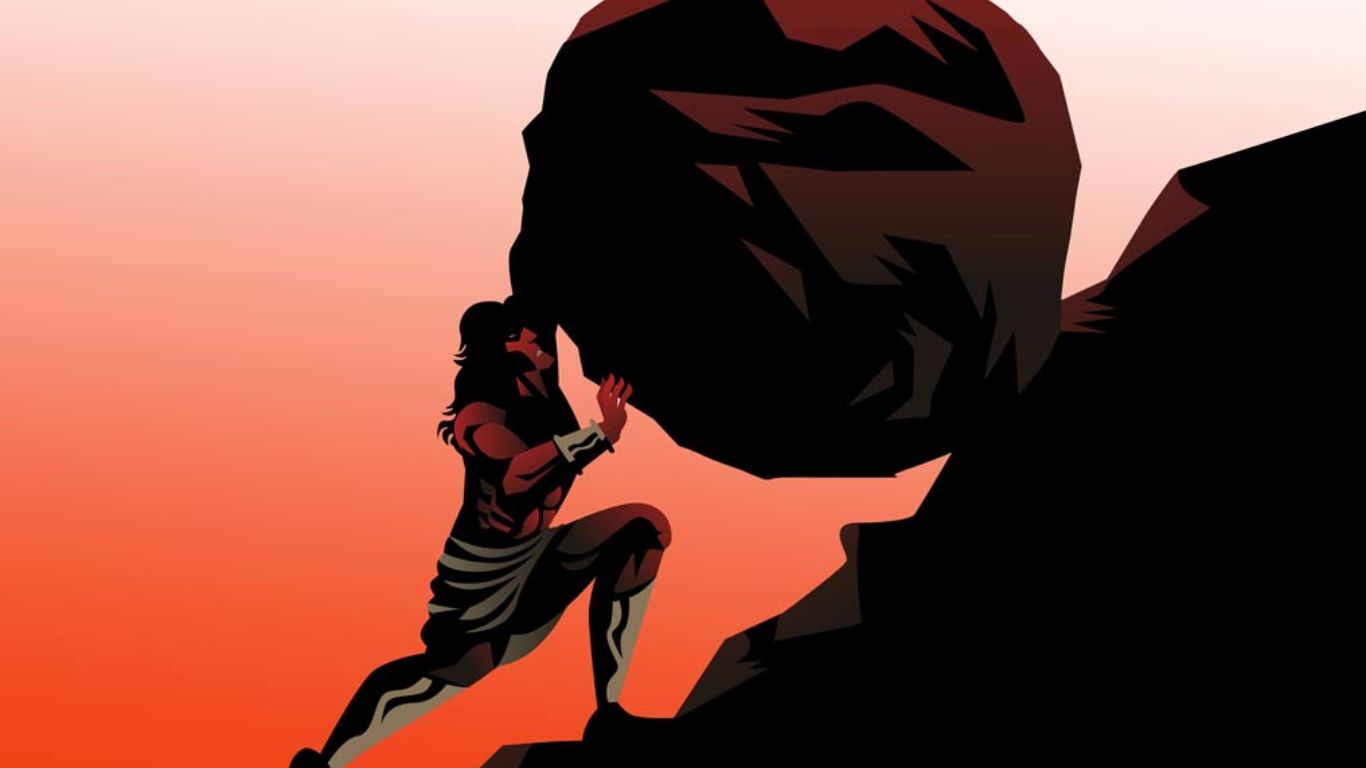
Most people know the punishment before they know the man. A figure strains against a massive boulder on a steep hill, only to watch it roll back to the bottom for eternity. But long before he became a symbol of futile labor, sisyphus was a king. He founded the city of Corinth and built a reputation as the most cunning mortal in Greek mythology. His story involves tricking the gods, trapping death itself, and ruling with a ruthless intellect. Greek mythology is filled with heroes who fight monsters, but this king fought his battles using deception and strategy. To understand the real meaning behind the myth of Sisyphus, you have to look at his life before his eternal punishment in the underworld.
The origins and etymology of a cunning ruler
The name itself offers clues about his character. Historians and linguists connect his name to the pre-Greek root word sophos, which translates to wise. Another theory links the name to the word sisys, meaning goat skin. This dual meaning perfectly captures a man known for his sharp intellect and his rugged, earthly survival skills. He was the son of King Aeolus of Thessaly and Enarete, placing him in a powerful royal bloodline. He used this lineage to establish his own kingdom. He founded the city of Ephyra, which later became known as Corinth. Under his rule, Corinth grew into a wealthy and powerful commercial hub. He promoted navigation and commerce, but he also ruled with an iron fist. He frequently killed travelers and guests, violating the sacred Greek law of xenia, or guest right. This early behavior established his reputation as a ruler who valued his own power over the laws of the gods. His ambition set the stage for a lifetime of divine conflict. You can read more about these ancient dynamics in our history archives.
Early reign and the founding of the Isthmian Games
Despite his ruthless nature, the king also contributed to Greek culture. One of his most significant acts was the founding of the Isthmian Games. According to the myth, he found the dead body of a young boy named Melicertes washed up on the coast of Corinth. The boy’s mother, Ino, had thrown herself and her son into the sea to escape her maddened husband. The sea gods transformed them into marine deities. To honor the boy, the king established the Isthmian Games. These athletic contests became one of the four great Panhellenic Games of ancient Greece, rivaling the Olympics in importance. The games featured chariot racing, wrestling, and musical competitions. By establishing this festival, he secured Corinth’s status as a major cultural center. This act of piety contrasts sharply with his usual defiance of the gods, showing a complex ruler who understood the political value of religious festivals. His actions here mirror other complex figures in mythology, much like how Prometheus changed the world in Greek mythology through acts that defied the gods but benefited humanity. The games brought wealth and prestige to Corinth, cementing his legacy as a capable, if dangerous, monarch. This success only fueled his arrogance, leading him into direct conflict with other powerful figures.
Conflicts with Autolycus and Salmoneus
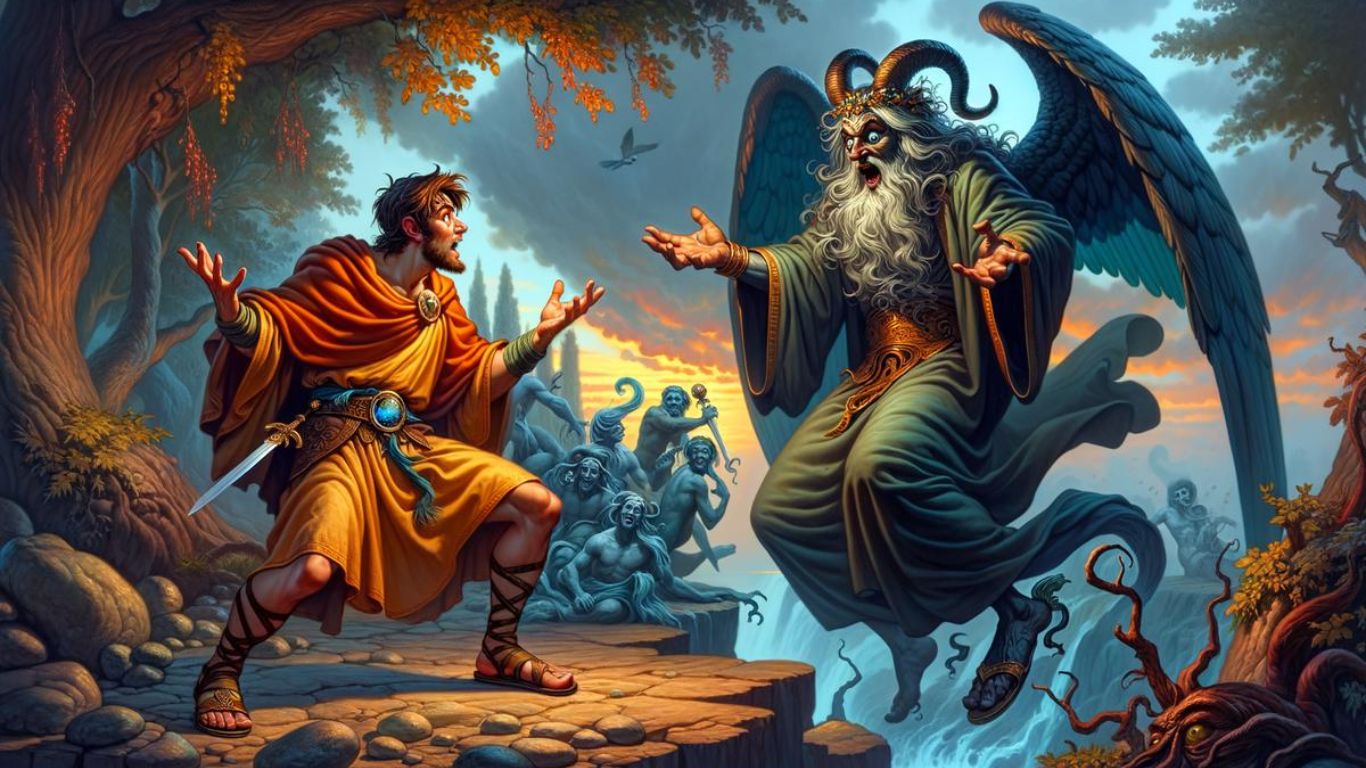
His cunning was tested against other famous tricksters of the ancient world. Autolycus, a son of Hermes, was a notorious thief who possessed the ability to change the color and shape of the livestock he stole. Autolycus began stealing cattle from the king’s herds. Because the stolen cattle looked different, Autolycus easily denied the thefts. The king, however, anticipated this deception. He secretly marked the hooves of his cattle with lead. When the next herd disappeared, he simply followed the tracks left by the marked hooves right to the thief’s door. This clever trick proved that his intellect could outmatch even the sons of the gods. His family life was equally chaotic. He held a deep, bitter rivalry with his brother Salmoneus. Salmoneus had taken the throne of Thessaly, a position the king believed was rightfully his. Seeking to destroy his brother, he consulted the Oracle of Delphi. The Oracle delivered a dark prophecy. It stated that if he had children with Tyro, the daughter of Salmoneus, those children would grow up to kill their grandfather. He seduced Tyro to fulfill the prophecy, but when she discovered his true motive, she killed the children herself to save her father. This brutal family conflict highlights the extreme lengths he would go to for revenge. It is a story of fate and family destruction that rivals the tragic tale of Oedipus.
The first time the king cheated death
His ultimate downfall began when he crossed Zeus, the king of the gods. Zeus had abducted the water nymph Aegina, the daughter of the river god Asopus. Asopus searched frantically for his missing daughter. When he reached Corinth, the king offered him a deal. He would reveal the location of Aegina if Asopus provided a permanent freshwater spring for the city of Corinth. Asopus agreed, creating the spring of Peirene. The king then told Asopus that Zeus had taken Aegina. This betrayal infuriated Zeus. In his anger, Zeus ordered Thanatos, the god of death, to chain the king in the underworld. But the mortal king was ready. When Thanatos arrived with the chains, the king asked the god of death to demonstrate how the shackles worked. Thanatos, not expecting a trick from a mortal, obliged. The king immediately locked the chains, trapping death himself. With Thanatos imprisoned, no one on earth could die. The natural order of the world ground to a halt. Battles were fought, but no soldiers perished. The sick suffered, but could not find release. Finally, Ares, the god of war, grew frustrated that his battles had lost their meaning. Ares descended to earth, freed Thanatos, and handed the king over to the god of death. This audacious act of trapping a god remains one of the most famous stories of mortal defiance in Greek mythology. It shows a man who refused to accept his fate, a theme common in the best love stories from different mythologies where mortals try to outsmart the divine.
The second escape from the underworld
Even after being dragged to the underworld by Ares, the king had another plan. Before he died, he gave his wife strict instructions. He told her to throw his body into the public square and to offer no funeral sacrifices or honors to the gods of the underworld. When he arrived in the realm of the dead, he approached Persephone, the queen of the underworld. He complained bitterly about his wife’s disrespect. He argued that a king of his stature deserved proper burial rites. He begged Persephone to let him return to the surface for just three days to punish his wife and arrange a proper funeral. Persephone, moved by his plea and angered by the lack of sacrifices, agreed to let him go. As soon as he returned to Corinth, he abandoned all plans for a funeral. He resumed his rule and lived a long, prosperous life. He had successfully tricked the gods a second time. He lived until old age finally claimed him. This second escape demonstrates his deep understanding of divine rules and how to manipulate them. He used the gods’ own demand for respect against them. His ability to talk his way out of the underworld makes him unique among Greek heroes. Most heroes rely on strength or divine favor, but he relied entirely on his own intellect. You can explore more about these divine interactions by reading about Apollo the Greek god of sun and light, who also frequently interacted with mortals.
The eternal punishment of the boulder
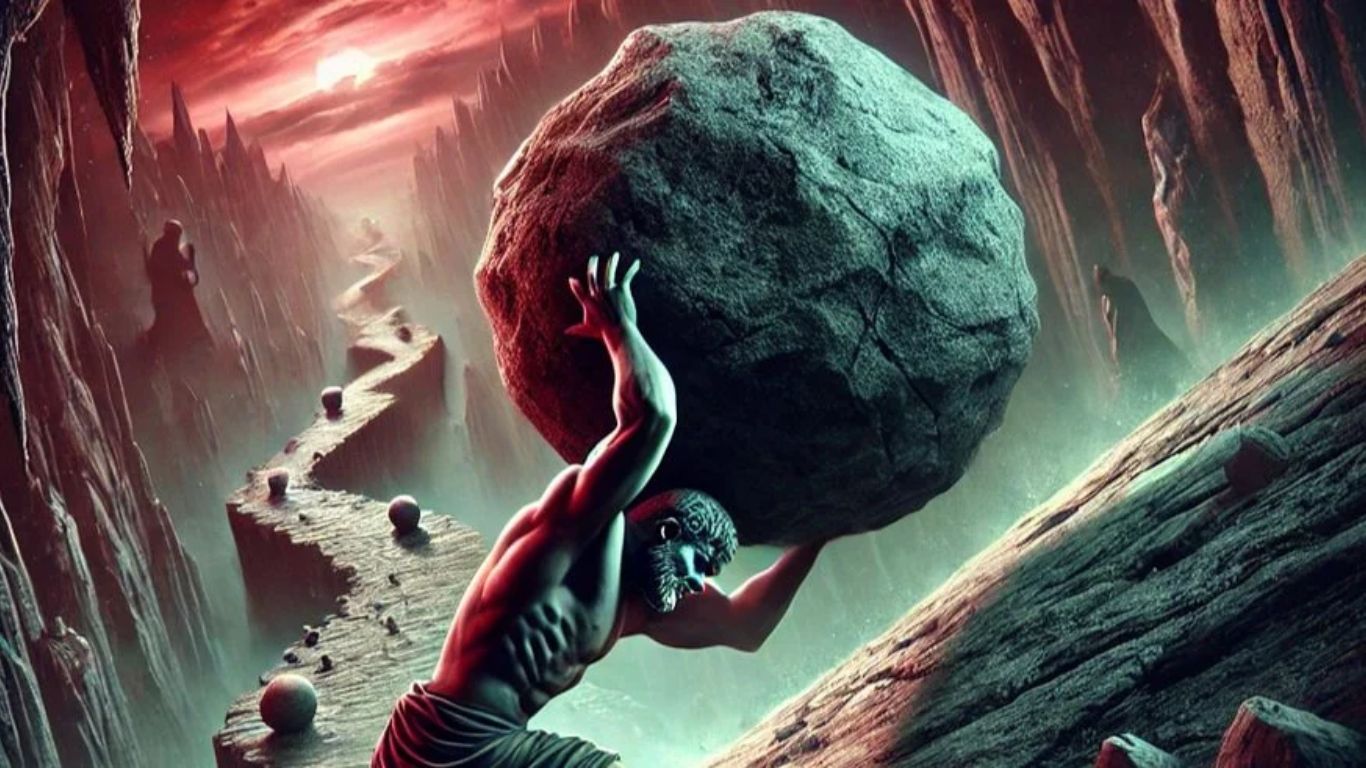
When old age finally brought him back to the underworld, the gods were waiting. Zeus decided that a simple death was not enough for a man who had caused so much disruption. The gods devised a punishment that would neutralize his intellect and break his spirit. They condemned him to push an immense boulder up a steep hill. He had to use all his strength to roll the heavy stone toward the summit. But every time he neared the top, the boulder would magically slip from his grasp and roll all the way back down to the bottom. He was forced to walk back down and start the process over again, for eternity. This punishment was perfectly tailored to his crimes. A man who had spent his life using his mind to build a kingdom and cheat the gods was now forced into mindless, repetitive physical labor. There was no trick to escape it, no god to manipulate, and no end in sight. The boulder represents the ultimate victory of divine authority over mortal ambition. The gods ensured that his punishment would serve as a warning to anyone else who thought they could outsmart death. The image of the king straining against the rock has become one of the most enduring symbols in Western culture. It strips away his history as a ruler and leaves only the raw reality of his eternal struggle.
The modern meaning of a Sisyphean task
The myth has left a permanent mark on the English language. Today, the word Sisyphean describes a task that is laborious, futile, and never-ending. When you spend hours organizing a database only for a system crash to erase your work, you are experiencing a Sisyphean task. The term bridges the ancient myth with contemporary life. It captures the frustration of working hard without ever achieving a final result. Philosophers have also used the myth to explore the human condition. The French philosopher Albert Camus famously used the story to explain his concept of the absurd. Camus suggested that human life is much like pushing the boulder. We search for meaning in a meaningless universe, constantly working toward goals that ultimately fade. However, Camus concluded that we must imagine the king happy. The struggle itself toward the heights is enough to fill a man’s heart. This philosophical interpretation transforms the ancient punishment into a metaphor for resilience. Even when the work is endless, the act of pushing forward gives life its purpose. Understanding this modern application helps explain what makes mythology so intriguing to readers today.
Frequently asked questions about the myth
Why was the king punished by the gods?
He was punished for his extreme hubris and his repeated attempts to cheat death. He trapped Thanatos in chains to prevent his own death, which stopped all mortals from dying. Later, he tricked Persephone into letting him leave the underworld by claiming his wife had not performed the proper funeral rites. His punishment was designed to break his pride through endless, futile labor.
What does the boulder symbolize?
The boulder symbolizes the futility of mortal ambition against the power of the gods. It represents a task that requires immense effort but yields no results. In a broader sense, it symbolizes the repetitive nature of human existence and the inescapable reality of death.
Did he have any children?
Yes, he had several children. His most famous son was Glaucus, who later became the father of the hero Bellerophon. Bellerophon is famous for taming the winged horse Pegasus and defeating the Chimera. The cunning traits of the grandfather were passed down through his royal bloodline.
Where did he rule?
He was the founder and first king of Ephyra, which was later renamed Corinth. Under his rule, the city became a major center of trade and wealth in ancient Greece. His actions as king, both good and bad, shaped the early history of the region.
The story of sisyphus is more than just a tale of a man pushing a rock. It is a comprehensive look at mortal ambition, the limits of human intellect, and the inescapable nature of fate. By studying his life, his tricks, and his ultimate downfall, readers gain a deeper understanding of how ancient cultures viewed the balance of power between humanity and the divine.
























Leave a comment