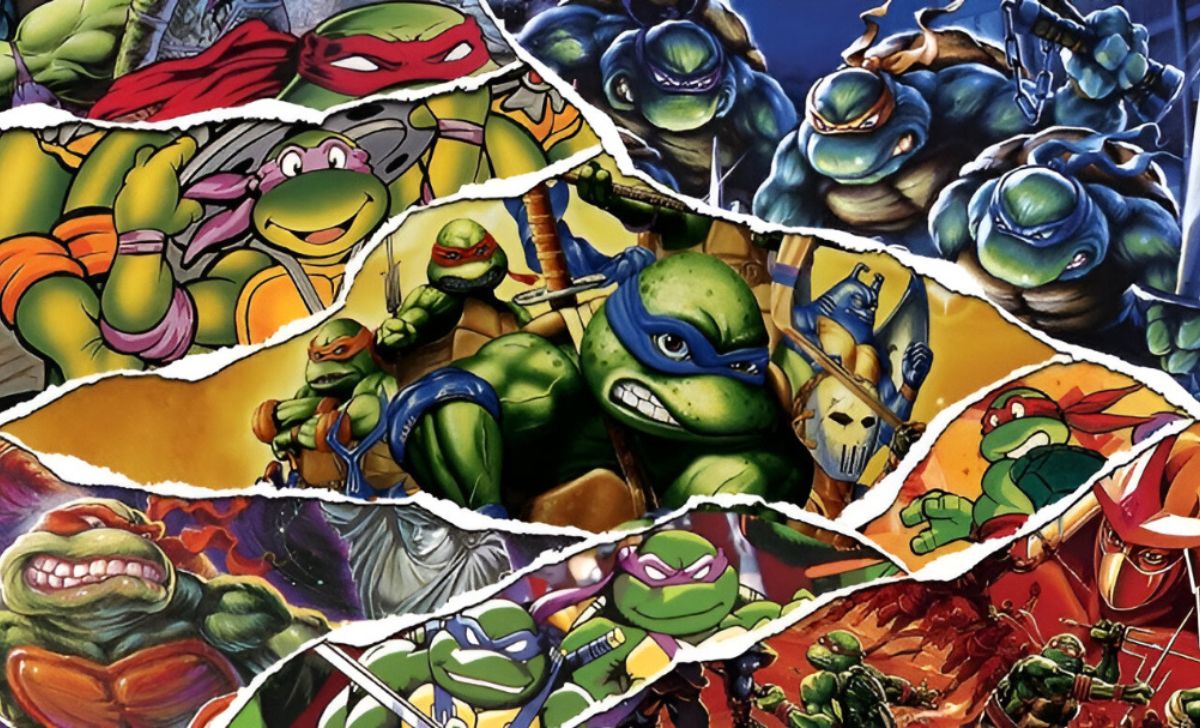
The Teenage Mutant Ninja Turtles have been a cornerstone of animated television since the late 1980s, captivating audiences across multiple generations with their unique blend of martial arts action, comedy, and pizza-loving adventures. Over nearly four decades, the heroes in a half-shell have been reimagined through various animated series, each bringing its own distinct flavor to the franchise. Based on IMDB ratings—a metric that reflects thousands of viewer opinions—here’s the definitive ranking of every Teenage Mutant Ninja Turtles cartoon series from lowest to highest rated.
7. Ninja Turtles: The Next Mutation (1997-1998) — IMDB Rating: 4.3/10
Landing at the bottom of our ranking is the live-action series Ninja Turtles: The Next Mutation, which aired from 1997 to 1998. This Saban Entertainment production attempted to revive the franchise after its decline in popularity, introducing Venus de Milo, a female fifth turtle trained in Shinobi magic, to the team.

With only 26 episodes across one season, the series struggled with multiple issues that alienated longtime fans. The production quality was noticeably low, with poor editing that frequently showed suit actors missing their marks and visibility problems with the costumes. The show also made controversial continuity decisions, including dialogue suggesting the four original turtles weren’t actually brothers—a statement that contradicted decades of established lore.
Rather than featuring classic villains like Shredder (who only appeared in the first two episodes), the series introduced new antagonists including Dragon Lord and his Rank dragons. Critics and fans alike found the show’s formulaic plots too reminiscent of Power Rangers, with bad costumes, weak acting, and unconvincing villains. The introduction of Venus de Milo, while intended to freshen the franchise, became one of the most controversial elements, leading creator Peter Laird to later declare that the character would never be used again.
6. Teenage Mutant Ninja Turtles: Legend of the Supermutants (1996) — IMDB Rating: 5.4/10
This Japanese two-part OVA (Original Video Animation) series holds the sixth position with a rating of 5.4/10 based on audience votes. Also known as Mutant Turtles: Chōjin Densetsu Hen (Superman Legend), this production was created by Bee Media and Tsuburaya Productions.

The first episode, based on the Supermutants toy line, features the Turtles exploring the temple of the lost Muta Kingdom where they free Crys-Mu, a spirit of light who grants them the ability to perform “Super Mutation”. This transformation turns them into Super Turtles for three minutes, and when combined, they form the almighty Turtle Saint. The second episode, based on the Metal Mutation toy line, follows the Turtles traveling to Japan to help Kinzō Hattori deal with a ghost haunting his house.
Individual episode ratings reveal the series’ struggle to connect with audiences, with the first episode scoring 3.6/10 and the second dropping even lower to 3.0/10. The OVA featured most of the same voice cast from TV Tokyo’s Japanese dub of the 1987 series, notably including Hideyuki Umezu.
5. Rise of the Teenage Mutant Ninja Turtles (2018-2020) — IMDB Rating: 5.9/10
Rise of the Teenage Mutant Ninja Turtles stands as one of the most divisive entries in the franchise, earning a 5.9/10 rating. Created by Andy Suriano and Ant Ward, this Nickelodeon production aired 76 episodes across two seasons from 2018 to 2020.
This series represented a dramatic departure from traditional TMNT aesthetics and storytelling. The animation embraced a more stylized 2D approach with anime influences, while the turtles themselves were redesigned as different species—Raphael as a snapping turtle, Leonardo as a red-eared slider, Donatello as a softshell turtle, and Michelangelo as a box turtle. The show introduced mystical ninja powers rather than focusing purely on traditional martial arts, with the turtles battling new villains like Baron Draxum instead of immediately facing Shredder.

The series received polarized reactions from fans and critics. Detractors criticized what they perceived as an overly comedic tone that made all four turtles feel like variations of Michelangelo. The redesigned characters, particularly the drastically different Master Splinter, alienated viewers who preferred more traditional interpretations. However, supporters praised the “gorgeous” animation, “flawless” fight choreography, and the show’s fresh approach to depicting the turtles as actual teenagers rather than stoic warriors. The voice acting, particularly Ben Schwartz as Leo and Josh Brener as Donnie, received widespread acclaim.
Critics noted that the show suffered from poor treatment by Nickelodeon, with erratic scheduling and limited promotion contributing to its premature cancellation. Despite its controversial reception, Rise developed a dedicated fanbase who appreciated its innovative animation style and deeper exploration of the brothers’ relationships. A feature film released on Netflix in 2022 attempted to provide closure to the series’ storylines.
4. Tales of the Teenage Mutant Ninja Turtles (2024-Present) — IMDB Rating: 6.9/10
The newest entry in the TMNT animated canon, Tales of the Teenage Mutant Ninja Turtles premiered on Paramount+ in August 2024 with a 6.9/10 rating. Developed by Christopher L. Yost and Alan Wan as a bridge between the 2023 film Teenage Mutant Ninja Turtles: Mutant Mayhem and its planned sequel, the series exists within the same continuity as that theatrical release.
Set two months after the events of Mutant Mayhem, the series follows the Turtles as they navigate their dual lives as both high school students and superheroes in New York City. The first season consists of 12 episodes that aired all at once on Paramount+, with a second season already greenlit for December 2025.

The voice cast reprises their roles from the film, including Micah Abbey as Donatello, Shamon Brown Jr. as Michelangelo, Nicolas Cantu as Leonardo, Brady Noon as Raphael, and Ayo Edebiri as April O’Neil. Notably, Jackie Chan’s Splinter from the film only speaks in “vermin” gibberish in this series.
The series received positive reviews from critics, achieving a perfect 100% approval rating on Rotten Tomatoes with an average score of 8.0/10. Episode ratings on IMDB range from 7.2 to 8.2, with “Night of the Mechazoids” and “The Pearl” earning the highest marks at 8.2/10 each. Critics praised the voice performances, animation quality, and action sequences, though some felt it didn’t quite match the high standard set by Mutant Mayhem. The series has earned multiple Annie Award nominations, including nods for character design, directing, storyboarding, voice acting, and editorial work.
3. Teenage Mutant Ninja Turtles (1987-1996) — IMDB Rating: 7.9/10
The series that started it all for television, the 1987 Teenage Mutant Ninja Turtles cartoon, ties for third place with an impressive 7.9/10 rating. Created by Fred Wolf, David Wise, and John Schulte, this syndicated phenomenon ran for an astounding 193 episodes across 10 seasons from December 1987 to November 1996.
This animated series transformed the TMNT from a dark, underground comic into a mainstream cultural juggernaut. The show lightened the tone considerably from the original Mirage comics, emphasizing slapstick humor, pizza jokes, and family-friendly action. It introduced the color-coded bandanas that became a franchise staple—blue for Leonardo, purple for Donatello, red for Raphael, and orange for Michelangelo—making it easier for young viewers to distinguish the characters.

The series featured an iconic voice cast including Cam Clarke as Leonardo, Townsend Coleman as Michelangelo, Barry Gordon as Donatello, Rob Paulsen as Raphael, Peter Renaday as Splinter, and James Avery (later known as Uncle Phil from The Fresh Prince of Bel-Air) as Shredder. The show’s legendary theme song, with its unforgettable “Heroes in a half-shell, turtle power!” chorus, became embedded in pop culture.
Individual episode ratings demonstrate the series’ consistent quality, with top episodes like “Shredder & Splintered” and “Turtle Tracks” scoring highly, while the lowest-rated episodes still maintained respectable scores. The first three seasons aired in syndication before CBS picked up the series for their Saturday morning lineup, where it continued for seven more seasons.
The show’s success spawned a merchandising empire including action figures, video games, and three live-action theatrical films. While later seasons (8-10) attempted to adopt a darker, edgier tone similar to contemporaries like Batman: The Animated Series and Gargoyles, these efforts were generally less successful than the earlier, more lighthearted episodes. Nevertheless, the 1987 series remains the most iconic TMNT incarnation for an entire generation of fans.
2. Teenage Mutant Ninja Turtles (2003-2010) — IMDB Rating: 7.9/10
Sharing the 7.9/10 rating with its 1987 predecessor but earning it from a different voting base, the 2003 Teenage Mutant Ninja Turtles series represents a grittier, more faithful adaptation of the original Mirage comics. Created by Peter Laird, Kevin Eastman, and Lloyd Goldfine, this Fox series aired 157 episodes across seven seasons from February 2003 to 2009.
This iteration marked a significant tonal shift from the comedy-focused 1987 series, embracing darker themes, more complex storytelling, and intense action sequences. The animation style featured a more anime-influenced aesthetic with the turtles notably lacking pupils in their eyes—a design choice that initially concerned some viewers but ultimately contributed to the show’s unique visual identity.

The series returned to the source material’s roots, portraying the turtles as true outcasts living in the sewers because they are viewed as monsters by society. This version of Shredder was particularly formidable—reviewers noted that comedic villains like Bebop and Rocksteady from the 1987 series “would not have lasted a second” against this incarnation. The show didn’t shy away from disturbing moments, including Leonardo decapitating Shredder and Splinter’s tragic origin story.
Character development received particular praise, with each turtle displaying more psychological depth than in previous adaptations. The voice cast included Michael Sinterniklaas as Leonardo, Wayne Grayson as Michelangelo, Gregory Abbey as Raphael, and Sam Riegel as Donatello. Notably, Rob Paulsen returned to the franchise voicing Donatello after previously voicing Raphael in the 1987 series.
The series successfully balanced mature storytelling with accessibility for younger audiences, incorporating humor through the turtles’ distinct personalities while maintaining serious overarching narratives. Critics hailed it as “the best cartoon intended for kids on TV” during its run, with many considering it the definitive TMNT television adaptation. The show adapted storylines directly from the original comics while introducing new characters like Agent Bishop, Ultimate Ninja, and Draco that expanded the TMNT mythology.
1. Teenage Mutant Ninja Turtles (2012-2017) — IMDB Rating: 7.9/10
Topping our ranking with a 7.9/10 rating from the broadest voting base is the 2012 Teenage Mutant Ninja Turtles series from Nickelodeon. Created by Ciro Nieli, Joshua Sternin, and Jennifer Ventimilia, this CGI-animated series ran for 124 episodes across five seasons from September 2012 to November 2017.
This series represented the franchise’s most successful synthesis of previous iterations, blending the lighthearted humor of the 1987 cartoon with the deeper character development and serious storytelling of the 2003 series. The computer animation allowed for more dynamic action sequences and detailed character designs that gave each turtle a distinct physical appearance beyond their colored bandanas.

The voice cast featured Sean Astin as Raphael, Rob Paulsen as Donatello, Greg Cipes as Michelangelo, Mae Whitman as April O’Neil, and initially Jason Biggs as Leonardo before Seth Green took over the role in later seasons. Kevin Michael Richardson brought gravitas to Shredder, creating one of the franchise’s most menacing incarnations of the villain.
What distinguished this series was its ability to appeal to viewers of all ages. The show maintained comedic elements that younger viewers enjoyed while developing complex storylines and character arcs that engaged adult fans. Each turtle’s personality went much deeper than the simple catch phrases and slapstick personas of earlier versions, with genuine character growth occurring throughout the series.
The series earned critical acclaim and industry recognition, including a Primetime Emmy nomination and multiple awards. Fan reactions were overwhelmingly positive, with multiple reviewers awarding perfect scores and declaring it “the best reincarnation of the turtles”. Episode ratings remained consistently strong, with individual episodes scoring between 7.2 and 9.2 out of 10.
The show successfully reintroduced classic characters like Bebop, Rocksteady, Karai, and Casey Jones while reimagining the Kraang as an interdimensional threat rather than a single brain-like entity. The series also featured memorable story arcs including trips to space, time travel, and even a final season set in a post-apocalyptic future. The animation notably ended each episode with a hand-drawn image in Osamu Dezaki anime style, paying homage to Japanese animation influences.
Critics and fans alike praised the series for being “flawless from beginning to end”. The show’s ability to balance action, humor, character development, and compelling storytelling made it the gold standard for TMNT animated adaptations and earned it the top position in our IMDB-based ranking.