
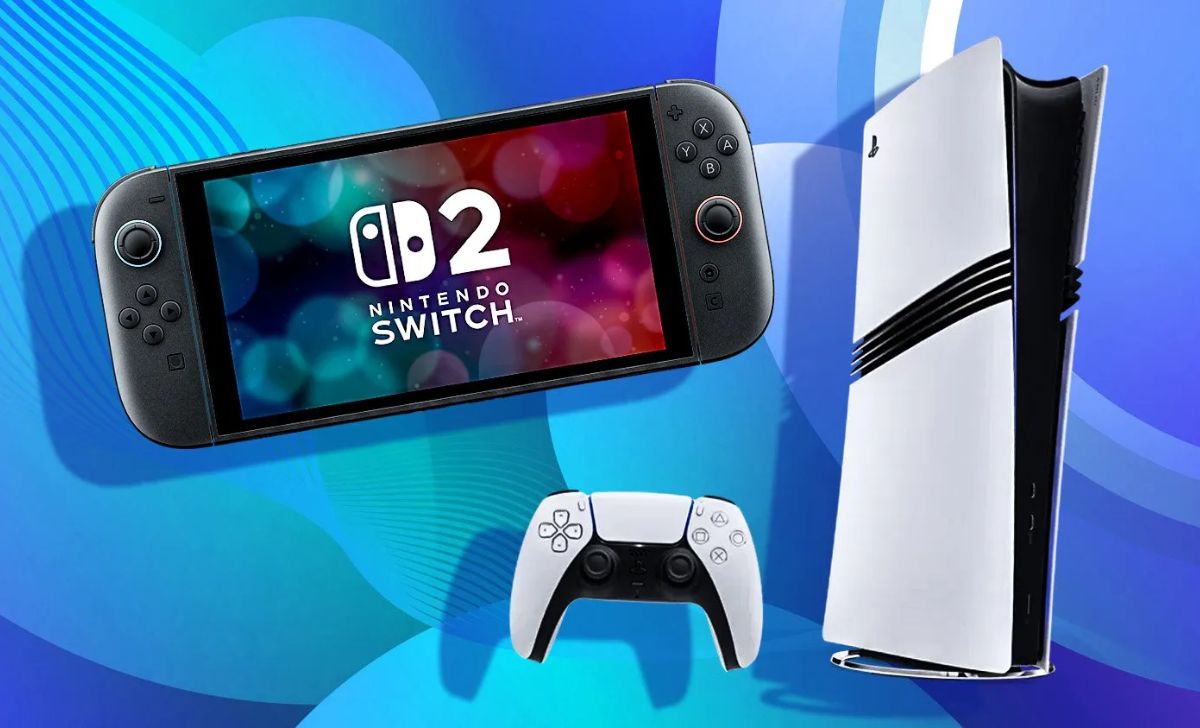
The gaming console landscape in 2025 is witnessing an epic showdown between two industry titans: Sony’s PlayStation 5 and Nintendo’s Switch 2. This PlayStation 5 vs Nintendo Switch 2 clash marks The Battle for Gaming Supremacy in 2025, as Sony’s seasoned powerhouse—with nearly five years of market dominance—faces off against Nintendo’s explosive newcomer that shattered launch records within days of its June 2025 debut. While these consoles embody contrasting gaming philosophies—raw graphical power versus portable versatility—both are vying for supremacy in an increasingly competitive market valued at $24.8 billion in 2025 and projected to soar to $28.9 billion by 2030.

Sales Performance: Established Giant vs Record-Breaking Newcomer
PlayStation 5: Sustained Market Leadership
The PlayStation 5 has cemented its position as the current generation’s sales leader, reaching 80.3 million units sold worldwide as of June 2025. This milestone represents remarkable achievement for Sony, placing the PS5 ahead of the PS4 by 4.6% at the same point in their lifecycles and officially surpassing the lifetime sales of the PS3 in the United States.
Sony maintained steady momentum throughout 2025, selling 2.5 million units in Q1 2025 (April-June period), which translates to an impressive daily average of 28,508 consoles sold globally during the first 116 days of the year. The console’s success comes despite a challenging economic environment that prompted Sony to increase prices by $50 across all models in August 2025, bringing the standard PS5 to $549.99 and the PS5 Pro to $749.99.

The PS5’s performance becomes even more impressive when examining regional data. In the United States alone, the console has sold over 25 million units, maintaining approximately 60% market share in the American gaming console market. Despite a 47% year-over-year decline in July 2025—attributed to market saturation and pricing pressures—the PS5 remains the dominant force in home console gaming.
Nintendo Switch 2: Breaking Records from Day One
The Nintendo Switch 2 launched on June 5, 2025, and immediately rewrote the record books with a staggering 3.5 million units sold in its first four days—Nintendo’s fastest-selling console launch ever. By the end of June, sales had reached 5.82 million units, and by late August 2025, the console had sold an estimated 8.6 million units globally.

What makes the Switch 2’s performance particularly remarkable is its 77% sales advantage over the original Nintendo Switch during the same three-month launch period. In the United States specifically, the Switch 2 sold 2.4 million units in its first three months (June-August), surpassing the previous record held by the PlayStation 4, which sold 2.2 million units in its first quarter.
The console’s regional breakdown reveals balanced global appeal. The Americas led with 2.08 million units (35.7% of total sales), followed by Europe with 1.34 million (23.0%), Japan with 1.27 million (21.8%), and other regions contributing 1.13 million (19.4%).

Nintendo’s fiscal projections remain ambitious, targeting 15 million units by March 2026, with analysts predicting the company could sell between 5 to 8 million additional units during the critical October-December holiday season. Industry reports suggest Nintendo has requested suppliers to produce 25 million units by the end of March 2026, signaling confidence in sustained demand.
Market Share and Industry Position
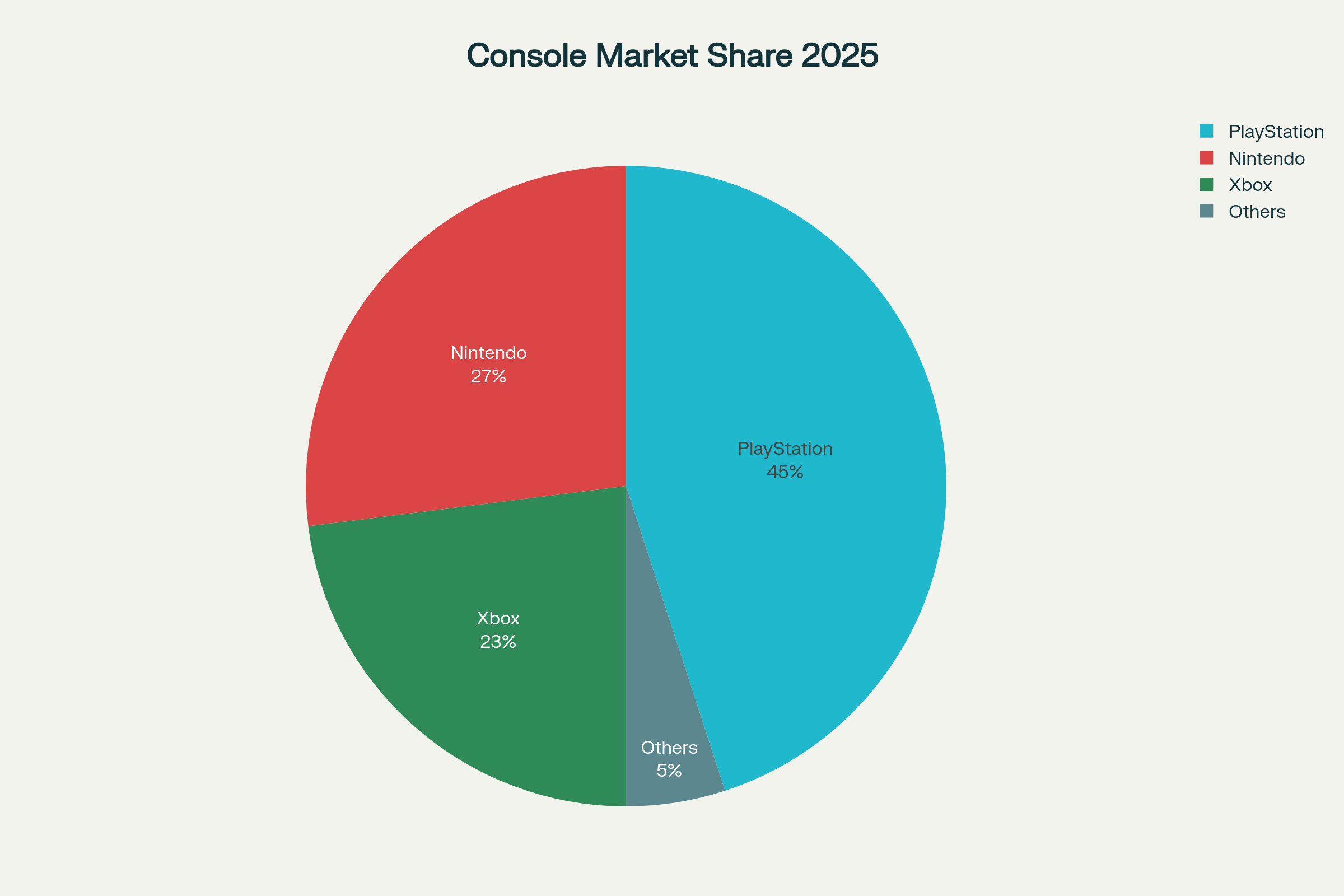
The 2025 console market reveals a clear hierarchy, with PlayStation commanding 45% market share, Nintendo holding 27%, Xbox at 23%, and other brands collectively accounting for just 5%. This distribution underscores the duopoly between Sony and Nintendo in defining modern gaming experiences, with each company pursuing distinct strategic visions.
PlayStation’s market dominance stems from its established ecosystem, extensive third-party support, and commitment to high-fidelity gaming experiences. The PS5’s installed base of 80.3 million users creates a powerful network effect, attracting developers and publishers to prioritize the platform for major AAA releases.
Nintendo’s 27% share represents significant growth potential, especially considering the Switch 2’s hybrid nature appeals to demographics beyond traditional console gamers. The original Nintendo Switch sold 153.10 million units over its lifetime, ranking as the third best-selling console of all time behind only the Nintendo DS (154.02 million) and PlayStation 2 (160.63 million). The Switch 2’s record-breaking launch suggests it could eventually challenge or exceed its predecessor’s remarkable performance.
Pricing Strategy and Value Proposition
PlayStation 5: Premium Pricing in a Challenging Market
Sony’s pricing strategy in 2025 reflects the economic pressures facing global electronics manufacturers. The standard PS5 now costs $549.99 (up from $499.99), the PS5 Digital Edition is $499.99 (up from $449.99), and the PS5 Pro commands $749.99 (up from $699.99). These August 2025 price increases—a flat $50 hike across all models—mark a departure from traditional console economics, where prices typically decrease over a product’s lifecycle.
The price hikes stem from tariff pressures on countries where PS5 consoles are manufactured, including China (30% tariffs), Japan (15%), Vietnam (20%), and Malaysia (19%). Sony justified the increases by citing a “challenging economic environment,” though the decision has frustrated consumers who expected discounts as the console approaches its sixth year on the market.
Nintendo Switch 2: Competitive Entry Point with Strategic Bundles
Nintendo positioned the Switch 2 at $449.99 for the base model—a $100 price premium over the original Switch’s 2017 launch price but $100 less than the current standard PS5. Despite initial concerns about potential tariff-related price increases, Nintendo confirmed it would maintain this pricing through strategic stockpiling and manufacturing adjustments.
The company also offers strategic bundles, including the Nintendo Switch 2 + Mario Kart World Bundle at $499.99, which includes the system and a digital copy of the flagship racing game. This bundle provides significant value compared to purchasing the console and game separately, effectively positioning the Switch 2 as a more accessible entry point for families and budget-conscious gamers.
Nintendo has raised prices on accessories due to tariff pressures—for example, a pair of Joy-Con 2 controllers now costs $95 instead of the originally announced price. However, the company has kept game prices stable, maintaining consumer goodwill during economic uncertainty.

Technical Specifications: Power vs Portability
The PS5 and Switch 2 represent fundamentally different engineering philosophies, each optimized for distinct gaming experiences.
PlayStation 5: Uncompromising Performance
The PS5 features a custom AMD Zen 2-based 8-core CPU running at 3.5 GHz paired with a custom AMD RDNA 2 GPU delivering 10.28 teraflops of graphical power. This hardware enables native 4K gaming at up to 120 frames per second, with support for 8K resolution in compatible titles.
The console includes 1TB of internal storage with support for M.2 SSD expansion up to 8TB, ensuring fast loading times and ample space for modern games that frequently exceed 100GB. Advanced features include ray tracing for realistic lighting and reflections, Tempest 3D Audio for immersive soundscapes, and the innovative DualSense controller with haptic feedback and adaptive triggers.
Nintendo Switch 2: Hybrid Innovation
The Switch 2 employs an Nvidia T239 chip with 8x ARM Cortex A78C cores running at 998MHz when docked and 1101MHz in handheld mode. Its Nvidia Ampere GPU with 1536 CUDA cores enables 4K gaming at 60fps when docked and 1080p at up to 120fps in handheld mode.
The console features a 7.9-inch touchscreen display with 1080p native resolution and 120Hz refresh rate support, a significant upgrade from the original Switch’s 720p screen. Despite reverting to LCD technology instead of OLED, the display offers HDR10 support and improved brightness for enhanced visual quality.
Storage begins at a modest 256GB but expands up to 2TB via microSD Express cards. The Switch 2 weighs just 534 grams with Joy-Cons attached, maintaining portability while delivering near-PS5 performance in select titles.
The magnetic Joy-Con 2 controllers introduce innovative features including Hall-effect joysticks to eliminate drift, mouse mode for precise control in strategy games, and enhanced haptic feedback. The hybrid design allows seamless transitions between handheld play and docked 4K gaming, offering flexibility the stationary PS5 cannot match.
Game Library and Exclusive Content
PlayStation 5: AAA Blockbusters and Cinematic Experiences
The PS5’s game library emphasizes high-budget, cinematic experiences that showcase the console’s technical prowess. Major 2025 exclusives include Ghost of Yōtei (releasing October 2, 2025), the highly anticipated sequel to Ghost of Tsushima set in northern Japan with refined combat and dynamic weather systems.
Death Stranding 2: On the Beach launched in June 2025 to critical acclaim, scoring 89 on Metacritic and selling over 3 million copies in its first month. Hideo Kojima’s follow-up expanded traversal mechanics and delivered Hollywood-level performances, proving the PS5 can still generate massive single-player hits.
Other notable exclusives include Code Violet (December 12, 2025), a third-person action horror title; Saros (March 20, 2026) from Returnal studio Housemarque; and Marvel’s Wolverine (Fall 2026) from Insomniac Games. The console also benefits from timed exclusives like Final Fantasy XVI, which surpassed 7 million units worldwide by early 2025 before releasing on other platforms.
The PS5’s software ecosystem shows strong engagement, with 65.9 million combined PS5 and PS4 games sold in Q1 2025—an increase of 12.3 million year-over-year. First-party titles accounted for 6.9 million units, up 900,000 from the previous year.
Nintendo Switch 2: Franchise Power and Hybrid Gameplay
The Switch 2 launched with Mario Kart World, an open-world reimagining of the beloved racing franchise that sold 5.63 million copies by late June 2025—including digital codes bundled with hardware. The game’s extraordinary attach rate demonstrates Nintendo’s ability to drive software sales through compelling first-party content.
Other confirmed exclusives include Donkey Kong Bananza (July 17, 2025), DK’s first new 3D game since 1999; Hyrule Warriors: Age of Imprisonment (November 6, 2025); and Kirby Air Riders (November 20, 2025). Future releases include Pokémon Legends: Z-A (October 12, 2025), Metroid Prime 4 Beyond (2025), and entirely new franchises like The Duskbloods (2026) and Pokémon Pokopia (2026).
The Switch 2’s backward compatibility with original Switch games provides immediate access to a library exceeding 1,415 million software units sold, though not all titles are fully compatible. Premium “Nintendo Switch 2 Editions” of games like The Legend of Zelda: Breath of the Wild and Tears of the Kingdom offer enhanced performance and graphical upgrades, bridging generations seamlessly.
Industry Trends and Future Outlook
Gaming Console Market Dynamics
The gaming console market is experiencing resurgence after years of pandemic-driven disruption and supply chain challenges. The market is projected to grow at a 2.05-8.6% CAGR through 2030, driven by technological innovation, hybrid console adoption, and the launch of AAA titles like Grand Theft Auto VI.
Hybrid consoles represent the fastest-growing segment, advancing at a 5.9% CAGR through 2030 as consumers increasingly demand versatility between home and portable gaming. The Switch 2’s success validates this trend, positioning Nintendo to capture market share from traditional stationary consoles.
Artificial intelligence is reshaping console capabilities, with AI-driven features improving gameplay realism, adaptive difficulty, voice recognition, and system performance optimization. The Switch 2’s DLSS-like upscaling technology and the PS5 Pro’s AI-assisted rendering exemplify how machine learning enhances visual fidelity without requiring exponentially more powerful hardware.
Regional Market Dynamics
Asia-Pacific leads global console revenue with 37-46% market share, driven by strong gaming cultures in Japan, South Korea, and China. China alone represents approximately 25% of global gaming income, making it the largest single gaming market.
The United States is projected to generate $8.2 billion in console revenue in 2025, maintaining its position as the most lucrative Western market. Europe shows stable PS5 sales but declining interest in Xbox and original Switch hardware, creating opportunities for the Switch 2 to capture transitioning consumers.
Emerging markets in South Asia, Latin America, and the Middle East/North Africa region show the strongest growth potential, fueled by increasing internet access, rising household incomes, and government subsidies for locally-assembled consoles.
Competitive Pressures and Market Challenges
Both Sony and Nintendo face headwinds from cloud gaming services and handheld PC devices like the Steam Deck, which shipped 4 million units and validated premium portable gaming beyond Nintendo’s ecosystem. Microsoft’s rumored handheld “Keenan” for 2025 could further fragment the portable market.
Tariff uncertainty continues to create pricing volatility. The Trump administration’s fluctuating trade policies—including tariffs ranging from 10% to 245% on electronics from various countries—have forced manufacturers to stockpile inventory, adjust supply chains, and pass costs to consumers. Both Sony and Microsoft raised prices in 2025, while Nintendo absorbed costs through strategic manufacturing adjustments.
Subscription services like PlayStation Plus (123 million subscribers as of June 2025) and Xbox Game Pass drive recurring revenue, with 77% of 2024 console game revenue coming from in-app purchases and ongoing services rather than one-time game sales. This shift toward “games as a service” models impacts how companies measure success beyond raw hardware numbers.
Next-Generation Planning
Industry reports suggest Sony is planning the PlayStation 6 for a 2027 launch, indicating the PS5 may have limited years remaining as Sony’s flagship platform. This timeline would give the PS5 a roughly seven-year lifecycle, consistent with previous PlayStation generations.
Nintendo’s trajectory appears less certain but more ambitious. With production targets of 25 million Switch 2 units by March 2026 and projected lifetime sales potentially exceeding the original Switch’s 153 million units, Nintendo is positioned for a longer current-generation cycle. The company’s focus on exclusive first-party content, backward compatibility, and hybrid flexibility creates sustainable competitive advantages that don’t require constant hardware refreshes.
Performance Comparison in Real-World Gaming
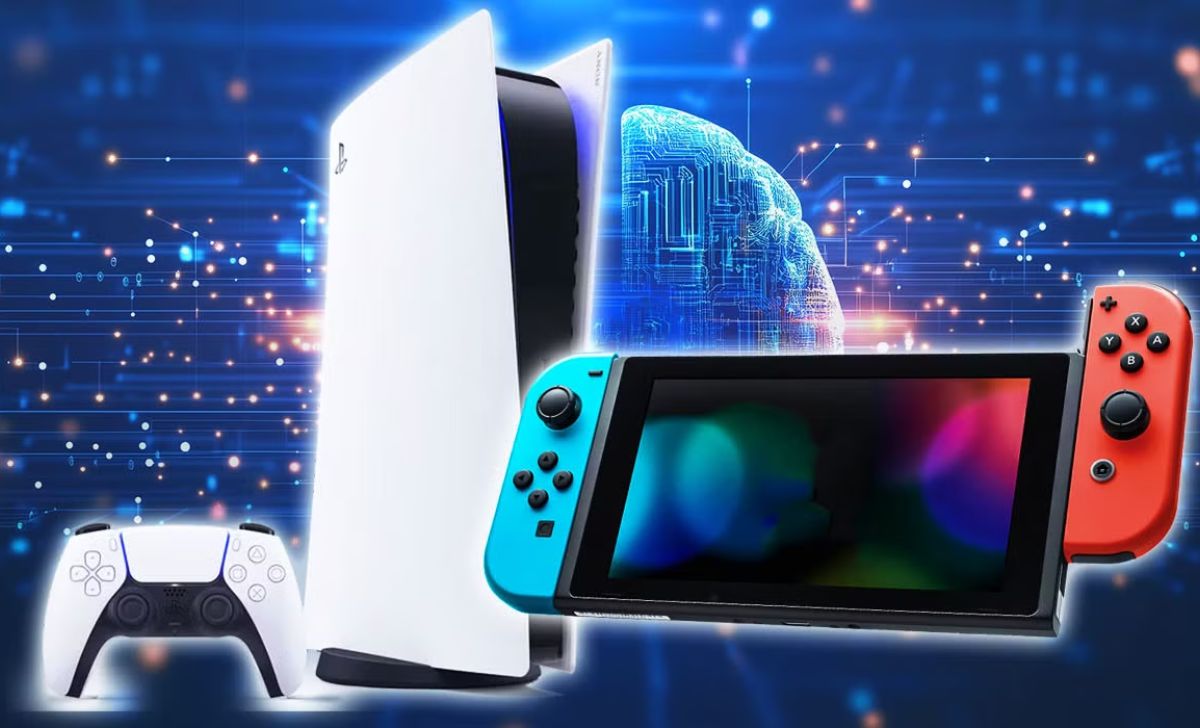
When comparing actual gaming performance, the PS5 delivers superior graphical fidelity, texture quality, ray tracing sophistication, and rendering distance in demanding titles like Cyberpunk 2077. The console’s 10.28 teraflops of GPU power significantly outpace the Switch 2’s capabilities, making it the clear choice for gamers prioritizing visual excellence and performance.
However, the Switch 2 impresses with its ability to run complex modern games—titles that challenged the PS4 just years ago—in a portable form factor weighing barely over a pound. The console’s DLSS-like upscaling technology helps bridge the performance gap, delivering sharp 1080p visuals in handheld mode that exceed expectations for mobile hardware.
For docked gameplay at 4K resolution, the PS5 maintains a decisive advantage in frame rate stability, lighting effects, and overall visual polish. But for gamers who value the flexibility to play AAA titles during commutes, while traveling, or away from a television, the Switch 2 offers an experience the stationary PS5 simply cannot provide.
The Verdict: Different Philosophies, Different Winners
The battle between PlayStation 5 and Nintendo Switch 2 isn’t a zero-sum competition but rather a clash of complementary gaming philosophies. The PS5 represents the pinnacle of stationary console gaming—a powerhouse designed for 4K televisions, surround sound systems, and players who prioritize cutting-edge graphics and cinematic storytelling. With 80.3 million units sold and dominant 45% market share, Sony has proven the enduring appeal of this traditional console model.
The Switch 2 reimagines what a “console” can be, merging home and portable gaming into a seamless hybrid experience that appeals to families, commuters, and players who value flexibility over maximum graphical fidelity. Its record-breaking 8.6 million units in just months validate Nintendo’s vision that gaming should adapt to players’ lifestyles rather than demanding they adapt to hardware limitations.
For 2025 and beyond, both consoles are winning by serving different audiences exceptionally well. PlayStation dominates the premium home console market with unmatched performance and exclusive AAA experiences. Nintendo leads the hybrid revolution with innovative hardware, beloved franchises, and unparalleled portability. The true battle for gaming supremacy isn’t between these consoles—it’s between the philosophies they represent, and in that contest, gamers ultimately win by having exceptional options regardless of their priorities.