
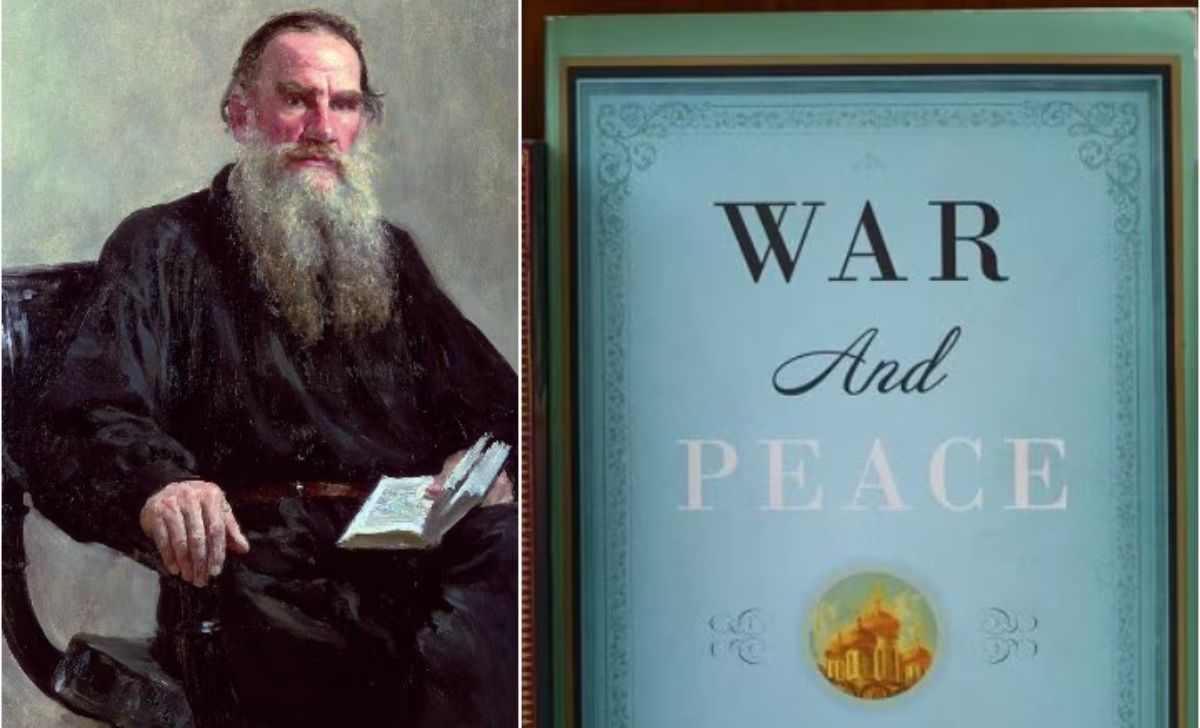
War and Peace is one of those books that many readers approach with caution. Its size alone makes it legendary—over a thousand pages of dense history, love, war, and philosophy. People often joke that it’s the kind of book you shouldn’t read in bed unless you’re ready for a concussion when it falls from your hands. But to dismiss it as just a “slog” misses the point. Tolstoy created more than just a novel—he built a living, breathing panorama of history filled with some of the most realistic characters ever written. And if readers feel daunted today, imagine how Tolstoy must have felt. What started as an idea for a short novel quickly spiraled into “War and Peace” a five-year journey that resulted in a masterpiece unlike anything before it.
From a Short Novel to an Unstoppable Epic
In 1863, Tolstoy sat down to write a modest book. His original idea was simple: tell the story of a political dissident returning home from exile in Siberia. That storyline might have been contained and focused. But Tolstoy’s mind didn’t work that way.
Instead, what emerged five years later was War and Peace—a sprawling, 1,200-page tapestry featuring love stories, philosophical debates, harrowing battlefields, moments of despair, visions of faith, financial ruin, a burning Moscow, and even a half-tamed bear. What it did not contain, however, was the exile or the political dissident Tolstoy had set out to describe.
So how did it expand so drastically? The answer lies in Tolstoy’s obsession with understanding history and the forces that shape human lives.
The Roots of Tolstoy’s Vision
Tolstoy himself was no ordinary writer. Born in 1828 into an eccentric aristocratic family, he lived a turbulent and restless early life. By the time he was thirty, he had already:
- Dropped out of Kazan University.
- Gambled away the family fortune.
- Served in the army.
- Written memoirs.
- Rejected the Russian literary establishment.
- Traveled through Europe in search of meaning.
Eventually, he returned to his family estate, Yasnaya Polyana, and turned his attention to writing. His initial project was inspired by the Decembrists—a group of aristocratic revolutionaries pardoned in 1856 after decades in Siberian exile. He wanted to depict their return.
But as he pondered this, questions kept pulling him deeper into history. How could he tell of their return without explaining the Decembrist revolt of 1825? And how could he cover that revolt without tracing its roots to Napoleon’s invasion of 1812, which had tightened the grip of Russian authoritarianism? And once he looked at 1812, how could he ignore 1805, when Russia first felt the sting of Napoleon’s power after its crushing defeat at Austerlitz?
Each answer led to a bigger question. Each historical moment demanded its own story. And soon, Tolstoy was no longer writing about a single exile but about the tides of history itself.
The World of War and Peace
The novel opens in 1805, as whispers of war with France unsettle Russian aristocrats. At a glittering cocktail party, the well-born gossip about politics, but their concerns quickly drift toward the eternal obsessions of wealth, love, and death.
From there, the narrative spirals outward. Tolstoy introduces an intricate web of characters, each with their own desires, flaws, and fates. There are no true “main characters.” Instead, readers are invited into a massive network of relationships:
- An illegitimate count’s son, shy and hapless, wonders if he can win the heart of a cunning princess.
- His loyal friend faces the brutal chaos of Austria’s battlefields.
- A young girl falls in love with both men, her emotions pulling her in two directions.
Historical figures move in and out of the story. Napoleon himself makes several appearances, and even one of Tolstoy’s own ancestors is woven into the background. Yet the fictional and the historical never feel separate—both serve Tolstoy’s vision of how people live within the machinery of history.
A Story That Pauses to Question
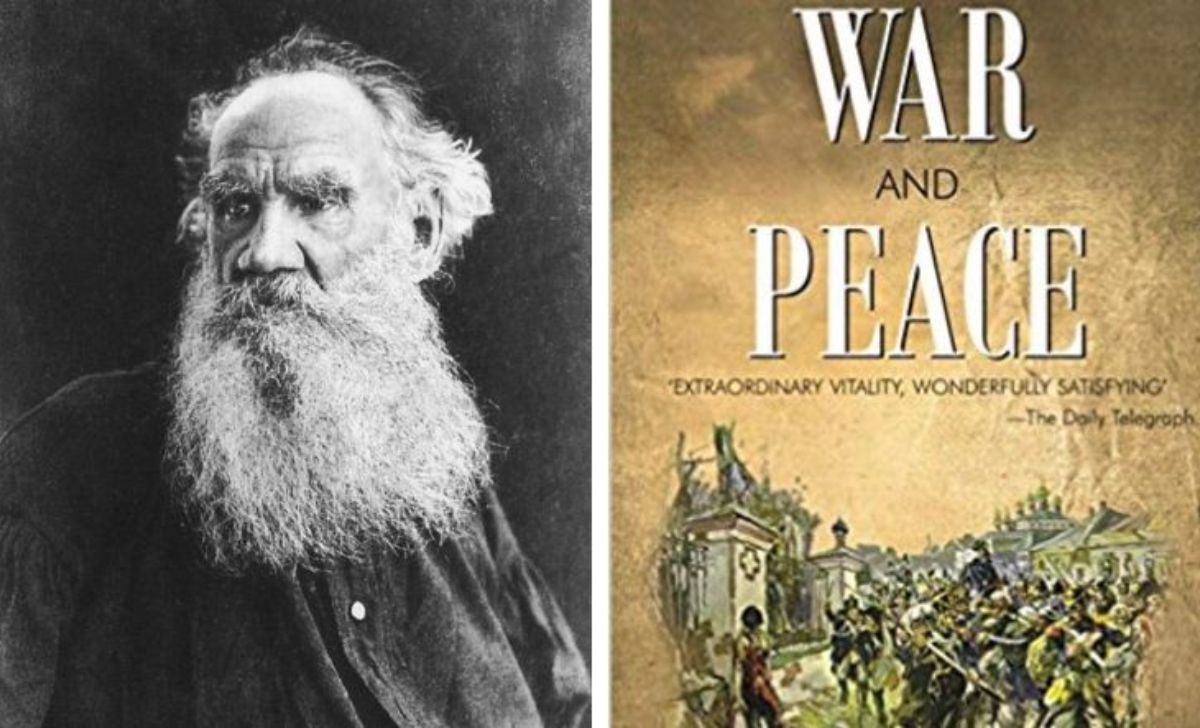
One of the most unusual features of War and Peace is Tolstoy’s refusal to keep the story neatly contained. He often halts the action to ask profound questions:
- Why do wars really begin?
- Are battles won by clever tactics or by chaos and chance?
- Do “great men” like Napoleon shape history, or are they carried along by greater social and economic forces?
These digressions sometimes stretch into essays within the narrative. They frustrate some readers, but they also expand the book into something larger than a novel. Instead of simply entertaining, Tolstoy invites his audience to wrestle with history itself.
Critics and Tolstoy’s Own View
Not everyone knew what to make of War and Peace when it was published. Some critics argued it was hardly a novel at all. Henry James famously dismissed it as a “large, loose, baggy monster.”
Tolstoy himself agreed to some extent. He insisted that novels were a Western European form that didn’t quite suit Russian life. “What is War and Peace?” he asked. “It is not a novel. Still less an epic poem. Still less a historical chronicle. War and Peace is what the author wanted and was able to express in the form in which it was expressed.”
In other words, it defied categories because it was the fullest expression of his imagination.
Reaching the End—But Not the Beginning He Intended
By the time Tolstoy concluded War and Peace, he had carried his characters to the year 1820. Ironically, that was still decades before the Decembrists’ return—the very story he had originally set out to write.
Instead of arriving at his starting point, he had gotten lost—in the best possible way—within the layers of Russian history. His attempt to explain the present led him deep into the past. The result was not just a novel but a meditation on war, culture, philosophy, psychology, and the human spirit.
The Legacy of a Monumental Work
War and Peace remains both intimidating and irresistible. Its sheer scale forces readers to slow down and live inside its world, to follow its characters across battlefields and drawing rooms, and to pause when Tolstoy himself asks us to think about the meaning of history.
What began as a short story became one of the greatest works of literature ever written. And maybe that’s the truest lesson Tolstoy left us: when you search for answers about your own time, you often uncover the countless lives and moments that came before.