There’s a moment in almost every Green Lantern story where someone — usually someone holding a gun or driving a tank — looks up and says something like, “What is that thing?” And the answer, depending on when the story was written, is different every single time. That, in a way, is the real story of the Power Ring: not just what it does, but how DC Comics has spent decades trying to explain why it does it.
A Ring That Does Anything. Seriously, Anything.
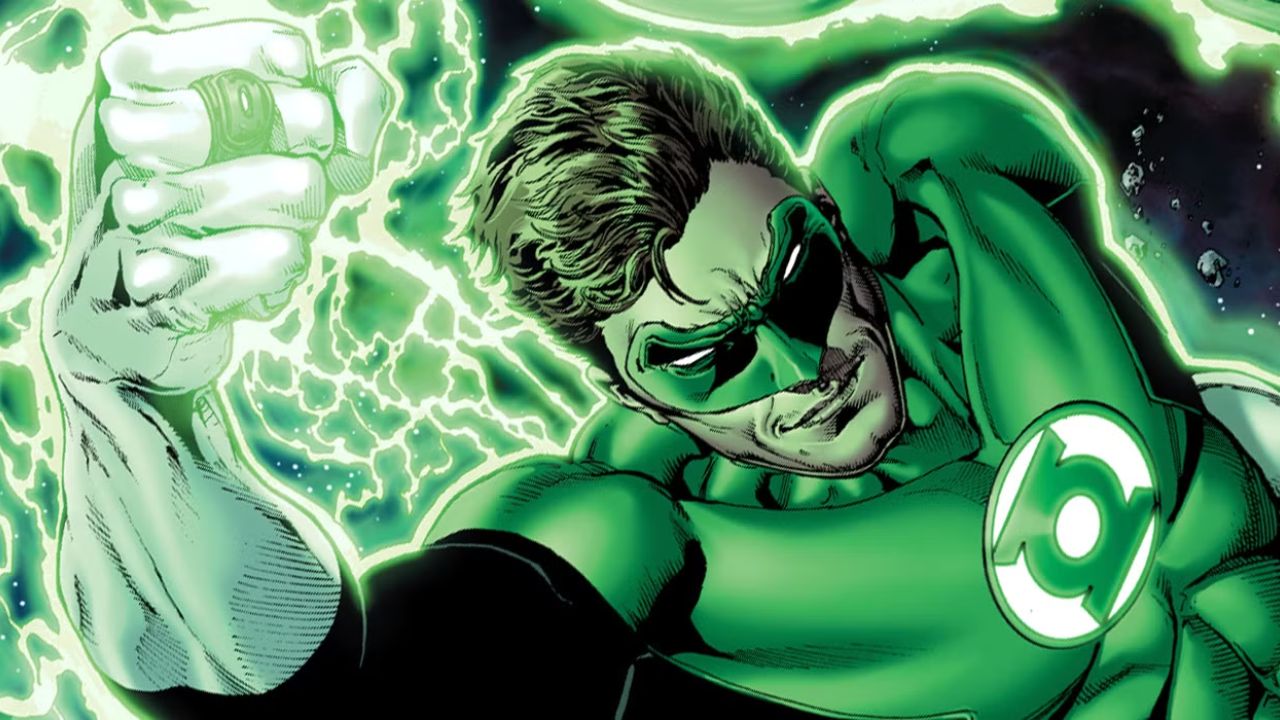
Let’s start with the obvious. A Green Lantern Power Ring is, on the most surface level, a tool that lets its wielder create hard-light constructs — physical objects made entirely out of concentrated willpower, shaped by thought alone. If Hal Jordan imagines a giant green fist, there’s a giant green fist. If John Stewart visualizes an architectural blueprint mid-battle, that blueprint becomes a functioning weapon or shield. The constructs are as real as anything made of matter, capable of hitting, blocking, lifting, or containing.
But calling it a “hard-light projector” undersells it wildly. The ring is also a spaceship, a universal translator, an encyclopedia, a medical scanner, a communication device, a life support system, and in more than a few storylines, something uncomfortably close to a weapon of mass destruction. In the hands of a Lantern operating at full capacity, it’s legitimately one of the most powerful objects in the DC universe.
The catch — and this is the part that makes the concept so rich — is that the ring doesn’t run on electricity or solar power or a fancy battery. It runs on will.
“In brightest day, in blackest night, no evil shall escape my sight — it’s not just a pretty oath. It’s a user manual.”
— The lore beneath the lantern02
Willpower as Energy: More Than a Metaphor
This is where it gets genuinely interesting. In the expanded mythology that DC built — particularly in Geoff Johns’ foundational run on Green Lantern beginning in 2004 — the rings don’t use willpower as a poetic stand-in for “trying really hard.” Willpower is treated as a literal, measurable, cosmological force.
The universe has what the comics call the Emotional Electromagnetic Spectrum, or simply “the Spectrum.” It’s a band of emotional energies that physically exist in DC’s universe, the same way light or radiation exists in ours. These energies are ancient, tied to the first light that ever shone at the beginning of creation, and different emotions correspond to different frequencies across that spectrum.
The Spectrum — Simplified

Think of the Emotional Spectrum like visible light. Just as white light contains red, orange, yellow, green, blue, indigo, and violet — so too does the "emotional light" of the DC universe. Each color corresponds to a specific emotion, and different civilizations have learned to harness each one.
Green sits at the center of this spectrum — and that positioning isn’t accidental. Will is considered the stable, focused core of sentient consciousness. Unlike rage (which burns hot but erratically) or fear (which is powerful but corrupting), will is controllable. It’s directed. That stability at the spectrum’s midpoint is precisely why the Guardians of the Universe chose it as the basis for their peacekeeping force billions of years ago.
The rings harvest this willpower energy from their wielder’s own consciousness, channeling it into functional output. The stronger your will — meaning not just stubbornness, but focus, clarity of purpose, and the ability to overcome doubt — the more powerful the constructs you can create. This is why the rings choose people who have demonstrated the ability to overcome great fear. Fear is the absence of will. Choosing to act despite it is what makes the energy flow.

The Other Six: Every Ring in the Rainbow
The Green Lanterns are the most famous, but they’re one of seven (later eight and nine) corps built around the Emotional Spectrum. Understanding the full spectrum helps explain what makes the green ring unique — and what its limitations are.
| Color | Emotion | Corps | Key Trait |
|---|---|---|---|
| Red | Rage | Red Lanterns | Ring replaces blood; wielder vomits red plasma |
| Orange | Avarice (Greed) | Agent Orange | Only one true wielder — Larfleeze, who consumes others’ rings |
| Yellow | Fear | Sinestro Corps | Powered by instilling terror in others; originally impervious to green rings |
| Green | Willpower | Green Lantern Corps | Most stable; constructs limited only by imagination and focus |
| Blue | Hope | Blue Lantern Corps | Amplifies green rings enormously; nearly powerless alone |
| Indigo | Compassion | Indigo Tribe | Can heal, teleport, and copy other ring constructs; strangely secretive |
| Violet | Love | Star Sapphires | Ring seeks those separated from loved ones; can encase enemies in crystal |
| White | Life | White Lanterns | Combines all spectrum energies; can resurrect the dead |
| Black | Death | Black Lantern Corps | Worn by reanimated corpses; antithesis of all emotional light |
What the table shows you is that the Green Ring occupies a very specific, almost philosophical niche. Every other ring is powered by reactive emotions — things that happen to you, or things you compulsively feel. Rage, fear, love, grief. Will is the one emotion on the spectrum that is inherently chosen. You decide to act. You decide to focus. That’s the distinction the Guardians built their empire on.
The Lantern Itself: More Than a Prop
Every Green Lantern carries a power battery — the physical lantern-shaped device they charge their ring against. This is where the corps’ name comes from, and it’s where a lot of the mythology lives.
Power batteries are personal items, typically kept somewhere safe on Earth or wherever a Lantern calls home. They’re not universal refueling stations — they’re individualized conduits, keyed to a specific ring and a specific wielder. The battery is connected, through a sort of mystical tether, to a massive central Power Battery on Oa, the homeworld of the Guardians of the Universe at the center of the universe.
When a Lantern recites the oath — “In brightest day, in blackest night…” — they’re doing more than just saying words. The oath is a focusing mechanism. It aligns concentration, calls up willpower, and initiates the charging cycle. Different Lanterns have used different oaths over the years, and certain writers have leaned into the idea that the specific words matter less than the act of committing to them. The ritual is the charge.
Power Level — What Does "Full Charge" Mean?

A fully charged ring traditionally operates at 100% power and depletes over time with use. Heavy constructs, sustained flight across deep space, or extended battles drain the ring faster. Certain attacks — particularly from yellow (fear-based) energy in classic continuity — would drain the ring or outright bypass it. A ring at zero charge is essentially a very pretty piece of jewelry.
In modern continuity, the “yellow impurity” — the old vulnerability to the color yellow specifically — has been retconned away and replaced with something more psychologically interesting: the ability to overcome fear itself unlocks the ring’s full potential against yellow energy. It’s not a material weakness; it’s a test. If you’re truly fearless in the Lantern Corps sense of the word, yellow can’t stop you at all.

Building With Light: The Art of the Construct
The constructs — the green glowing objects the ring creates — are the most visible and most interesting part of the ring’s operation. And this is where individual Lanterns differ dramatically from one another.
The ring translates thought into physical form. But thoughts are different from person to person. A Lantern who thinks in broad visual terms will make large, sweeping constructs. A Lantern who thinks analytically will make precise, highly detailed ones. The ring doesn’t limit you — it mirrors you.
Hal Jordan — The Test Pilot
Hal Jordan is a test pilot by trade, and his constructs reflect it. They tend toward mechanical precision — jet engines, aircraft, fists, blasters. Functional, fast, built for maximum impact. He doesn’t overthink the ring because test pilots can’t afford to overthink anything. There’s an instinct to his constructs, a kinetic directness that makes him devastating in a fight even when he’s outclassed in raw power.
John Stewart — The Architect
John Stewart was a Marine and a trained architect before he ever wore the ring, and it shows. His constructs are architectural masterworks — load-bearing walls with proper stress distribution, shields that account for angles and force vectors, cities rebuilt from rubble in minutes. Where Hal makes weapons, John makes structures. His ring work is deliberate, almost methodical, and has a solidity to it that makes his constructs notably hard to break.
Kyle Rayner — The Artist
Kyle is the most visually creative of the major Lanterns, and he’s widely considered to have the most imaginative constructs in corps history. Where others default to familiar shapes, Kyle draws on a lifetime of art training and pop culture absorption. His ring has produced things no other Lantern would’ve thought to make — and that creative diversity is genuinely a tactical advantage. Enemies can’t predict what’s coming when the constructs look like nothing they’ve ever fought before.
Jessica Cruz — The Anxious One
Jessica Cruz’s ring work is fascinating precisely because it fights against her. She has severe anxiety and PTSD, and her ring — initially one of the most unstable in the corps — forces her to confront the internal warfare that other Lanterns can sidestep. Her constructs reflect the effort; they require more conscious control, and when she loses focus, they destabilize. But when she’s centered? She’s one of the most powerful Lanterns alive. Her ring is doing exactly what it’s supposed to: making her overcome.
The ring isn’t giving you power. It’s amplifying the power that was always already in you. That’s the whole point. That’s what the Guardians understood — or thought they understood.
— A throughline across six decades of Green Lantern stories
What the Ring Cannot Do
For all its capabilities, the Power Ring has real, interesting limitations — and understanding them is what makes Green Lantern stories work as drama rather than power fantasy.
It cannot directly affect the color yellow — in classic continuity. This was originally a “necessary impurity” the Guardians built in to limit the ring’s power, tied to the imprisoned fear entity Parallax living inside the central battery. In modern continuity this has been revised, but the emotional basis remains: if you’re acting out of fear, the ring knows. It can feel the hesitation.
It needs a conscious, focused wielder. An unconscious or dying Lantern’s ring loses coherence fast. The constructs aren’t autonomous — they’re projections of active thought. Drop the Lantern, and you drop the wall they were holding up.
It cannot create organic life. The ring can simulate biological forms, but it cannot make a living creature. It can make a very convincing cat out of green light, but that cat doesn’t purr. This limitation has philosophical weight — the ring can do almost anything except the one thing no instrument of will can do: create consciousness itself.
It won’t kill without the wielder’s intent. The ring is an extension of will, which means it amplifies moral choices as readily as tactical ones. Hal Jordan has gone to extraordinary lengths to restrain his ring from lethal force, and the construct always reflects that hesitation — or that resolve. The ring is not a gun. It’s a mirror with horsepower.
Notable Exception — The Parallax Event

When Hal Jordan was possessed by the fear entity Parallax during the "Emerald Twilight" arc (1994), his ring effectively had no limits at all. He defeated dozens of other Lanterns, shattered their rings, destroyed Oa, and drained the central battery dry. What the story showed — perhaps unintentionally — was what the ring looks like when willpower fully uncouples from conscience. The answer was apocalyptic. There's a reason the Guardians built in checks.
How Does the Ring Choose Its Bearer?
When a Green Lantern dies — or retires, or is incapacitated — the ring leaves and finds a replacement. It doesn’t wait for a job posting or run a background check. It scans. The ring is semi-sentient in most continuities, capable of evaluating candidates across vast distances and making a selection within seconds of its previous bearer’s death.
The criteria it uses: the ability to overcome great fear. Not the absence of fear — that would be a much shorter list — but the demonstrated capacity to act in spite of it. The ring looks for courage in its truest, most neurological sense: fear present, acknowledged, and overridden anyway.
This is why the corps looks like it does. Former soldiers, test pilots, architects, artists, doctors, mechanics, aliens with biologies humans can’t even process — the ring doesn’t care about any of those things. It cares about that one specific quality, and it seems to find it everywhere. The implication is that courage is common. Latent. Waiting.
Hal Jordan’s selection remains one of comics’ great founding myths. The ring found him in the Mojave Desert, where it had traveled from the crash site of its dying previous bearer — the alien Abin Sur — looking for the “closest honest man.” Jordan was a disgraced pilot grounded by authority for insubordination, broke, living out of a trailer, and considered a liability. The ring didn’t see that. It saw what he’d overcome to become all of those things, and what he was capable of becoming next.
Oa, the Guardians, and What the Ring Really Is
The ring didn’t emerge from nothing. It was engineered — over hundreds of thousands of years — by the Guardians of the Universe, a race of immortal beings from the planet Maltus who relocated to Oa and decided it was their responsibility to impose order on creation. Whether that was wisdom or arrogance is a question the comics have spent sixty years wrestling with.
The Guardians created the rings as tools for their Green Lantern Corps — essentially a cosmic police force divided into 3,600 sectors, each patrolled by one or two Lanterns. The rings were designed to be the ideal enforcement instrument: powerful enough to handle any threat, limited enough to require judgment, and tied to an emotional core that would theoretically select for the right kind of person.
The central Power Battery on Oa is essentially a power plant and server farm combined. It stores an enormous reserve of green willpower energy, channeled from the emotional output of living beings across the universe. The individual batteries connect to it. The individual rings connect to the individual batteries. The whole system is a network, and Oa is the hub.
This means that when Oa is threatened — as it has been, catastrophically, multiple times — the entire corps is threatened too. Destroying the central battery is the fastest way to strand or kill every Green Lantern simultaneously. It’s also why the Guardians’ own moral failures are so consequential. They built a system where their judgment propagates outward to every Lantern in every sector. When they get it wrong, they get it very, very wrong at scale.
🟢
A Ring That Demands Something Real
The best superhero objects are the ones that reflect something true about their wielder — or ask something genuine of them. The Power Ring does both. It’s a piece of technology that only works if you’re willing to be honest about who you are and what you’re afraid of. It will amplify your courage and expose your cowardice, and it genuinely cannot tell the difference between a human and a species that breathes methane and has seven brains, as long as at least one of those brains can choose to act despite fear.
That’s not bad mythology for a piece of jewelry invented in 1959.
In brightest day, in blackest night — no evil shall escape my sight. Let those who worship evil’s might beware my power: Green Lantern’s light.