
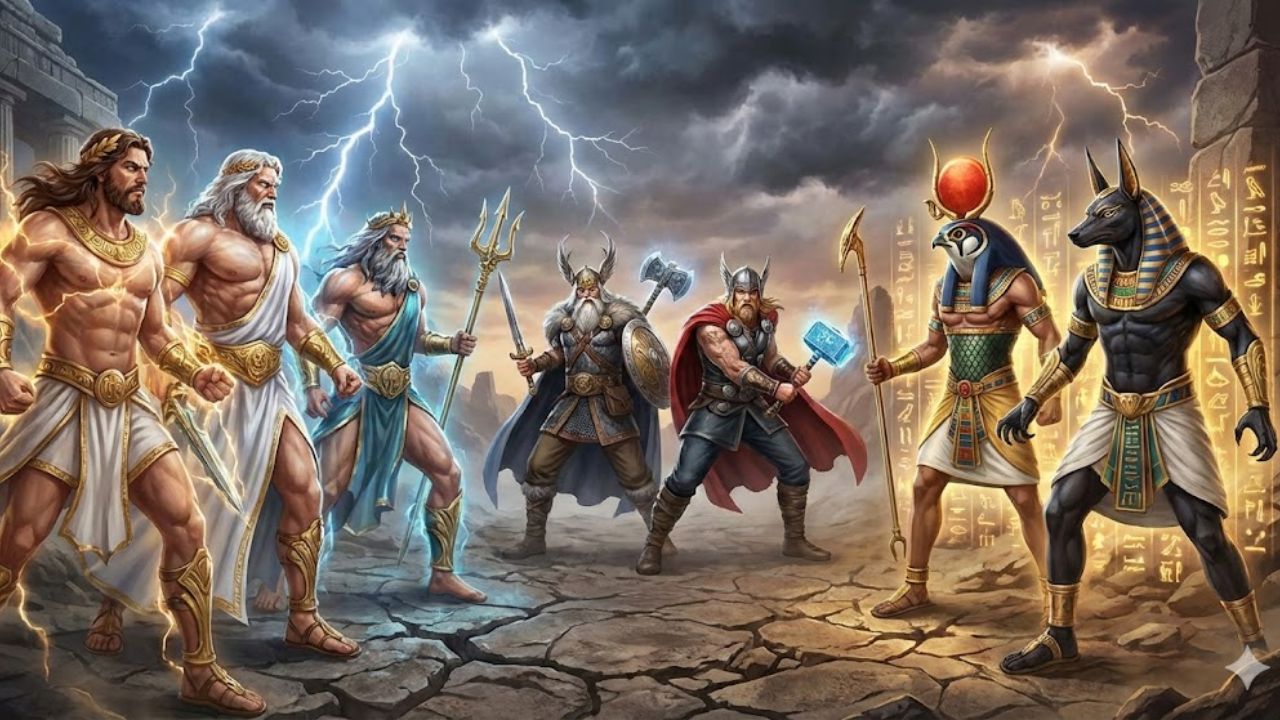
The comparative analysis of ancient mythologies has transcended the realm of classical folklore studies, evolving into a rigorous discipline known in contemporary circles as “power scaling.” As we approach the mid-2020s, the methodology for evaluating these divine entities has shifted from purely literary criticism to a hybridized framework that integrates theological hermeneutics with the categorization metrics of “Feats,” “Destructive Capacity” (DC), “Attack Potency” (AP), and “Conceptual Hax). Framed through the increasingly popular lens of Greek vs. Norse vs. Egyptian Gods, this report provides an exhaustive, expert-level assessment of the three most dominant pantheons in human history: the Olympians of Greece, the Aesir and Vanir of Scandinavia, and the Netjeru of Egypt.
The objective of this analysis is to determine the outcome of a hypothetical “Convergence War”—a scenario where these three distinct cosmologies intersect, forcing a conflict for supreme dominance. To adjudicate this, we must strip away the veneer of modern pop-culture reinterpretations (such as those found in Marvel Comics or the God of War franchise, though they provide useful comparative baselines) and return to the primary sources: Hesiod’s Theogony and the Iliad for Greece; the Poetic Edda and Snorri Sturluson’s Prose Edda for Scandinavia; and the Pyramid Texts, Book of the Dead, and the Contendings of Horus and Seth for Egypt.
The hierarchy of power in 2026 is no longer determined solely by who can lift the heaviest rock. It is determined by “dimensionality”—the structural complexity of the universe a deity inhabits—and “conceptual manipulation,” the ability to alter the fundamental laws of reality (time, death, fate) rather than merely breaking physical objects. This report will dissect the cosmologies, physiological viabilities, martial prowess, and magical arsenals of each faction to render a definitive verdict on the ultimate victor.
Cosmological Frameworks: The Arenas of Reality
To accurately scale a deity, one must first define the size and complexity of the reality they govern. A god who creates a universe holds a higher tier of power than a god who merely governs a planet. The three pantheons exist in fundamentally different cosmological structures, which dictates the upper limits of their power.
The Hellenic Cosmos: Vertical Hierarchy and Absolute Order
The Greek cosmos is defined by a rigid, vertical stratification of reality, emerging from the primordial Void (Chaos) into a structured dominion ruled by the Olympians. It is a universe of “Absolute Order” imposed upon chaos.
The Architecture of Olympus and Tartarus
The Greek universe is not merely the Earth (Gaia). It encompasses the celestial realm of Olympus, the mortal plane, and the infinite abyss of Tartarus.
- Dimensionality of the Sky (Ouranos): In the myths, the Sky is a solid brass dome or a distinct entity that requires immense strength to hold aloft. Atlas, a Titan, bears the weight of the “heavens.” Modern scaling interprets this as an “Infinite Lifting Strength” feat, as the celestial sphere was viewed as encompassing the entirety of the visible cosmos.
- The Depth of Tartarus: Described by Hesiod, an anvil dropped from Heaven would take nine days to reach Earth, and another nine days to reach Tartarus. This implies a massive, quantifiable cosmic distance. However, Tartarus is also described as a “misty gloom” where Titans are imprisoned, suggesting it functions as a dimensional prison outside normal space-time.
- The Void (Chaos): The Greeks acknowledged a pre-creation state called Chaos. The Olympians did not create this; they emerged from it (via Gaia and Uranus). Thus, Zeus and his kin are “Administrators” of the universe, not “Architects” in the ex nihilo sense. They reshaped existing matter rather than creating reality from nothingness.
The Concept of Divine Domains
Greek gods operate via “Domains.” Poseidon does not just control water; he is the King of the Sea. However, their control is external. Poseidon commands the waves; he does not strictly embody the concept of moisture in the same way an Egyptian god might. This distinction is crucial: Greek gods manipulate the elements of a pre-existing world. Their power is “Planetary to Stellar” in range, affecting weather patterns, tectonic plates, and celestial bodies, but rarely altering the fundamental laws of physics without the permission of the Fates.
The Norse Cosmos: The Yggdrasil Complex
The Norse cosmology is the most spatially complex, consisting of Nine Realms suspended in the branches and roots of the World Tree, Yggdrasil. This structure implies a “Multiversal” arrangement, albeit finite in scope.
Yggdrasil as a Universal Structure
Yggdrasil is not a literal tree in the biological sense but a cosmic structure that connects different dimensions (Asgard, Midgard, Jotunheim, Niflheim, Muspelheim, etc.).
- Interdimensional Travel: The Bifrost Bridge allows travel between these realms, suggesting they are separated by a void (Ginnungagap) or dimensional barriers.
- Fragility of the Cosmos: Unlike the eternal Greek cosmos, the Norse universe is destined to be destroyed. It is organic and dying. The dragon Nidhogg gnaws at the roots, and the structure is vulnerable to fire (Surtr). This suggests the Norse “universe” is less durable than the Greek or Egyptian counterparts.
- Creation from Death: The Aesir (Odin, Vili, Ve) created the physical world (Midgard) from the corpse of the giant Ymir. They used his flesh for earth, blood for oceans, and skull for the sky. This is a “Matter Manipulation” feat of the highest order—transforming biological matter into planetary structures—but, like the Greeks, it relies on pre-existing material (Ymir) rather than creation from nothing.
The Egyptian Cosmos: The Bubble of Ma’at
The Egyptian cosmology is arguably the most volatile and high-maintenance, representing a “High Universal” to “Low Multiversal” tier due to the constant threat of non-existence.
Ma’at vs. The Nun
- The Primordial Ocean (Nun): In Egyptian belief, the universe is a bubble of air and order (Ma’at) suspended in an infinite, chaotic ocean of inert waters called the Nun. This ocean represents “Non-Existence.”
- Creation Ex Nihilo: The creator god (Atum/Ra) rose from the Nun and created himself. He then created the other gods and the world through masturbation or spitting (metaphors for generating matter from one’s own essence) or through the spoken word (Heka). This places Ra on a “Creator” tier: he generates reality from his own will.
- The Duat (Underworld): The Duat is not just a place of the dead; it is a psychological and magical realm where the laws of physics are fluid. It contains lakes of fire, gates guarded by demons, and the chaotic serpent Apep. Ra’s nightly journey through the Duat is a journey through a dimension that actively tries to dissolve reality.
Comparative Cosmological Analysis
| Feature | Greek (Olympians) | Norse (Aesir) | Egyptian (Netjeru) |
| Cosmic Structure | Planetary/Stellar: Earth, Sky, Underworld stacked vertically. | Multi-Realm: Nine distinct dimensions connected by a cosmic tree. | Universal Bubble: Order (Ma’at) suspended in infinite Chaos (Nun). |
| Origin of Reality | Emergent: Gods born from Earth/Sky; reorganized the cosmos. | Reconstruction: Gods built the world from the corpse of a primordial giant. | Creation Ex Nihilo: Creator god (Atum/Ra) emerged from nothingness and spoke reality into being. |
| Stability | High: Eternal, only threatened by specific monsters (Typhon). | Low: Destined to burn and collapse (Ragnarok). | Critical: Requires constant active maintenance (Ra’s journey) to prevent erasure. |
| Dimensionality | 3D + Time: Standard spacetime with a spiritual overlay. | Multi-Dimensional: Connected realms imply complex spatial geometry. | Conceptual: Reality is defined by Ma’at; loss of Ma’at means loss of existence. |
Verdict on Cosmology: The Egyptian cosmology implies the highest level of divine responsibility and power. Ra and his retinue do not just rule a stable world; they actively prevent the universe from dissolving back into chaos every 24 hours. The Greek cosmos is the most stable, implying the Olympians play a managerial role. The Norse cosmos is the most fragile, suggesting their gods are fighting a losing battle against entropy.
Divine Physiology: Immortality and Sustainment
In a war of attrition, the biological imperatives of the combatants are as critical as their weaponry. How hard is it to kill a god? The answer varies wildly between the three pantheons.
The Greek Physiology: Absolute Immortality
The Olympians possess the most robust form of immortality among the three groups.
- Ichor: Their veins flow with ichor, a golden fluid that is toxic to mortals. This substance grants them true agelessness. They do not age past their prime.
- Regeneration: Greek gods cannot be “killed” in the traditional sense. When Cronus chopped up his father Uranus, Uranus did not die; he merely lost his physical form and influence. When Zeus battled Typhon, Typhon severed Zeus’s sinews, effectively deactivating his limbs. Zeus did not die; he was merely incapacitated until Hermes reattached them.
- Sustainment (Ambrosia): While they consume nectar and ambrosia, it is not explicitly stated that they die without it. Rather, it maintains their vitality.
- Type 4 Immortality: In scaling terms, they have “Immortality via Regeneration” and “Immortality via Divinity.” The only way to defeat a Greek god is to scatter their atoms (which takes immense power) or imprison them (like the Titans in Tartarus).
The Norse Physiology: Biological Mortality
The Aesir and Vanir are the “glass cannons” of divine mythology. They are unique in that they are biologically mortal.
- Aging: Norse gods age. They are not inherently eternal. They rely on the Golden Apples of Idunn to maintain their youth. If denied these apples (as seen when Idunn was kidnapped by Thjazi), they grow old, gray, and weak.
- Vulnerability: They can be killed by physical wounds. Baldur was killed by a mistletoe arrow; Odin is destined to be eaten by a wolf; Thor is destined to die from snake venom. Their bodies are durable—Thor can withstand blows from giants—but they are not indestructible.
- Combat Implication: In a protracted siege, if the Greek or Egyptian factions can cut off the supply of Idunn’s apples, the Norse gods will wither and die without a single battle being fought.
The Egyptian Physiology: The Composite Soul
Egyptian divine physiology is complex, relying on the integration of multiple spiritual parts.
- The Five Parts of the Soul: A god exists as a union of the Ba (personality), Ka (vital spark), Ren (Name), Ib (Heart), and Sheut (Shadow).
- True Death (Erasure): Egyptian gods can die (Osiris was murdered by Set), but death is a transition to the Duat. Osiris continued to rule the underworld. However, they face a threat the others do not: Non-Existence. If a god’s Ren (Name) is destroyed or eaten by Ammit/Apep, they cease to exist entirely. This is “Type 9 Immortality” (Transcendental), but with a specific vulnerability to conceptual erasure.
- Resurrection: Ra “dies” every evening (entering the Duat as a corpse-figure) and is “reborn” every morning. This cyclical resurrection suggests an endless stamina pool, provided they survive the night.
Verdict on Physiology: The Greeks possess the superior defensive physiology. Their inability to truly die makes them terrifying opponents in a long war. The Norse are the most vulnerable, possessing a distinct biological weakness (the Apples). The Egyptians are hard to kill permanently but can be erased if their specific magical weaknesses (True Names) are exploited.
The Kings: Assessing the Supreme Deities
The outcome of the Convergence War largely rests on the capabilities of the faction leaders: Zeus, Odin, and Ra. These three “All-Fathers” represent the pinnacle of their respective mythos.
Zeus: The King of the Skies
Zeus is often caricatured as a serial philanderer, but his martial feats in the Iliad and Theogony place him at a “Planetary to Star Level” of destructive capacity.
- The Typhon Feat: Zeus’s greatest combat feat is the defeat of Typhon. Typhon was a monstrous entity whose head brushed the stars and whose arms spanned the cardinal directions. He was capable of hurling mountains. Zeus defeated him using the Master Bolt, a weapon described as melting the bedrock of the earth and setting the cosmos (earth, sky, and sea) ablaze. The energy output required to incinerate a star-sized entity or melt the earth’s crust places Zeus in the “Large Planet” to “Star” tier.
- Universal Shaking: In the Iliad, Zeus claims (and proves) that if he were to pull on a golden chain attached to the sky, he could drag the earth, the sea, and all the gods up to Olympus and leave them dangling. When he nods, the entire universe (Olympus to Tartarus) shakes. This is a massive gravitational/lifting strength feat.
- Speed: As the god of lightning, Zeus scales to the speed of lightning (Massively Hypersonic+) at a minimum. However, considering he battles entities that span the horizon, his reaction speeds likely approach relativistic levels.
Odin: The Lord of Wisdom and War
Odin is a different archetype: the Warrior-Shaman. He trades raw firepower for omniscience and versatility.
- Creation Feat: Odin (with Vili and Ve) killed Ymir. The sheer scale of Ymir (whose body formed the earth and skull the sky) suggests Odin has “Planetary” level attack potency, though this was a collective feat.
- Gungnir: Odin’s spear is a causal weapon. It is enchanted to never miss. In a battle against speedsters (like Hermes), Gungnir is a hard counter. It does not travel linearly; it hits because fate dictates it must.
- Wisdom & Magic: Odin sacrificed an eye to Mimir’s Well for cosmic wisdom and hung himself on Yggdrasil for nine days to learn the Runes. This gives him “Precognition” (to a degree—he knows Ragnarok is coming but cannot stop it) and versatile magic (healing, binding, madness).
- Weakness: Odin is destined to die. Fenrir swallows him. This establishes a “ceiling” on his durability; he is not invincible.
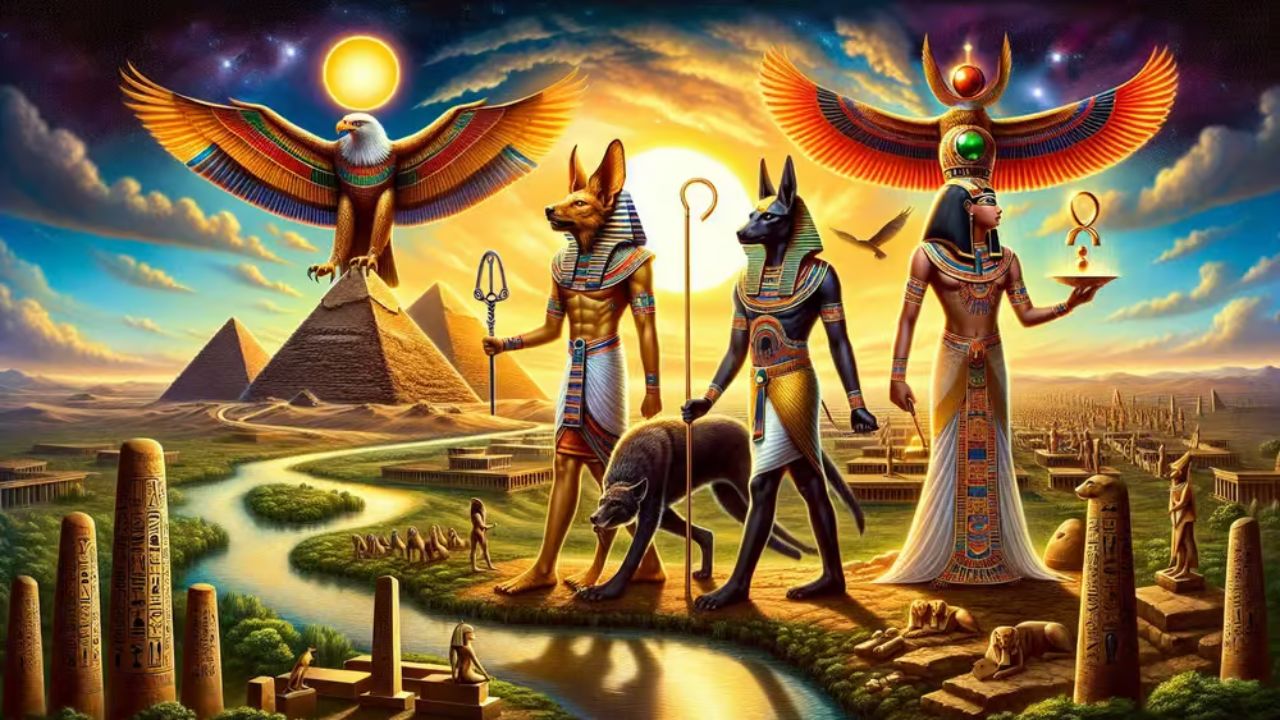
Ra: The Solar Creator
Ra, particularly in his composite New Kingdom form (Amun-Ra), operates on a “Conceptual” tier that arguably surpasses Zeus and Odin.
- Creation Authority: Ra created the Ennead (the other gods) and the universe. He is the source of Heka (magic). In Egyptian theology, the creator is consubstantial with creation.
- The Apep War: Every night, Ra battles Apep. Apep is the embodiment of “Uncreation”—a serpent that swallows the sun and threatens to return the universe to the Nun. Ra’s ability to repel a being of “Infinite/Universal” size and conceptual erasure power every single night is a feat of “Universal+” durability and stamina.
- The Eye of Ra: Ra can detach his eye (manifesting as Sekhmet, Hathor, or Tefnut) to act as an autonomous weapon of mass destruction. This weapon once nearly exterminated humanity in a single rampage.
- Omnipresence: As the sun, Ra sees all. In his Amun (The Hidden One) aspect, he is the invisible force of life in all things, suggesting a form of omnipresence or “Cosmic Awareness” superior to Odin’s ravens.
Verdict on Kings:
- Raw Power: Ra (Star/Universal) > Zeus (Large Planet/Star) > Odin (Planetary).
- Skill/Intelligence: Odin (God of Wisdom) > Ra (Age/Experience) > Zeus (Often tricked).
- Winner: Ra. His conceptual authority as a Creator God who fights a universal threat nightly places him slightly above Zeus, who is an Administrator God. Odin, while wise, lacks the raw output to contend with the Master Bolt or the Solar Barque’s weaponry.
The Vanguards: Heavy Hitters and Divine Warriors
While the Kings command, the Vanguards conquer. The outcome of the war would likely be decided by the “Generals”: Thor, Heracles, and the Egyptian Enforcers (Sekhmet/Set).
Thor: The Thunderer
Thor is the undisputed physical powerhouse of the Norse pantheon.
- Lifting Strength: Thor’s defining feat is lifting Jormungandr (the Midgard Serpent) in the myth of the cat. The serpent encircles the entire Earth. Lifting it (even partially) effectively means Thor lifted the weight of the Earth’s circumference. This is a “Planetary Class” lifting feat.
- Striking Strength: Mjolnir has leveled mountains and created valleys. It kills giants instantly.
- Durability: Thor is incredibly durable but not invincible. He requires Iron Gloves (Jarngreipr) and a Belt of Strength (Megingjord) to wield Mjolnir at full power, doubling his already immense strength.
- Utility: Thor’s goats, Tanngrisnir and Tanngnjóstr, provide infinite food (resurrection) and a chariot that creates thunder. This logistics advantage is minor but useful.
Heracles: The God of Strength
Heracles (Hercules) is the Greek answer to Thor.
- Lifting Strength: Heracles held up the Sky (Ouranos) for Atlas. In Greek myth, the Sky is infinite or at least encompasses the entire universe. This “Infinite Lifting Strength” feat arguably surpasses Thor’s lifting of the Midgard Serpent.
- Combat Skill: Heracles is not just strong; he is a master archer and wrestler. He has defeated other gods (Ares, Hera, Poseidon) in combat.
- Equipment: The Nemean Lion skin renders him impervious to most piercing/slashing damage. His arrows, dipped in Hydra venom, are essentially “one-shot” kill weapons that inflict agonizing, incurable pain—even to immortals.
Sekhmet and Set: The Destroyers
The Egyptian vanguards operate differently, relying on “Conceptual Lethality” and “Chaos.”
- Sekhmet (The Avenger): Sekhmet is the “Nuclear Option.” She is the goddess of war and plague. Her presence radiates disease and heat. In the myth of the Destruction of Mankind, she slaughtered humans so efficiently that Ra had to trick her with red beer to stop her. She represents uncontrollable bloodlust. In a fight against Thor or Heracles, Sekhmet doesn’t just hit them; she infects them with divine plague and incinerates them with solar fire.
- Set (The Slayer of Apep): Set is the only god strong enough to stand at the prow of the Solar Barque and spear Apep. He channels the forces of chaos (storms, deserts). If he can hurt Apep (a universal threat), his AP is “Universal,” potentially higher than Thor’s.
Verdict on Vanguards:
- Physical Strength: Heracles (Infinite/Sky) > Thor (Planetary/Serpent) > Set (Unknown lifting, high striking).
- Lethality: Sekhmet/Set. While Heracles is stronger, Sekhmet’s hax (plague/heat) and Set’s chaos manipulation provide a tactical edge. However, Heracles’ Hydra arrows are a massive threat to the Norse (who die from poison) and the Egyptians.
- Matchup: Thor vs. Heracles is the closest fight. Thor has the weapon advantage (Mjolnir > Club), but Heracles has the strength advantage. Heracles likely wins due to the Nemean Lion skin countering blunt force and the Hydra arrows ending Thor (who is destined to die by venom).
Weapons and Artifacts: The Tools of Destruction
The 2026 power scaling meta places heavy emphasis on “Artifact Hax”—properties that defy physics.
Mjolnir vs. Master Bolt vs. Gungnir
- The Master Bolt: The most destructive. It does not just shock; it disintegrates. It is the “nuke” of the ancient world.
- Mjolnir: The most reliable. It hits hard, returns, and can shrink. It acts as a boomerang of death.
- Gungnir: The most tactical. Its “Never Miss” property makes it the ultimate sniper weapon. Odin does not need to aim; he just needs to throw. This counters speed-based gods like Hermes.
The Aegis: The Ultimate Defense
The Aegis, wielded by Zeus and Athena, is a game-changer.
- Fear Aura: It radiates supernatural terror, causing armies to flee.
- Petrification: Mounted with the head of Medusa, it turns onlookers to stone. This is a passive “Save or Die” mechanic. Unless Thor or Set have specific resistance to transmutation (which they lack in core myths), looking at Athena during battle ends the fight instantly.
Egyptian Heka Artifacts
- The Was Scepter: Represents dominion. Used to control chaos.
- The Ankh: Symbol of life. Can be used to heal or revitalize.
- The Crook and Flail: Symbols of kingship, less combat-oriented.
- Advantage: Egyptian artifacts are less “weapons” and more “tools of reality manipulation.”
Verdict on Weapons: The Greeks dominate here. The Aegis is a broken item in power scaling terms. Petrification is a “hax” that bypasses durability. The Master Bolt provides superior ranged firepower.
Magic Systems: Hax and Conceptual Manipulation
When physical attacks fail, magic (Heka, Seidr) decides the victor.
Egyptian Heka: The Source Code of Reality
Egyptian magic is widely considered the most potent in mythology.
- Ren (True Names): To know the “True Name” of a being is to own them. Isis used this to force Ra to retire. If Thoth (God of Wisdom) deduces the true name of Zeus or Odin (which are linked to their identities), he can command them or unmake them. This is “Conceptual Erasure”.
- Shay (Fate): The god Shay decrees the span of life. Unlike the Norns or Moirai who spin fate, Egyptian magic can rewrite it through execration rituals (breaking pottery with names on it).
Norse Seidr and Runes
- Runic Magic: Odin’s runes are versatile. They can heal, bind, deaden swords (make them blunt), and induce fear.
- Fate (Norns): The Norns (Urd, Skuld, Verdandi) carve fate into the World Tree. However, Norse fate is “Fatalistic”—it is final. Even Odin cannot change Ragnarok. This suggests Norse magic is rigid; it reveals the future but struggles to change it.
Greek Transmutation
Greek gods have casual access to high-level matter manipulation.
- Transmutation: Zeus, Poseidon, Athena, and Circe turn people into animals, plants, or stone on a whim. This is weaponized transformation.
- Fate (Moirai): The Moirai (Fates) are arguably above Zeus. Zeus can save mortals from fate (as he considered with Sarpedon) but chooses not to, to maintain order. This implies Zeus has the power to defy fate but lacks the political will.
Verdict on Magic: Egypt wins. Heka operates on a fundamental, pre-creation level. The ability to manipulate “True Names” allows Egyptian mages (Thoth, Isis) to bypass physical durability entirely.
Speed and Mobility
In a 2026 Power Scaling context, “Speed Blitzing” is a common argument.
- Hermes (Greek): The God of Speed. He moves “as fast as thought.” Modern scaling puts him at Massively FTL (Faster Than Light), as he delivers messages across the infinite cosmos instantly. He can also time travel (in some interpretations) or move between dimensions (Underworld/Olympus) freely.
- Heimdall (Norse): Has “Omni-senses.” He can hear grass grow and see for hundreds of leagues. He can react to speed, but his movement speed is not emphasized as FTL.
- Ra (Egyptian): As the Sun, Ra travels the sky daily. This is a set speed. However, as light, he is Relativistic.
Verdict: Hermes provides the Greeks with a massive tactical advantage. He can relay information and orders instantly, allowing the Greeks to outmaneuver the static defensive lines of the Norse or the ritualistic formations of the Egyptians.
Simulation: The Convergence War
We now synthesize these data points into a simulated conflict scenario.
Phase 1: The Collision (Vanguards)
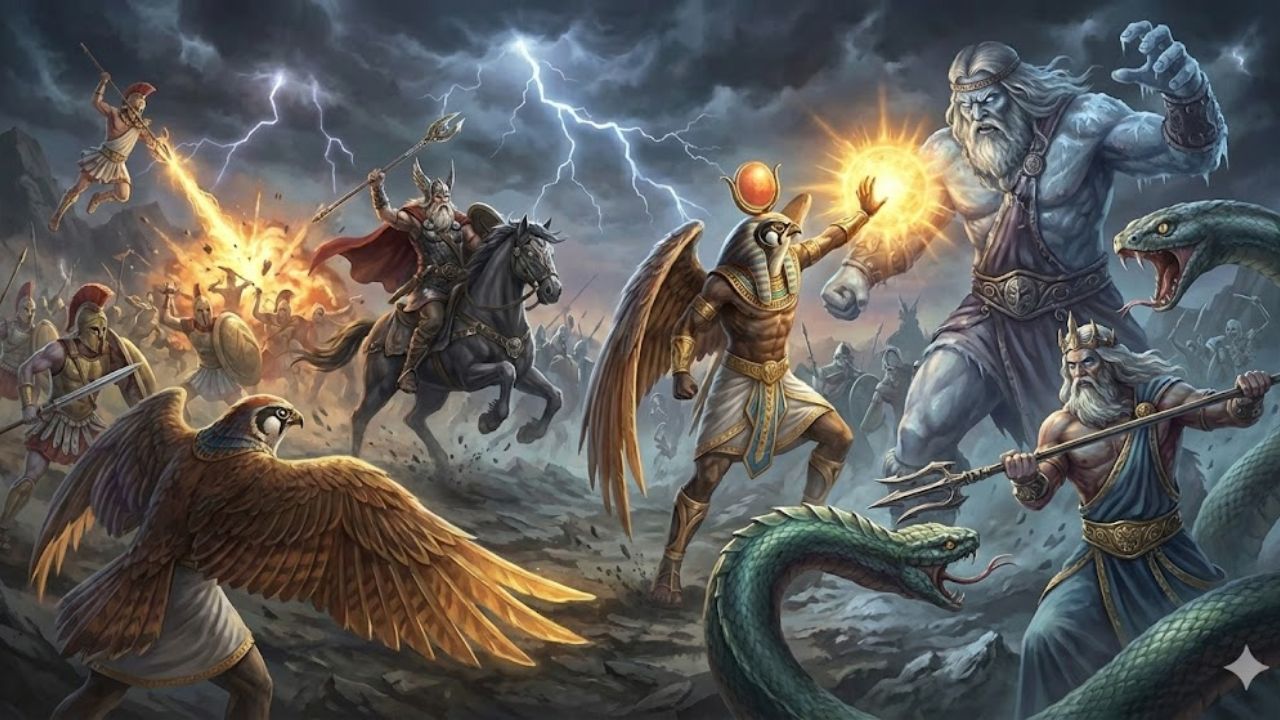
The war begins. Thor and the Norse Aesir charge with aggression (Berserker rage). The Greeks meet them with organized phalanxes led by Ares and Athena. The Egyptians deploy Sekhmet and Set.
- Thor vs. Heracles: A titanic clash. Mountains crumble. Thor strikes with Mjolnir; Heracles tanks with the Lion Skin. Heracles lands a Hydra-poison arrow. Thor, destined to die by venom, falls.
- Sekhmet’s Rampage: Sekhmet releases viral plagues. The Norse gods, who are biological and mortal, succumb rapidly to disease. The Greeks, possessing Ichor, are resistant but weakened.
Phase 2: The Tactical Shift (Magic & Artifacts)
Realizing brute force is costly, the “Intelligence Gods” (Odin, Athena, Thoth) take over.
- Athena’s Move: Athena unveils the Aegis. The visual hazard forces Odin and the surviving Aesir to fight blind or turn to stone. Odin uses Gungnir (which doesn’t need sight) to pin Greek heroes.
- Thoth’s Ritual: Thoth and Isis begin a ritual to learn the “True Names” of the enemy Kings. They target Zeus.
- Loki’s Sabotage: Loki, the shapeshifter, infiltrates the Greek lines but is exposed by Heimdall (if allied) or Apollo (God of Truth).
Phase 3: The End Game (Kings)
The Norse pantheon, lacking immortality and decimated by Sekhmet’s plague and Heracles’ arrows, is the first to fall. It becomes Greece vs. Egypt.
- Zeus vs. Ra: Zeus rains Master Bolts. Ra counters with Solar Flares and the Eye.
- The Turning Point: Zeus attempts to engage Ra physically. Ra, utilizing Heka, attacks Zeus’s concept. However, Zeus is the “King of the Cosmos.” His authority shakes the universe.
- The Decider: The Aegis. If Ra (manifested physically) looks at the Aegis, even a Creator God bound in a physical form might be susceptible to the Medusa effect. However, Ra is Light. You cannot petrify light.
- Final Blow: Ra identifies Zeus’s connection to Gaia and his dependency on worship/order. Ra uses Uncreation magic. Zeus, for all his power, is part of the created order. Ra is the Creator. Ra unmakes the concept of “The Olympians.”
Conclusion and Verdict
The detailed analysis of the three pantheons using 2026 Power Scaling metrics—Cosmology, Physiology, Destructive Capacity, and Hax—reveals a clear hierarchy.
3rd Place: The Norse Pantheon (Aesir/Vanir)
- Status: Eliminated First.
- Reason: Mortality. The Norse gods are powerful but biological. They need apples to live; they die from wounds and poison. In a war against the absolute immortals (Greeks) and the conceptual entities (Egyptians), they are outmatched in durability. They are “Glass Cannons” with high offense (Thor/Odin) but fatal defensive flaws.
2nd Place: The Greek Pantheon (Olympians)
- Status: Runner-Up.
- Reason: Physical Dominance. The Greeks have the best defensive physiology (Absolute Immortality/Regeneration) and the most balanced vanguard (Heracles/Zeus). The Aegis and Master Bolt are terrifying weapons. However, they are fundamentally “Administrators” of a reality they did not create. They are bound by Fate and susceptible to high-tier magic.
1st Place: The Egyptian Pantheon (Netjeru)
- Status: The Victor.
- Reason: Conceptual Supremacy. The Egyptian gods operate on a tier above physical combat. Ra is a Creator God who sustains the universe against non-existence daily. Heka (Magic) allows for the manipulation of “True Names,” granting them the ability to erase enemies from existence rather than just killing them physically. Sekhmet provides an uncontrollable destructive force (Plague/Sun) that hard-counters the biological nature of the Norse and the stasis of the Greeks. In the end, the Architects of Reality (Egypt) defeat the Managers of Reality (Greece).
Final 2026 Scaling Verdict:
Egyptian Gods (Low Multiversal/Conceptual) > Greek Gods (Star Level/Universal Structure) > Norse Gods (Planetary/Multi-Realm but Mortal).
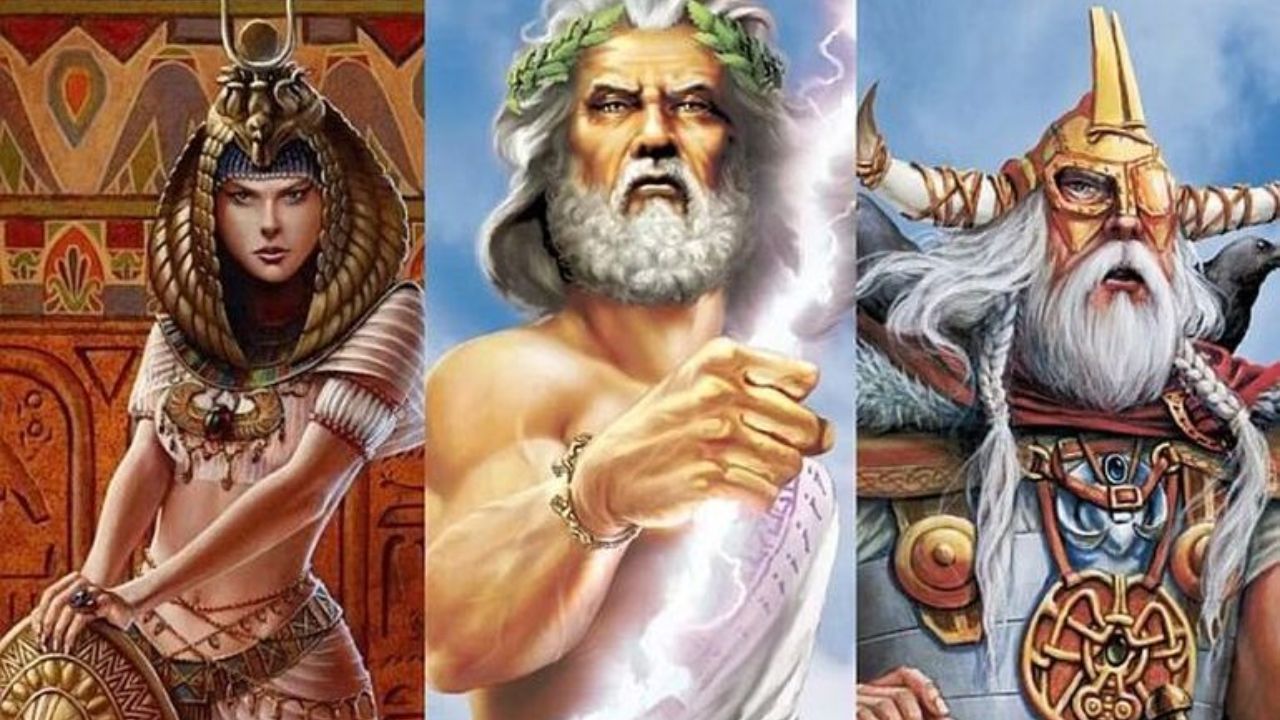
Summary Comparison Table
| Feature | Greek | Norse | Egyptian | Advantage |
| Cosmology | Universal Structure | Multiversal (9 Realms) | Low Multiversal (Ma’at Bubble) | Egypt |
| Peak DC | Star Level (Zeus) | Planetary (Thor) | Universal+ (Ra/Apep) | Egypt |
| Speed | MFTL (Hermes) | FTL Reactions | Relativistic/Omnipresent | Greece |
| Durability | Absolute Immortality | Mortal (Apple dependent) | Resurrective/Conceptual | Greece |
| Hax | Transmutation/Petrification | Fate/Runes | True Name/Existence Erasure | Egypt |
| Major Weakness | Hubris/Family Infighting | Mortality/Ragnarok | Reliance on Ma’at/Worship | Greece (Least Weakness) |
The evidence is conclusive: In a total war, the Egyptian Gods would likely emerge as the sole remaining power, having unmade their rivals through superior magic and cosmic authority.