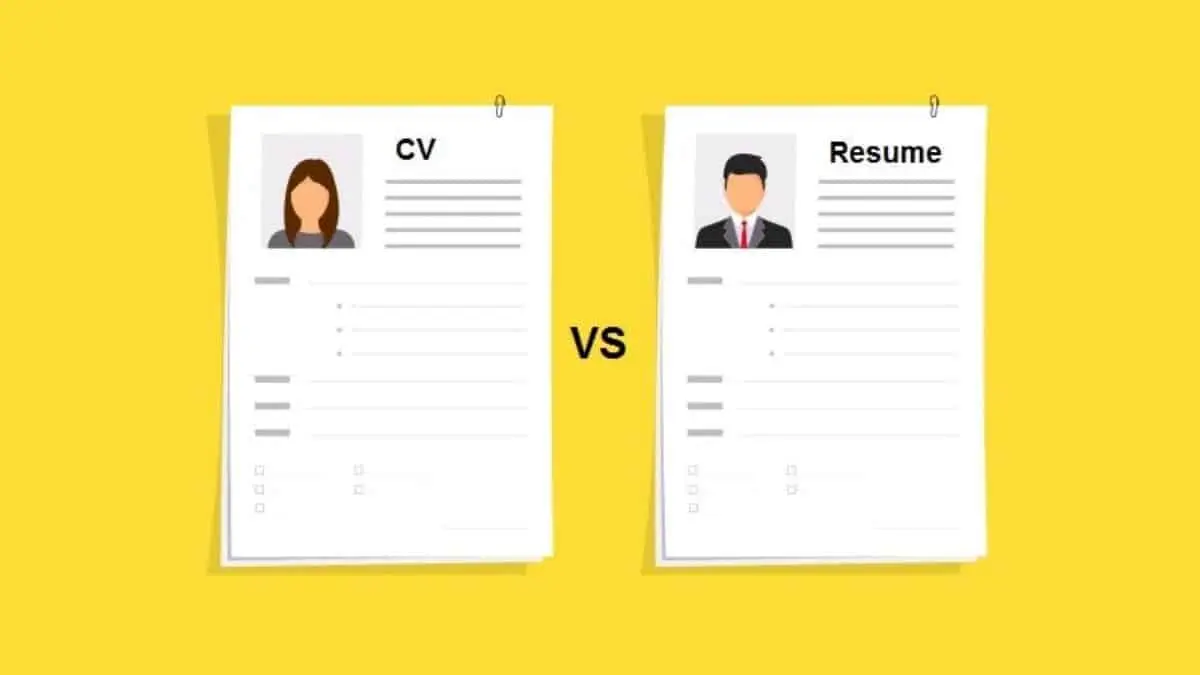
In the competitive world of job hunting, your first impression isn’t made with a firm handshake; it’s encapsulated in the pages of a document you submit before ever setting foot in an interview room. Whether it’s a curriculum vitae (CV) or a resume that lands in the hands of a potential employer, understanding the distinctions between these two critical documents is paramount. While both serve as your personal marketing tools, showcasing your skills, experiences, and qualifications, they are not interchangeable. In this blog “Difference Between CV and Resume”, we will dive deep into the nuances that differentiate a CV from a resume.
Definition of Terms
Curriculum Vitae (CV): A Curriculum Vitae, commonly referred to as a CV, is a comprehensive document that details your entire career journey. Unlike resumes, which are typically concise and to the point, a CV is longer and more detailed, often extending over two or more pages. It includes a thorough listing of your academic credentials, research, publications, awards, affiliations, and other professional accomplishments. The term “curriculum vitae” translates to “course of life” in Latin, which aptly describes its comprehensive and detailed nature. CVs are primarily used in academic, scientific, educational, or research environments where detailed professional histories are crucial.
Resume: A resume is a concise summary of your skills, experiences, and education, typically confined to one or two pages. It is designed to provide a quick snapshot of your qualifications tailored to the specific requirements of the job you are applying for. Resumes focus more on relevancy rather than thoroughness, highlighting only those aspects of your career that are pertinent to the particular position. The objective of a resume is to catch the employer’s attention quickly and convince them that you are the ideal candidate for the job opportunity.
Purpose and Use
Curriculum Vitae (CV): The primary purpose of a CV is to provide a comprehensive record of your academic and professional accomplishments. This document is used when applying for positions within academia, research, healthcare, and some international jobs. It is particularly crucial when pursuing opportunities that require a detailed Review of your educational and professional background, such as for graduate school applications, faculty positions, grants, scholarships, or scientific presentations. A CV is often expected to be detailed and continuously updated to reflect the full trajectory of one’s professional life.
Resume: The resume serves a more dynamic and targeted purpose. It is primarily used in the private sector and focuses on concisely conveying relevant experiences and skills tailored to the specific job you are applying for. The aim is to quickly showcase your qualifications in a manner that aligns with the needs of the employer, demonstrating how your background makes you the best fit for the job. Resumes are often customized for each application, with adjustments made to emphasize different aspects of the applicant’s experience based on the job description.

Length and Layout
Curriculum Vitae (CV): CVs are comprehensive and expansive by nature. They typically extend beyond two pages and can sometimes run much longer, depending on the individual’s academic and professional experiences. The layout of a CV is often more flexible than a resume, allowing for the inclusion of various sections such as publications, research, courses taught, and extensive educational and professional histories. The order of information can also be adjusted based on what the individual wishes to emphasize, though it generally starts with personal details followed by education and professional experience.
Resume: In contrast, resumes are succinct and designed to be read quickly. They are typically limited to one page, especially for early-career individuals, though they can extend to two pages for those with more extensive experience. The layout of a resume is highly structured and usually follows a chronological or functional format. The chronological resume lists work experience in reverse chronological order (most recent first), while the functional resume focuses on skills and experiences grouped by type, rather than by the timeline of employment. Each entry in a resume should be brief and directly related to the job to which the individual is applying, with bullet points often used to make information easily digestible.
Content Details
Curriculum Vitae (CV): A CV is thorough and detailed, covering every aspect of your professional life. Key sections include:
- Personal Information: Name, contact details, and sometimes a professional title or summary.
- Education: Detailed list of degrees, certifications, and relevant honors, often including thesis or dissertation titles and advisors.
- Professional Experience: Comprehensive overview of employment history, including roles, responsibilities, specific achievements, and timelines.
- Publications and Presentations: Lists of relevant scholarly articles, books, conference presentations, and other publications.
- Research Experience: Detailed account of research projects, methodologies used, and outcomes.
- Teaching Experience: Courses taught, training workshops led, and other educational contributions.
- Grants and Awards: A list of relevant awards and grants received over the course of your career.
- Professional Affiliations: Memberships in professional organizations relevant to your field.
- Skills and Qualifications: Advanced competencies, particularly in software, languages, or other specialized areas.
Resume: A resume is concise and focuses on relevance to the job. Key sections include:
- Contact Information: Name, phone number, email, and sometimes a LinkedIn profile or personal website.
- Professional Summary: Brief statement summarizing your career goals and what you bring to a potential employer.
- Work Experience: Selected employment history relevant to the job you’re applying for, with key achievements and responsibilities highlighted in bullet points.
- Education: Brief details of degrees, institutions, and graduation dates. Include honors if highly relevant.
- Skills: List of skills pertinent to the job, including both hard and soft skills.
- Certifications and Professional Training: Relevant certifications or courses that enhance your candidacy for the specific job.
Also Read: Difference Between Books and Journals