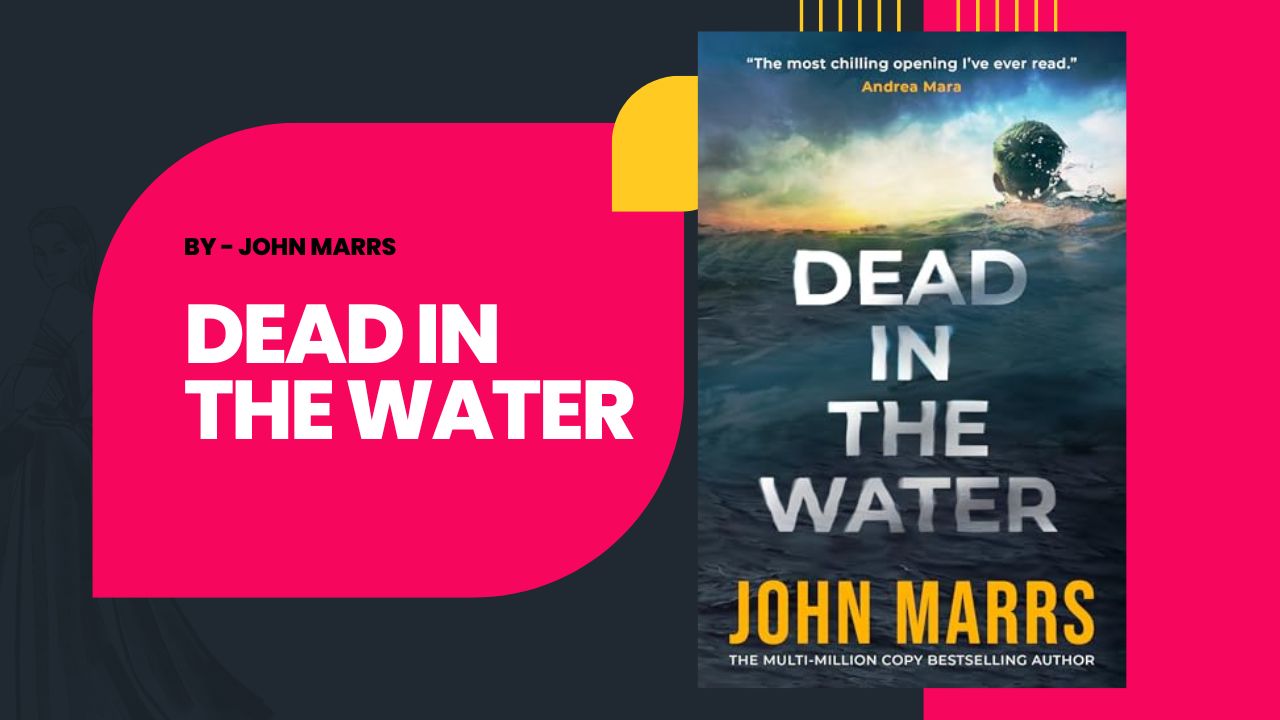
John Marrs drops a neat, cold hook in Dead in the Water: Damon survives a near-drowning only to have his life flash before him — every memory crystal clear except one terrifying image, a dead boy he can’t place. Obsessed with that missing moment, Damon convinces himself the only way to recover the truth is to flirt with death again and again, and what follows is a lean, claustrophobic riff on memory, guilt and self-destruction.
Plot & pacing — how the story moves
The novel opens in immediate, physical danger and keeps that urgency running through most chapters. Marrs uses short, propulsive scenes and an episodic structure that reads like someone skimming the surface of consciousness — appropriate, given the book’s fixation on flashes and gaps. The central conceit (re-experiencing near-death to unlock memories) is handled as a mystery engine: the book rarely stalls in exposition, preferring to deliver revelations in controlled bursts. That keeps the pages turning, though it also makes some reveals feel engineered rather than earned.

Characters — Damon and the people he drags under
Damon is written with a believable, slightly brittle interior life: fearful, self-reproachful and stubborn enough to make reckless choices. Supporting characters are sketched with economy — enough to care about their stakes, but not always enough to surprise. A “perfect stranger” who steps in to help Damon introduces moral ambiguity and a slow twist of menace; Marrs leans on that dynamic to raise the emotional temperature rather than creating a sprawling ensemble. The result is an intimate, character-driven thriller rather than a sprawling whodunnit.
Themes & ideas — memory, death, and what counts as proof
Marrs is playing with a few layered questions: how reliable are memory and identity, and what would you risk to know the truth? The book’s repeated returns to the brink of death turn those questions into a literal gamble — an effective metaphor for obsession. There’s also a moral itch under the surface: when recollection means accusation, what responsibility does the pursuer carry? Marrs doesn’t sermonize; he uses plot pressure to make readers sit with the ethical weight of his characters’ choices.
Writing style & tone — voice that tightens the throat
The prose is clean, economical and often lean to the point of cinematic clarity. Marrs favours short chapters and snapping dialogue, which creates momentum. Atmosphere is achieved through concrete sensory detail — the coldness of water, the dizzying blur of near-death — more than lyrical flourishes. That fits the book’s thriller instincts: it’s designed to be read quickly and to keep the reader on edge.
Audio note (if you listen)
The audiobook is an ensemble effort, with a lead narrator supported by additional voices — a solid production that matches the novel’s pulse and keeps different points of view distinct. If you prefer eating pages with your ears, the read is satisfying and keeps the tension taut.
What works — the book’s strengths
• The central hook is memorably eerie and original enough to sustain suspense.
• Fast pacing, short chapters and crisp scene work make it an easy, gripping read.
• Marrs’s ability to make ordinary decisions feel consequential gives emotional resonance to the thriller beats.
What didn’t fully land — small but notable quibbles
• A few plot conveniences feel engineered.
• Secondary characters could’ve used more shading.
• Some big questions are raised more than fully resolved.
Final verdict — who should pick this up
Dead in the Water is a tight, readable psychological thriller that mixes dread with a smart, show-don’t-tell structure. If you like thrillers that prioritize mood, mounting obsession and a twisty central idea over sprawling conspiracies, this will hit the spot. If you demand fully realized ensembles or philosophical closure, it may leave you wanting a little more. I’d rate it 3.5–4 stars out of 5 — unsettling, fast, and hard to put down.