Marvel has never been shy about moral complexity. From its earliest days in the comics, the universe has been populated by characters who blur the line between heroism and villainy — people shaped by trauma, circumstance, and the peculiar kind of desperation that comes from having nothing left to lose. But what truly separates Marvel from the crowd isn’t the quality of its heroes. It’s the quality of its former villains.
There’s something uniquely compelling about a character who chooses good not because it was always in their nature, but because they fought hard to get there. The road from darkness to redemption is rarely clean or linear — it’s littered with relapses, betrayals, and moments of genuine moral failure. And that’s exactly what makes these arcs so powerful to watch unfold.
These are the six best storylines where Marvel’s villains didn’t just get redeemed — they earned it. One painful, hard-won step at a time.
“The best villains are the ones who look in the mirror and recognize themselves in the hero — and then decide to do something about it.”
On Marvel’s Redemption Architecture
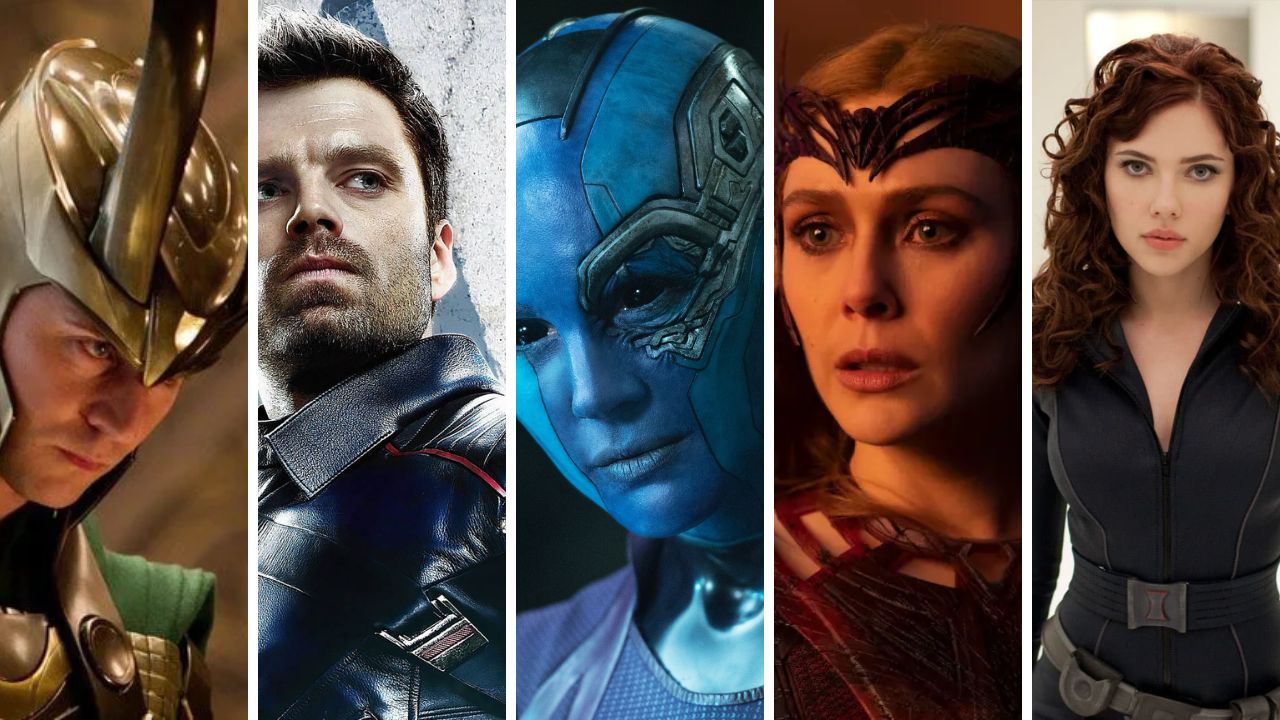
Loki Laufeyson
The God of Mischief · God of Stories
There is no arc in the Marvel Cinematic Universe more intricately constructed, more emotionally resonant, or more genuinely surprising than Loki’s. When he first appeared in 2011, curled around a stolen Tesseract and orchestrating an alien invasion, he was everything a great villain should be: intelligent, wounded, charismatic, and utterly convinced of his own righteousness. He wasn’t just a bad guy — he was a bad guy who believed he was the only sane person in the room.

What made Loki’s eventual redemption so hard-won was that it never came cheap. For years — literal years of screen time — Marvel resisted the temptation to fast-track him into goodness. He schemed. He betrayed. He faked his own death not once but twice. Even when he appeared to be on the right side, there was always a nagging suspicion that it was just another layer of the con.
The Defining Moment

In Avengers: Infinity War, Loki steps forward to offer the Tesseract to Thanos — ostensibly in surrender — then attempts to kill him with a hidden dagger. There is no plan B. No scheme. Just a man choosing to die rather than watch his brother be destroyed. It costs him everything. And it might be the most heroic moment in the entire franchise.
But the true culmination comes in the Disney+ series, where Loki is stripped of every defense mechanism he ever had. No illusions. No tricks. Just a deeply broken man confronting the reality that all he ever truly wanted was to be loved. When he ultimately sacrifices the multiverse’s freedom — and his own happiness — to protect the branching timelines and everyone who lives in them, it doesn’t feel like a plot twist. It feels inevitable, in the best possible way. The God of Mischief became the God of Stories because that’s what mischief always was, underneath: a desperate need for the narrative to change.
Bucky Barnes
The Winter Soldier · White Wolf
Bucky Barnes presents a kind of moral puzzle that most action franchises simply don’t have the patience to sit with: what do you owe the world for crimes you committed but don’t remember choosing? He was a good man — Steve Rogers’s best friend, a decorated soldier — who was captured, mutilated, and turned into something monstrous over the course of seven decades. He killed people. Dozens of them. Important ones. And none of it was really his fault.

The genius of Bucky’s arc is that Marvel doesn’t let that moral complexity become a free pass. Captain America: The Winter Soldier introduces him as a terrifying, nearly unstoppable force — someone who doesn’t even register the humanity of his targets. He is pure operational efficiency wrapped in grief. And yet there’s a flicker: when Steve says “I’m not going to fight you,” something underneath the programming cracks open, just slightly.
The Quiet Core of the Arc

What makes Bucky's story quietly radical is its insistence that healing isn't dramatic. It's not a single cathartic moment. It's therapy sessions, notebooks, and the slow, unglamorous work of calling the people you hurt and saying: I remember now. I'm sorry. The Falcon and the Winter Soldier took a superhero and turned his arc into something that resembles actual trauma recovery.
By the time James Buchanan Barnes becomes the White Wolf — welcomed into Wakanda, trusted by T’Challa himself — he has earned it through the quietest kind of heroism imaginable: showing up, doing the work, and refusing to let his past define the rest of his story. In a franchise built on spectacle, Bucky’s redemption is one of the most human things Marvel has ever done.
Nebula
Daughter of Thanos · Guardian of the Galaxy
Nebula’s transformation is, at its root, a story about surviving an abusive parent and learning — very slowly, very painfully — that you didn’t deserve any of it. Thanos didn’t just raise Nebula; he systematically dismantled her, replacing parts of her body with cybernetic upgrades every time Gamora bested her in combat. The message was clear and relentless: you are not enough. You will never be enough. But if we remove enough of the original, maybe something worthy will remain.

When we first meet her in Guardians of the Galaxy, Nebula’s hatred of Gamora reads as simple sibling rivalry — the jealous lesser sister. But by the time the films excavate the full horror of her childhood, that reading collapses entirely. She wasn’t jealous. She was a child trying to survive a father who expressed love as surgery. And Gamora, despite everything, had been slightly less destroyed.
What’s extraordinary about Nebula’s arc is how unsentimental it is. She doesn’t have a climactic tearful reconciliation with Gamora. She doesn’t give a speech about choosing good over evil. She just… keeps choosing differently. She helps the Avengers in Endgame. She kills her past self rather than let history repeat. She protects the people around her. And by Volume 3 of Guardians, when she’s quietly become the one holding the team together, it doesn’t feel earned through grand gesture. It feels earned through ten years of very small, very deliberate choices.
Wanda Maximoff
The Scarlet Witch · Sokovian Survivor
Wanda Maximoff’s arc is the most morally turbulent on this list, and perhaps the most realistic for it. She begins as a villain — a young woman weaponized by grief, volunteering for HYDRA experiments to avenge her parents’ death, then unleashing psychological torture on the Avengers. She is not sympathetic in those early scenes, exactly. She is frightening. And that’s the point.

Her pivot to the side of good in Age of Ultron feels abrupt to some viewers, but it’s grounded in something very specific: Wanda has always been motivated by protection. When the threat becomes something she can see clearly — when Ultron turns out to be something even she can’t rationalize — she switches sides not because of ideology but because of instinct. And that same instinct drives the best and worst of everything she does afterward.
WandaVision: Grief as Superpower

The Disney+ series is one of the most bold pieces of storytelling in the MCU's history — a meditation on grief, denial, and the violence we're capable of when we simply cannot accept our loss. Wanda doesn't enslave a town because she's evil. She does it because she loves Vision so completely that reality itself seems negotiable. That's terrifying. It's also, quietly, devastating.
What ultimately elevates Wanda’s arc above a simple redemption narrative is that she doesn’t get a clean one. By Multiverse of Madness, the Darkhold has consumed much of what was left of her rational self — and the Wanda we see there commits atrocities that the Avenger we grew to love never would have. Her final act of self-destruction isn’t presented as triumphant. It’s presented as necessary. And necessary isn’t the same as good. Wanda Maximoff remains the most complicated character in Marvel’s canon precisely because her story refuses a tidy ending.
Gamora
The Deadliest Woman in the Galaxy · Guardian
Gamora’s trajectory is in some ways the most classical redemption story on this list — the assassin who chooses love over duty — but James Gunn’s treatment of it elevates it far beyond archetype. When she appears in the first Guardians of the Galaxy, she is already operating from a place of private rebellion: she despises Thanos but has no language or framework for doing anything other than serving him. She is a weapon that has begun to question its own purpose.

The critical insight Gunn builds into Gamora’s arc is that her turn toward heroism isn’t a dramatic renunciation of violence — it’s a slow, awkward discovery of the specific people she’s willing to fight for. Quill. Nebula. This ridiculous, chaotic family that shouldn’t work but somehow does. She doesn’t become good because goodness is abstract. She becomes good because these specific people are worth protecting.
The complication — and it’s a rich one — arrives with Endgame’s “variant” Gamora, a version of her who never made those choices, who emerges from the past already carrying the moral weight of all those years of service to Thanos. Watching her encounter a future she never lived is genuinely poignant: she can see what she could have become, and the freedom she claims at the end of Volume 3 — wild, unaffiliated, finally only answerable to herself — feels like a different kind of heroism. Not the kind defined by sacrifice. The kind defined by sovereignty.
Natasha Romanoff
Black Widow · Red Room Graduate
Natasha Romanoff’s arc is perhaps the most quietly radical of all of Marvel’s villain-to-hero transformations, because it happened almost entirely off-screen. By the time we meet her in Iron Man 2, she is already on the other side — already SHIELD, already choosing differently. The backstory is delivered in fragments across the franchise: she was manufactured by the Red Room into a near-perfect killing machine, stripped of choice, stripped of identity, and sent out into the world to do terrible things in service of a cause she had no say in joining.

What makes Natasha interesting — and the 2021 Black Widow film explores this with care — is that she never quite stops carrying the weight of what she was. She speaks about having “red in her ledger” not as a rhetorical flourish but as something she takes genuinely seriously. She doesn’t believe heroism erases history. She believes it has to be earned, transaction by transaction, choice by choice.
The Vormir Sacrifice

When she and Clint fight on Vormir — not to survive, but to be the one who gets to sacrifice — it recontextualizes the entire franchise. She's not dying to be dramatic. She's dying because she has decided, quietly and without needing anyone's approval, that this is the specific moment where her ledger gets balanced. It is the most private kind of heroism. No audience. No applause. Just a choice.
The Clint Barton detail is worth dwelling on, too. The story Marvel tells — though mostly in negative space — is of a SHIELD agent who looked at a target and chose to offer a hand instead of pull a trigger. That single decision set off a decade of heroism. Natasha’s story is ultimately about what happens when someone decides you are more than what you were made to be — and then, eventually, you start to believe them.
Why These Arcs Matter Beyond the Screen
Strip away the superpowers, the multiverse mechanics, and the billion-dollar visual effects, and what you’re left with in each of these stories is something embarrassingly simple: a person who did harm, who acknowledged it, and who then chose to do something different. That’s it. That’s the whole formula.
And yet it never gets old, because the specific details of how each character navigates that journey are always different. Loki schemes his way to sincerity. Bucky heals slowly and without fanfare. Nebula makes her choices quietly, in the dark. Wanda burns herself up trying. Gamora claims her freedom instead of her goodness. Natasha settles the account in full, alone, on a cliff no one will ever visit again.
What Marvel understood — at its best, in these moments — is that the audience doesn’t just want villains to become heroes. They want to believe that the becoming is possible. That the distance between darkness and decency is, if not short, at least crossable. These stories work because they’re aspirational in the deepest sense: not aspirational about power or wealth or beauty, but aspirational about character. About the kind of people we’re capable of being, given time, given the right circumstances, given someone who believes in us before we believe in ourselves.
That’s why we keep coming back. Not for the explosions. For the moment when the former villain makes the choice — small and quiet and deeply, irreversibly human — to be something better than what they were.
“Redemption is not an event. It’s a direction.”
The throughline of every arc on this list