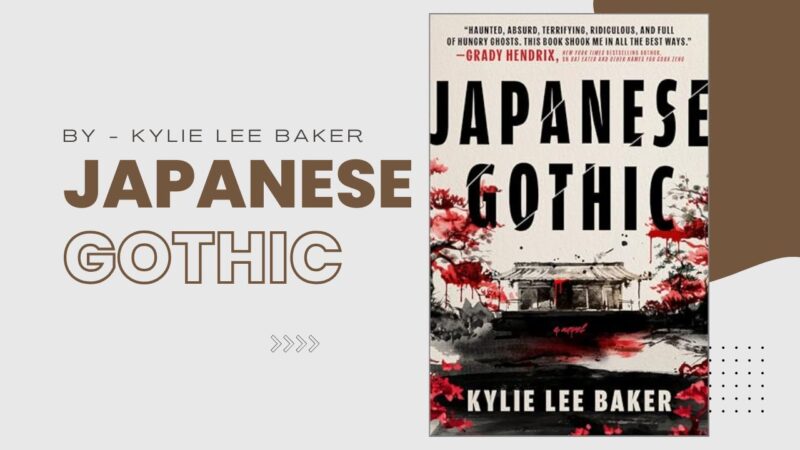

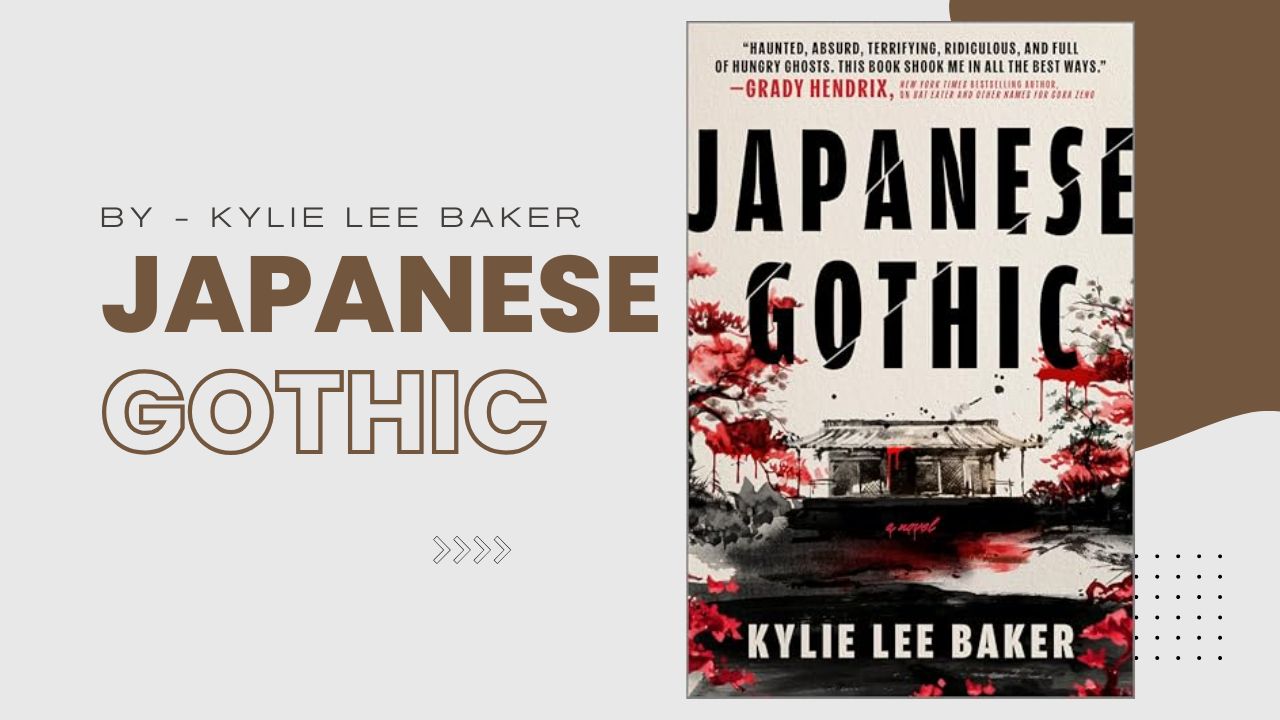
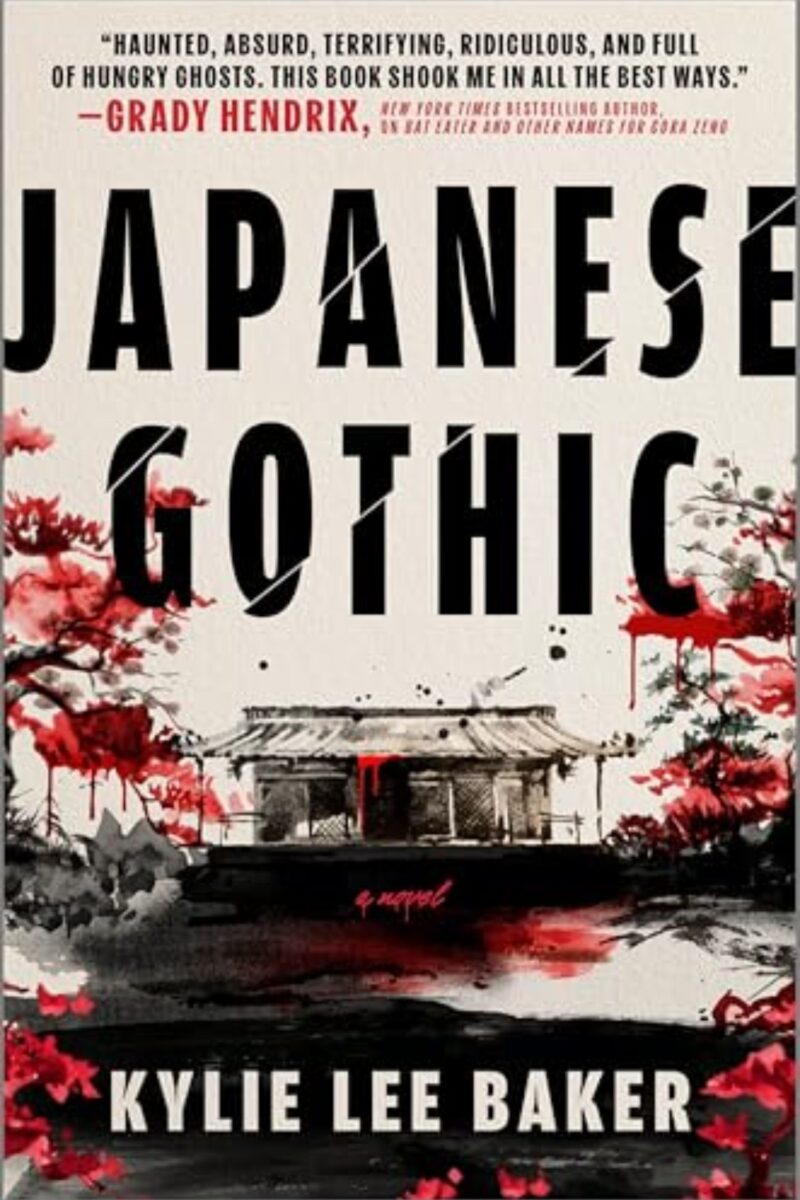
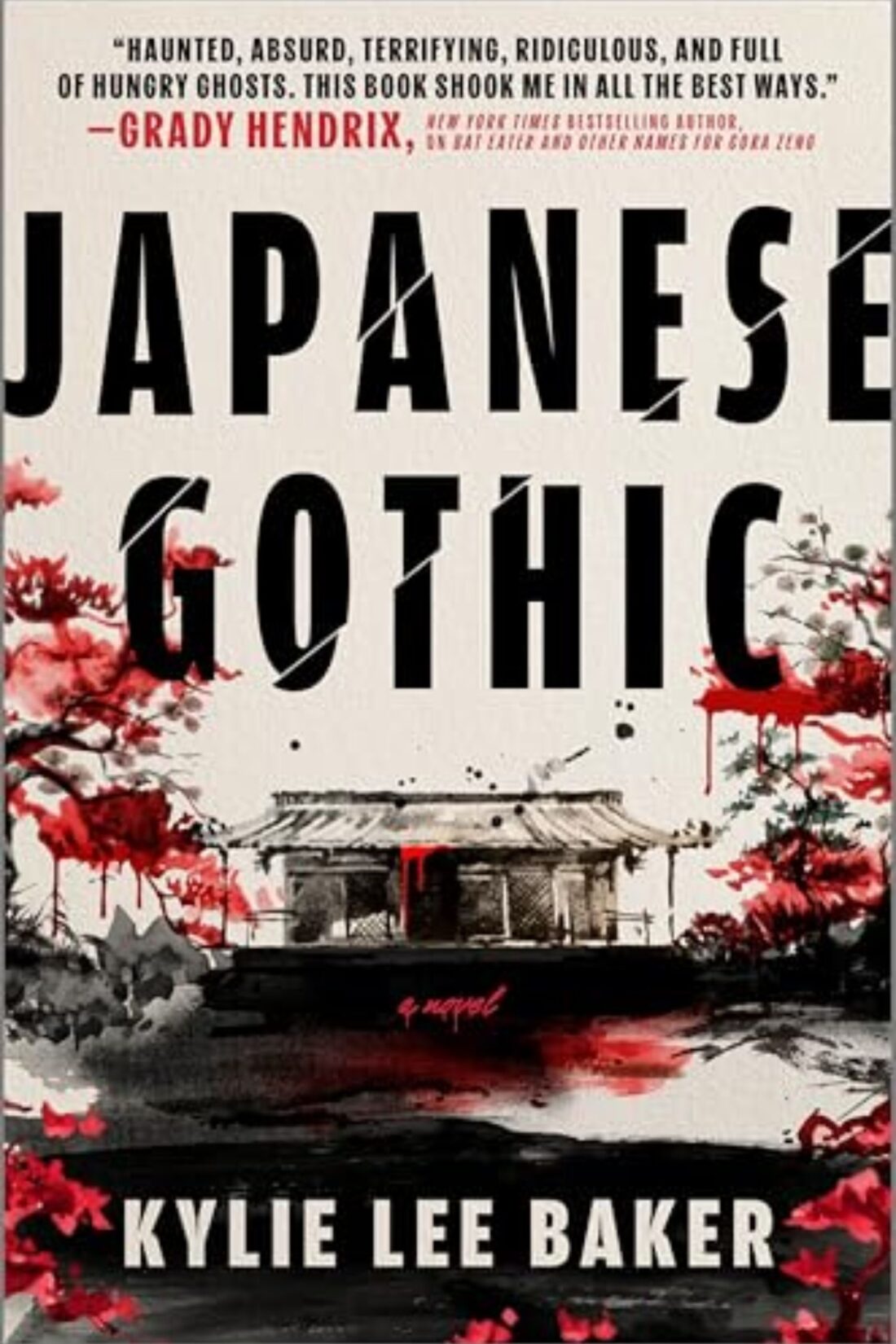
Kylie Lee Baker’s Japanese Gothic is a dual-timeline horror novel that operates on the premise that certain houses — and certain traumas — stretch across centuries. Named a New York Times Most Anticipated Book for 2026 and praised by critics for its lyrical ambition and folkloric depth, the novel marks a bold step forward from Baker’s adult debut, Bat Eater and Other Names for Cora Zeng, confirming her as one of the most distinctive voices working in literary horror today. Part haunted-house nightmare, part slow-burning meditation on generational violence, the book weaves together two storylines separated by 150 years — but bound to the same blood-stained ground.
Plot Synopsis
In October 2026, Lee Turner arrives at his American expat father’s ancient Japanese home in the countryside, freshly fled from New York after murdering his college roommate — a killing he barely remembers. Sedative-dependent and haunted by the disappearance of his mother when he was twelve, Lee finds that the old house behind the sword ferns offers no refuge. Animals refuse to approach it. The bedroom window is not always a window. And a woman with a sword materialises in the yard each night.
In October 1877, Sen is a young samurai’s daughter in exile during the Meiji era, hiding from imperial soldiers in the very same house. Her father — a man the war sent home wearing a monstrous face — dotes on her as the last hope of the samurai tradition, a love that curdles into something deeply abusive. Sen would do almost anything to please him, even raise her sword against her own mother.
These two stories intersect through a literal door — a closet that is, and is not, a closet — where Lee and Sen find each other across the century-and-a-half divide, passing notes backward through a mirror, slowly unravelling the secret the house has been keeping all along.
Content warning: graphic violence, depictions of abuse, dark themes of trauma and familial harm.
Atmosphere & Setting
Baker constructs her haunted house with meticulous, sensory precision. The property is surrounded by natural beauty — lush sword ferns, sun-dappled forests, flowers of every season blooming simultaneously — yet something underneath it all refuses to rest. No animals approach. The well has Okiku inside it. The architecture of the supernatural is kept deliberately modest: a door that measures differently from inside and out, a window that flickers in and out of existence. Through accumulating detail rather than direct explanation, Baker creates a structure of genuine, sustained unease.
The house itself functions as a character. It holds two centuries of memory, and Baker’s central motif — a recurring stain of blood that cannot quite be scrubbed away — gives physical form to the novel’s thesis: that place retains the residue of the atrocities committed upon it, possibly forever.
Characters & Themes
Lee and Sen are both loners shaped by parental catastrophe, and Baker refuses to make either of them entirely sympathetic. Lee’s fractured, sedative-blurred perspective disorients the reader productively, making his chapters feel genuinely unstable and strange. Sen’s chapters are, by consensus among critics, where the novel truly shines — each one a small, vivid window into a culture in transition, rendered with both historical fascination and visceral emotional weight.
The novel’s most searing theme is the danger of parental love. Sen’s father dotes on her with a toxic, death-obsessed traditionalism; Lee is haunted by a mother who vanished and a father too distracted by his expatriate life to truly see him. Baker traces precisely how societies and families pass violence from one generation to the next — how being loved in the wrong way is, in this book, often as lethal as being hated.
Japanese mythology is not decorative here. The legend of Urashima Tarō and the sea goddess Otohime form the actual structural architecture of the plot’s final movements. The reveal of how the myth has been embedded in the narrative all along is the book’s most ambitious creative achievement.
Writing Style
The prose has a quality critics have repeatedly struggled to name — a stillness that persists even in the most violent moments. A sword swings, a door opens, a terrible truth surfaces, and the sentences hold steady rather than accelerating. This is unsettling in the best possible way. Baker writes with the patience of a writer who trusts her readers to lean into discomfort without being jolted into attention by spectacle.
The novel has drawn comparisons to Stephen King’s 11/22/63, Poe, and the films of Makoto Shinkai — a “sad, bawling” emotional core wrapped in genuinely twisted, bloody horror. Several reviewers noted that it reads like a puzzle box: disorienting and even deliberately opaque through the middle, but snapping together in the final quarter with startling elegance. The tenderness between Lee and Sen — communicated through notes slid under a closet door — provides unexpected warmth at the novel’s heart.
Strengths & Weaknesses
Strengths
- Exceptional gothic atmosphere and sensory world-building
- Sen’s historical chapters are outstanding
- Mythology structure builds to a devastating, earned payoff
- Psychologically precise horror with literary ambition
- Unique, memorable prose style — lyrical yet cold
- The supernatural architecture is inventive and restrained
Weaknesses
- Mid-section pacing (Parts Two & Three) can feel slow
- Lee’s chapters are intentionally disorienting, which some readers may find taxing
- Some structural ambiguity may frustrate rather than intrigue on first read
- The swift conclusion may feel abrupt after the patient build-up
Who Should Read It
Japanese Gothic is not for readers who want their horror delivered at speed. It rewards patience, close attention, and a willingness to sit inside two very different kinds of grief at once. Those with a taste for gothic horror grounded in cultural specificity — fans of Silvia Moreno-Garcia’s Mexican Gothic, Shirley Jackson’s The Haunting of Hill House, Ruth Ozeki’s A Tale for the Time Being, or Han Kang’s quiet visceral dread — will find a worthy companion here. Historical fiction lovers will be captivated by the Meiji-era chapters in particular.
For readers with the appetite for it, Japanese Gothic will stay long after the last page — rattling at the windows, asking questions that do not have clean answers.
Final Verdict
A dazzling, disorienting triumph of literary horror. Baker has written something genuinely dark at its center, anchored by exceptional historical chapters, a mythology-laced structure that rewards patient readers, and prose of rare, sustained beauty. The mid-book pacing unevenness is real but minor against the force of the whole.
Japanese Gothic
Summary
A haunting, dual-timeline gothic horror novel that explores generational trauma through a cursed house spanning centuries. Kylie Lee Baker blends Japanese folklore, psychological horror, and lyrical prose to craft a slow-burning narrative that rewards patience. While the pacing occasionally falters in the middle, the novel’s atmosphere, historical depth, and emotional payoff make it a standout in modern literary horror.