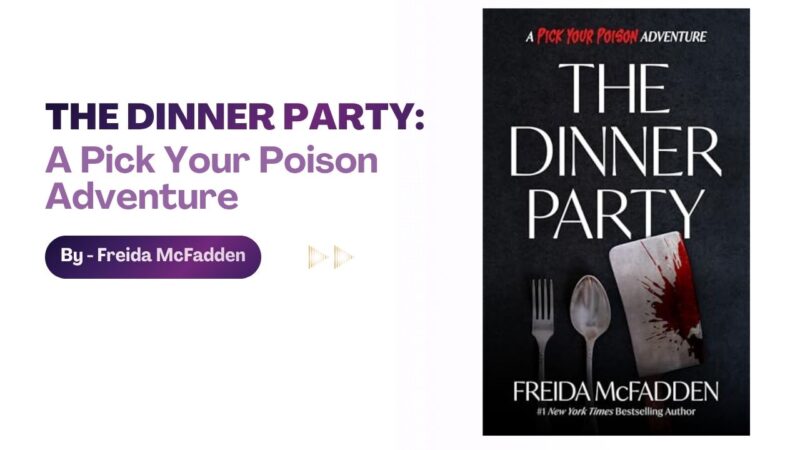

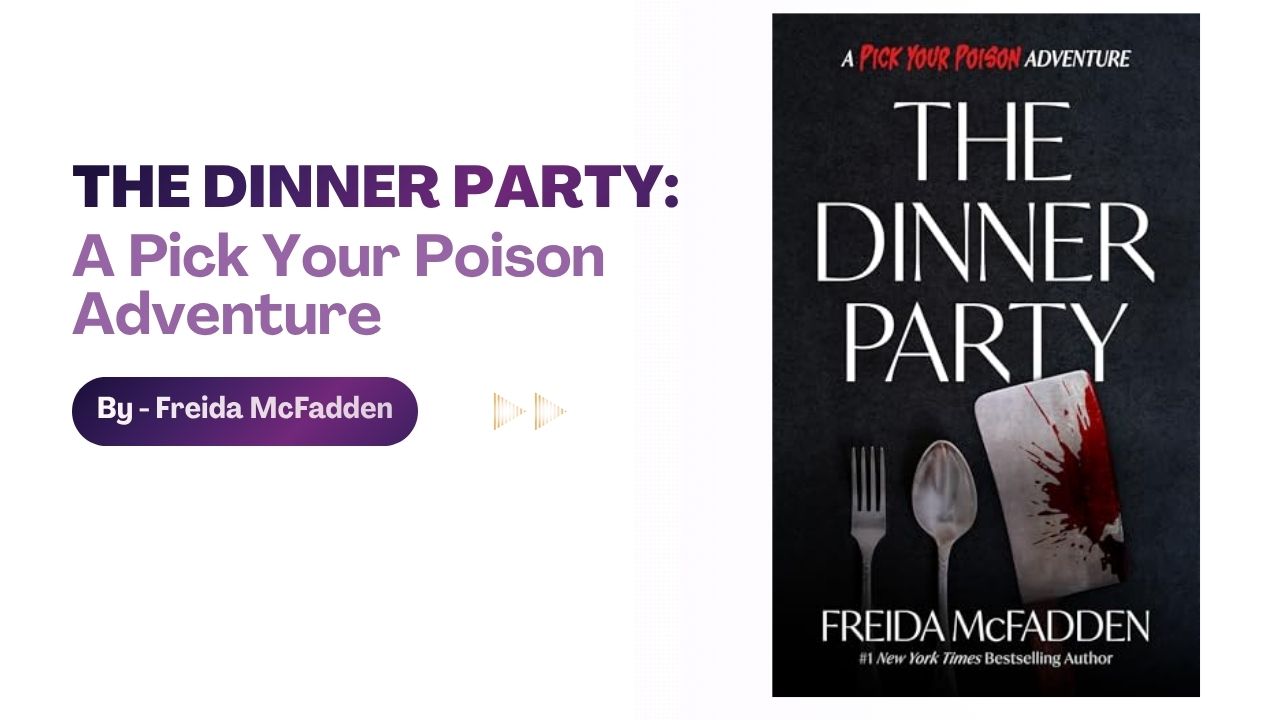
Let’s be clear right from the start: if you pick up The Dinner Party expecting another nail-biting psychological thriller in the vein of The Housemaid or The Nurse’s Secret, you’re going to land somewhere very different. This is Freida McFadden in full playground mode — tongue planted firmly in cheek, genre conventions tossed into a cannibalistic stew, and the reader handed a spoon to stir it however they like.
The book dropped on April 4, 2026, quietly appearing on Amazon and Goodreads with no advance fanfare — quietly enough that fans initially debated on social media whether it was even real, given that it surfaced on April Fool’s Day. That bit of accidental (or perhaps very deliberate) chaos is actually a perfect preview of what the book itself delivers: chaos, absurdity, and a wink at every thriller cliché you’ve ever rolled your eyes at.
The premise — straightforward until it really, really isn’t
You play as Sloan, a broke twenty-something who can’t make rent. A friend dangles a lifeline: a one-night catering gig at an isolated mansion on Peyton’s Peak. The pay is suspiciously generous. The location is suspiciously remote. And every thriller-reader instinct in your body screams that this is a terrible idea. But here’s the twist — the choice is yours. Literally.
This is a branching-path narrative where you make decisions at the end of each chapter: accept the job or stay home, pick up the hitchhiker or drive past, go left or right at the fork. Each choice reshapes the story and drops you into one of 22 to 28 possible endings depending on the format you read — some editions vary slightly in path count. Those endings range from darkly comic to genuinely grisly to outright surreal: think cannibalistic dinner club guests, a werewolf butler, and outcomes that made multiple readers literally laugh out loud when they described their first playthrough on Goodreads.
“I got murdered on my first path. Did not survive. But I was back for more within the hour.” — Goodreads reader
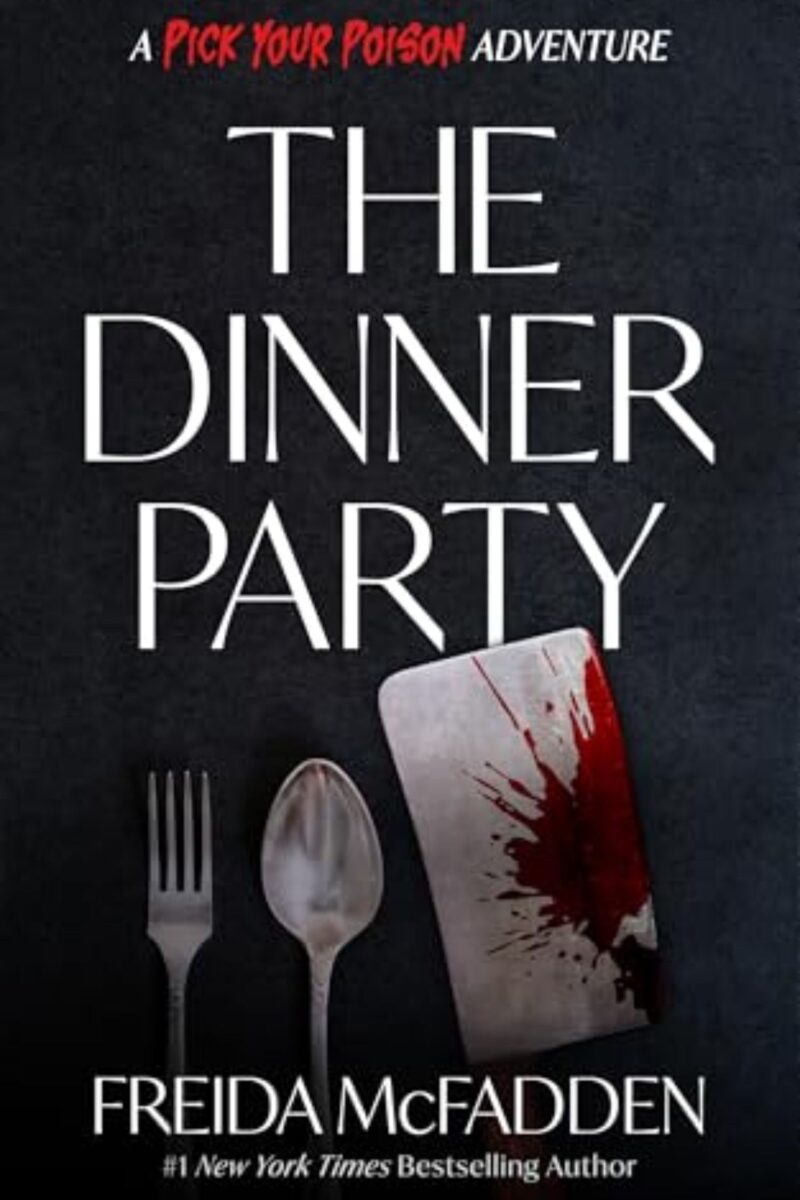
The format — a genuine breath of fresh air for adult fiction
The choose-your-own-adventure format has had a long life in children’s and young adult publishing, but it’s a rare creature in adult thriller fiction, and McFadden deserves credit for committing to it fully. This isn’t a gimmick slapped onto a traditional narrative — the branching architecture is the entire engine of the experience. Every decision you make genuinely changes where the story goes, and there’s real craft in the way the paths are structured without looping back in ways that feel lazy or repetitive.
The chapters are short and punchy, and each path can be completed in a single sitting. That makes it enormously replayable — and replay is kind of the whole point. Readers who went back to explore every available path reported having the most fun, discovering endings that were completely tonally different from the one they found first. The variety is commendable. One path ends in a fairly grounded escape. Another ends with you married to a werewolf. Both are canon. Both make a kind of deranged sense within the world McFadden builds.
The writing — sharp wit, deliberately absurd
One of the fairest critiques you can make of this book is that the base storyline, taken in isolation, is thin. The character of Sloan doesn’t get the kind of deep psychological excavation that McFadden normally builds into her protagonists. But that critique misreads the book’s own goals. The Dinner Party is openly and affectionately satirical — it’s skewering horror and thriller tropes, not earnestly playing them straight. When the pacing feels rushed in a given branch, or when a character behaves in a way that stretches logic, it’s usually because the book is leaning into genre absurdity with full awareness.
The prose is crisp and energetic. McFadden writes with her characteristic efficiency — no wasted sentences, punchy dialogue, and a second-person voice that pulls you into Sloan’s shoes with minimal friction. Some paths have a genuinely menacing atmosphere that fans of her thrillers will recognize. Others go fully comedic. The shifts in tone between paths are actually one of the book’s quiet achievements: she’s writing in multiple registers simultaneously, and it mostly works.
Where it stumbles — managing expectations
Not everyone left the dinner party satisfied. The most common criticism among readers — and it’s a fair one — is that after a certain number of replays, the paths begin to feel repetitive. Some endings resolve somewhat abruptly, as if McFadden ran out of real estate in a particular branch and had to wrap things up quickly. Readers who chased all 22+ endings sometimes reported hitting diminishing returns somewhere around the halfway mark.
There’s also the matter of audience expectations. McFadden’s typical readership came expecting the layered twists and character depth of her standard output, and those readers are most likely to find this one underwhelming. That’s not really a flaw in the book — it’s a mismatch in positioning. If you go in knowing you’re getting a playful, interactive horror-comedy satire rather than a prestige thriller, the experience shifts considerably.
What works well
- Genuinely replayable with real path variety
- Sharp, witty prose with perfect pacing for the format
- Committed, inventive satire of thriller tropes
- Short chapters make it incredibly easy to pick up and put down
- Surprising tonal range across different endings
Where it falls short
- Thin character development by McFadden’s usual standard
- Some branches end abruptly or feel underdeveloped
- Repetition sets in after 10–12 paths for completionist readers
- Not a satisfying read if you want a traditional thriller
- Better experienced in print than audiobook format
Who should read this — and who should skip it
If you grew up loving Choose Your Own Adventure books and have been waiting for someone to make that format genuinely dark and funny for adults, this was made specifically for you. Readers who enjoy interactive fiction, dark comedy, or horror parody will get a lot of mileage out of it. Book clubs, in particular, could have an interesting time comparing which endings different members stumbled into first — the divergence in experiences makes for good conversation.
If you’re a McFadden completionist who buys everything she writes regardless of format, go in knowing this is her most experimental release by a wide margin. Treat it as a bonus, a curiosity, a side dish at the main dinner table of her bibliography — and it’s a pretty good one. If you’re brand new to McFadden and want to understand what she’s actually known for, start with The Housemaid first and circle back to this later.
Final verdict
The Dinner Party is a genuinely fun experiment that McFadden pulls off with more skill than the format demands. It won’t replace her best thrillers, and it doesn’t try to. What it does instead is invite you to die hilariously in a remote mansion, shrug, flip back to page one, and try again — which turns out to be its own particular kind of pleasure.
The Dinner Party
Summary
Freida McFadden's most experimental release to date is a satirical, interactive horror-comedy that trades her signature psychological depth for branching paths, cannibalistic dinner guests, and over 22 possible endings. It's not her usual thriller — and that's entirely the point. Quick, replayable, and darkly funny, it works best when you go in expecting a genre parody rather than a prestige mystery.