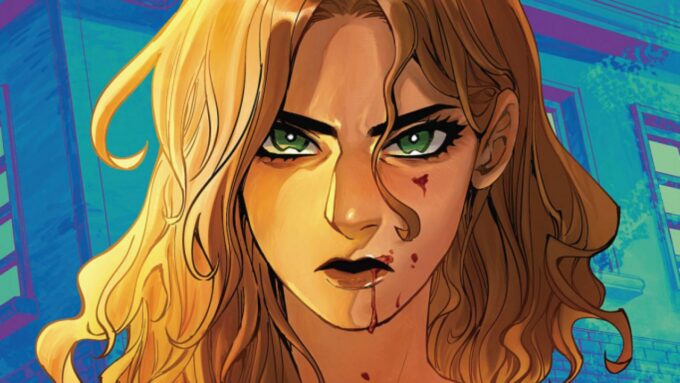

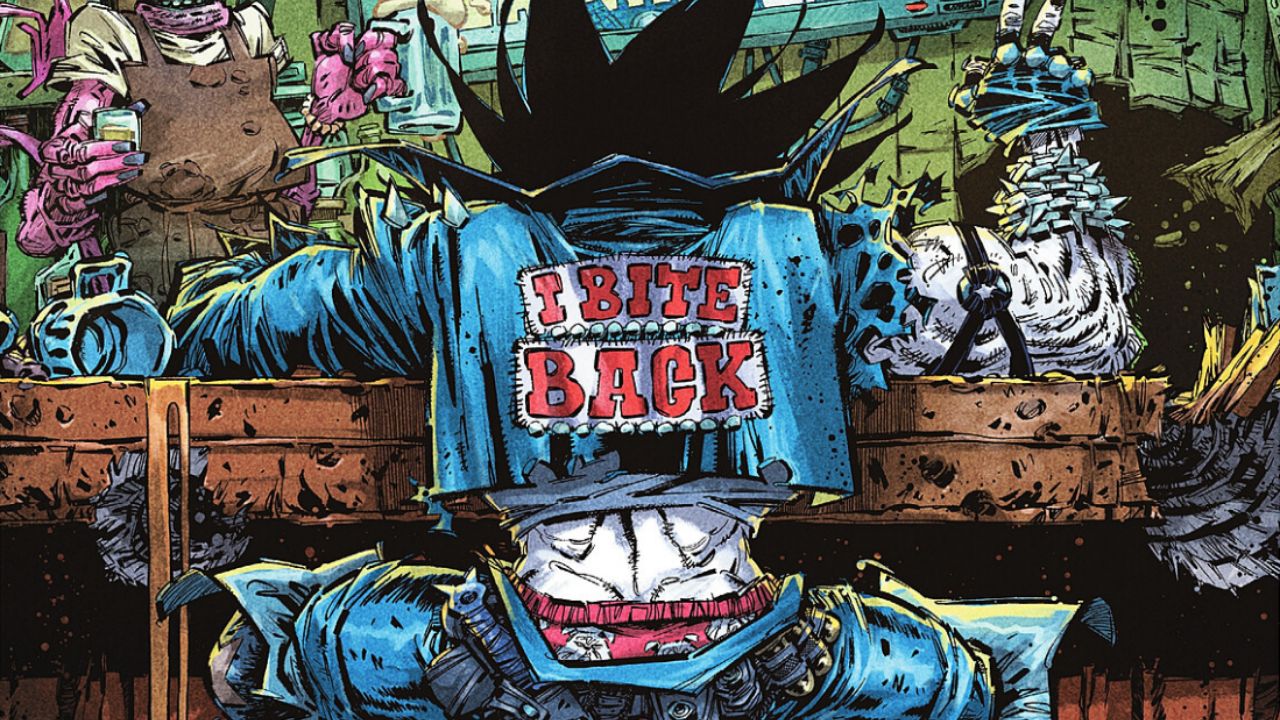
The galaxy’s most dangerous bounty hunter is back, and he’s finding out that the only thing more lethal than a space-pirate’s blaster is a corporate executive with a focus group. In Lobo #2 (2026), we witness the hilarious and brutal fallout of the Main Man’s decision to sign his life away to a media conglomerate. This is a full, page-by-page breakdown of the story leading up to its shocking (and partially unclothed) conclusion.
The New Look: Tight Tights and Biohazards
The issue opens at the headquarters of Omni Omega+ Entertainment Corp, where Lobo is undergoing what can only be described as a “corporate-mandated glow-up.” Under the direction of the executive KZZT, Lobo is stripped of his iconic biker gear and forced into a new ensemble. The result is a vibrant, neon-colored “superhero” costume complete with restrictive tights. Lobo is visibly miserable, complaining that he never agreed to “rock the tights,” but KZZT remains unmoved.
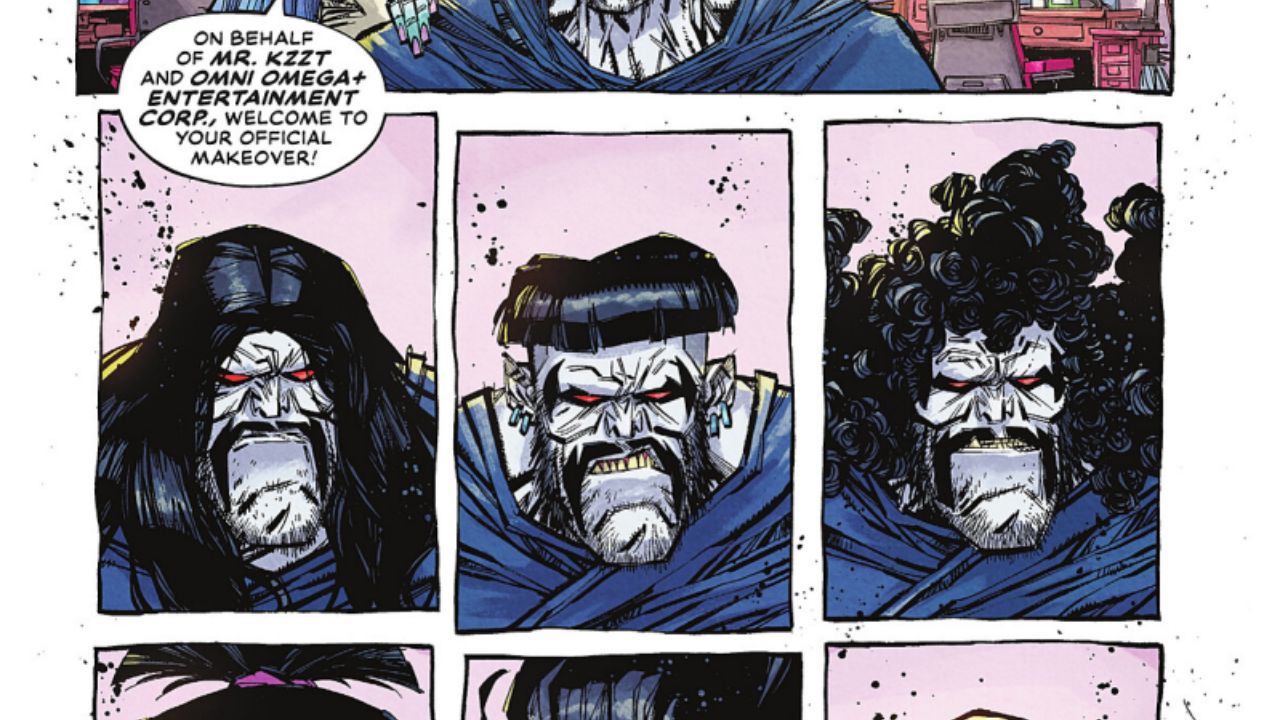
The executive explains that this change isn’t just about style; it’s about “retention”. New data from their focus groups indicates that audiences are more likely to stay tuned when characters wear traditional “heroic” costumes. When Lobo argues that his original outfit was just fine, KZZT counters with a horrifying reality: his old clothes were essentially living organisms. They were considered a biohazard due to the sheer volume of bacteria and “live cultures” that had been growing on them since their last cleaning—a date KZZT suggests only a biohazard engineer could pinpoint.
Lights, Camera, Scripted Action!
With his new look finalized, Lobo is sent on his first “official” bounty for the reality show. The location is Lixton Blind, a decaying, abandoned Brutanium factory city that now serves as a haven for the dregs of the southeastern galaxies. To film the action, Lobo is followed by a swarm of “Brass Balls”—camera drones that serve as his constant, unblinking audience and a direct line to his producers. Lobo is understandably annoyed by having “brass balls in his face all day,” but he has no choice but to play along.
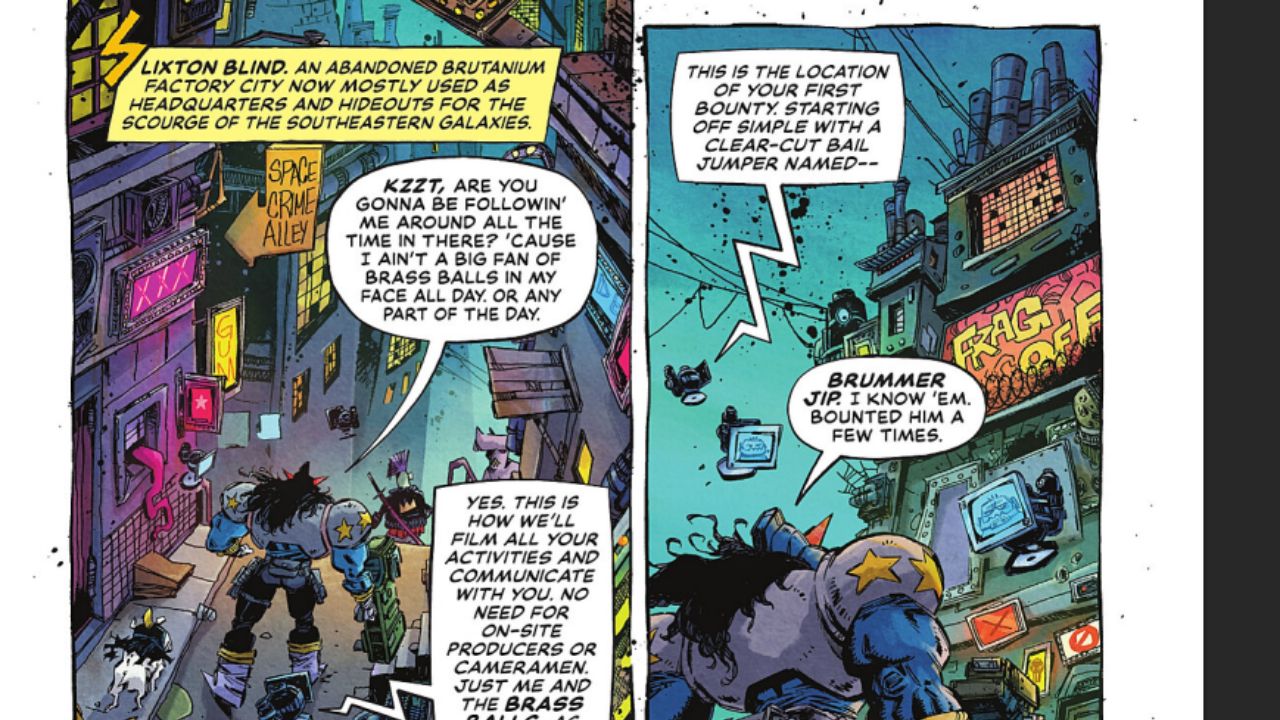
His target is an old acquaintance named Brummer Jip, a low-level bail jumper whom Lobo has apprehended several times in the past. As Lobo prepares to kick down the door and get to the violence, he is suddenly interrupted by the producers. They scream “CUT!” and inform him that while they want “authenticity,” their legal department has a few requirements. Lobo is ordered to “knock and announce” himself before using forced entry.
The Sincerest Form of Advertising
The scripted nonsense continues as Lobo attempts to deliver a intimidating threat to Brummer. He threatens to turn Jip’s chest into “barbecue chicken” and deliver him to court like a “Grub-Livery driver”. The producers stop him again, asking him to replace “Grub-Livery” with “Resident Rush Driver,” as they are one of the show’s top sponsors.
Lobo’s frustration reaches a boiling point. He is forced to read a pre-approved legal statement informing Brummer of his 23 felonies and his failure to appear in court. He even has to vocalize “Bang Bang!” sounds because the show has a strict “frag” limit—a cap on the number of times he can use his favorite swear word or engage in lethal violence per season to maintain his “heroic” image.
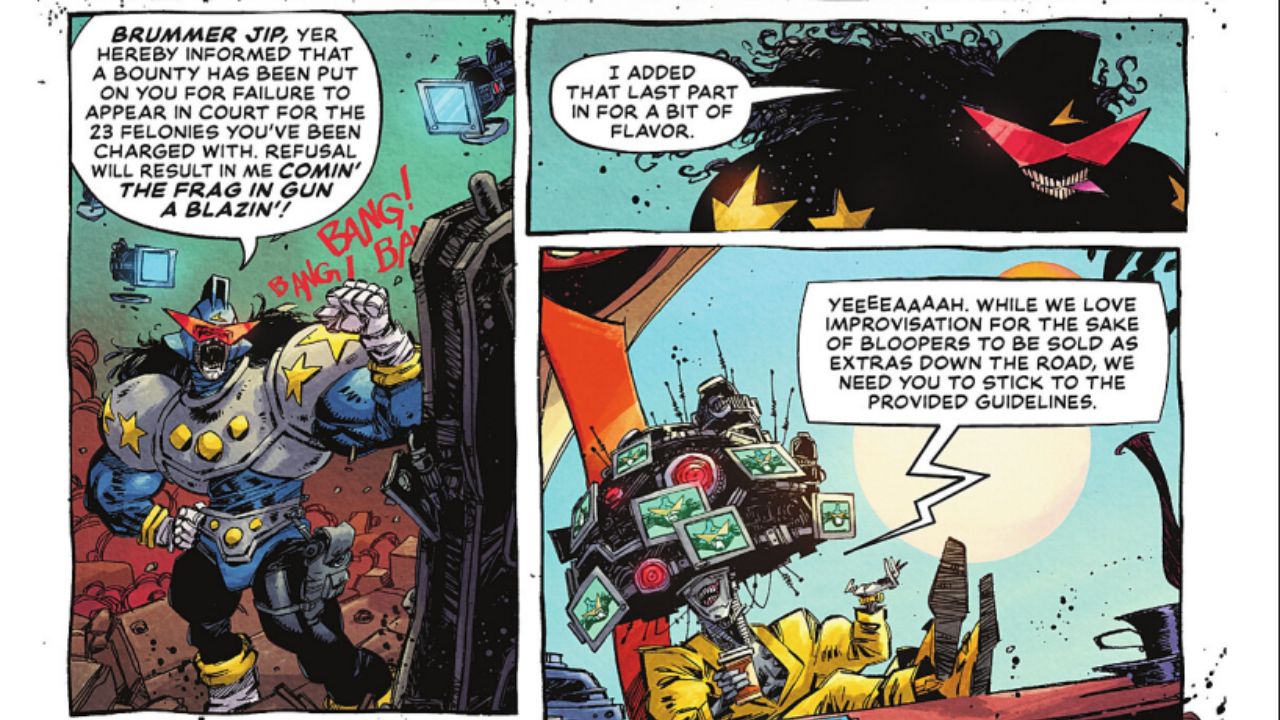
When Lobo finally loses his patience and guns down the door with a “SCRIPT FRAG OFF!”, he finds that the corporate rules don’t apply to the villains. The enemies can fire as much as they want, while Lobo is told to preserve the “hero in antihero” by showing restraint.
Ratings vs. Reality
Back at the OOEC headquarters, the mood is grim. Despite the makeover and the scripted drama, the show is failing. KZZT and the board members (including a being named MR. FRXXT) reveal that their competitors—the fictional Fisty Claws and Murder Mouth—are still outperforming them in every demographic from “18-24” to “100-Infinite”.
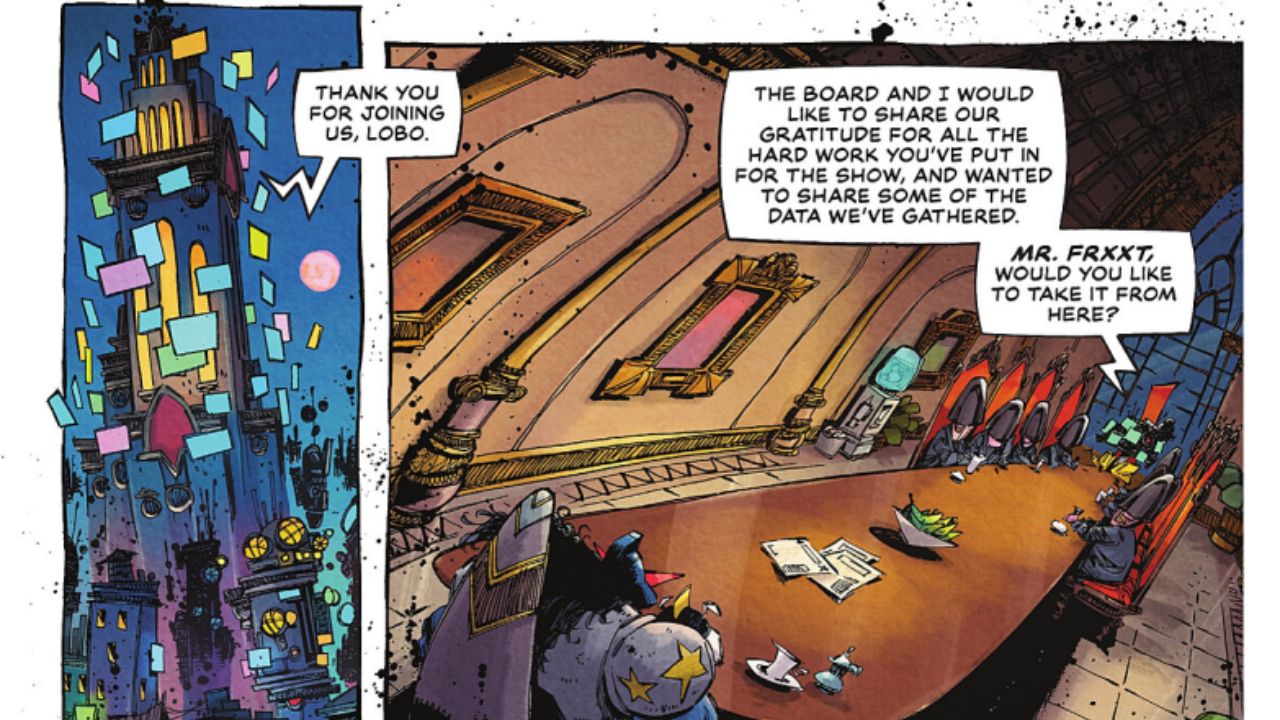
The analysts have come to a confusing conclusion: the audience loves Lobo, but they want “a little less him”. They want what the corporation tells them they want. To fix the ratings, the committee decides that their “antihero” needs to face off against a “full-blown hero”. They have identified a target: King Emperor Aquaman.
The Clash with the King of the Seven Seas
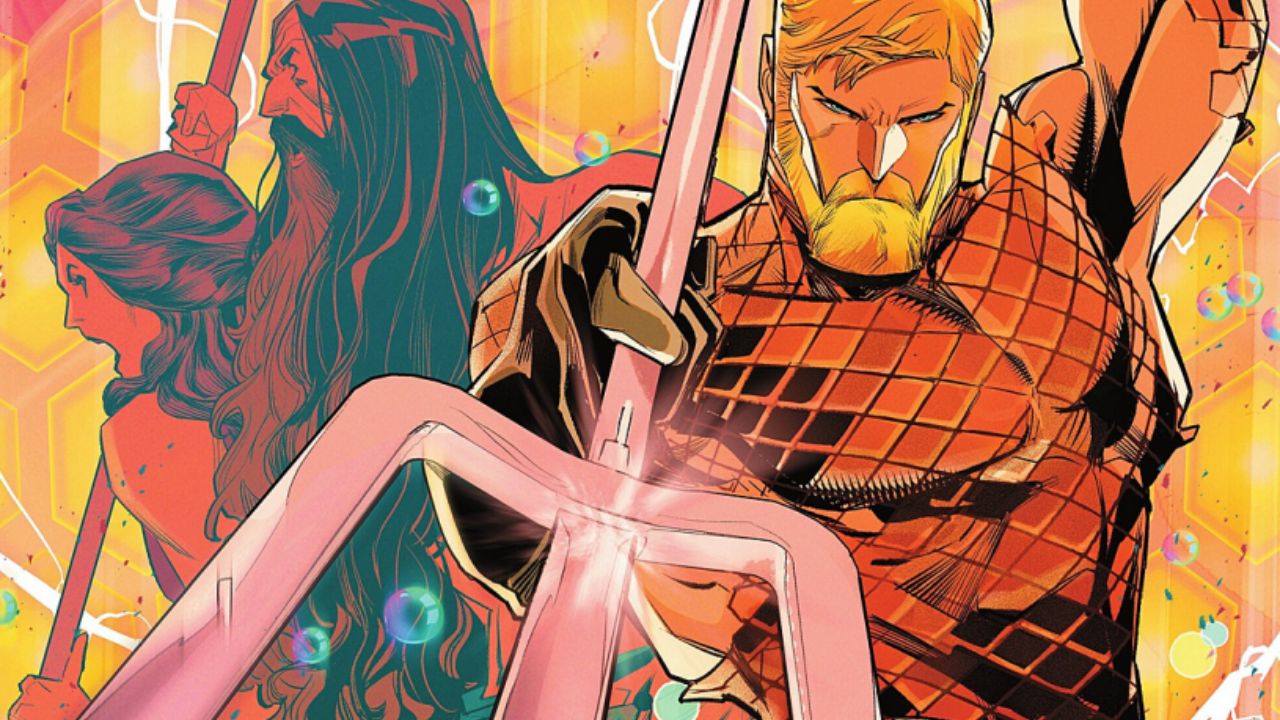
Lobo tracks Aquaman down, and the meeting is anything but dignified. Arthur Curry immediately bursts into laughter upon seeing Lobo in his new neon tights, barely recognizing him. The OOEC writers are thrilled by this “witty banter” and begin feeding Lobo “fish stick” and “fish and chips” jokes through the camera drones.
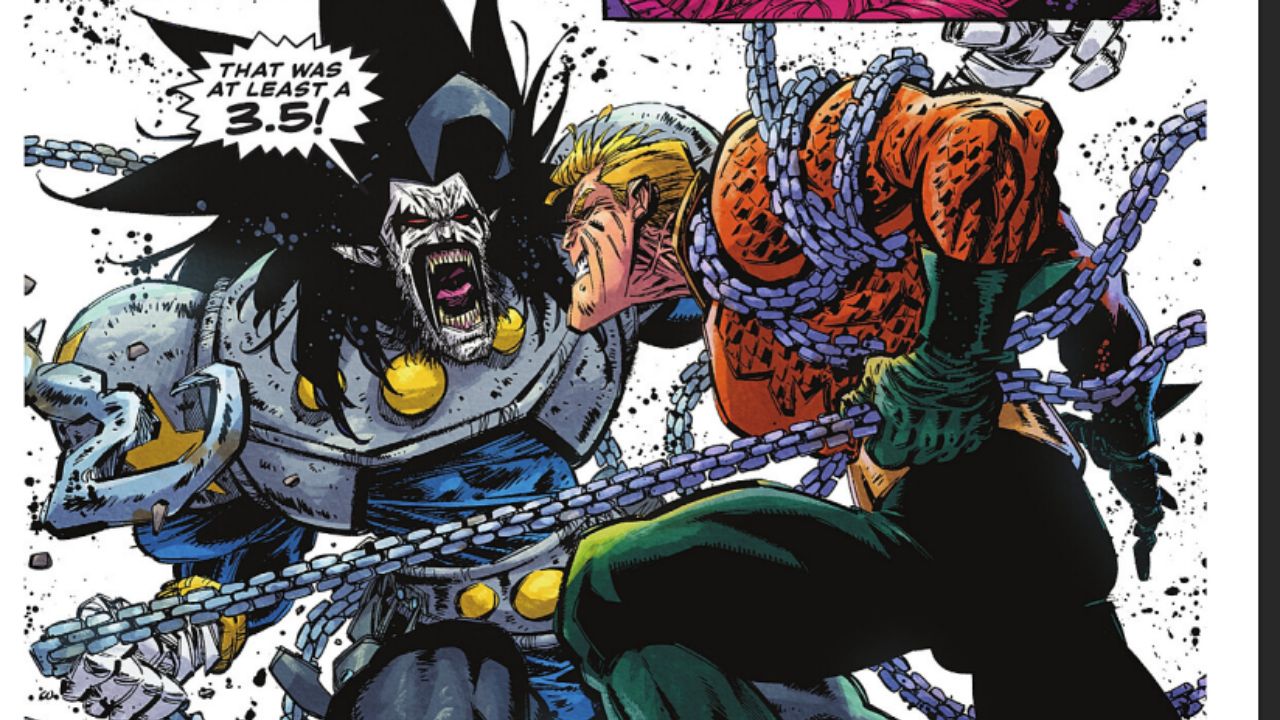
Aquaman is perplexed by the whole situation, especially when he realizes the program is simply titled The Main Man. He mocks the show’s format, asking if Lobo is waiting for the drones to deliver his next one-liner. The producers, meanwhile, are more concerned about the visual assets than the actual combat; they tell Lobo he can proceed with the “physical altercation” but warn him not to hit Aquaman in the face to avoid damaging the “heroic” look.
The fight is a disaster for both parties. It is live-streamed to the world, and we see “social media” comments from Atlanteans like Lori and Chloe, who are more interested in where they can get their fins done than the battle taking place. After an hour of grueling, scripted combat, both Lobo and Aquaman are physically exhausted. Lobo, bleeding and delirious, tries to threaten to “debone” Aquaman like a fish, but he’s interrupted by yet another “CUT!”.
The Merger and the Rodent
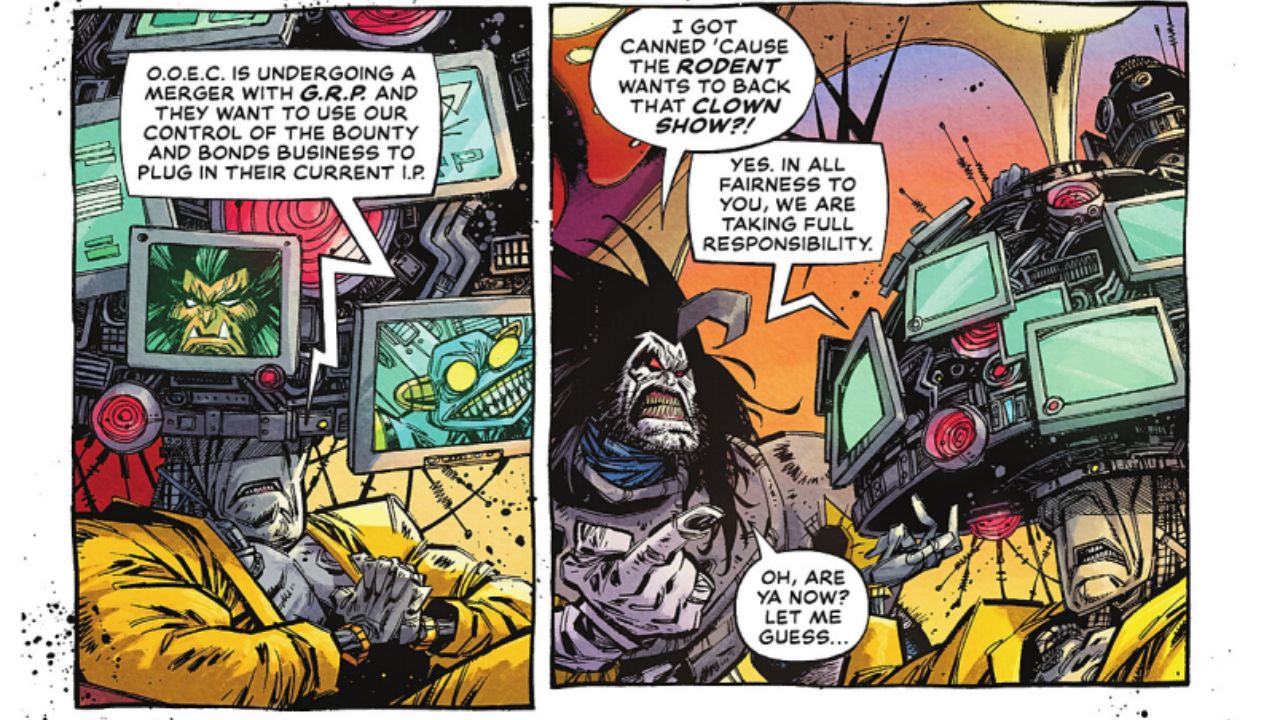
Back at headquarters, Lobo learns the shocking truth: the bounty on Aquaman has been canceled. Lobo assumes it’s because of his behavior—perhaps the time he “pulled out his situation” in front of a priestess—but KZZT explains it’s much more cold-blooded.
Omni Omega+ Entertainment Corp is undergoing a merger with a massive entity referred to only as “G.R.P.“. Lobo quickly realizes that this means “the Rodent” (a thinly veiled reference to Disney) is taking over. The merger means that the new owners want to use OOEC’s control of the bounty business to plug in their own existing intellectual properties. In the eyes of the new committee, Lobo’s gritty, authentic violence is a “clown show” that doesn’t fit their brand.
Lobo’s Final Word
Lobo is fired. The suit, KZZT, explains that his services are no longer required and he must leave the premises immediately. Lobo, ever the observer, reaches out to check if the meeting is just another hologram. When KZZT confirms he is there “in the technoflesh,” Lobo delivers one final, brutal “physical altercation” to the executive.
As he prepares to leave, Lobo demands that the remainder of his contract be deposited by the end of the week, or he’ll return to give the rest of the board the same treatment. KZZT, nursing his wounds, agrees but reminds Lobo of one final detail: the neon superhero costume is property of OMNI OMEGA+. He is strictly forbidden from taking the company’s property with him.
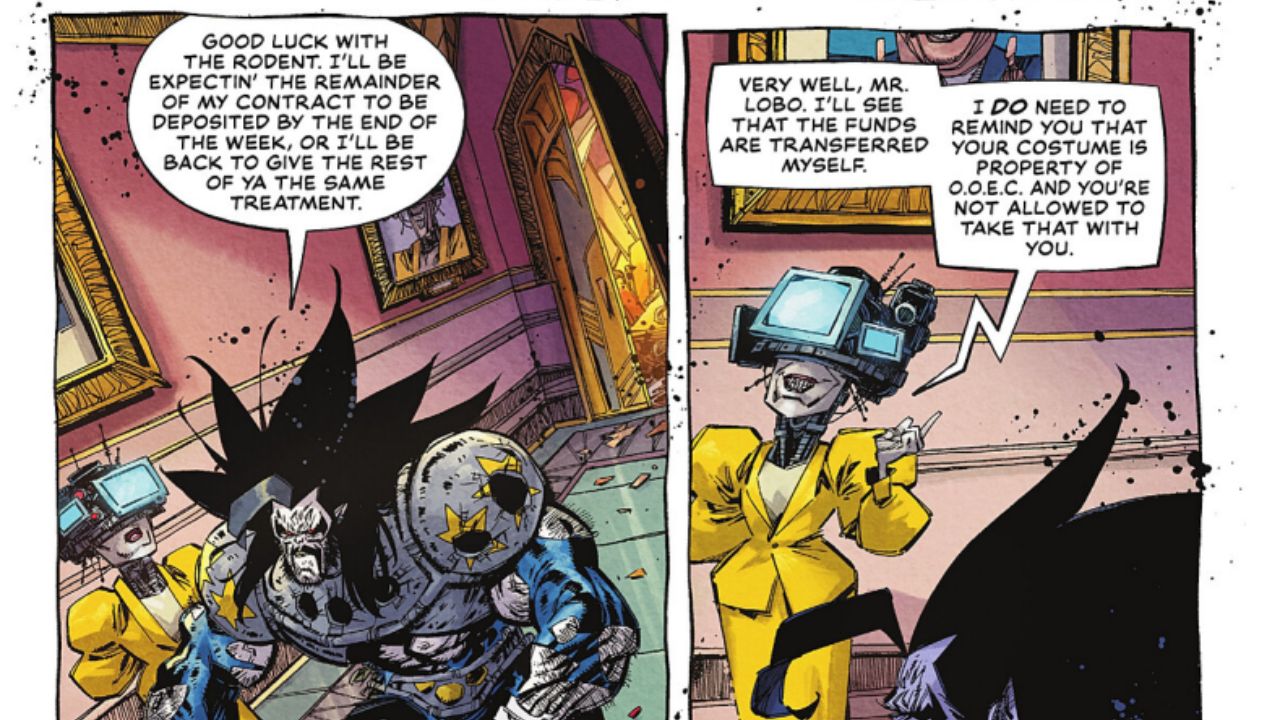
Lobo, in a final act of rebellion and “authenticity,” proceeds to strip the costume off right then and there. Walking away from the corporate world and back toward his life as the galaxy’s most unrefined bastich, he delivers his final line of the issue:
“NO PROBLEM, LADY.”
Also Read: Lobo (2026) #1 – Full Story Breakdown