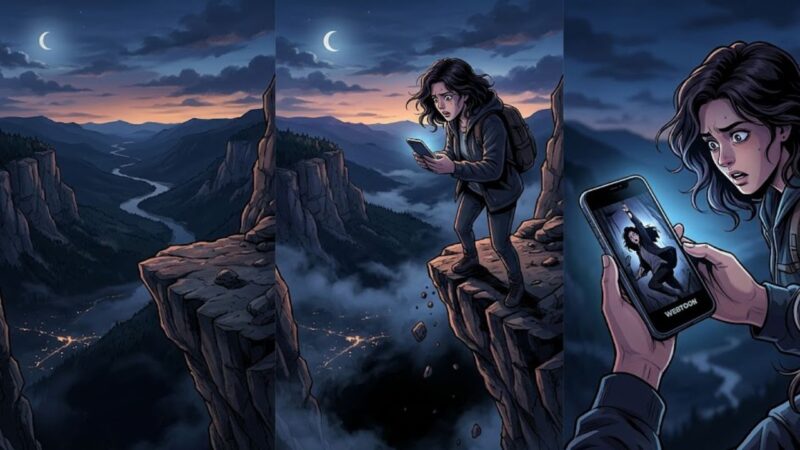

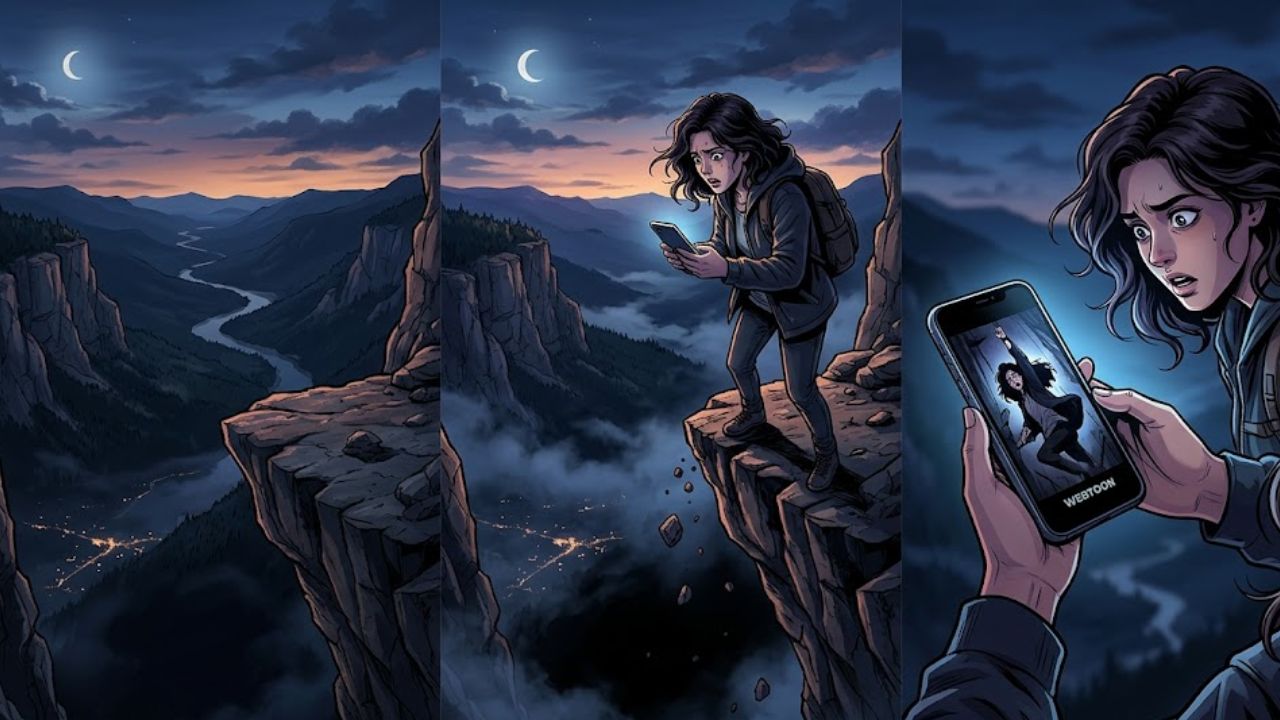
There’s a specific kind of torture that webtoon readers know well. You’re scrolling through an episode, lost in the world, emotionally invested in a character who’s finally — finally — about to get what they deserve or discover what they’ve been searching for. And then the panels slow down. The art gets a little more dramatic. The dialogue drops to almost nothing. And then there it is: the last panel. A face frozen mid-realization. A hand reaching for a door. A villain stepping out of the shadows. The words “Episode 47 — End” sitting at the bottom like a polite little gut-punch. You close the app. You stare at the ceiling. You open the app again just to confirm that yes, it really did end there. That’s the Art of the Cliffhanger at work — precise, calculated, and almost cruel in its timing. And in the world of webtoons, where creators live and die by weekly engagement, reader retention, and subscriber counts, mastering this rhythm is essential to keeping Webtoon Readers Engaged.
Why Webtoons Are a Cliffhanger’s Natural Habitat
Before we talk technique, it’s worth understanding why the cliffhanger hits differently in webtoon format compared to, say, a novel or a binge-able streaming show.
Webtoons are serialized. Most run on weekly or bi-weekly schedules. Readers don’t consume the whole story at once — they live with it, chapter by chapter, often for months or years. That waiting period is both the format’s greatest strength and its biggest challenge for creators.
When a reader finishes a novel chapter and immediately flips to the next page, a cliffhanger just creates momentum. When that same reader has to wait seven days for resolution, the stakes completely change. The cliffhanger now has to do something harder: it has to live in the reader’s head for an entire week. It has to be interesting enough to compete with everything else demanding that reader’s attention — other webtoons, social media, life itself.
That’s a tall order. And most webtoons that fail to retain readers fail right here, not because the story is bad, but because their episode endings don’t give readers a compelling reason to come back.
The Anatomy of a Great Webtoon Cliffhanger
Not all cliffhangers are created equal. Experienced readers can feel the difference between a cliffhanger that’s earned and one that’s manufactured — and the manufactured kind actually drives readers away over time, because it starts to feel like the creator is jerking them around rather than genuinely building something.
So what separates the two?
1. The Revelation Cliffhanger
This is the one where something the reader didn’t know — but maybe suspected — is suddenly confirmed or completely upended. A character who seemed trustworthy is revealed to be working against the protagonist. A hero discovers that everything they believed about their past is a lie. A mystery that’s been building for thirty episodes snaps into focus in a single, devastating panel.
What makes this work is setup. Revelation cliffhangers land hardest when the reader can look back and see all the pieces that were there all along. They feel clever, not cheap, because the story earned them. The payoff is proportional to the patience the storyteller had in laying the groundwork.
Weak version: A random new character appears at the end of an episode with no prior context, and the narration box says “But neither of them knew the danger that had already found them.”
Strong version: The reader has spent twenty episodes wondering why the mentor never talks about the war. The last panel of the episode is a closeup of a document. The mentor’s name. A list of traitors. We already know the mentor. We already care. The cliffhanger doesn’t introduce the mystery — it explodes one we’ve been sitting with.
2. The Decision Cliffhanger
This is the “point of no return” ending. The character is standing at a crossroads — metaphorically or literally — and the episode ends the moment before they choose. The reader spends the whole week thinking about what they would do. Debating it in comments. Writing theories.
Decision cliffhangers are uniquely powerful because they invite participation. The reader doesn’t just want to see what happens — they have an opinion about what should happen. And that emotional investment is exactly what brings them back.
The key here is that both (or all) choices have to feel genuinely possible and genuinely consequential. If the “choice” is obviously going to go one way, it’s not a cliffhanger — it’s just a pause. Real tension comes from uncertainty, and the creator has to resist the urge to tip the scales too early.
3. The Threat Cliffhanger
Someone or something is in danger. The episode ends before we know if they survive, escape, or succeed. Classic, visceral, effective — when the reader actually cares about whoever’s at risk.
This is where a lot of newer webtoon creators make a critical mistake: they use threat cliffhangers on characters the reader hasn’t had time to love yet. The emotional math doesn’t work if we barely know the person in peril. Danger only registers as tension when there’s attachment behind it.
The best threat cliffhangers tend to involve secondary characters — the ones readers have grown fond of over time — rather than the main protagonist, because readers generally don’t believe the main character will die. But Soo, the cheerful best friend from chapter three? She’s not protected by plot armor, and readers know it. Put her in danger and the reader will be back next week.
4. The Tonal Shift Cliffhanger
This one is subtle but devastatingly effective. The episode has been light — funny, even. Characters are having a good day. There’s warmth, maybe a little romance, definitely some laughs. And then, in the last few panels, the tone cracks. Something small and wrong creeps into the corner of a panel. A familiar face in a place they shouldn’t be. A line of dialogue that reads as casual but means something terrible in context.
The tonal shift cliffhanger doesn’t tell the reader something terrible is coming. It shows them the shadow of it while everything is still warm, and that contrast is genuinely unsettling in a way that pure drama rarely achieves.
The Scroll Pacing Problem
Here’s something that’s specific to webtoon format and almost never gets talked about enough: the cliffhanger’s power depends enormously on how you get to it.
Webtoons are read vertically, by scrolling. That means the reader controls the pace. Unlike a book where a page turn creates a natural moment of anticipation, a webtoon reader can scroll past your carefully constructed dramatic beat in half a second if they’re moving too fast.
Skilled webtoon creators build what you might call “scroll resistance” — visual and narrative techniques that naturally slow the reader down as they approach a key moment.
This includes:
Panel elongation. Tall, narrow panels force the eye to slow down. A full-height panel of a character’s face — no dialogue, no action, just expression — asks the reader to linger.
Deliberate whitespace. Empty panels, or panels with minimal content surrounded by a lot of blank space, create a visual pause. The brain registers “something important is about to happen” before it consciously processes why.
Dialogue rhythm. Short lines of dialogue broken across multiple panels slow the reading pace. Instead of one speech bubble with a complete thought, breaking it into fragments — “I’ve been waiting…” / “…to tell you this” / “…for a long time.” — stretches the moment across the scroll.
The final panel composition. The last panel of any episode is where everything converges. The best webtoon artists treat this like the final note of a song — it has to resolve some things while leaving one crucial thing hanging, and the visual composition has to be strong enough to stick in the reader’s memory until next week.
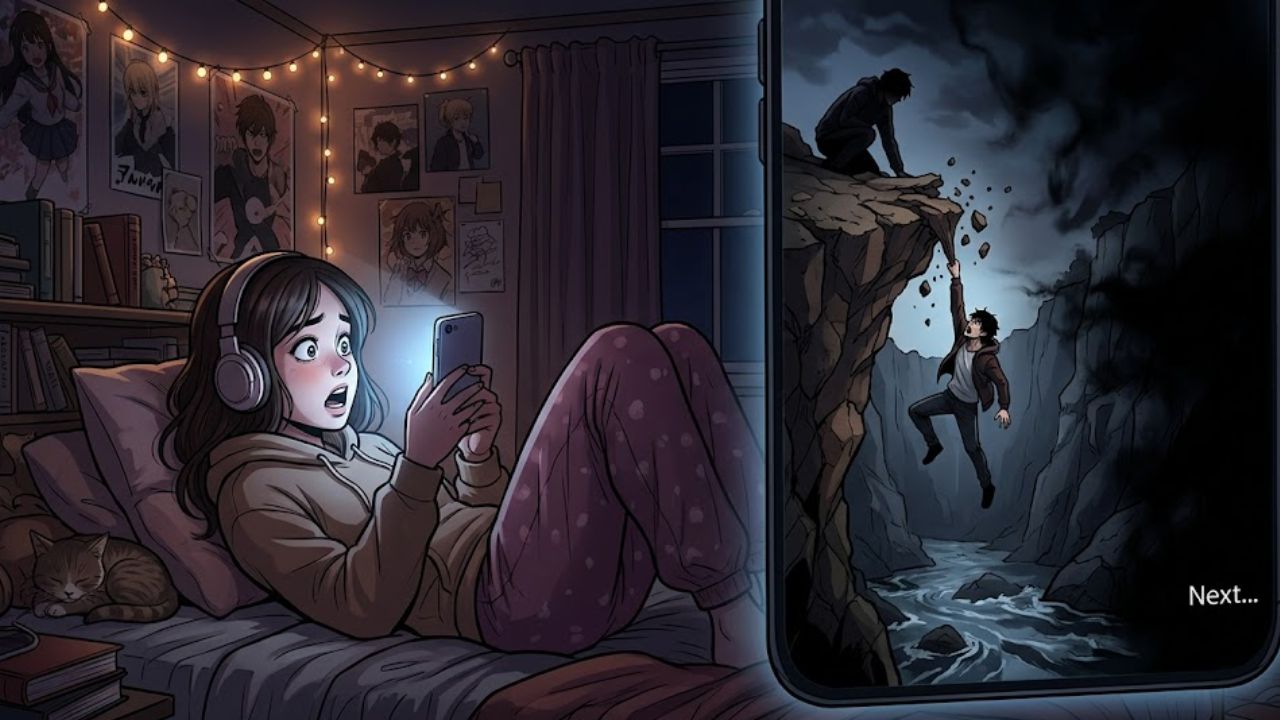
What Happens Between Episodes: The Comment Section Ecosystem
One thing that makes webtoons genuinely different from almost every other storytelling format is the comment section.
Readers don’t just consume webtoons — they process them communally, in real time. After a great cliffhanger, the comments on that episode become their own kind of ongoing story. Theories pile up. Arguments break out. Someone makes a joke that becomes a meme. Readers who subscribe early get to watch the conversation evolve, and that social experience is part of what makes coming back feel urgent.
Smart creators understand this and design their cliffhangers partly with the comment section in mind. The best ending panels are ones that generate debate — not confusion, but genuine disagreement about what something means or what’s going to happen next. When two reasonable readers can look at the same final panel and come to completely different conclusions about what it means, you’ve built something that will generate hundreds of comments and a lot of readers coming back just to see how the conversation develops.
There’s a real craft to this: the cliffhanger has to be specific enough to feel meaningful but ambiguous enough to invite interpretation. It’s threading a needle, and the creators who do it well — Lore Olympus, Weak Hero, True Beauty, I Love Yoo at its peak — build genuine communities around that weekly ritual.
The Dark Side: Cliffhanger Fatigue
Here’s the uncomfortable truth that not enough people talk about: cliffhangers can be overused, and when they are, they stop working.
If every single episode ends with a dramatic revelation or someone in mortal peril, readers start to feel like nothing is ever actually resolved. The tension becomes white noise. Instead of leaning forward, they lean back and think, “Sure, another cliffhanger, I’ll believe it when I see the follow-through.”
The most sustainable approach is rhythm — alternating between high-tension cliffhangers and episodes that deliver genuine satisfaction or breathing room. An episode that fully resolves an arc, lets characters rest, and gives readers emotional closure actually increases the impact of the next cliffhanger. Contrast is what gives drama its power. If you’re always at a ten, ten loses its meaning.
The best serialized webtoon storytellers are actually thinking in larger arcs. Each episode cliffhanger is a small hook. Each arc ending is a bigger hook. And the overarching series mystery is the hook that holds everything together. When all three operate simultaneously, readers don’t just want to know what happens next week — they feel genuinely invested in where the whole story is going.
Practical Notes for Creators
If you’re making a webtoon and reading this because you’re trying to figure out why your reader retention drops off, here are some honest, concrete things worth examining:
Look at your last panels. Are they visually strong? Do they create a question the reader will actually spend time thinking about? Or do they just… stop?
Check your attachment work. Before putting a character in danger or at a decision point, ask yourself honestly: has the reader spent enough time with this character to care? If not, the tension is hollow.
Audit your resolution rate. If you’ve introduced five mysteries in the last ten episodes and haven’t resolved any of them, your readers may feel overwhelmed or manipulated rather than intrigued. Give them a win sometimes. Let something pay off.
Read your own comments. Readers tell you exactly what they’re thinking about between episodes. If they’re theorizing about the wrong things — things you never intended to be mysterious — that’s feedback about what landed versus what confused.
Vary your cliffhanger types. A string of threat cliffhangers gets predictable. Mix in a tonal shift here, a revelation there, a decision cliffhanger when you’ve built up to it long enough.
The Deeper Thing
There’s a reason the best webtoon cliffhangers linger in readers’ minds for days. It’s not really about the technique — the panel composition, the dialogue rhythm, the ambiguous final image. Those are tools. The actual source of power is something simpler and harder to manufacture:
The reader has to care.
When a reader genuinely loves a character, is genuinely uncertain about a story’s outcome, and genuinely trusts that the creator is building toward something worth waiting for — any cliffhanger works. Even a quiet one. Even just a character looking out a window and thinking.
But when that trust and investment aren’t there, even the most technically perfect cliffhanger falls flat. The reader just shrugs and closes the app and doesn’t come back.
So yes, learn the craft of the episode ending. Study how your favorite creators close their chapters. Pay attention to pacing and panel composition and the architecture of suspense. These things matter.
But spend at least as much energy making your readers love your characters and believe in your world. That’s the foundation everything else is built on. The cliffhanger is just the door. What keeps readers standing outside it, waiting — is everything that happened inside the story before.
If you’re a webtoon creator, a reader, or just someone who has lost too much sleep to a “to be continued” panel — I’d love to hear which cliffhangers have wrecked you the most. You know where the comments are.