
Norse mythology is filled with stories of bravery, fate, and sacrifice. Among these tales, one of the most powerful is the story of Tyr, the god who willingly lost his hand to the monstrous wolf Fenrir. It is not simply a story about a violent encounter between a god and a beast. Instead, it is a story about courage, duty, and the difficult choices leaders sometimes must make. The moment when Tyr placed his hand inside Fenrir’s mouth remains one of the most dramatic scenes in Norse myth, and it continues to be remembered as a powerful example of sacrifice.
The gods knew the act would likely cost him dearly, yet Tyr still stepped forward. His sacrifice ensured that a creature destined to bring destruction could be restrained, at least for a time. The story is deeply tied to the Norse belief in fate, where even the gods could not escape destiny but could still act bravely in the face of it. To understand why Tyr made such a decision, it is necessary to explore the larger story behind Fenrir, the fears of the gods, and the deeper symbolism hidden within the myth itself.
Tyr: The Norse God of Courage and Justice
Before diving into the sacrifice itself, it helps to understand who Tyr was in the world of Norse mythology. Tyr was one of the Æsir, the principal group of gods who lived in Asgard and ruled over the cosmos. Among these gods, he was widely respected for his courage and unwavering sense of justice. Many ancient traditions describe him as a god of war, but his role was quite different from other war gods who thrived on chaos and destruction.
Instead, Tyr represented honorable warfare, bravery, and the rule of law. Warriors would invoke his name before battle, hoping that his courage would guide them and grant them victory. More importantly, Tyr was seen as a god who upheld oaths and fairness. In a society that valued loyalty and trust, this made him one of the most respected divine figures. Stories about him often emphasize his reliability and integrity.
Because of his legendary bravery, Tyr was often described as the most courageous among the gods. The Norse people even used expressions that connected his name with exceptional valor. This reputation for fearlessness would ultimately define the most famous act of his mythological life—the sacrifice of his hand to the wolf Fenrir.
The Birth of Fenrir: A Threat Foretold
The story truly begins with Fenrir, the gigantic wolf who would eventually become the cause of Tyr’s sacrifice. Fenrir was not an ordinary creature roaming the wild forests of the mythological world. He was the child of Loki, the cunning trickster god, and a giantess named Angrboda. From the moment of his birth, the wolf was already surrounded by dark prophecy.
Fenrir had two equally terrifying siblings. One was Jörmungandr, the enormous serpent that would grow so large it could encircle the entire world. The other was Hel, the ruler of the realm of the dead. The existence of these children alarmed the gods, because ancient prophecies suggested that Loki’s offspring would bring disaster and chaos to the cosmos.
According to these prophecies, Fenrir would grow into a monster so powerful that even the gods would struggle to stop him. During the apocalyptic battle known as Ragnarök, the wolf was destined to break free and play a key role in the destruction of the gods. Most frightening of all, the prophecy foretold that Fenrir would eventually kill Odin, the ruler of Asgard.
Knowing this, the gods became deeply uneasy. They realized that Fenrir might become unstoppable if they allowed him to grow freely. Yet they hesitated to destroy him outright, partly because fate in Norse mythology could not truly be avoided. Instead, they decided to watch him closely and attempt to control him before it was too late.
Raising the Wolf Among the Gods
Rather than abandoning Fenrir to the wild, the gods brought the young wolf to Asgard and raised him there. At first, this decision seemed practical. By keeping the wolf close, the gods believed they could monitor his growth and prevent him from becoming too dangerous. However, the situation soon became more complicated than they expected.
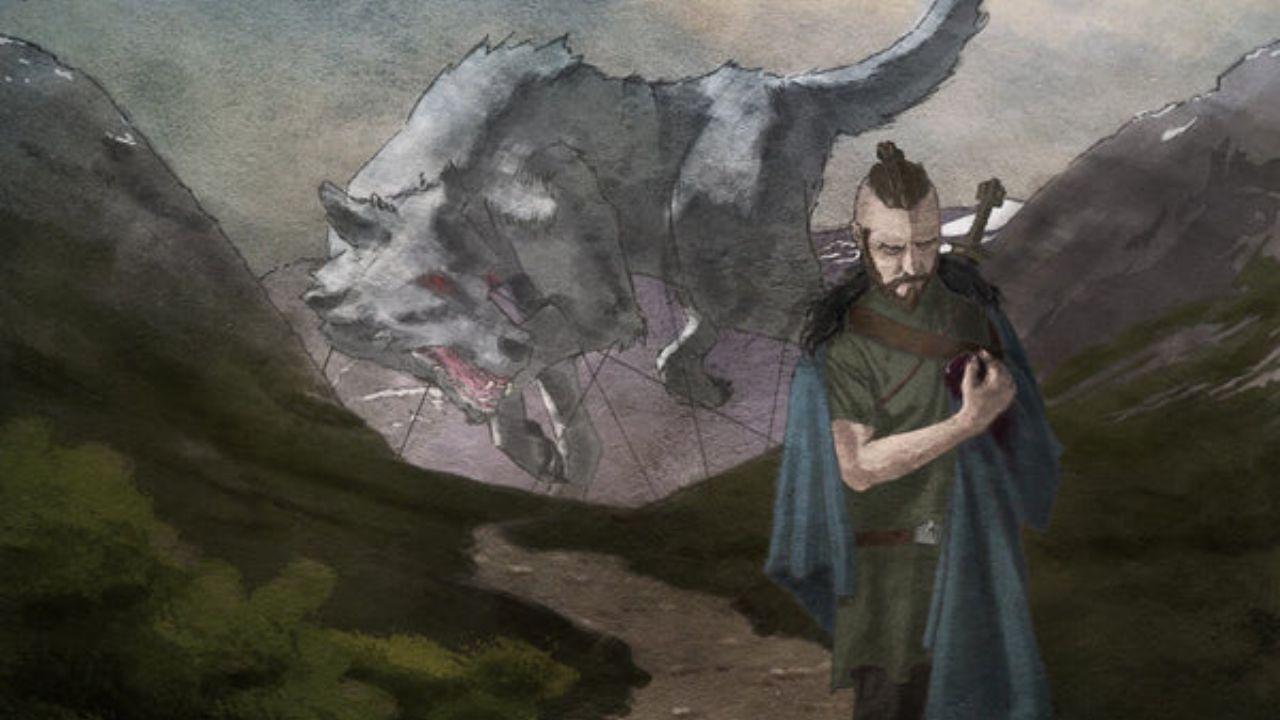
Fenrir grew at an astonishing rate. Day by day, he became larger and stronger, quickly surpassing the size of any normal wolf. His strength increased so dramatically that even the bravest gods began to feel uneasy around him. Many of them feared approaching the creature at all.
Yet one god was different. Tyr alone showed the courage to feed Fenrir and interact with him regularly. While the others kept their distance, Tyr treated the wolf with a level of calm confidence that no one else could match. Over time, this created a unique bond between them.
Fenrir came to trust Tyr more than any other god in Asgard. In many ways, Tyr was the only god the wolf believed would deal with him honestly. This trust would later play a crucial role in the events that followed.
The First Attempts to Bind Fenrir
As Fenrir continued growing larger and stronger, the gods realized their fears were becoming reality. The wolf was no longer just a potential threat. If left unchecked, he might soon become powerful enough to destroy everything around him. The gods therefore decided that the creature had to be restrained.
Their first attempt seemed straightforward. The gods forged a massive iron chain and presented it to Fenrir as a test of his strength. The wolf enjoyed demonstrating his power, so he willingly allowed the gods to wrap the chain around him.
But the moment Fenrir flexed his muscles, the chain shattered. The wolf had broken free with ease.
Unwilling to give up, the gods created an even stronger restraint. This second chain was heavier and far more durable than the first. Once again, Fenrir agreed to the challenge, confident that nothing could hold him.
Once again, he broke free without much difficulty.
These repeated failures alarmed the gods. Each attempt only confirmed that Fenrir’s strength was growing beyond their control. It became clear that ordinary materials could never contain the monstrous wolf.
The Creation of the Magical Chain Gleipnir
Realizing they needed something extraordinary, the gods turned to the dwarves, who were renowned as master craftsmen in Norse mythology. The dwarves possessed magical skills far beyond those of the gods, and they were capable of creating objects that defied ordinary logic.
The dwarves forged a magical binding called Gleipnir. Unlike the heavy iron chains used before, Gleipnir looked surprisingly delicate. It resembled a thin ribbon or strip of silk rather than a weapon designed to restrain a giant wolf. Yet despite its fragile appearance, it was stronger than any chain ever forged.
What made Gleipnir truly remarkable were the strange ingredients used in its creation. According to the myth, the ribbon was crafted from six impossible things: the sound of a cat’s footsteps, the beard of a woman, the roots of mountains, the sinews of a bear, the breath of a fish, and the spittle of birds. These mythical ingredients symbolized things that do not exist in the ordinary world.
Because these elements were impossible to obtain, the ribbon appeared harmless. But its magical nature made it completely unbreakable. With this mysterious ribbon in their possession, the gods finally believed they had found a way to restrain Fenrir permanently.
Fenrir’s Demand for Trust
When the gods presented Gleipnir to Fenrir, the wolf immediately sensed something was wrong. Unlike the heavy chains they had shown him before, this ribbon seemed far too thin to hold him. Fenrir’s instincts told him that the gods were attempting to deceive him.
Because of this suspicion, the wolf refused to allow the binding unless the gods agreed to a condition. He demanded proof that they were acting honestly.
Fenrir proposed that one of the gods place their hand inside his mouth as a pledge of good faith. If the ribbon truly proved harmless and he could break free, the wolf would release the hand without harm. But if the gods had tricked him and the ribbon could not be broken, the wolf would bite off the hand in anger.
The gods immediately understood the implication of this demand. Whoever volunteered would almost certainly lose their hand. The room fell silent as the gods realized that none of them wanted to accept such a risk.
Tyr Steps Forward
At that critical moment, Tyr stepped forward. While the other gods hesitated, the god of courage and justice made his decision quickly. He understood that the safety of the gods and the stability of the world depended on restraining Fenrir.
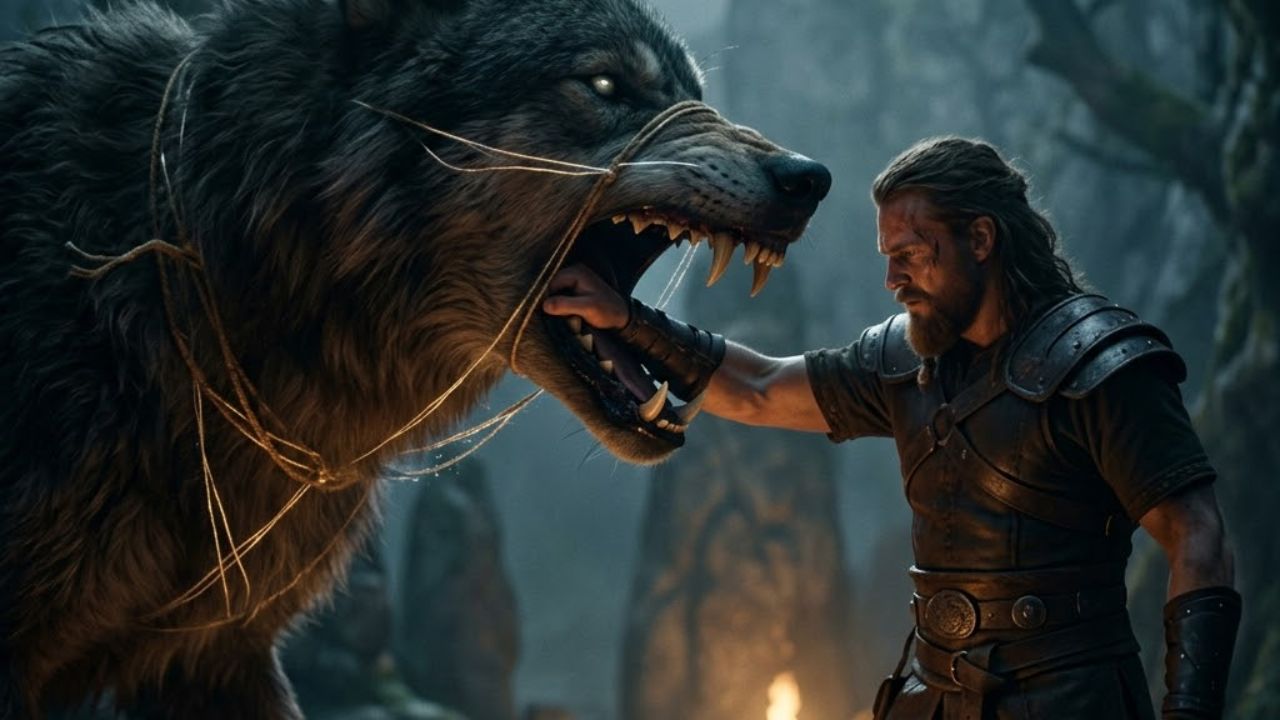
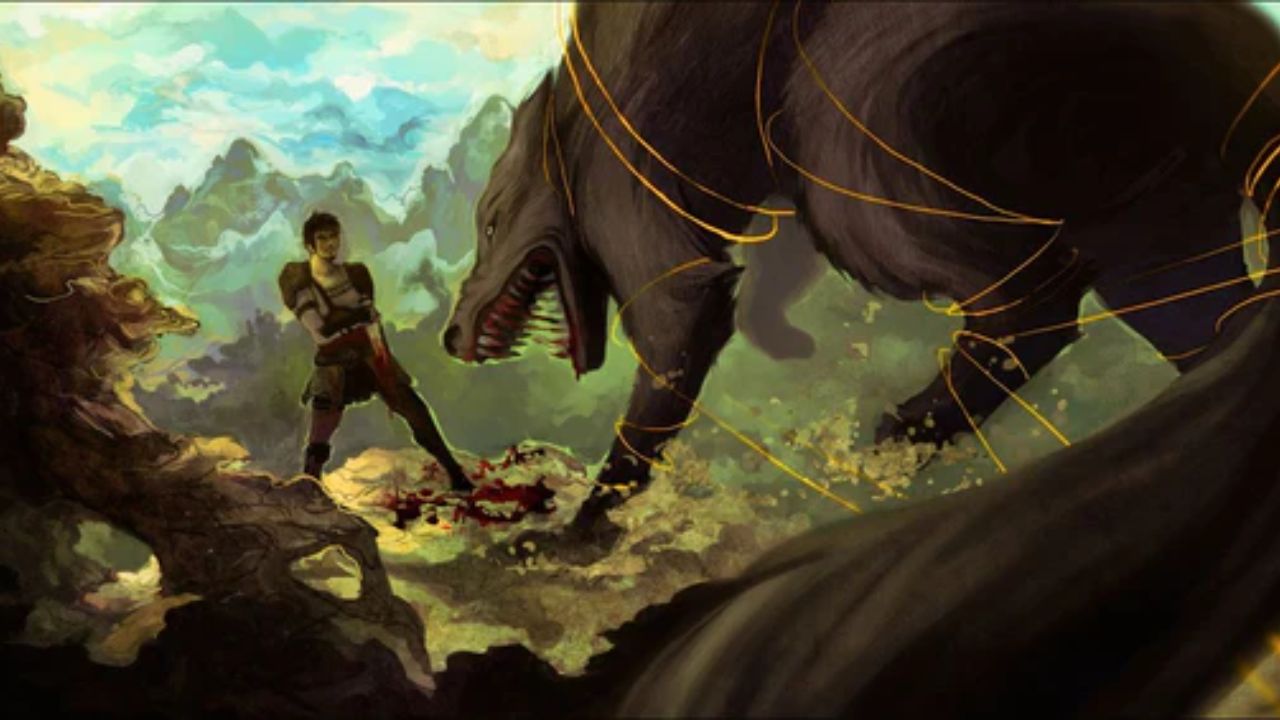
Without hesitation, Tyr placed his right hand inside the wolf’s mouth while the other gods carefully wrapped Gleipnir around Fenrir’s enormous body. It was an extraordinary act of bravery. Tyr almost certainly understood that the wolf would bite once he realized the truth.
Yet he accepted the risk without protest. For Tyr, the duty to protect the world was more important than his own safety.
The Bite That Changed Everything
Once the ribbon was secured, Fenrir attempted to break free. He twisted and strained against the magical binding, expecting it to snap like the chains before it. But the more he struggled, the tighter Gleipnir held him.
That was when the wolf understood what had happened.
Realizing that the gods had tricked him, Fenrir reacted with furious rage. His massive jaws snapped shut around Tyr’s hand, which was still inside his mouth.
With a single powerful bite, the wolf tore the hand away.
From that moment forward, Tyr became permanently one-handed. Although the gods had succeeded in binding Fenrir, their victory came at a painful cost.
The Price of Victory
In many mythological stories, heroes defeat monsters without suffering any lasting consequences. The story of Tyr and Fenrir is different. Here, the victory comes with a very real sacrifice.
Tyr’s missing hand became a permanent reminder of the price paid to restrain the wolf. While the other gods celebrated their success, Tyr bore the physical mark of the decision they had all made together.
This detail adds emotional weight to the story. It emphasizes that even divine beings must sometimes endure loss in order to protect the greater good.
The Symbolism Behind Tyr’s Sacrifice
Like many myths from ancient cultures, the story of Tyr and Fenrir contains powerful symbolism beneath the surface. The sacrifice of Tyr’s hand represents several important themes that were central to Norse culture.
One interpretation focuses on the idea that justice and leadership often require personal sacrifice. Tyr was the god associated with fairness and oaths, and by offering his hand he upheld the promise the gods had implicitly made to Fenrir.
Another layer of symbolism involves trust and betrayal. Fenrir trusted Tyr more than any other god, and in the end Tyr became the one who suffered for the gods’ deception. The story therefore reflects the complicated moral choices that sometimes arise when protecting the world from danger.
Finally, the myth celebrates courage. Tyr’s act was not the courage of a warrior charging into battle, but the courage of someone accepting a painful fate for the sake of others.
Fenrir’s Future Revenge
Although Fenrir was successfully bound, the story did not truly end there. Norse mythology is deeply shaped by the concept of fate, and the gods knew that their victory could only delay what had already been foretold.
According to prophecy, Fenrir would eventually break free during Ragnarök, the final battle that would bring the age of the gods to an end. In that apocalyptic conflict, the wolf would fulfill his destiny by killing Odin before being defeated himself.
This prophecy adds another tragic dimension to Tyr’s sacrifice. Even though the gods knew they could not prevent the final catastrophe forever, Tyr still chose to delay it for as long as possible.
His sacrifice bought the world valuable time.
Why Tyr’s Story Still Resonates Today
Even today, the story of Tyr sacrificing his hand continues to resonate with readers and audiences around the world. It stands as one of the clearest examples of selfless courage in ancient mythology.
Modern storytelling often celebrates heroes who defeat their enemies without paying a price. Tyr’s story reminds us that real heroism sometimes involves accepting loss rather than avoiding it.
His missing hand became a powerful symbol of bravery, duty, and honor—qualities that were deeply valued in Norse culture and continue to inspire people today.