
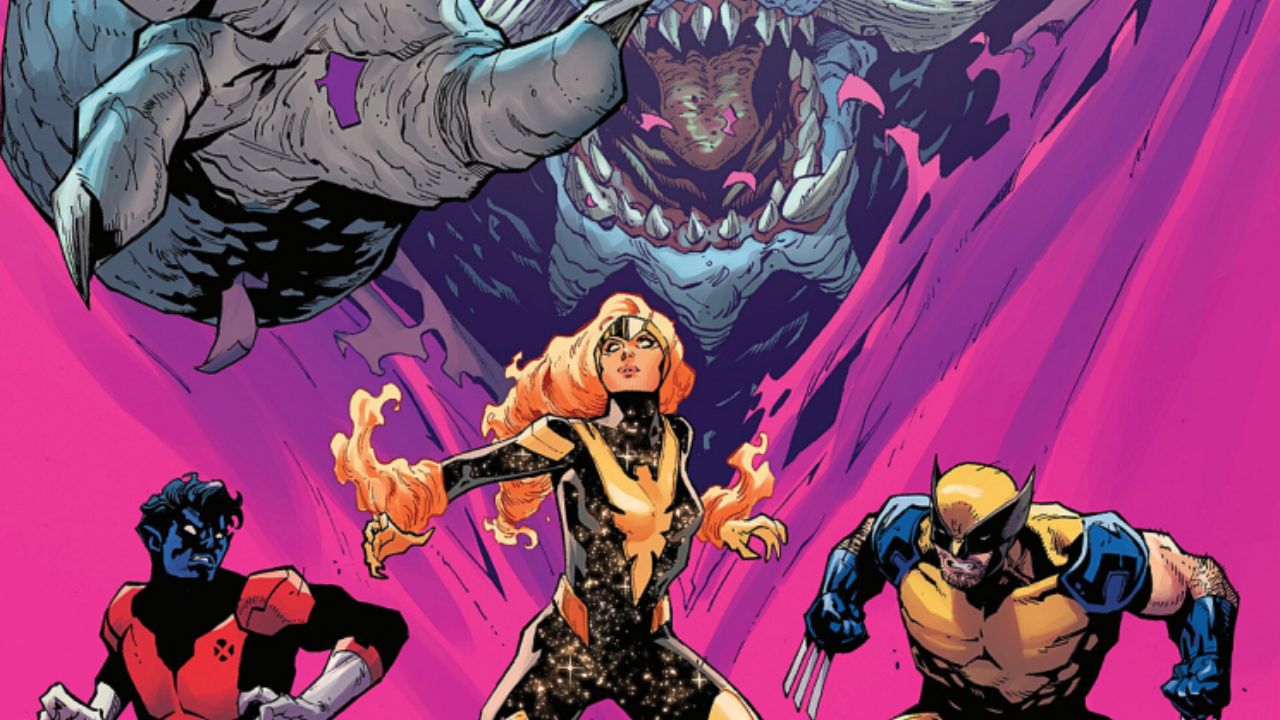
The X-Men have always been about more than just superheroics; they are a family, a sanctuary, and a bridge between two worlds. In X-Men Annual #1 (2026), written by Ryan Stegman with art by Steve Skroce, Sanford Greene, and Stegman himself, these themes are pushed to the forefront through a surreal, meta-textual lens. This issue, titled “The Creationist,” takes us to Haven House, Louisiana, the current base of operations for the Uncanny X-Men, where a routine day of “relaxing guard duty” quickly spirals into a fight for the very soul of a lost mutant.
The Disturbance at Haven House
The story begins with a familiar prologue, reminding us of the X-Men’s mission to protect a world that hates and fears them while bridging the divide between humanity and mutantkind. We find ourselves at Haven House, where Rogue is welcoming Jean Grey (Phoenix) back home from the stars. The atmosphere is initially light, with Rogue joking about Jean finally remembering her way home and Jubilee complaining about not having time to wash the mud out of her hair from a previous mission.
However, the levity is short-lived. Jean hasn’t returned just for a social visit; she has felt a “distressed psychic signal”—one that is “scared, chaotic… and nearby”. Her intuition is proven correct almost immediately when a blinding glow erupts right in front of the team, so bright it “could blind a saint”.
A Battle Against Ideas
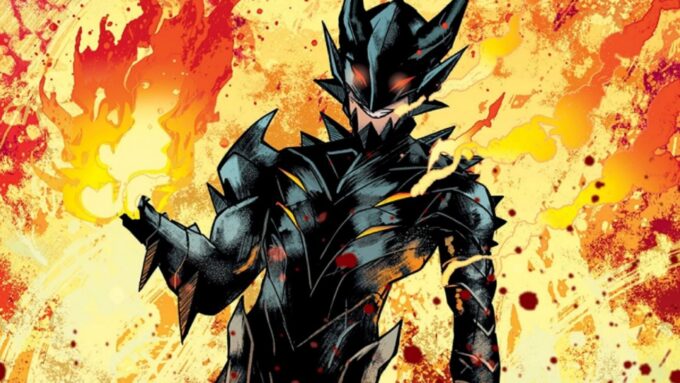
Nightcrawler and Gambit are the first to witness the anomaly: a creature made of glowing lines, looking less like a physical being and more like a raw drawing trying to manifest into reality. Jean describes it as “an idea that is trying to manifest… trying to become whole”. However, as Wolverine points out, the claws on this “idea” are starting to look “awfully real”.
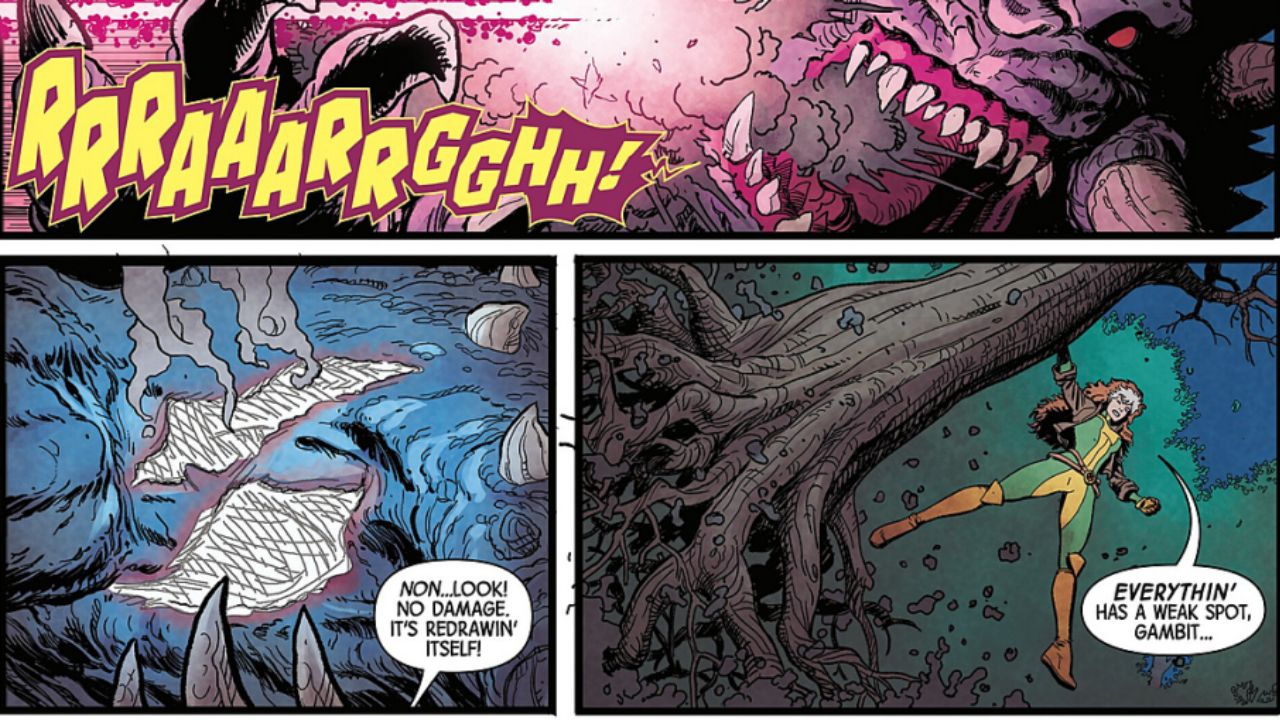
The initial skirmish sets the tone for the issue’s unique visual style. As Gambit and Logan engage the creature, they realize they aren’t fighting a typical monster. Remy notes that his attacks do no damage because the creature is “redrawing itself” in real-time. The X-Men find themselves in a battle not just against physical power, but against the very process of creation. Rogue realizes that everything has a weak spot, but before they can find it, Jean senses a mind trying to push through the energy.
The Identity of the Creationist
As the battle rages, Jean Grey reaches out telepathically to the mind behind the chaos. She identifies the entity as “The Creationist,” who claims to be seeking revenge for being “thrown away like so much trash”. Jean, with her immense Phoenix-enhanced empathy, sees through the anger. She realizes that if someone is reaching out this violently, it isn’t revenge they want—it’s attention and an audience. The Creationist admits as much, stating he wants to show the world what he is capable of making.
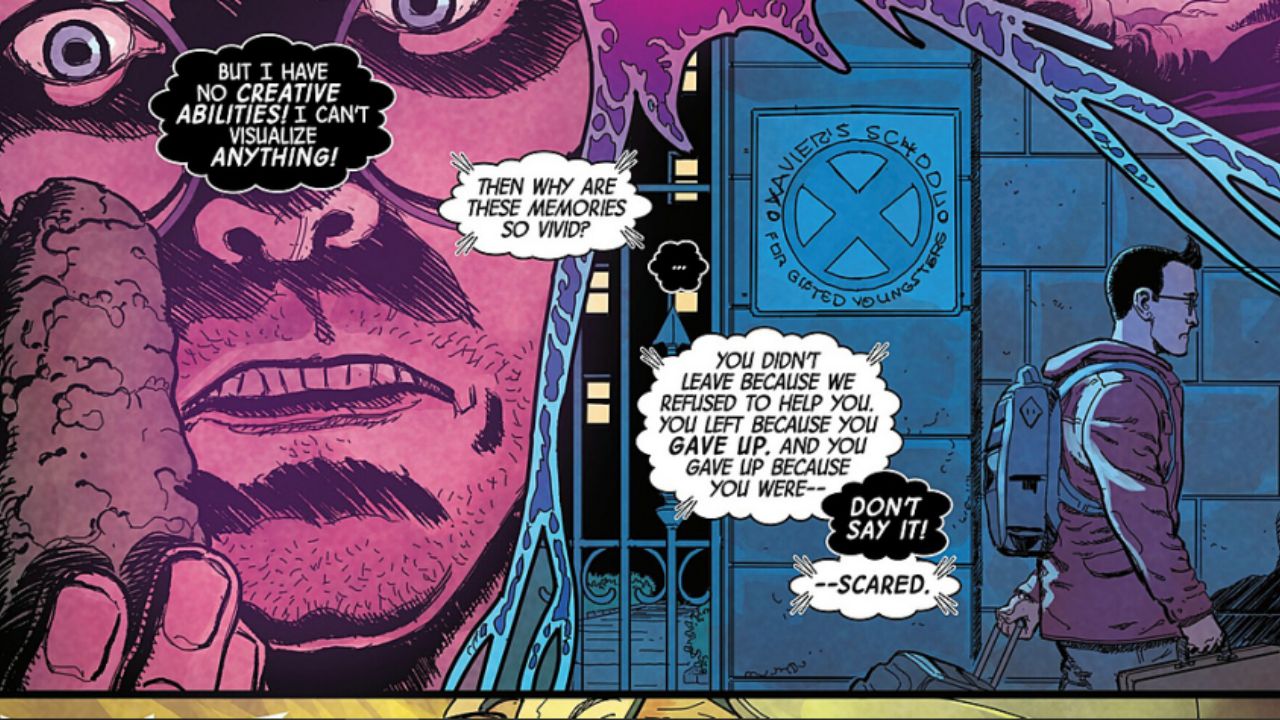
Diving deeper into the attacker’s psyche, Jean discovers a tragic history. The Creationist, revealed to be a young man named Bobby, was once a student at the Xavier Academy. Despite having the incredible ability to manifest anything he can visualize, Bobby felt like a failure because he lacked “creative abilities”—he claimed he couldn’t visualize anything on his own. He felt “broken” and “inferior,” eventually giving up on himself and leaving the school because he was scared.
The Meta-Fictional Twist
In a fascinating meta-fictional twist, Bobby isn’t manifesting these monsters through his own imagination alone. He is using a machine and two “artists”—named Ryan and Sanford (a clear nod to the comic’s real-life creators Ryan Stegman and Sanford Greene)—to do the visualization for him. He screams at them to draw “more teeth! more claws!” and to “make me see it!” because he cannot do it himself. This highlights Bobby’s dependency on others to define his reality and his power.
Journey into the Conceptual Space
Realizing that the physical battle is just a symptom of a psychological breakdown, Jean and Logan decide to enter the “conceptual space” of Bobby’s mind. As they prepare to cross the breach, Jean explains that these breaches are “two-way streets” and they must go through to find him. As they cross over, their physical forms begin to change, looking as though they were “scratched out with a pencil”. In this realm, they are no longer flesh and blood; they are ideas.
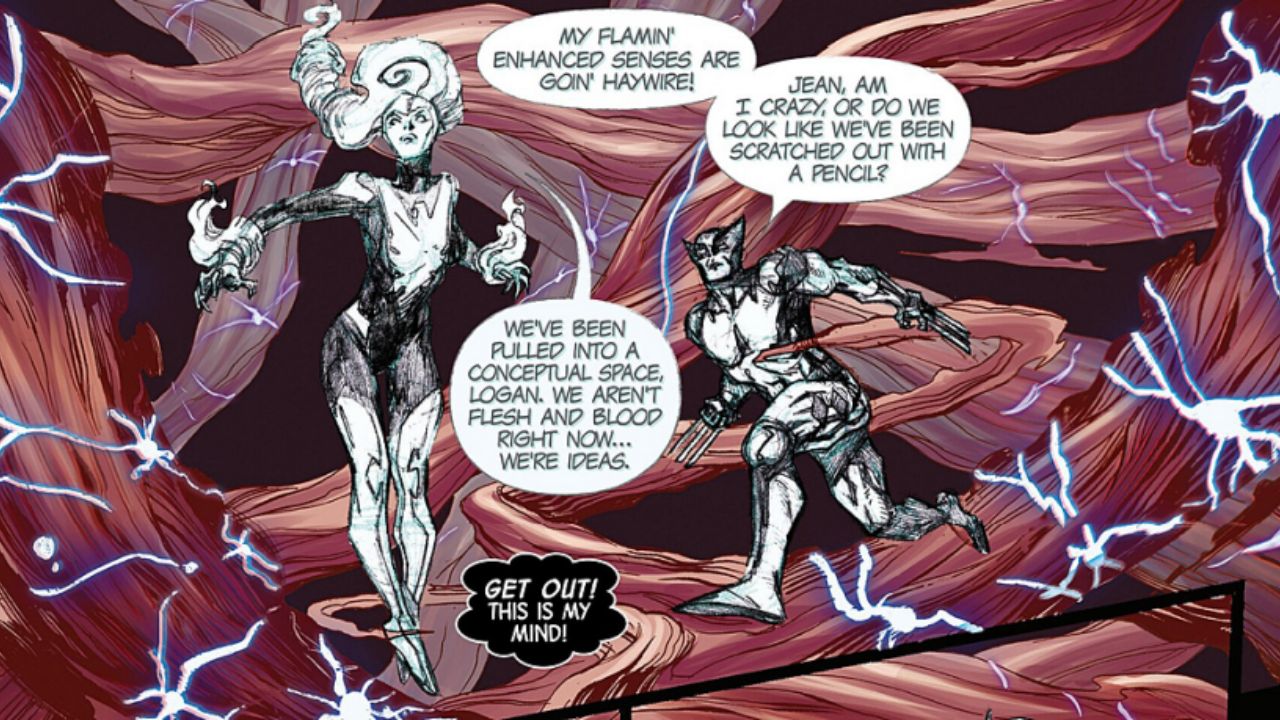
Inside Bobby’s mind, Jean finds the root of his trauma. She witnesses a memory of Bobby’s mother, who called his mutant abilities “filthy mutant tricks” and told him he was a “child of God, not a monster”. This was the moment Bobby’s imagination died, replaced by a deep-seated shame. Jean realizes that Bobby’s mind isn’t broken; it’s just “loud” and “cluttered” with the noise of his past and the static of the machine.
Holding the Line at Haven House
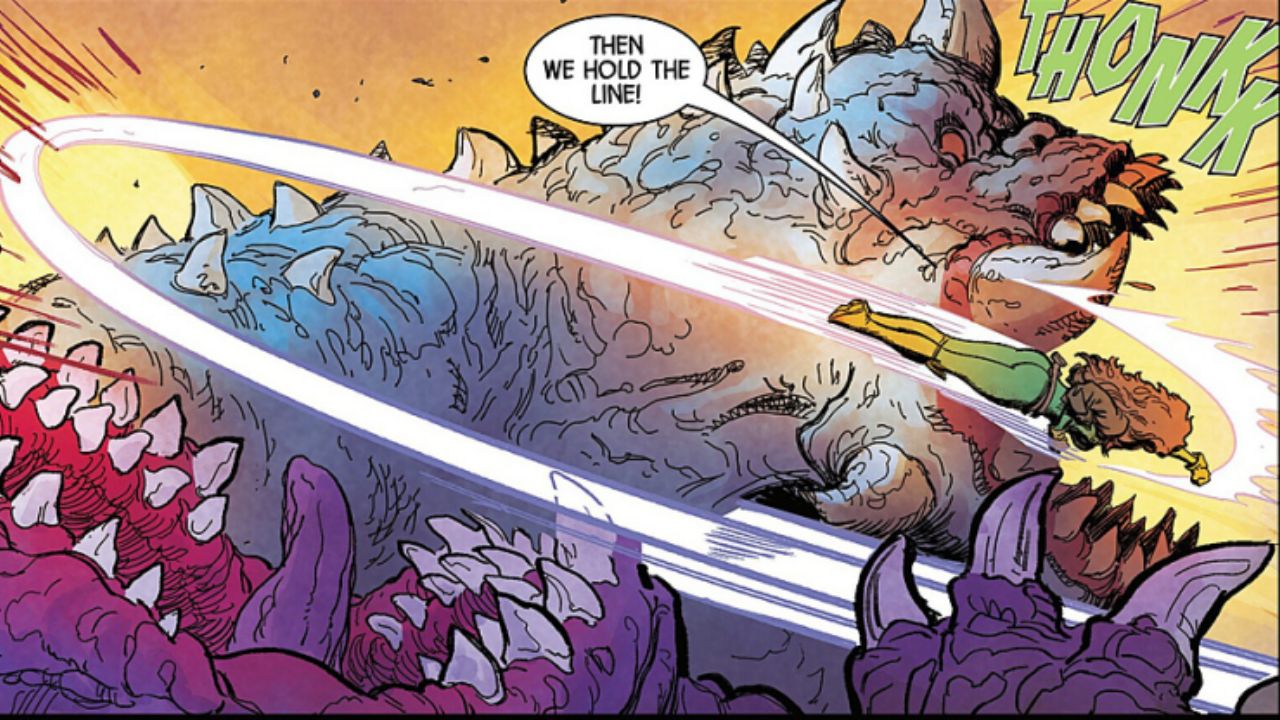
While Jean and Logan work from the inside, the rest of the X-Men—Rogue, Gambit, Nightcrawler, and Jubilee—are struggling to hold the line at Haven House. The manifestations are threatening the school, which is full of young mutants who still haven’t learned to control their powers. Rogue desperately charges her power, wanting to hit the creatures like a “fallen asteroid”. The stakes are high; if the monsters reach the house, the resulting panic could turn the whole place into a “panic bomb”.
Redemption and the Big Idea
Back in the conceptual realm, Jean and Logan confront Bobby. Logan is ready to “cut this little weaseal in half,” but Jean stops him, insisting Bobby is going to help save their friends. Jean disconnects Bobby from the machine, telling him he doesn’t need it or his kidnapped artists to be whole. “You don’t need the machine,” she says. “You need trust. Trust in yourself”. Wolverine adds his own brand of encouragement, noting that if trust fails, “there’s always pain”.
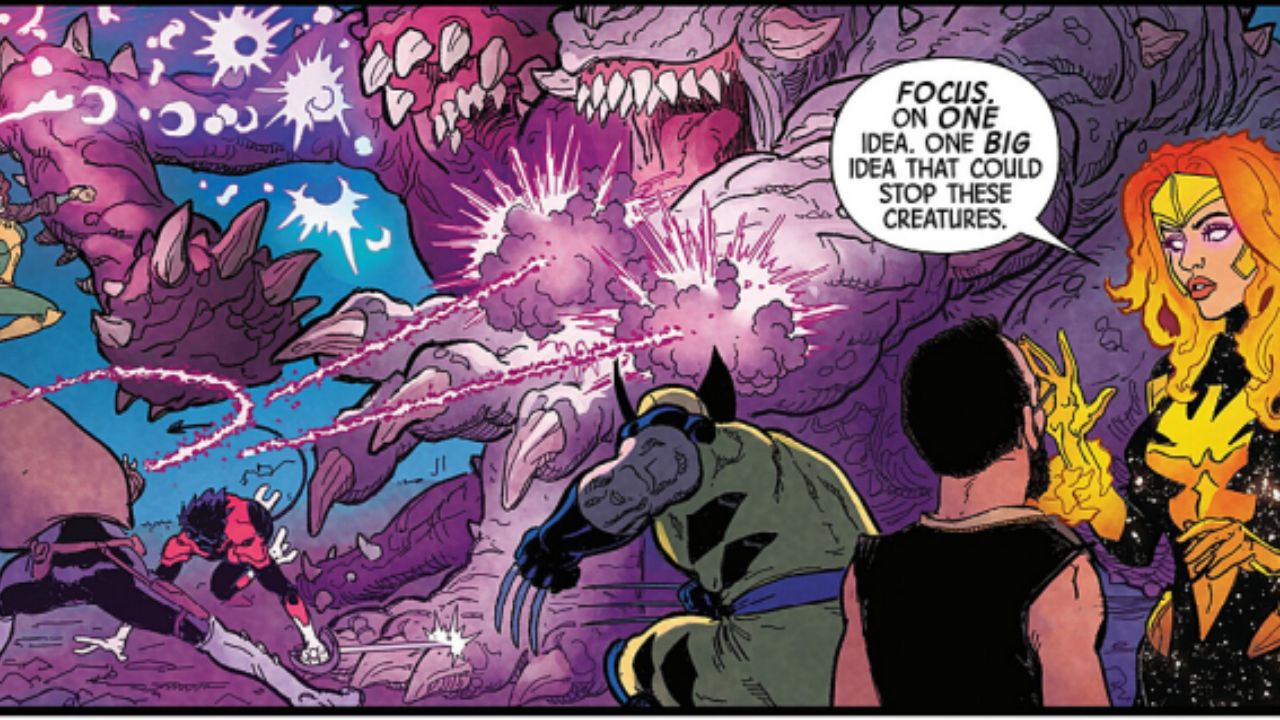
Jean calms the “noise” in Bobby’s mind, urging him to focus on one big idea that could stop the chaos. As Bobby begins to focus, he manifests a new creation—not a monster, but a hero. This figure is described as a “child’s fever dream of what a super hero looks like,” a bizarre mashup that resembles “Spider-Man crossed with… who’s that guy again?”. Despite the costume being described as “kinda mid,” the new manifestation gets the job done and starts “doin’ the job” against the creatures.
A New Beginning
The issue concludes with a powerful moment of reconciliation. The manifestations vanish, and Bobby is left standing among the X-Men at Haven House. While some, like Rogue, are still rightfully angry about the mess he made, Jean Grey stands by him. She explains that Bobby never lacked the ability to be a hero; he only lacked clarity. She reaffirms that Bobby belongs with them, just like all mutants do.
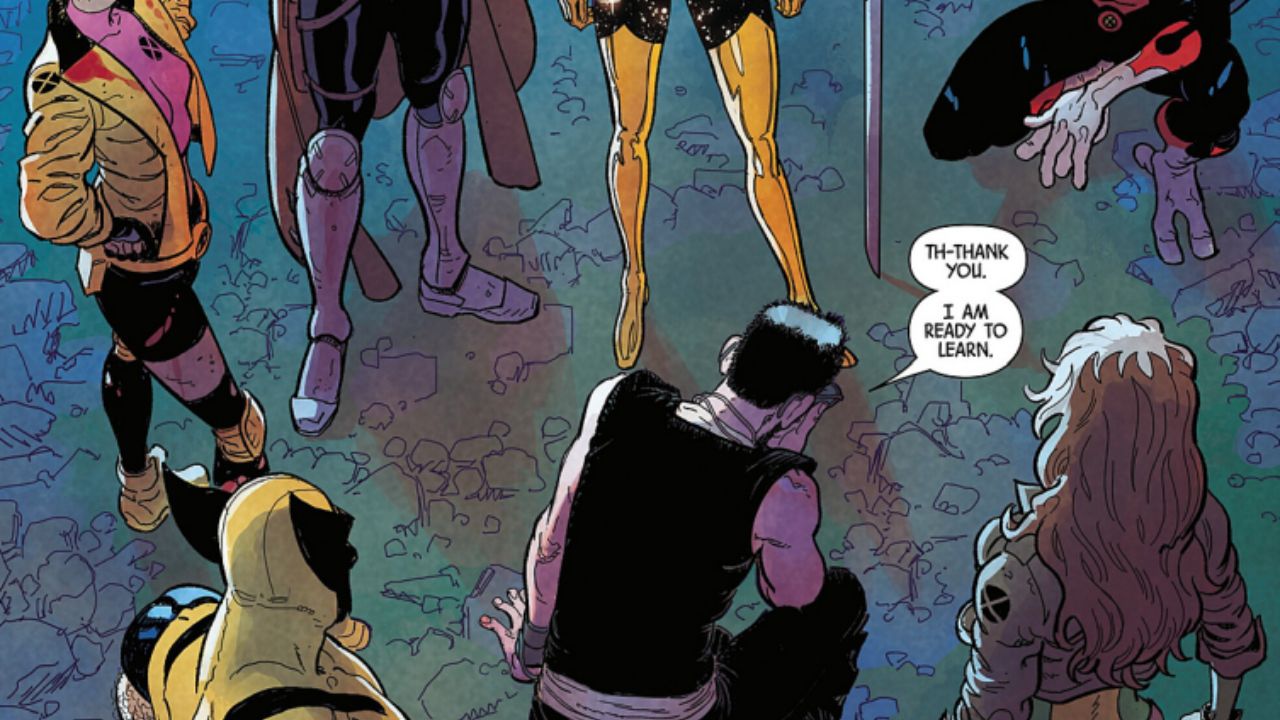
The story concludes on page 27 with a humble and hopeful Bobby looking at Jean and the team. Having finally found a place where he isn’t judged for his “noise,” he simply says: “TH-THANK YOU. I AM READY TO LEARN.”.