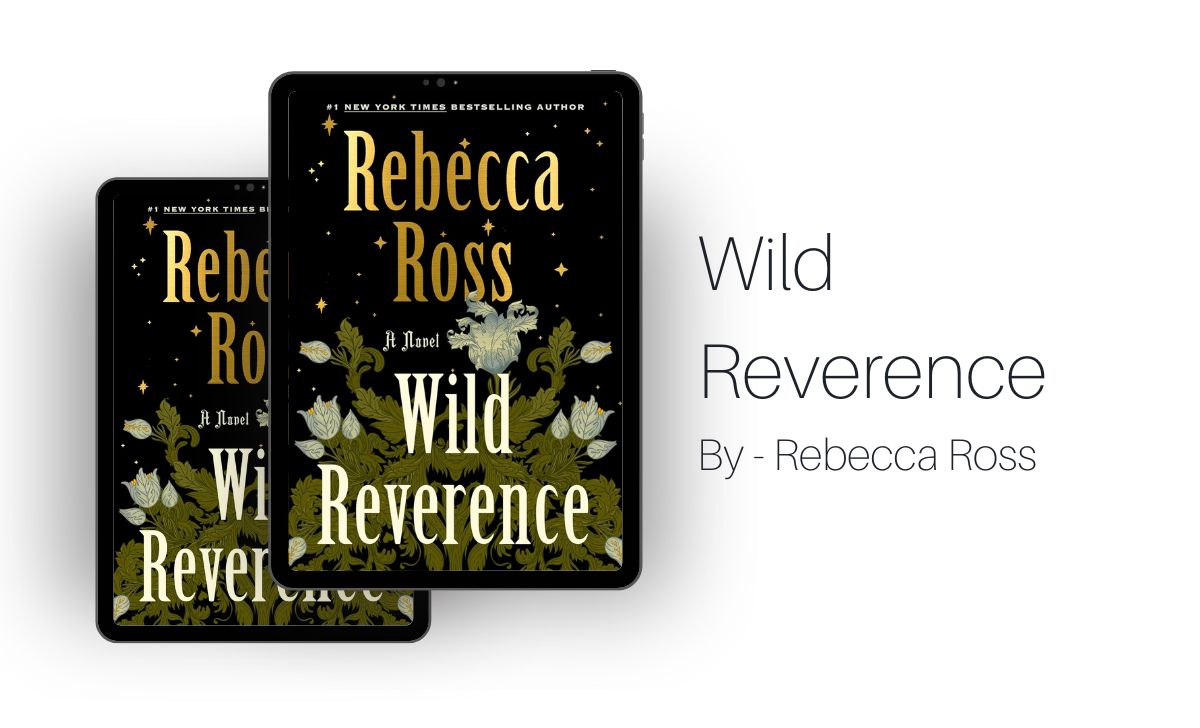
Rebecca Ross has a knack for making myth feel immediate: she writes as if a folktale had been edited on a typewriter and then set loose in modern hearts. Wild Reverence is that impulse stretched into a full-length novel — a book where godly politics, tender intimacies, and childhood promises collide across years. It’s not built from loud spectacle; its power comes from small, precise moments: a letter delivered, a dream that won’t let go, a silence that finally says too much.
What the book is (short synopsis)
At its core Wild Reverence follows Matilda, a young messenger goddess born in the under realm who can carry words and letters through multiple realms, and Vincent, a mortal boy who once dreamed of her and begged the gods for aid — a plea that went unanswered and left him hard and wary. Years later those dream-bound threads tighten when Matilda tumbles into Vincent’s world carrying a letter that promises to change both their fates. The story is set centuries before the events of Ross’s Divine Rivals duology, but it stands on its own as a mythic origin tale about choices, culpability, and what one will sacrifice for love.
Structure and pacing: a novel that breathes like a myth
Ross organizes the novel like an unfolding chant rather than a sprint. The book spans years: childhood friendship by way of dreams, separation and hardening, and then a slow reconvergence that forces both characters to reckon with what they’ve lost and what they’ve become. Fans of Ross’s lyrical scenes will recognize her slower, atmospheric build here; it’s less propulsive war narrative than it is a long, inevitable tide. That pacing will delight readers who want character work and world detail; it may frustrate readers looking for constant plot beats. Several reviewers and early readers note that the book reads more like an elegy at times — melodic, patient, and deliberately paced.
Characters: Matilda and Vincent (and why they matter)
Matilda is written as both innocent and dangerous: innocent because she is young and still forming an ethics in a savage divine world, dangerous because the secret she carries could upend entire systems. Ross does a good job of making Matilda feel mythic and vulnerable at once — someone who has messenger duties but whose interior life is rich in longing and question. Vincent is the counterpoint: human, scarred, suspicious of gods because of past betrayals. Their relationship is the engine of the book: it moves from unfathomable distance (dream-friendship) to a real-world entanglement where choices mean blood and politics. Across the book Ross balances their private tenderness with the public consequences those private acts can carry. Early readers praised both characters as emotionally real and complex.
Worldbuilding and themes: gods, letters, agency
Ross returns to the Letters of Enchantment universe and leans into its trinity of realms — skyward, mortal, underling — in a way that makes the setting feel like a character. The messenger magic that defines Matilda is an elegant device: letters and words are not just tools, they are moral currency. Thematic threads here include accountability (what gods owe mortals), the cost of neutrality, and whether love can be a force that rewrites violent systems. Several reviewers remarked that this is a prequel that enriches the larger series while offering its own stakes and revelations.
Writing style: lyrical without becoming ornate
Rebecca Ross’s sentences often read like poetry in motion: taut, image-rich, and emotionally angled. That lyricism lifts scenes into memorable set pieces — a dream sequence, a letter delivered at midnight, a confession said in half-light — but Ross resists staying in the clouds. Her prose frequently snaps back into concrete details and grim consequences, which helps the book avoid becoming indulgent. Reader reaction shows many praising the prose for being evocative and affecting; a few note that the lyrical tone creates a quieter overall energy than Ross’s wartime romance in Divine Rivals, which is an intentional stylistic choice.
Tough moments: content and emotional weight
This isn’t a light romance. The book handles violence, grief, and traumatic events that have tangible impact on characters and communities. If you’re sensitive to depictions of violence or emotional trauma, be prepared: reader notes and content summaries flag moments that are intense and consequential. Those difficult moments are used to interrogate the moral cost of power, not for shock value; still, they shape the novel’s somber tone.
What works (and why you should read it)
- Character intimacy: Ross builds a convincing bond between god and mortal that feels earned.
- Atmospheric worldbuilding: the three-realm world is rendered with enough detail to feel lived-in while keeping mystery.
- Moral stakes: the novel asks what it means to answer a prayer — and whether answers justify the cost.
What may not work for everyone
- If you prefer plot-heavy fantasy with constant action, this book’s steady, mythic pace might feel slow.
- If you want a light romance, the emotional weight and violence here will make it a heavy read.
Verdict
Wild Reverence is a thoughtfully constructed prequel that expands Rebecca Ross’s world while offering a quieter, more elegiac story about the moral price of miracles. It’s a love story and a morality play wrapped in lyrical prose: beautiful, occasionally brutal, and designed to linger. If you love character-driven romantic fantasy with a lyrical voice and don’t mind being challenged emotionally, this is a rewarding read.