
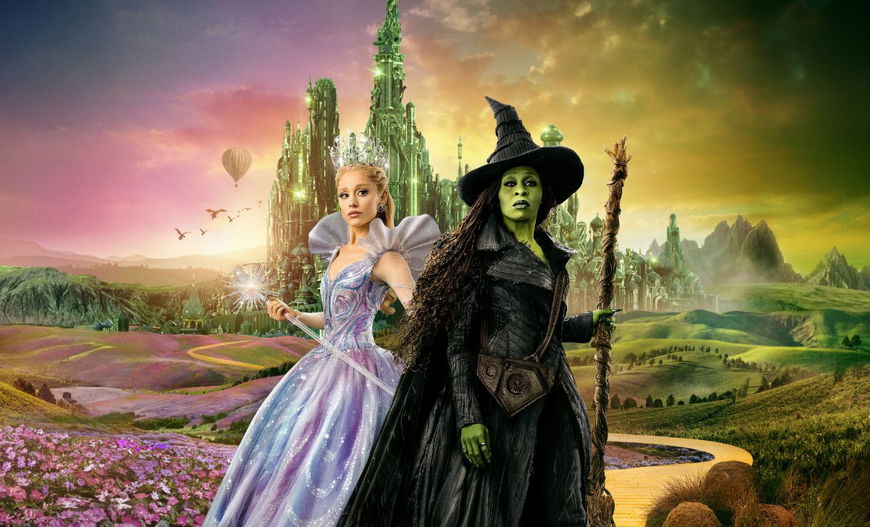
Jon M. Chu’s Wicked: For Good concludes his grand, two-part adaptation of the hit Broadway musical with flair, emotion, and a surprising amount of heart. Where Wicked: Part One introduced audiences to a lushly imagined world and redefined the Hollywood musical, For Good brings that spectacle full circle—completing Elphaba’s journey from misunderstood outcast to mythic figure, while exploring the cost of power, truth, and friendship.
Continuing directly from the last film’s soaring finale, the story opens in the aftermath of Elphaba’s (Cynthia Erivo) defiant flight from the Emerald City. Exposed as a fraud, the Wizard of Oz (Jeff Goldblum) and his devoted ally, Madame Morrible (Michelle Yeoh), have turned public opinion against her, painting her as the Wicked Witch of the West. Meanwhile, Glinda (Ariana Grande) assumes her mantle as Glinda the Good, maintaining her image through the Wizard’s illusionary technology and a carefully staged engagement to Prince Fiyero (Jonathan Bailey), now a captain tasked with capturing Elphaba. Though bound by duty and appearances, Glinda struggles with guilt and the hollow comfort of public approval—her sparkling façade concealing inner turmoil and regret.
A World on the Brink
The film plunges viewers back into Oz’s turbulent politics. Years of propaganda have convinced its citizens that Elphaba is the enemy, while animals face brutal discrimination under the Wizard’s rule. Elphaba’s rescue of abused animals forced to construct the Yellow Brick Road sets the tone early: Oz is dazzling but corrupt, a world where even magic obeys the laws of propaganda. Her rebellion, though righteous, isolates her further. In one poignant sequence, Dr. Dillamond (Peter Dinklage), a once-respected goat scholar, becomes a symbol of intellectual freedom crushed by tyranny—an allegory uncomfortably relevant to the real world.
The story also deepens the lore of Oz, revealing how the Scarecrow, the Tin Man, and even the Cowardly Lion came to be. These transformations, tragic rather than whimsical, add emotional weight and moral complexity, echoing Elphaba’s realization that every act of magic carries consequences.
Friendship and Redemption
The heart of Wicked: For Good remains the evolving relationship between Elphaba and Glinda. Their reunion ahead of Glinda’s wedding reignites the emotional core that made the first film so enthralling. Through their clashes, misunderstandings, and enduring compassion, the story examines how friendships bend under the weight of ideology and personal sacrifice. Chu gives the pair more screen time together than the Broadway show did, and it pays off—their dynamic is layered, mature, and deeply felt.
Musically, the film delivers several highlights. Erivo’s powerful “No Good Deed” captures Elphaba’s acceptance of her misunderstood fate, while Grande shines in the introspective “The Girl in the Bubble.” Their bittersweet duet “For Good” seals the emotional journey with tenderness that mirrors their real-life camaraderie, infusing the performance with genuine affection and melancholy.
A Visually Magnificent Finale
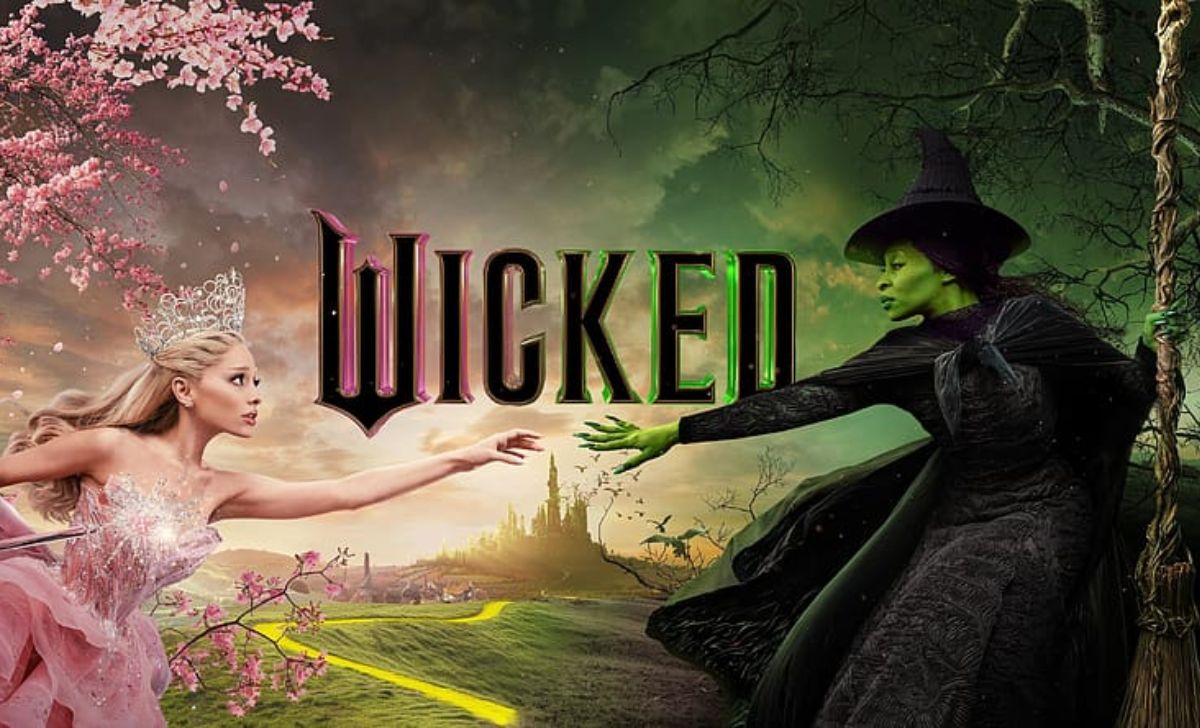
Visually, For Good pushes the boundaries of Chu’s imagination. The Emerald City returns more dazzling than ever, its art nouveau-inspired design glimmering with golds and greens. Yet, for all its spectacle, the film doesn’t shy away from showing cracks beneath the polish. Chu uses visual grandeur to contrast the emptiness of public deception—offering one of the most striking critiques of mass manipulation in modern cinema.
Still, the sequel stumbles occasionally. The pacing lags in the early sequences, and some of the new songs by Stephen Schwartz feel unnecessary. Yet, once the story refocuses on Elphaba and Glinda, momentum builds and rarely falters. By the time the two witches face their final reckoning, the film finds its rhythm again—propelled by sincerity, emotion, and timeless themes.
The Legacy of “Wicked: For Good”
Ultimately, Wicked: For Good doesn’t just conclude a story—it reframes a legend. The narrative’s commentary on truth, perception, and moral complexity feels timely, while the central message endures: friendship and compassion outlast even the darkest reputations. Though it introduces a few uneven choices near the end, Chu’s direction and the leads’ powerhouse performances make the finale deeply satisfying.
Taken together, Wicked and For Good form one continuous, emotionally resonant epic. Five hours of magic, heartbreak, and restoration later, Oz has never felt more alive—or more human.