
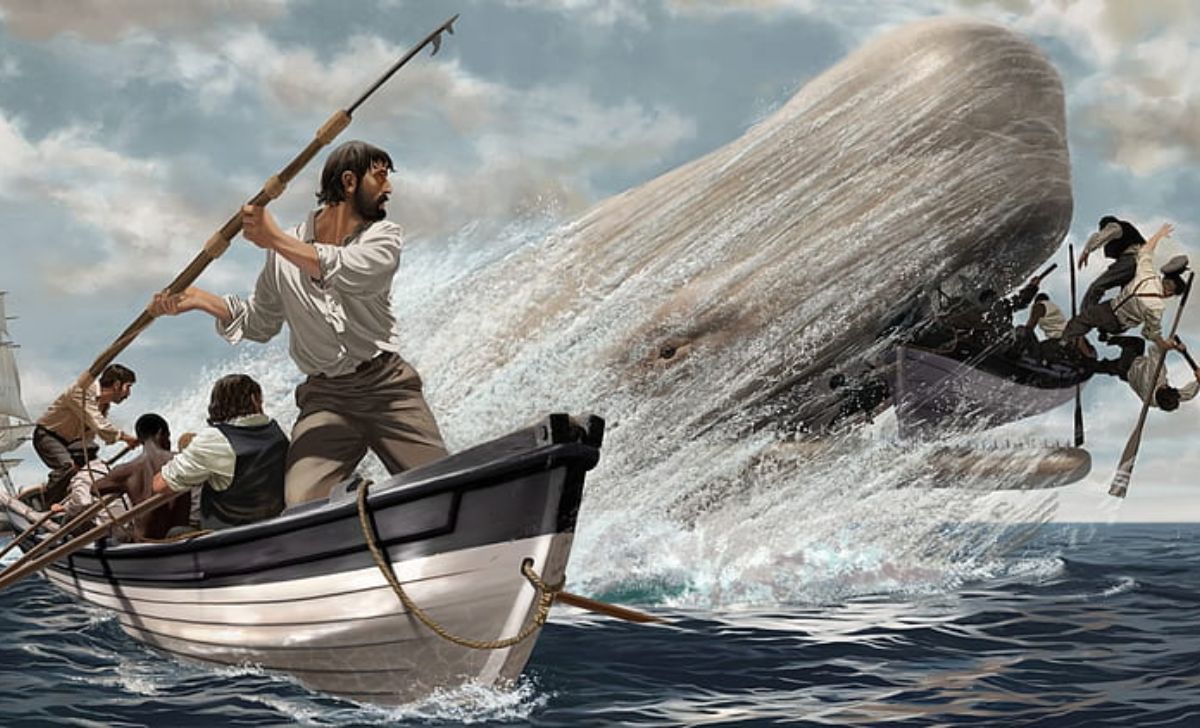
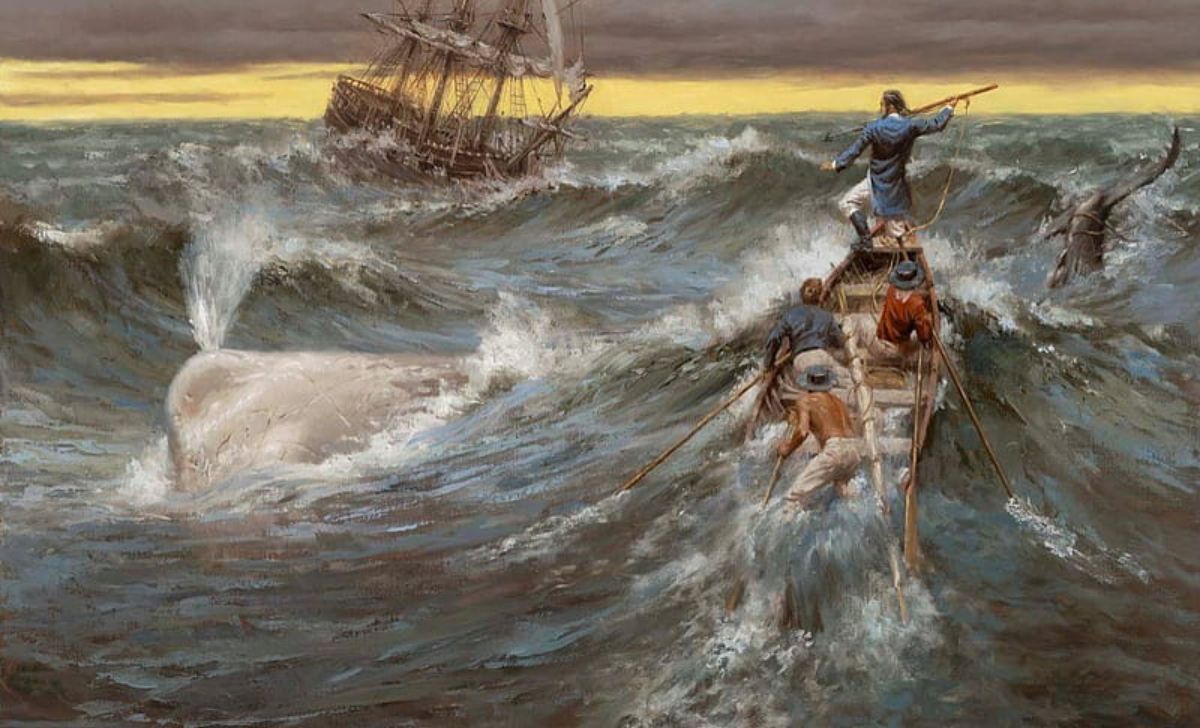
Few novels in history have managed to be as ambitious, complex, and daring as Herman Melville’s Moby Dick. At first glance, it seems like a simple story: Captain Ahab’s relentless pursuit of the great white whale that cost him his leg. But step inside its pages, and you’ll quickly discover that it’s not merely a tale of revenge at sea. Instead, Moby Dick becomes a sweeping meditation on life, death, knowledge, obsession, and humanity itself. So, why should you read Moby Dick today, more than 170 years after its publication? Let’s dive into the reasons.
More Than Just a Whaling Adventure
Yes, the book has pirates, storms, giant squids, and high-speed chases across the ocean. But don’t expect a typical swashbuckling seafaring tale. Melville’s novel is less about action and more about reflection. Through the eyes of Ishmael, the sailor-narrator, readers are guided into a multilayered exploration of human existence.
Ishmael doesn’t just tell us about life aboard the Pequod; he muses on philosophy, religion, history, and science. He invites us to pause and look at the world’s grand mysteries—even in the smallest details of whaling life.
Ishmael: The Restless Guide
Ishmael begins as an ordinary sailor, fleeing the “damp and drizzly November” in his soul. But once he joins Ahab’s crew and bonds with Queequeg, he transforms into something more—a wandering philosopher who narrates not just the journey of the Pequod, but of the universe itself.
While Ahab obsesses over revenge and Starbuck, the first mate, tries to reason with him, Ishmael offers a wider perspective. He asks us to think about life’s biggest questions: What drives us? What binds us? And what dangers—like tangled whaling lines—are always waiting to ensnare us?
Melville’s Restless Curiosity
Melville himself was no ivory-tower author. He lived the harsh life of a sailor, enduring grueling voyages across the globe. That firsthand experience pulses through the novel, from the vivid descriptions of whale hunts to the weary camaraderie among sailors.
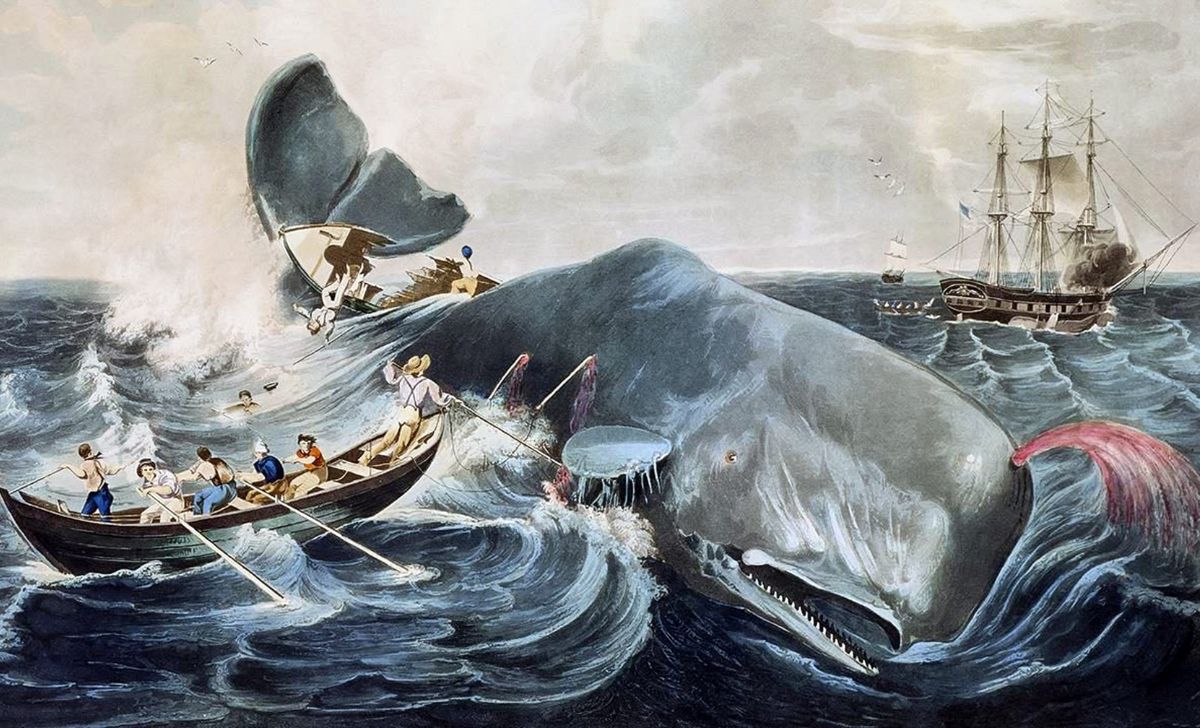
But Melville didn’t just write about the romance of the sea. He also confronted the brutality of whaling. In one striking passage, he imagines the terror of whales glimpsing the shadows of ships above them. For a book published in 1851, when the whaling industry was booming, this perspective was shockingly ahead of its time.
A Treasure Chest of Knowledge
What makes Moby Dick unforgettable is how it blends adventure with encyclopedic curiosity. One moment, you’re reading about the anatomy of a whale’s head. The next, you’re reflecting on Plato, economics, mythology, or law.
Even the strangest chapters—like the one comparing a whale’s head to midwifery—turn into rewarding meditations. Ishmael’s digressions on religion, gastronomy, zoology, and philosophy transform the novel into a tapestry of human thought.
Experimentation with Form and Style
Melville refused to be confined by traditional storytelling. Some chapters read like Shakespearean monologues, full of fire and grandeur—like Ahab’s thunderous challenge to the whale: “From hell’s heart I stab at thee!”
Others shift into unexpected formats. One chapter plays out like a script, with the crew speaking in chorus, their diverse voices—African, Spanish, Tahitian, Chinese, Portuguese—echoing the cultural melting pot of 19th-century whaling. Another turns into an epic poem about pouring whale oil in the storm-tossed night.
This unpredictability keeps the reader off balance, reminding us that the novel is as wild and uncontainable as the sea itself.
Themes That Still Resonate
What’s remarkable about Moby Dick is its sheer range. Readers have found religious allegory, existential dread, political commentary, satire of American industry, and even reflections on race and imperialism.
At its heart, though, the novel is about the human condition. Ahab chases the whale, Ishmael chases meaning, and we—through them—are reminded of the eternal tug between curiosity and fear, hope and despair, certainty and doubt.
A Leap into the Unknown
To read Moby Dick is to embark on a journey that defies simple categorization. It’s part adventure story, part encyclopedia, part philosophy text, and part poem. It asks you to slow down, wrestle with its digressions, and open yourself to discovery.
Like Ishmael, you’ll find yourself confronting the “ungraspable phantom of life”—those elusive truths that keep us questioning, searching, and wondering.
Final Thoughts
Why should you read Moby Dick? Because it’s not just a novel; it’s an experience. It challenges you, frustrates you, surprises you, and ultimately rewards you with insights that are just as relevant now as they were in 1851.
Whether you approach it for its philosophy, its history, its literary daring, or its unforgettable characters, Moby Dick offers something for everyone willing to set sail.
So grab the book, climb aboard the Pequod, and let Melville take you on the greatest voyage in American literature.