
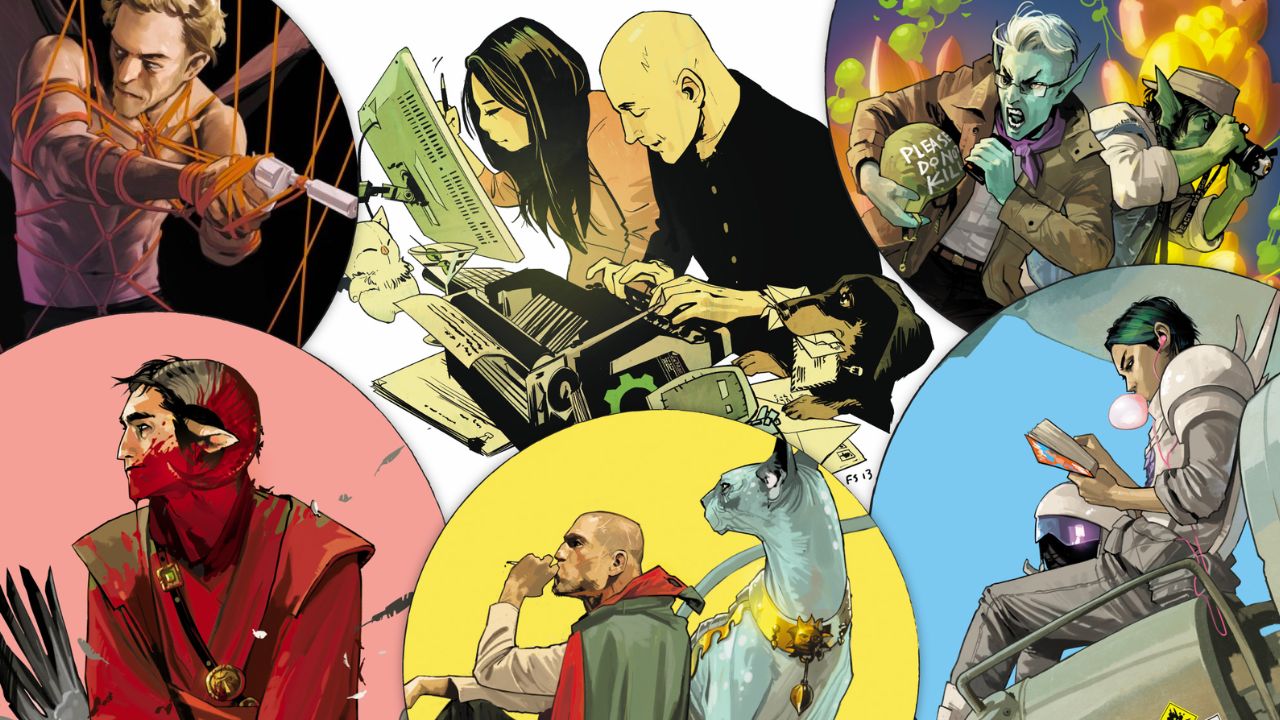
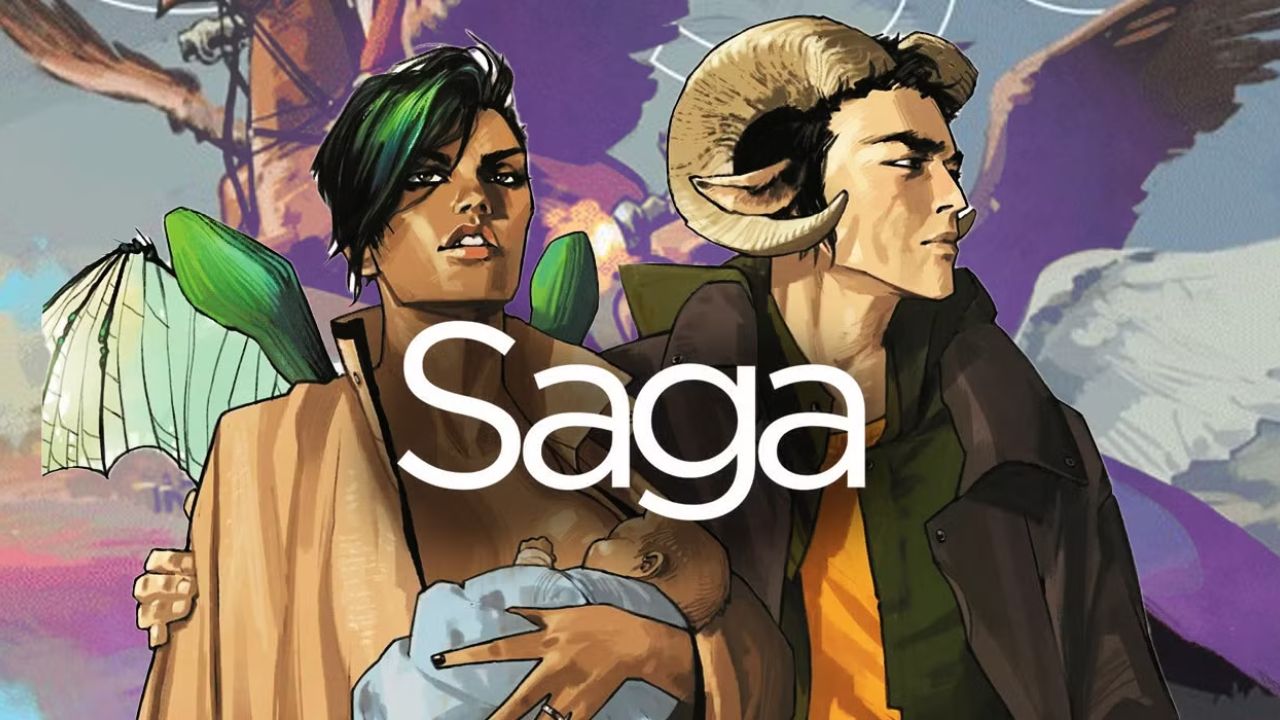
The global comic book landscape in 2026 represents a sector of profound economic expansion and creative diversification. With the total market value estimated at 18.63 billion and a projected growth trajectory reaching 27.01 billion by 2034, the industry is navigating a pivotal era of maturation. Within this framework, the distinction between mainstream and independent publishing has blurred, yet the prestige of creator-owned intellectual property remains the primary indicator of artistic and commercial success. At the center of this cultural phenomenon is Saga, the epic space opera written by Brian K. Vaughan and illustrated by Fiona Staples. As the saga series approaches its anticipated return in 2026 with issue #73, its status as the definitive “king” of the indie market remains unchallenged. This dominance is not merely a byproduct of historical momentum but is rooted in a sophisticated architecture of narrative planning, visual consistency, and a unique business model that prioritizes long-term brand equity over short-term publishing frequency.
The Macroeconomic Context of Independent Comics in 2026
To understand the continued supremacy of Saga, it is essential to analyze the broader comic book market dynamics. By 2026, the physical comic segment continues to account for approximately 63.42% of the global market share, bolstered by an increase in subscription-based models and high-profile comic events. The independent sector, led by publishers like Image Comics, BOOM! Studios, and Skybound Entertainment, has seen a compound annual growth rate (CAGR) of 4.75%, driven largely by the expansion of global licensing and creator-led storytelling.
Despite the rising costs of printing and logistics—often exacerbated by geopolitical instability and tariffs—the demand for premium formats remains robust. Saga has capitalized on these trends by maintaining a presence in diverse distribution channels, from local comic shops to mainstream bookstores. The bookstore segment, which captures nearly 39.05% of the market, has become a primary driver for Saga sales through its trade paperbacks and specialized “commuter-sized” or 6×9 young adult editions.
Global Comic Book Market Projections and Share (2025–2026)
| Metric | 2025 Value (Est.) | 2026 Projected Value | Key Driver |
| Global Market Size | 17.69 Billion | 18.63% Billion | Creator-led content expansion |
| Physical Segment Share | 62.15% | 63.42% | Event-driven consumption |
| Bookstore Channel Share | 38.20% | 29.05% | Diverse reader demographics |
| Independent CAGR | 4.50% | 4.75% | Transmedia collaborations |
Narrative Architecture: The 108-Issue Strategic Roadmap
One of the most significant factors contributing to the longevity of Saga is its transparent and finite structural plan. Brian K. Vaughan has consistently messaged a final destination of 108 issues, a goal reiterated during his 2025 New York Comic Con (NYCC) updates. This 18-volume roadmap serves as a contract with the readership, distinguishing the series from the “infinite” narratives typical of superhero franchises. By early 2026, Vaughan confirmed the completion of a detailed overview for the remaining 48 issues, ensuring that the thematic conclusion remains cohesive even as production timelines fluctuate.
The completion of issue #72 in March 2025 marked the end of the “Circus Arc,” a narrative cycle that functioned as a pivotal bridge between the series’ midpoint and its final descent. This structural discipline allows the creative team to manage the maturation of their central protagonist, Hazel, in a way that feels organic rather than reactive. The commitment to a specific endpoint has turned Saga into a “life’s work” for its creators, a sentiment that resonates with a fan base that views the comic as a generational milestone.
Saga’s Structural Milestones and Projections
| Issue Range | Volume Designation | Major Narrative Phase | Publication Status (as of 2026) |
| 1–54 | Volumes 1–9 | The Origin and Expansion | Completed / Hiatus |
| 55–72 | Volumes 10–12 | The Post-Hiatus Reorientation | Completed (March 2025) |
| 73–90 | Volumes 13–15 | The Final Conflict Setup | Production (2026) |
| 91–108 | Volumes 16–18 | The Conclusion / Hazel’s Adulthood | Outlined / Future |
Character Evolution as a Metric of Success
The “King” status of Saga is inherently tied to its ability to evolve its characters beyond their initial archetypes. In 2026, the series is no longer defined solely by the romance of Alana and Marko but by the survival and moral development of their children.
The Maturation of Hazel
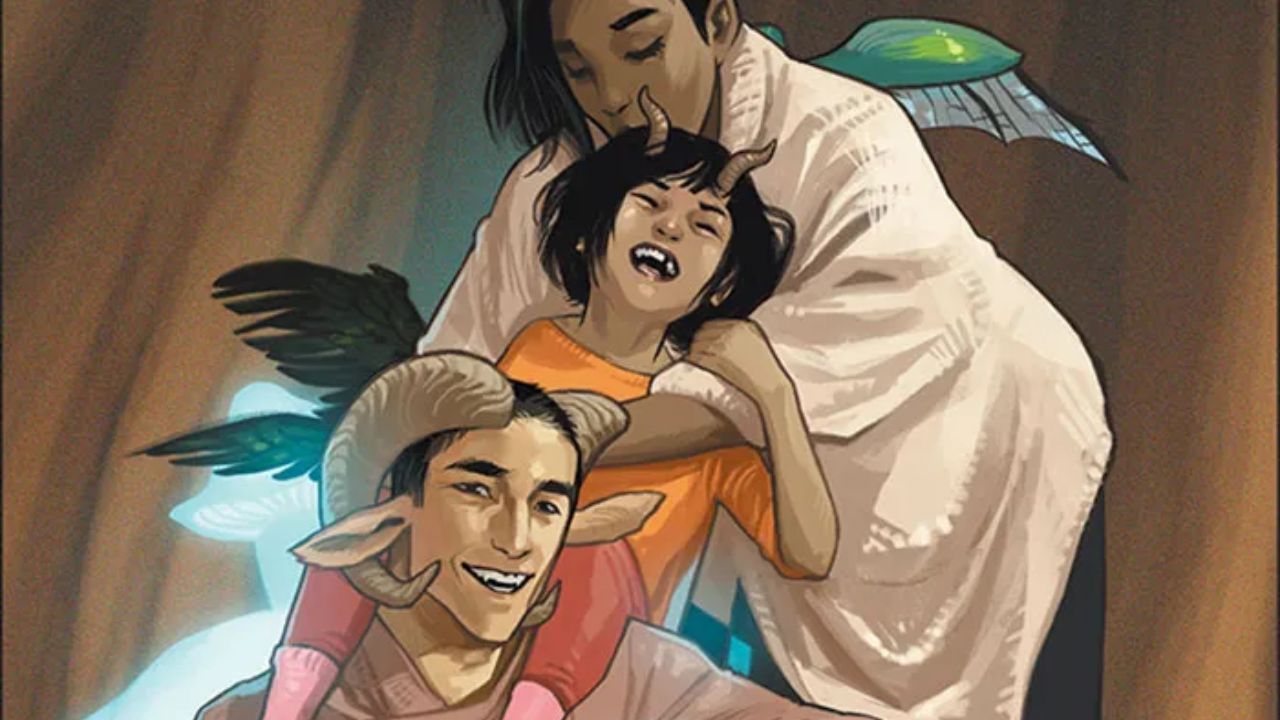
Hazel has transitioned from an infant narrator to a 14-year-old protagonist with significant agency. In the most recent arc (Issues 67–72), she is depicted as kind but assertive, managing a role within a traveling space circus while navigating the complexities of adolescence. Her hybrid nature—combining the wings of Landfall with the horns of Wreath—is no longer just a plot device for concealment but a visual representation of her burgeoning powers, including shielding spells and elemental magic. The 2026 return in issue #73 is teased as her “most life-changing adventure yet,” potentially moving her closer to the young adulthood promised by the 18-volume plan.
The Traumatic Arc of Squire
Squire, often referred to as “Brobot,” serves as the series’ most profound exploration of narrative trauma. By issue #72, his character arc has become a focal point of discussion due to his intense guilt following an act of violence in previous chapters. His reliance on VR technology as an escapist mechanism reflects contemporary anxieties regarding digital detachment and youth mental health. The decision by Alana to send him to a specialized camp, “Windy Tooth,” highlights the series’ commitment to realistic parenting dynamics within a fantastical setting, as she acknowledges his need for interaction with his own species to heal.
Alana and the Weight of Widowhood
Alana’s development in the 2024–2025 issues has been characterized by the lingering trauma of losing Marko. The use of a “Heartbreaker”—a device that allows a user to relive memories—to revisit the moment of his death illustrates the series’ refusal to allow characters easy emotional resolution. This narrative choice reinforces the series’ central theme that violence has long-term, non-linear ramifications, a perspective that distinguishes it from more escapist sci-fi ventures.
Artistic Continuity and Visual Innovation
Fiona Staples remains the singular artistic voice behind Saga, a fact that remains a cornerstone of its market dominance in 2026. Her technique—blending traditional inking for characters with cel-shaded or painted backgrounds—creates a visual clarity that is essential for a series with such high densities of “weirdness”.
The absence of variant covers, while common in the industry to drive sales, is a point of pride for Saga. Vaughan noted during NYCC 2025 that the series avoids variants to preserve the integrity of the work, making the inclusion of guest art in the upcoming Deluxe Edition Hardcover, Volume 4—featuring contributions from Niko Henrichon and Zoe Thorogood—a rare and significant event for collectors. This strategy positions the comic as a prestige object rather than a speculative asset, although the back-issue market for Saga #1 remains robust, with high-grade CGC copies (9.8) maintaining significant value into 2026.
Comparative Analysis of the 2026 Indie Market
To maintain its “King” status, Saga must contend with a competitive field that has adopted its creator-owned model but applied it to different genres and formats.
The Energon Universe and the Nostalgia Factor
Skybound’s Energon Universe, featuring Transformers and G.I. Joe, has become a major commercial force. In March 2026, Transformers #30 and G.I. Joe #20 are expected to dominate the sales charts, particularly with the “first-ever on-page meeting between Duke and Optimus Prime”. While these titles utilize top-tier creators like Robert Kirkman and Daniel Warren Johnson, they rely heavily on established IP and nostalgia-driven crossovers. Saga maintains its edge by offering a wholly original mythology that lacks the “reboot” baggage of legacy franchises.
Something is Killing the Children and the Horror Boom
James Tynion IV and Werther Dell’Edera’s Something is Killing the Children (SIKTC) is arguably Saga‘s closest rival for the crown of “Gold Standard” ongoing series. By late 2026, the series will release its tenth volume, reaching a “shattering conclusion” to its current origin arc. With a film and television deal at Blumhouse and a commitment to a 100-issue run, SIKTC has successfully emulated the Saga model of long-term planning and world-building. However, Saga retains a broader demographic reach due to its “Trojan Horse” domesticity—using space opera to discuss universal themes of parenthood—whereas SIKTC remains more localized in the horror and thriller genres.
The Rise of “Absolute” and “Ultimate” Prestige Lines
In 2025 and 2026, the “Big Two” (Marvel and DC) have attempted to reclaim the indie aesthetic through prestige imprints. DC’s Absolute Universe, particularly titles like Absolute Batman and Absolute Wonder Woman, has seen immense success by reimagining core heroes with creator-owned sensibilities. Kelly Thompson and Hayden Sherman’s Absolute Wonder Woman won several “Best of” awards in 2025, challenging the notion that high-concept storytelling is exclusive to independent houses. Saga maintains its distinction by being truly owner-managed, where the lack of corporate oversight allows for the “dragon penises” and “sex scenes” that continue to provoke and engage a mature audience.
Comparative Analysis of Key Indie Competitors (2026)
| Series | Publisher | Core Appeal | Key 2026 Milestone |
| Saga | Image Comics | Original mythology / Domestic drama | Return with Issue #73 |
| Energon Universe | Skybound | High-stakes crossover / 80s nostalgia | Duke vs. Optimus Prime |
| SIKTC | BOOM! Studios | Horror / High-frequency spin-offs | Volume 10 / Blumhouse deal |
| Absolute Universe | DC Comics | Deconstructed superhero / Premium art | Expansion of the Absolute line |
The Business of the Hiatus: A Sustainable Model
The “hiatus” has become an integral part of the Saga business model. While long gaps—such as the one following issue #72 in March 2025—can lead to “consternation” among fans, they are essential for maintaining the series’ high quality. Brian K. Vaughan and Fiona Staples use these breaks to pursue “top-secret comic projects,” which they claim enrich their work on Saga.
This model has proven financially viable through a robust backlist. Image Comics’ strategy of releasing diverse editions—from deluxe hardcovers to “YA-style” books—ensures that the series continues to generate revenue even when new issues are not shipping. The 2024 Hugo Award for Volume 11 further solidified this status, proving that the series maintains critical momentum during its off-cycles.
Saga Collected Edition Releases (2024–2026)
| Title | Release Date | Format | Contents |
| Saga Vol. 1: New Edition | Sept 2024 | 6×9 Paperback | Issues #1–6 |
| Saga TP, Vol. 12 | April 2025 | Trade Paperback | Issues #67–72 |
| Saga TP New Edition, Vol. 3 | Oct 2025 | 6×9 Paperback | Ongoing YA rebranding |
| Saga DLX Ed HC, Vol. 4 | April 2026 | Oversized Hardcover | Issues #55–72 |
The “Trojan Horse”: Philosophical and Political Relevance
The enduring relevance of Saga in 2026 is also a product of its thematic complexity. Vaughan has often noted that the series is a vehicle to talk about the “fears and joys of parenthood,” a topic he felt was otherwise “boring” unless wrapped in sci-fi trappings. This “Trojan Horse” approach allows the series to tackle heavy themes like genocide, miscarriage, and drug addiction while maintaining the pace of an adventure story.
Furthermore, the series’ depiction of war—not as a noble struggle but as an “endless galactic” nuisance that people want “out of”—continues to resonate in a 2026 geopolitical climate defined by prolonged conflicts and economic strain. The relationship between Landfall and Wreath remains a complex allegory for real-world monarchies and power dynamics, avoiding the standard “good vs. evil” binary of traditional sci-fi.
The Road Ahead: Issues 73 to 108
The announcement that all scripts for the next arc have been written and a detailed plan for the final 48 issues is in place suggests a team that is energized rather than fatigued. The upcoming landmark 75th issue is touted as a “personal high point” for the creators, promising surprises that even Staples did not see coming.
The 2026 market will see Saga return alongside other high-profile Image releases, such as the Youngblood #100 anniversary and the relaunch of Head Lopper. However, the “special event” status of a new Saga chapter remains unique. While titles like Transformers or Absolute Batman may ship more frequently, the “quiet interlude” of a Staples-drawn page and the “humanized” narrative of a Vaughan script continue to define what “King” means in the independent space.
Conclusion
The supremacy of Saga in 2026 is a testament to the power of a unified creative vision and a meticulously planned narrative structure. By centering the story on the generational maturation of its characters and refusing to sacrifice quality for frequency, Brian K. Vaughan and Fiona Staples have created a work that is both a commercial juggernaut and a critical masterpiece. As the series moves into its third act with issue #73, its ability to reflect the complexities of modern life through a cosmic lens ensures its continued reign at the top of the indie comic world. In a market increasingly crowded by nostalgia-driven franchises and high-octane crossovers, the intimate, domestic, and often shocking journey of Hazel and her family remains the gold standard for the 21st-century comic book medium.