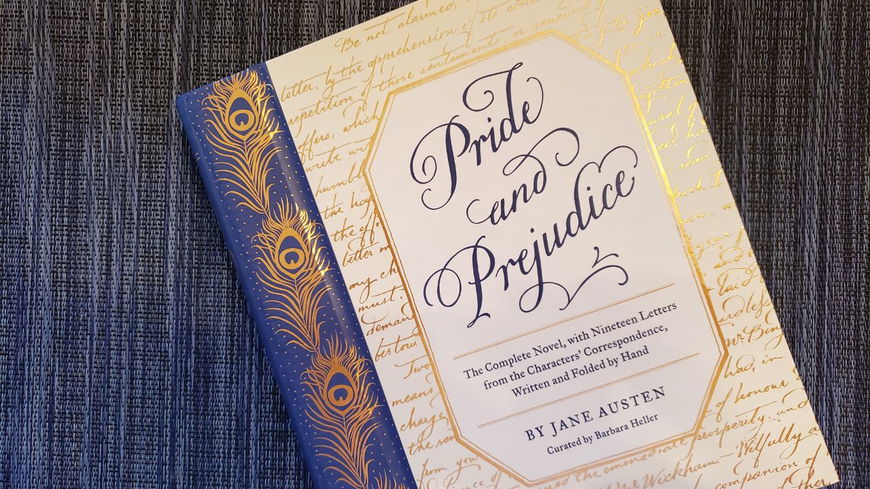
Call it the original love algorithm — a collision of pride, wounded assumptions, social pressure, and slow-burning attraction. Long before dragons took flight and shadow-wielding princes ruled enchanted courts, Pride and Prejudice laid down a storytelling formula that still powers shelves today. What Jane Austen built in drawing rooms and country estates became a blueprint — not just for romance, but for the emotional mechanics of modern Romantasy.
At its core, Austen’s novel isn’t simply about courtship. It’s about tension shaped by status, ego, and misjudgment. Elizabeth Bennet and Mr. Darcy don’t fall in love at first sight; they clash, retreat, reassess, and evolve. Their romantic journey is inseparable from their personal growth. That dual arc — emotional transformation intertwined with romantic payoff — is precisely what defines today’s romantasy narratives.
Swap Regency ballrooms for magical academies or warring fae kingdoms, and the engine remains strikingly familiar. High stakes aren’t limited to survival or sorcery; they are social, personal, and reputational. Misunderstandings ignite conflict. Pride hardens into distance. And recognition — the moment when perception shifts — becomes the true climax.
In that sense, Pride and Prejudice did more than shape classic romance. It offered a structural blueprint that modern Romantasy continues to refine: love as both battlefield and transformation, where the greatest magic isn’t spellwork — it’s self-awareness.
The Structural Magic: How Romance Fuels Plot
Romantasy is often defined as fantasy where the romance is essential — remove it and the story collapses. That definition is recent but telling: romantasy doesn’t abduct the romance to decorate worldbuilding; it binds the protagonist’s choices to the relationship itself, so politics, magic, war and personal growth all orbit the central pairing.
That’s the same scaffolding Austen used in Pride and Prejudice. Elizabeth Bennet’s moral education and Mr. Darcy’s transformation both occur through their evolving bond, and nearly every subplot feeds into marital futures and social positioning. When the romantic and the social are inseparable, you’re writing in an Austenian key — whether your lovers meet at a ball or on a dragon’s back.
Tropes That Traveled from Ballrooms to Battlements
Look at the tropes: enemies-to-lovers tension, social mismatch, razor-sharp banter, pride, prejudice, the slow burn revelation. In Pride and Prejudice, the friction between Elizabeth and Darcy is fuelled by character flaws and social friction; the reader’s pleasure comes from watching both characters learn and bridge that gap.
Romantasy borrows those moves wholesale but upgrades the stakes. Instead of dowries and neighborhood gossip, lovers in romantasy navigate cursed bloodlines, magical treaties, warring kingdoms, or apocalyptic prophecies. Yet the emotional mechanics remain Austen’s. The narrative reward is the same: a moral transformation that justifies love.
That continuity explains why readers can swap a Netherfield ball for a moonlit fae court and still feel the same electric charge.
Recasting Realism as Wonder
Some treat Austen as the queen of realism. But strip away the Regency setting and what remains is a precision-engineered relationship plot. Her scenes function like narrative pressure valves — an overheard remark, a disastrous proposal, a carefully composed letter — each designed to reveal or conceal truth at the exact moment it matters.
Fantasy doesn’t disrupt that system. It amplifies it.
A slight in a drawing room that damages a woman’s reputation becomes, in romantasy, a public humiliation that shifts the balance between rival courts. A private letter explaining wounded pride becomes a magical revelation that rewrites political allegiance. The machinery is identical; the spectacle changes.
That’s why even playful retellings that add monsters or supernatural threats still feel faithful. The heartbeat is not the setting. It’s the slow correction of misjudgment.
The Heroine’s Emotional Work
Elizabeth Bennet endures because she thinks. She observes, misjudges, reassesses, and grows. She is neither passive nor blindly romantic. Her pride is real; so is her willingness to confront it.
Romantasy heroines often follow this template. They wield swords, command magic, negotiate treaties — but their central battle is frequently internal. They must confront their own prejudices, traumas, assumptions, and fears before love becomes possible.
This alignment between emotional growth and romantic fulfillment is not accidental. Austen’s innovation was to make love contingent on moral self-knowledge. The best romantasy does the same. Love is not a prize at the end of a quest; it is the crucible that forces transformation.
Social Satire Scaled to Epic Systems
Austen’s world is a marriage market shaped by inheritance laws and class hierarchy. She skewers it with wit, but she also understands its brutal mathematics. Who marries whom determines security, power, survival.
Romantasy operates in grander arenas, yet the equation remains recognizable. Bloodlines replace property; magical ability replaces social rank; royal alliances replace polite visits. But the essential question persists: what does this union mean for the world around it?
When two characters fall in love in romantasy, kingdoms may rise or fall. In Austen, reputations and livelihoods hang in the balance. The scale shifts; the stakes endure.
The Power of Misunderstanding
At the core of Pride and Prejudice lies a misunderstanding — actually, several. Darcy misreads Elizabeth’s family. Elizabeth misreads Darcy’s character. External manipulation worsens these errors.
Romantasy thrives on similar narrative tension. A concealed identity, a prophecy misinterpreted, a betrayal rooted in half-truths — these devices echo Austen’s logic. Readers are not merely waiting for passion; they are waiting for clarity.
The emotional climax in both forms is recognition. The moment when pride yields, prejudice dissolves, and the beloved is finally seen correctly.
That is the blueprint.
Escapism With Ethical Weight
It is easy to label romantasy as escapism, but Austen proves that escapism and examination can coexist. Her novel offers balls, flirtation and romantic satisfaction — yet beneath the elegance lies a critique of economic vulnerability, class rigidity, and gender constraint.
Modern romantasy may drape its lovers in enchanted armor or set them amid celestial wars, but the most compelling entries interrogate power, agency, and consent. They ask who holds authority and how love disrupts or redistributes it.
In that sense, Austen is not quaint. She is foundational.
Why the Blueprint Still Works
So why does this pattern endure?
Because it mirrors a deeply satisfying psychological rhythm. Attraction sparks tension. Tension breeds misinterpretation. Misinterpretation leads to conflict. Conflict demands self-reflection. Self-reflection allows growth. Growth makes love earned.
That rhythm is timeless. It feels earned rather than accidental. It honors the fantasy that love changes people — not through instant chemistry, but through difficult recognition.
Romantasy magnifies this rhythm. Instead of risking embarrassment at a dinner party, characters risk exile, war, or magical annihilation. Yet the emotional payoff is identical to what Austen delivered two centuries ago.
Where Romantasy Expands the Model
Romantasy does not merely imitate. It stretches the blueprint.
Heroines today are often political actors, generals, assassins, scholars of forbidden magic. They do not depend on marriage for survival. They choose love rather than require it. Queer relationships, morally gray heroes, and layered explorations of trauma expand the emotional palette far beyond Regency norms.
Still, the bones are Austen’s: mutual respect, earned admiration, and the dismantling of false assumptions.
From Drawing Room to Dragonfire
Imagine the iconic second proposal scene in Pride and Prejudice. Now imagine it delivered in the aftermath of a battlefield, beneath a shattered sky. Strip away corsets and cravats; add steel and stardust. What remains is the same confession: I was wrong. I see you now. I choose you freely.
That confession — not the setting — is what readers crave.
Austen as Deep Narrative Grammar
To call Pride and Prejudice the blueprint for romantasy is not to suggest that every dragon-rider owes allegiance to Darcy. It is to recognize that Austen perfected a storytelling grammar where romance is inseparable from growth, and growth is inseparable from social consequence.
Romantasy inherits that grammar and writes it in bolder ink. It builds towering castles atop a Regency foundation. It replaces carriage rides with winged beasts, but it keeps the architecture intact.
As long as readers hunger for stories where love transforms flawed people into better versions of themselves — and where that transformation ripples outward into the world — the blueprint will hold.
The gowns may change. The magic may evolve. The kingdoms may burn and rebuild.
But somewhere in the ashes, Elizabeth Bennet is still lifting her chin — and someone very much like Darcy is learning how to deserve her.