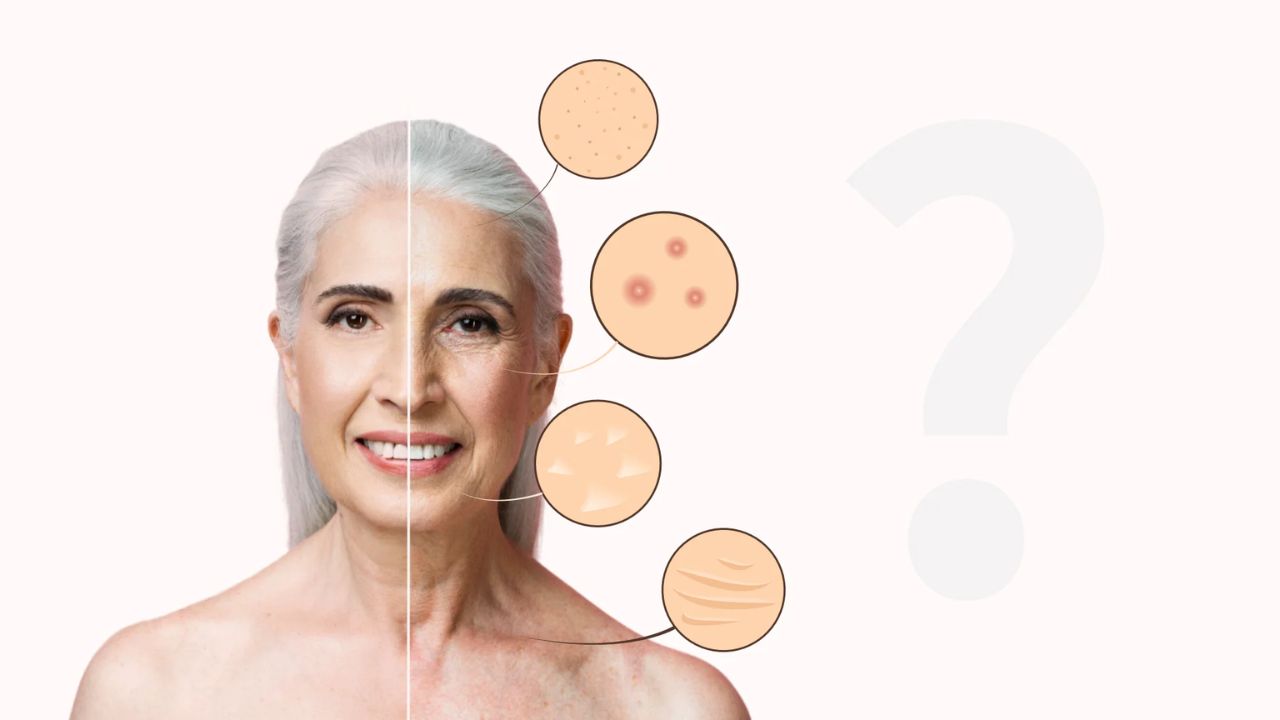
Everyone knows someone — maybe a grandparent or a beloved teacher — who seems to carry time in their smile lines and silver hair. We see aging on the outside: wrinkles, slower steps, a few more aches after a restless night’s sleep. But beneath that familiar face is a deeper narrative — the story written in our cells, a process scientists study to understand why our bodies age at all. Aging, they explain, is the gradual decline in our body’s ability to function and adapt to stress. It’s not a disease, exactly — more like the inevitable shift from growing to maintaining, and eventually to wearing down, as countless microscopic changes quietly shape who we become over time.
1. The Clock in Every Cell: Telomeres and the Hayflick Limit
Imagine your DNA as a long zipper. At the ends of that zipper are protective caps called telomeres — like the plastic tips that keep shoelaces from fraying. Each time a cell divides, these telomeres shorten just a little. Over time, they become so worn that the cell can no longer divide safely. When enough cells reach this state, tissues lose their ability to regenerate like they did in youth.
This phenomenon is tied to something known as the Hayflick limit — the idea that human cells only divide a certain number of times before they stop forever. That’s why a cut heals faster in your twenties than in your sixties.
Think of your body like an old library book. The pages were once crisp and new. Now the spine weakens, the print fades, and every time you flip a page it becomes a little more fragile. That’s what telomere shortening feels like on a cellular level.
2. Wear and Tear: Damage Buildup Inside the Engine
Another way to picture aging is to imagine a high-performance car that’s been driven thousands of miles. Over time, parts wear down, paint fades, and the engine doesn’t roar the way it used to.
Our cells face a similar struggle. Every day, DNA inside our cells gets damaged — by sunlight, pollution, stress, even just normal chemical reactions inside the body. While repair systems do heroic work to fix most of this damage, they aren’t perfect. Little errors persist and accumulate.
A key culprit here is oxidative stress — a process where unstable molecules damage proteins, fats, and DNA in cells. Over decades, this damage builds up, slowing down repair systems and weakening organs.
This isn’t science fiction. Think about your skin — sun exposure over years makes it thinner and less elastic. That’s oxidative stress playing out on the surface you see every day.

3. Cells That Tire, Not Just Wear Out
Not all aging is random damage. Some cells choose to stop working well on purpose. When a cell senses that its DNA is too damaged, it may enter a state called senescence — a sort of permanent retirement. These senescent cells no longer do their job, but they stick around, sending out signals that stir inflammation and disrupt surrounding tissues.
Imagine a factory where some workers stop their machines but don’t leave the floor — they get in the way of everyone else and slow down productivity. That’s what senescent cells do inside us.
4. The Clock That Lives in Our Genes
There’s more to aging than damage. Some scientists believe our bodies carry an internal timetable — a sort of “biological clock” — that dictates how long certain processes should continue. That’s why different species have such different lifespans: a mouse lives for a couple of years, while a tortoise may live for over a century.
This genetic and evolutionary angle suggests that aging wasn’t “designed” for us — it’s a byproduct of how natural selection works. In evolutionary terms, once we’ve passed our reproductive prime, nature doesn’t invest as heavily in maintaining the body.
5. Why Aging Feels Different in Every Person
If aging were a simple process, we’d all experience it the same way. But we don’t. Some people still run marathons at 70, while others tire more quickly. The reasons include:
- Genetics – Some people have stronger cellular repair systems from birth.
- Lifestyle – Diet, exercise, stress, and sleep shape how quickly damage accumulates.
- Environment – Sun exposure, toxins, and chronic stress accelerate cellular wear.
6. Stories Inside Us: What Aging Looks Like
You see signs of aging not just in wrinkles, but in everyday struggles:
- A slight forgetfulness that wasn’t there before, as connections between brain cells slow down.
- A knee that once ran up stairs easily now hesitates because cartilage thins and muscles lose strength.
- Vision that used to be crystal-clear now needing a little help from reading glasses.
All of these are reflections of the microscopic changes happening within us.

In the End — Aging Isn’t a Fault, It’s a Journey
Our bodies weren’t built to last forever. They were built to grow, to thrive, to reproduce, and then slowly yield to time. Aging doesn’t just happen — it emerges from the interplay of genetic clocks, accumulated damage, cellular decisions, and life’s daily stresses.
It’s a story of survival. Every breath, every heartbeat, every memory comes with a cost. And that cost is written quietly in every cell.