
When Jonathan Hickman’s multiversal epics reached their crescendo in the Time Runs Out / Secret Wars era, readers met a handful of shadowy, terrifying factions operating behind the scenes of the incursions — and among the most mysterious and chilling of those factions were the Black Priests. They’re not a single villain you can punch into submission; they’re a multiversal force with strange magic, disturbing philosophy, and methods that force heroes (and readers) to confront moral compromises when whole worlds are at stake. Below I break down Who Are Marvel’s Black Priests?, how they work, what they did in the comics, and why they matter to the Marvel Multiverse. (Spoilers for New Avengers and the Time Runs Out storyline follow.)
Quick snapshot: the essentials
- Nature: A multiversal order (or race) of sorcerers/priests who travel realities.
- Goal (apparent): To stop or “manage” incursions — collisions between two universes — by destroying the Earth that would otherwise allow an incursion to be prevented, with the hope that sacrificing the one world will stabilize both universes.
- Method: Ritual-language magic — words of power — used to reshape reality on a cosmic scale.
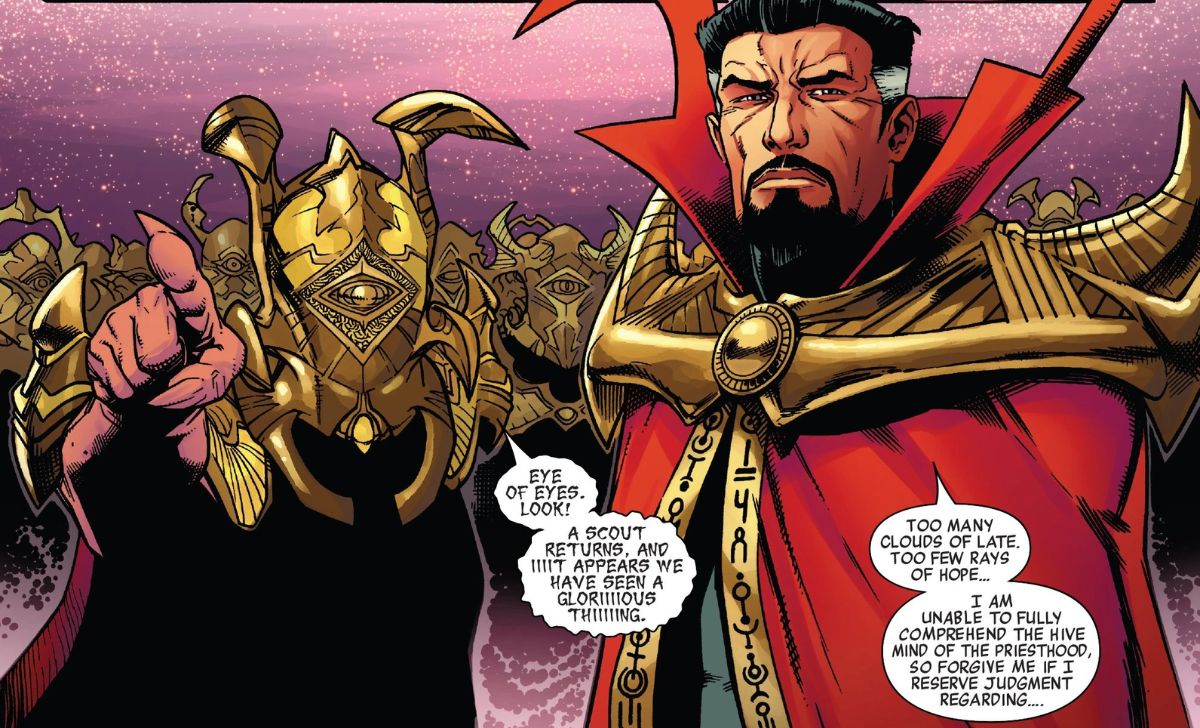
- Notable interaction: Doctor Stephen Strange joins and becomes their leader (referred to as the “Eye” or “Eye of Eyes”) during the Time Runs Out arc.
- Fate (in the main 2014–2015 arc): They mount a direct assault on the Black Swans’ Library of Worlds and are largely wiped out there; Strange is captured and forced to confront larger truths about Rabum Alal (Doctor Doom) and the real enemies behind the multiverse’s collapse.
Origins and core concept
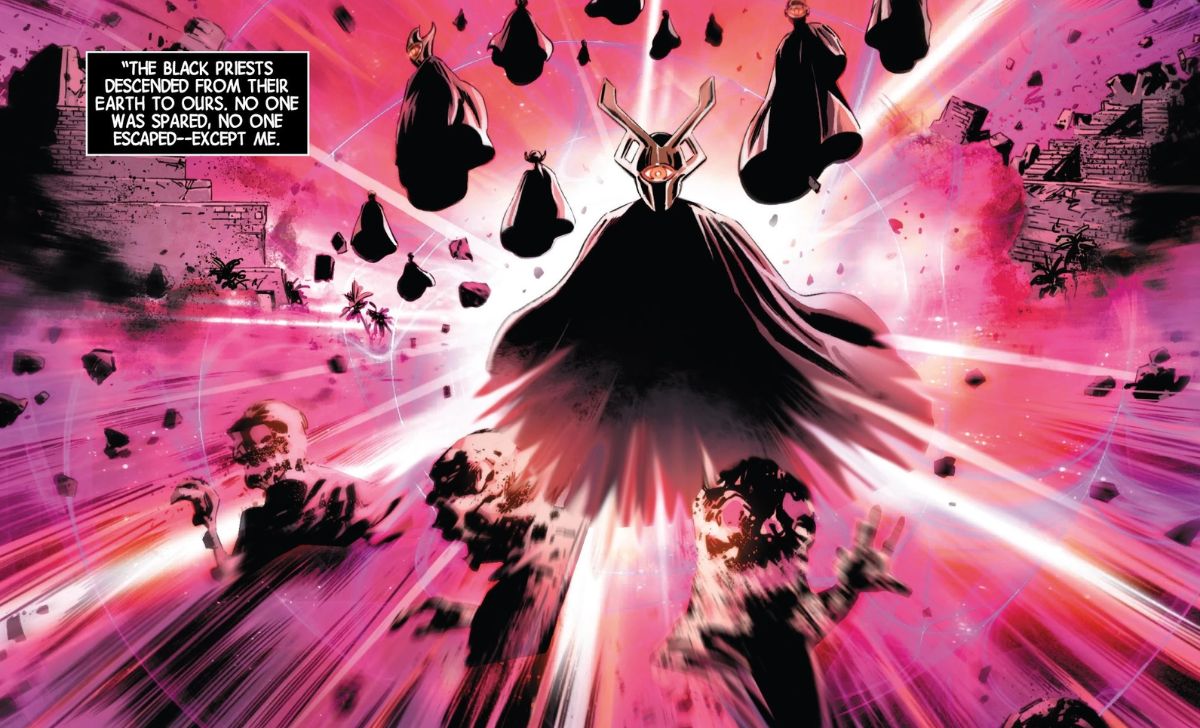
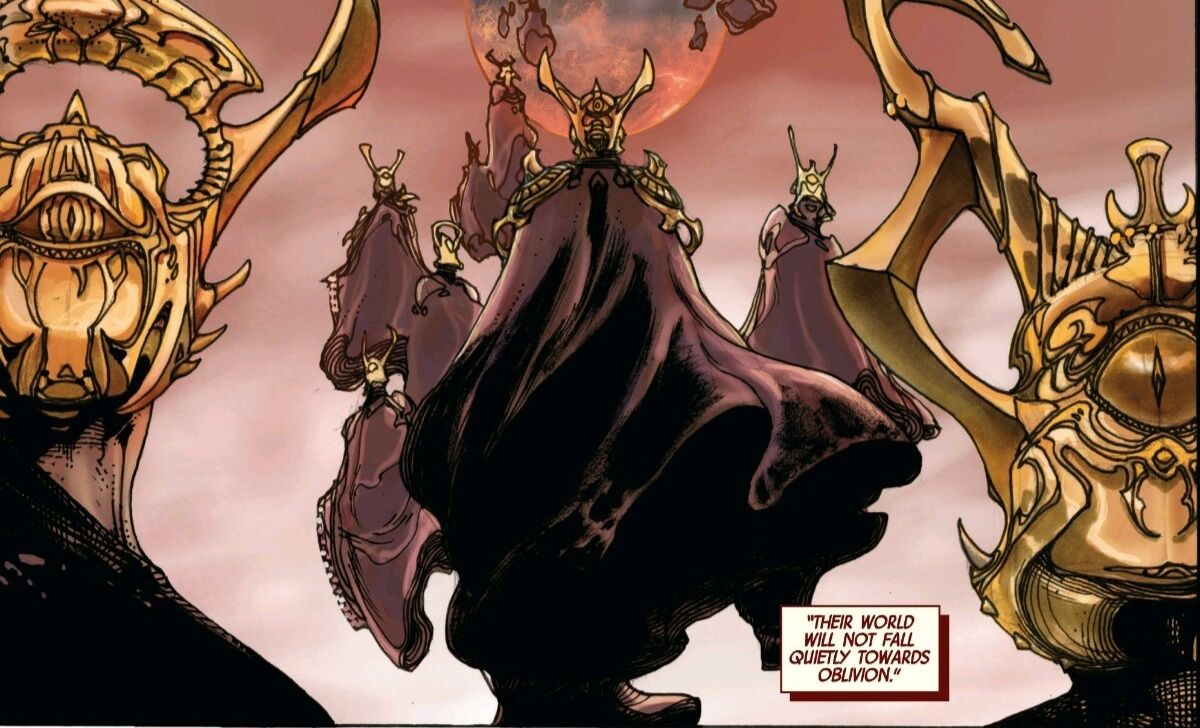
The comics introduce the Black Priests during the Time Runs Out lead-up to Secret Wars (the Jonathan Hickman era of Avengers/New Avengers). They are presented not as a conventional villain gang but as a multiversal phenomenon — powerful magical beings that emerged around the same time as other multiversal players (Mapmakers, Black Swans, Ivory Kings, Rabum Alal). In-story speculation (including from Rabum Alal himself) suggests the Priests may be a defensive reaction of the Multiverse — a kind of internal immune response attempting to prevent a total collapse by extreme means.
Mechanically, the Black Priests use a unique system of magic built around words of power. Individual priests are specialized — sometimes described as representing specific words or functions — and when combined they can create massive, reality-altering effects. That weird constraint (each priest being a part of a ritual vocabulary) is part of what makes them conceptually fascinating: power derived not from brute force, but from language and ritual coordination. Fan discussion and issue text imply their magic can literally rewrite physics when the right combinations are spoken.
Powers and abilities — how dangerous are they?
The Black Priests’ key abilities come down to two linked strengths:
- Language-as-magic (words of power): They cast reality-warping spells via an arcane vocabulary. Individually a priest may be limited, but groups can utter combinations that bend causality. That makes them dangerous on a cosmic scale: they’ve been shown to destroy entire Earths or alter local reality to facilitate those destructions.
- Multiversal movement & coordination: They are able to travel across dimensions and operate on the level of whole universes — not just cities. Their interventions are surgical (destroy a planet) but aim at structural consequences (prevent an incursion from cascading). This placement — between sorcery and a multiversal environmental force — is what elevates them beyond ordinary villainy.
From a storytelling standpoint, they are terrifying because their powers are indiscriminate and their logic is utilitarian: sacrificing one world might save many. That philosophy makes them antagonists to heroes who value individual lives above abstract equations, which fuels the moral conflict central to Time Runs Out.
Major plot beats — what they actually did in the comics
The Black Priests appear throughout Hickman’s run on New Avengers and show up repeatedly as part of the web of factions vying to control or save the Multiverse:
- Incursions and their mission: The Priests actively destroyed Earths they deemed “intrusive” during incursions — essentially making preemptive sacrifices to try to preserve both colliding universes. This brutal calculus is what brought them into conflict with groups like the Illuminati and the Multiversal Avengers.
- Clashes with heroes: Their methods put them at odds with Sunspot’s Multiversal Avengers and various Illuminati members who had been trying to manage incursions in very different ways. Tensions turned into direct confrontations when both sides converged on multiversal targets.
- Doctor Strange joins and leads them: In one of the more shocking developments, Stephen Strange (Earth-616) learned their words of power and joined the Black Priests — eventually becoming their leader (the Eye or “Eye of Eyes”). Strange’s mastery of their language made him exceptionally powerful — enough to reshape and restrain other multiversal entities — and created deep narrative complications, since he is normally a hero yet adopts extremist measures to stop the multiverse’s decay.
- Attack on the Library of Worlds & aftermath: The Priests, allied briefly with Strange, attacked the Black Swans’ Library of Worlds (the Black Swans were another key faction working under Rabum Alal). Inside the Library the Priests encountered a condition — a vacuum that prevented their ritual speech — and were wiped out in that space. Strange, however, survived (captured by the Black Swans) and learned that Rabum Alal (Doctor Doom in disguise) and the Molecule Man were pursuing their own strategy to save the Multiverse — revealing deeper layers to the conflict and reframing who the real “enemy” was.
Those sequences are core to the emotional effect of Time Runs Out: heroes making impossible choices, once-trusted defenders turning to extreme means, and the ultimate revelation that there’s a larger, almost cosmic-level conflict between forces like the Ivory Kings (Beyonders in effect) and those trying to shield reality.
The Black Priests vs other multiversal factions: a quick map
- Black Swans: Operatives working (in Rabum Alal’s interests) out of the Library of Worlds — enemies during the Library assault. The Black Priests fought the Swans and were defeated there.
- Mapmakers: Another multiversal group; often contrasted with Priests as different “specializations” in how the Multiverse reacts to collapse.
- Ivory Kings / Beyonders: Presented as the true destroyers or antagonists behind the multiversal unmaking. Priests claimed to be defenders against incursions, but the larger war showed multiple parties pursuing conflicting goals.
Why the Black Priests matter (beyond spectacle)
- They force moral questions into the foreground. The idea of sacrificing one world to save many is ethically grotesque on a personal level but plausible in a cold multiversal calculus. That friction drives much of the emotional weight of Hickman’s run. The Priests embody a brutal utilitarianism that collides with the Avengers’ duty to protect lives.
- They expand Marvel magic into linguistics and ritual. Marvel often mixes tech and magic; the Priests take the “magic language” conceit and scale it to civilization-ending consequences. That gives writers a different toolbox for cosmic stakes: not just who has the biggest energy blast, but who knows the right words.
- They complicate familiar characters. Strange’s absorption into their ranks — learning their lexicon and using it — is an example of how power can corrupt or at least blur the boundary between hero and fanatic. It’s a neat narrative twist to have the Sorcerer Supreme leading a group whose methods most sorcerers would abhor.
Reading guide — where to see them
The Black Priests are primarily present during the Time Runs Out chapters of Jonathan Hickman’s Avengers / New Avengers run. Key appearance notes:
- New Avengers (Vol. 3) — their early appearances and the arc that reveals their motives (issues in the 2013–2015 stretch). Specific scenes involving the Library of Worlds and Strange’s leadership appear later in the arc (e.g., New Avengers #27, #31 and surrounding issues).
If you want the full context for why incursions happen and how the Illuminati’s choices lead to the Priests’ prominence, read Hickman’s full Avengers + New Avengers run leading into Secret Wars (2013–2015). Reviews and recaps of these issues are plentiful and help explain the complex factions.