

Understanding What Readers Are Searching for when discovering fiction books becomes essential for authors navigating today’s digital publishing landscape. With millions of books published annually and readers increasingly turning to online platforms for their next great read, the right keywords can mean the difference between obscurity and bestseller status. The modern reader’s journey from search to purchase relies heavily on strategic keyword placement across titles, descriptions, and metadata.
The Evolution of Fiction Book Discovery
Reader behavior has fundamentally shifted from browsing physical bookstore aisles to conducting targeted online searches. Research shows that over 90% of ebook discovery occurs in the digital realm, with readers employing specific search terms to find their next literary adventure. Social media platforms, particularly BookTok on TikTok, have emerged as powerful discovery engines, with hashtags like #booktok accumulating over 53.9 million views.
Modern readers approach book discovery through multiple channels. They begin searches on Amazon, browse social media recommendations, and rely heavily on peer reviews and community suggestions. The most effective book discovery methods include recommendations from fellow readers on online forums and blogs (29% of respondents), random browsing of book covers, and sampling free content before purchasing.
Top Fiction Keywords Dominating 2025
High-Volume Genre Keywords
Fiction book searches concentrate around established genre categories, with “science fiction” leading at 422,700 global searches monthly, followed by “historical fiction” at 41,300 searches. These broad genre terms capture readers seeking familiar territory, making them essential baseline keywords for authors.
The fantasy genre demonstrates remarkable staying power with a 17% search increase for 2025. Popular fantasy-related searches include “fantasy novels” (12,800 searches), “dystopian novels” (18,900 searches), and “ya novels” (7,400 searches). These terms reflect readers’ enduring appetite for escapist literature and world-building narratives.
Romance maintains its commercial dominance, generating $1.5 billion annually and representing nearly half of all mass-market paperbook sales. Key romance keywords include “erotic novel” (51,000 searches), “romance novels,” and the emerging “romantasy” trend that blends romance with fantasy elements.
Trending Subgenre Keywords
Current fiction trends reveal readers’ sophisticated search behaviors around hybrid genres and specific tropes. “Dark academia” has emerged as a dominant trend, featuring scholarly settings with mysterious or sinister undertones. “Romantasy” represents the fastest-growing hybrid category, combining romantic relationships with fantasy world-building elements.
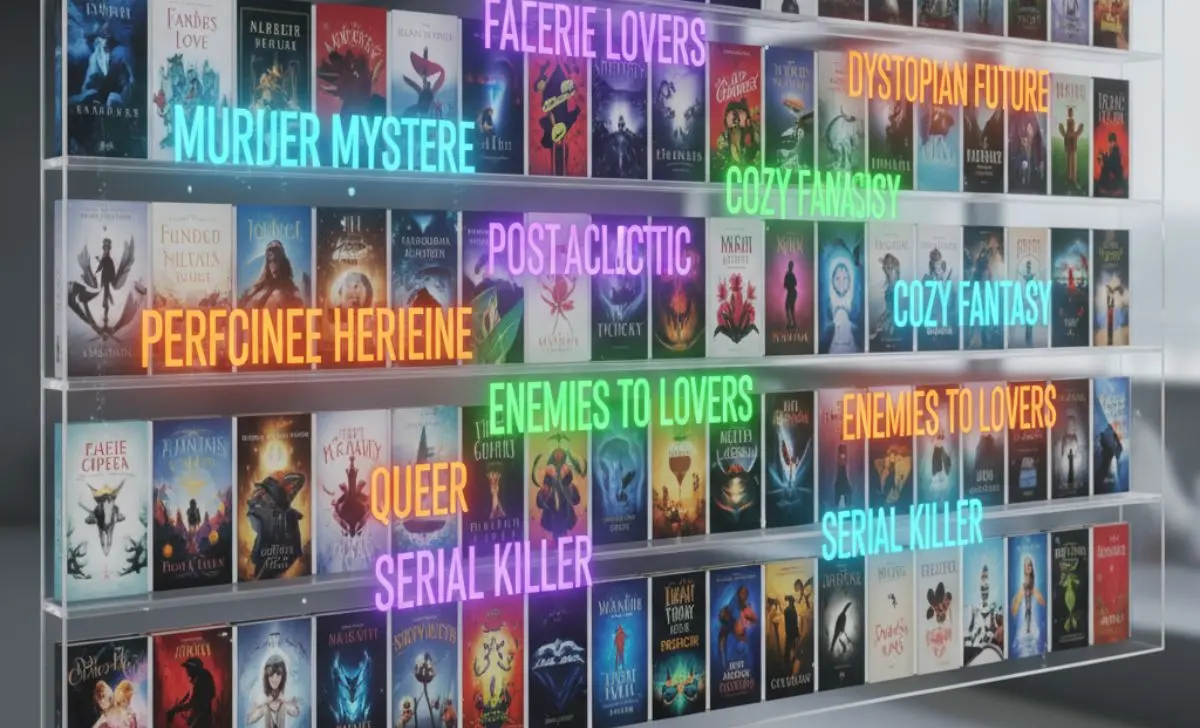
BookTok has popularized highly specific trope-based searching. Readers actively seek “enemies to lovers,” “grumpy sunshine,” “one bed,” and “found family” storylines. These micro-targeted keywords allow readers to find precisely the emotional experience they desire, making them incredibly valuable for authors crafting metadata.
The horror genre experiences renewed popularity with keywords like “gothic horror novels,” “supernatural thriller series,” and “creature feature” gaining traction. This resurgence reflects readers’ appetite for darker content and psychological exploration.

Platform-Specific Keyword Strategies
Amazon KDP Optimization
Amazon’s search algorithm prioritizes keywords appearing in titles, subtitles, and descriptions. The platform allows seven keyword fields, each supporting multi-word phrases that target niche audiences. Successful authors combine high-demand, low-competition phrases with broader genre terms to maximize discoverability.
Long-tail keywords prove particularly effective on Amazon. Instead of targeting broad terms like “romance,” successful authors use specific phrases like “second chance romance with small-town setting” or “cozy mystery with librarian detective”. These detailed phrases capture readers seeking specific story elements while facing less competition from established bestsellers.
Social Media Keywords and Hashtags
BookTok requires different keyword strategies focused on hashtags and trending terms. Popular fiction hashtags include #fictionbooks (36,000 uses), #bookish (6.8 million), and #bookrecommendations (5.1 million). Authors benefit from combining broad discovery hashtags with specific genre and trope tags.
Instagram book discovery relies heavily on visual appeal combined with strategic hashtag use. The platform favors aesthetic book photography tagged with genre-specific terms like #historicalfiction, #fantasybooktok, or #darkacademia.
Genre-Specific Keyword Analysis
Young Adult Fiction
YA dominates current publishing demands, with 56 mentions across literary agent profiles—more than any other genre. Key YA keywords include “young adult fantasy academy,” “supernatural academy,” “teen romance,” and “ya paranormal romance”. The genre’s crossover appeal means authors should include both age-specific and general audience keywords.
Trending YA subgenres include academy fantasies, supernatural romances, and coming-of-age stories with fantastical elements. Keywords like “chosen one trope,” “magic school,” and “teen paranormal” capture readers seeking these popular storylines.
Romance and Romantasy
Romance keywords span from traditional categories to emerging hybrid genres. Traditional romance searches include “contemporary romance,” “historical romance,” and “small-town romance”. The romantasy trend introduces keywords like “fae romance,” “dragon shifter romance,” and “fantasy romance with magic systems”.
Sports romance has gained popularity with keywords like “hockey romance,” “football romance,” and “athlete romance”. These specific niches allow authors to target dedicated readerships seeking particular romantic scenarios.
Fantasy and Speculative Fiction
Fantasy keywords have evolved beyond traditional “high fantasy” and “epic fantasy” to include specific subgenres. “Urban fantasy,” “cozy fantasy,” “gamelit,” and “LitRPG” represent growing reader interests. The cozy fantasy trend emphasizes low-stakes, comfort-reading experiences with keywords like “slice of life fantasy” and “feel-good magic”.
Science fiction keywords include “space opera,” “dystopian fiction,” “cyberpunk,” and “apocalyptic fiction”. Hybrid categories like “sci-fi romance alien” and “dystopian romance young adult” capture readers seeking cross-genre experiences.
Mystery and Thriller
Mystery and thriller keywords focus on atmosphere and character types. Popular searches include “psychological thriller,” “domestic thriller,” “cozy mystery,” and “police procedural”. Character-driven keywords like “smart female detective,” “FBI thriller,” and “small-town sheriff” help readers find specific protagonist types.
The genre benefits from setting-based keywords like “Nordic noir,” “Southern gothic thriller,” or “locked room mystery”. These geographic and atmospheric descriptors help readers discover books matching their mood preferences.
Long-Tail Keywords and Niche Targeting
Successful fiction marketing increasingly relies on long-tail keywords—specific, multi-word phrases that capture precise reader intentions. Rather than competing for broad terms like “thriller,” authors benefit from targeting “psychological thriller unreliable narrator” or “small-town mystery with amateur sleuth”.
These detailed phrases serve multiple purposes. They face less competition from established bestsellers, attract highly engaged readers seeking specific experiences, and often demonstrate higher purchase intent. Readers using specific search terms typically know exactly what type of story they want, making them more likely to convert to sales.
Niche targeting also encompasses demographic-specific keywords. “LGBTQ+ romance,” “diverse fantasy,” “own voices fiction,” and “neurodivergent protagonist” help readers find representation while allowing authors to connect with dedicated communities.
Keyword Research Tools and Techniques
Professional Research Platforms
Authors have access to numerous keyword research tools, each offering unique advantages. Publisher Rocket provides Amazon-specific keyword data with search volume and competition analysis. KDPilot focuses exclusively on Kindle publishing optimization, while tools like SEMrush and Ahrefs offer broader digital marketing insights.
The Amazon Keyword Tool Dominator specializes in Amazon-specific searches, providing real-time data on trending terms. These platforms help authors identify emerging trends and validate keyword choices before publication.
Free Research Methods
Budget-conscious authors can leverage free research techniques. Amazon’s autocomplete feature reveals popular search terms when users type partial queries. This method uncovers reader language patterns and trending phrases without requiring paid tools.
Google Keyword Planner, while designed for advertising, provides valuable insights into search volume and competition levels. Authors can research book-related terms to understand broader market interests and seasonal trends.
Social media platforms offer organic keyword research opportunities. BookTok hashtag volumes indicate trending topics, while Goodreads reviews reveal language patterns readers use when describing their preferences.
Measuring Keyword Performance
Effective keyword strategy requires ongoing monitoring and adjustment. Authors should track their books’ Amazon rankings for targeted keywords and analyze which terms drive actual sales versus mere clicks. This data helps refine future keyword choices and optimize existing metadata.
Performance metrics include search ranking improvements, click-through rates from specific keywords, and conversion rates from keyword-driven traffic. Authors successful in the long term regularly update their keyword strategies based on market changes and reader behavior shifts.
Future Trends in Fiction Keywords
The fiction keyword landscape continues evolving as reader preferences shift and new platforms emerge. Hybrid genres will likely proliferate, creating demand for increasingly specific descriptive terms. The influence of artificial intelligence on book discovery may change how readers search, potentially favoring conversational queries over traditional keyword phrases.
Visual search capabilities on platforms like Instagram and Pinterest may reduce reliance on text-based keywords, emphasizing the importance of strong visual branding alongside traditional SEO strategies.
Cross-media integration presents new opportunities as readers discover books through streaming adaptations, podcasts, and gaming platforms. Keywords connecting fictional content across media formats will become increasingly valuable for comprehensive marketing strategies.
The most successful fiction authors will embrace keyword research as an ongoing practice rather than a one-time task. By understanding their readers’ language, staying current with trending terminology, and adapting to platform changes, authors can maintain discoverability in an increasingly competitive marketplace. The investment in proper keyword research and implementation often determines whether a quality book finds its intended audience or remains hidden among millions of alternatives.