
If you’ve ever found yourself wondering why your grandmother is so obsessed with “Days of Our Lives” while you prefer binge-watching “Breaking Bad,” the answer isn’t just about personal taste—it’s actually about two fundamentally different approaches to storytelling. Soap operas and regular TV series might seem similar on the surface (they both have characters, drama, and ongoing stories), but once you dig deeper, you realize they’re operating under completely different rules. Let’s break down what actually separates these two very distinct forms of television.
Why Soap Operas Air Every Single Weekday
One of the most obvious differences between soap operas and regular TV series is their broadcast schedule. While your typical drama series like “Grey’s Anatomy” or “The Crown” releases one episode per week (or even less frequently), soap operas pump out brand new episodes five days a week, 52 weeks a year—that’s roughly 260 episodes annually. This isn’t just a scheduling quirk; it fundamentally shapes how these shows are written, produced, and consumed.
Think about what this means. A regular TV drama might spend weeks or even months carefully crafting a single hour-long episode. Writers refine dialogue, directors plan shots meticulously, and actors get multiple takes to nail their performances. Soap operas? They’re operating on an entirely different factory system. A typical daytime soap like “General Hospital” shoots around 140 pages of script daily, with entire episodes filmed in a single day using multi-camera setups. Some shows even film parts of three to five episodes in one shooting day to stay ahead of their broadcast schedule.
This pace is brutal by standard television production standards. Actors memorize dozens of pages of dialogue overnight and perform with minimal (or zero) rehearsal. The expectation is that experienced soap actors will get it right the first time—retakes are a luxury most soaps simply can’t afford. Compare this to prestige dramas where a single scene might be shot a dozen different ways to find the perfect take, and you start to understand just how different these production worlds really are.
Soap Operas Never Truly End
If there’s one thing that defines the soap opera format, it’s the concept of the “open-ended narrative.” This means that instead of building toward a definitive conclusion, soap opera stories are designed to continue indefinitely. An episode ends, sure, but not because the story reaches a natural endpoint. Instead, it ends on a cliffhanger—a perfectly timed moment designed to make you desperate to tune in tomorrow.
A regular TV series, on the other hand, operates within a more traditional narrative structure. Each episode typically has a beginning, middle, and end. Even in complex dramas with multiple storylines, individual episodes resolve their main conflicts while potentially advancing longer story arcs. Think of how “The Office” works: each episode has its own plot that gets tied up, even though the characters’ relationships and the broader workplace drama continue across seasons.
Soap operas completely reject this model. Instead, they feature multiple storylines running simultaneously, weaving in and out of focus episode after episode. When one story thread finally concludes, several others are at completely different stages of development. This creates an almost infinite narrative. Some soap opera characters and plotlines have been developing for decades without ever reaching a true resolution. On a show like “Days of Our Lives,” which has been on air since 1965, characters can reference events from the 1980s as if they happened recently. The show literally never stops advancing its stories—it just keeps moving, adding new complications and introducing new characters to perpetually refresh the drama.
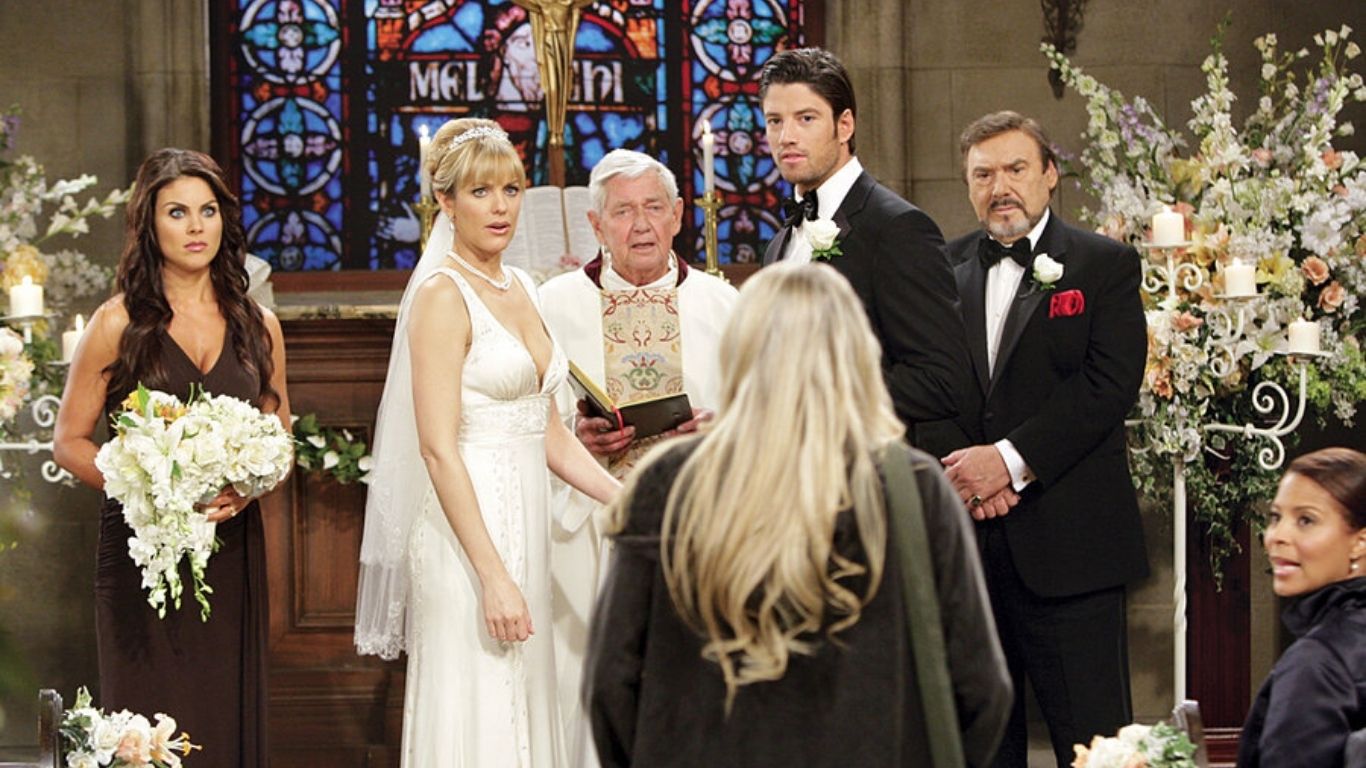
The Cliffhanger: Soap Opera’s Secret Weapon
Every single soap opera episode ends with some kind of cliffhanger. Not the explosive, action-packed variety you might see in an action series, but rather the emotional kind—a shocking revelation, a confession that changes everything, a betrayal about to be exposed, or a simple but devastating line of dialogue. The genius of this approach is that it doesn’t require a dramatic explosion or chase scene to keep you hooked. Sometimes it’s just a meaningful look or a pause before a character reveals something that will upend an entire relationship.
Regular TV series use cliffhangers too, but they’re typically reserved for season finales or critical moments in a story arc. Soap operas, by contrast, operate on the principle that every single episode needs a hook—some element that makes you need the next episode, even if you watched the previous one just yesterday. This constant state of unresolved tension is by design, and it’s utterly essential to the soap opera formula.
Why Soap Operas Look Different (And That’s Okay)
If you’ve ever watched a soap opera, you’ve probably noticed that they look different from other TV shows. The sets are smaller and more minimally lit. The cinematography favors certain camera angles that help the crew work faster. The whole aesthetic has a particular “stagy” quality to it, especially in classic soaps. This isn’t an accident—it’s a direct result of the production constraints these shows operate under.
Because soap operas shoot so quickly and so frequently, they can’t afford the elaborate, high-budget production values of shows like “House of the Dragon” or “The Last of Us.” Instead, they prioritize efficiency. Multi-camera setups allow them to capture multiple angles simultaneously, reducing setup time. Interiors dominate because changing exterior locations and moving cameras around takes precious time. The lighting is consistent and deliberately designed for quick, repeated use.
Regular TV series, in contrast, can spend considerably more resources on each episode. They might employ award-winning cinematographers, shoot on film (rather than video), and carefully design every frame. This often means regular series look and feel more polished, more cinematic, more “professional” in the traditional sense.
But here’s the thing—the lower production values of soap operas aren’t a limitation so much as a choice. They’re optimized for their format. Soap operas prioritize speed of production and frequency of episodes over visual polish. And for fans who’ve been watching these shows for years, that familiar, lived-in aesthetic is actually part of the charm.
Why Soap Operas Need So Many Characters
Soap operas typically feature massive ensemble casts—often 20 to 50+ principal characters, with many more recurring players. This isn’t because the creators enjoy complex character management (though they certainly do have to be good at it). It’s because of the daily broadcast schedule. With five episodes a week, you need enough characters and storylines to keep the show moving without burning through material too quickly.
In a regular TV drama like “Succession,” you might have 5–8 core characters who share the bulk of the screentime. In a soap like “The Young and the Restless,” you could have 30+ characters who all have active storylines happening simultaneously. Some characters will appear in a given week’s episodes frequently, others might only show up once or twice. This rotation system allows the show to develop multiple storylines in parallel without exhausting any single actor.
Here’s another unique aspect of soap operas: character recasting is common and often acknowledged directly on screen. If an actor leaves the show, the part is simply recast with a new actor—sometimes even announced in the middle of a scene, with minimal fanfare. This would be unthinkable in most other television contexts, where a character’s departure would be a major plot point. But in the soap opera world, where the characters and their stories are more important than the specific actors playing them, recasting is just part of business as usual.
A Week’s Worth of Soap Opera Versus a Week’s Worth of Regular Drama
Here’s something that might surprise you: whatever major plot development happens in a single hour-long episode of a drama series would often take roughly two weeks to unfold in a soap opera. A confession might be teased, delayed, interrupted, and finally revealed across multiple episodes. A single conversation between two characters might span multiple scenes and multiple episodes as it gets interrupted and resumed.
This isn’t padding for the sake of it—it’s actually a deliberate stylistic choice. The slow pacing serves a purpose. It allows the show to develop emotional beats and character reactions in ways that faster-paced dramas can’t match. When a major revelation happens, soap opera viewers have already watched the tension build across several days, they’ve seen how it affects various characters, and by the time resolution comes, they’re deeply invested in every nuance.
A regular TV series, by contrast, tends to move more briskly through plot points. There’s pressure to advance the story, to avoid repetition, to keep the narrative momentum going. A mystery might be introduced and resolved in a single episode. A relationship might develop over a season. The pacing is designed to balance episodic satisfaction with season-long progression.
Knowing Characters for Years
One of the surprising things about soap operas is that, despite their melodrama and sometimes ridiculous plotlines, they actually offer something genuinely valuable: deep character familiarity. Because these shows run five days a week for years or even decades, viewers spend an enormous amount of time with these characters. You don’t just know what a character does; you know how they react to situations, what their fears are, how their psychology works. You’ve seen them grow and change across years of your own life.
A regular TV series, even an excellent one, can’t quite match this. You might spend 30–50 hours watching a character across a few seasons, but a devoted soap opera viewer might have 500+ hours with a single character across multiple years. That kind of time investment creates a uniquely intimate relationship with the material.
Moreover, soap operas are character-driven rather than purely plot-driven. The story exists to explore how characters respond emotionally. A regular drama might be more about what happens, while a soap opera is more about how characters feel about what happens.

A Historical Quirk That Tells You Everything
Here’s a fun piece of trivia that actually explains a lot: soap operas got their name because they originated as radio dramas in the 1920s, and the primary sponsors were soap and detergent manufacturers who wanted to reach housewives during daytime hours. The name stuck even when the genre transitioned to television in the 1950s, and it tells you something important about the original target audience and the format’s original purpose.
Soap operas were designed for people (primarily women) who had other tasks to do while watching. The slow pacing and repetitive elements of soap opera storytelling meant viewers could step away to do household chores and pick up the story seamlessly when they came back. It’s fundamentally different from a prestige drama that demands your undivided attention.
That historical context matters because it shaped the entire DNA of the format. Soaps were built to be watched in the background, to be part of your daily routine, to offer emotional escapism rather than intellectual challenge. Regular TV series, particularly in the modern era, are often designed to be watched with full attention—they’re crafted as “must-watch” viewing experiences.
Prestige Soaps and Serialized Dramas
It’s worth noting that the lines between these formats have become increasingly blurred in recent years. The rise of streaming and binge-watching culture has led to dramas that use some soap opera elements: extended story arcs, large ensemble casts, and continuous emotional development. Meanwhile, some soap operas have adopted more cinematic production values and tighter narrative structures.
But the core DNA remains different. A show like “Grey’s Anatomy” might have some soap opera qualities—it’s been running for years, it has a large ensemble cast, and personal drama often outweighs plot—but it still operates on a different production schedule and narrative structure than traditional daytime soaps.
The Bottom Line
Soap operas and regular TV series are essentially two different answers to the same basic question: “How do we create engaging ongoing television?” Soap operas answer that question by saying: “Give viewers daily access to familiar characters and perpetual emotional investment.” Regular TV series answer it by saying: “Craft compelling individual episodes that advance a larger story arc.”
Neither approach is inherently better. Some people love the daily ritual and deep character familiarity of soap operas; others prefer the tightly plotted storytelling and episodic satisfaction of dramatic series. Your preference often depends on what you’re looking for from your television: pure escapism and emotional engagement, or intellectually engaging narratives with satisfying resolutions.
What’s clear is that these formats have fundamentally different economics, different production methods, and different relationships with their audiences. And understanding those differences helps explain why your grandmother and you might never agree on what makes for “good” television—you’re literally watching two different kinds of shows.