


Ray Bradbury’s Fahrenheit 451 is a must-read because it goes far beyond being a simple cautionary tale about burning books—it paints a chilling picture of a world where curiosity withers, free thought is forbidden, and shallow entertainment takes the place of true understanding. Published in 1953 amid the tensions of the Cold War, this dystopian classic still strikes a powerful chord today, warning us about the dangers of censorship, the dominance of mass media, and the numbing effects of societal apathy in our fast-paced, screen-saturated age.
A World Built on Fire and Forgetting
Bradbury wastes no time igniting his story.
“It was a pleasure to burn.”
With that chilling line, we’re thrust into a future where firemen don’t save homes—they burn books. Guy Montag, the novel’s protagonist, begins the story as one of these firemen, gleefully torching what remains of literature. Books are illegal, curiosity is dangerous, and independent thinking is almost extinct.
Mass media dominates every aspect of life. Montag’s wife Mildred spends her days immersed in wall-sized screens and radio chatter, while advertisements scream from subway walls. People no longer have conversations—they exchange sound bites. At work, Montag’s colleagues kill time by smoking and betting on their mechanical hound chasing rats. In this world, ideas have been replaced by noise.
And yet, amidst the crackle of flames and static of screens, Montag hides contraband books in his home, their quiet weight stirring questions he can’t quite name.
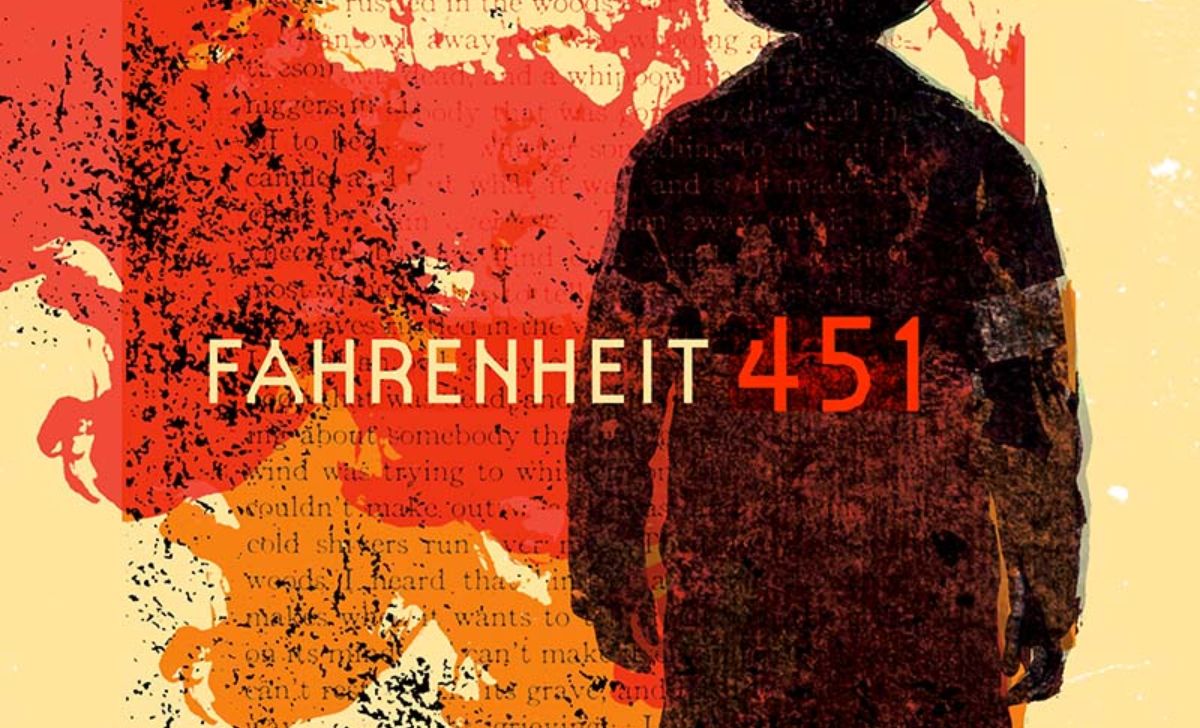
Montag’s Awakening: From Blind Obedience to Burning Questions
Montag’s journey is at the heart of what makes Fahrenheit 451 so compelling. He begins as a cog in the system, burning “black butterflies” of paper without hesitation. But over time, doubt creeps in. He realizes that he’s always felt uneasy, only lacking the words to articulate it—because words themselves have been erased.
Bradbury shows how language shapes our ability to think. Without access to stories, Montag can’t describe his discontent or dream of alternatives. Even uttering “once upon a time” can be fatal. This is the novel’s central tragedy: without stories, people forget how to imagine, resist, or care. Montag’s slow, painful awakening becomes a powerful reminder that books aren’t just objects—they’re tools for understanding ourselves and our world.
A Warning Born from History
Bradbury didn’t create this dystopia out of thin air. He wrote Fahrenheit 451 during the height of the Cold War, when fear and paranoia gripped America. Artists and writers faced suspicion and blacklisting for alleged Communist sympathies. Government investigations silenced dissent. Bradbury saw the danger in this cultural crackdown—echoes of the Library of Alexandria’s destruction and the book burnings of fascist regimes.
He titled the novel after the temperature at which paper supposedly burns, crafting a story that warned of what happens when fear overrides freedom. His message was clear: censorship often starts small, disguised as protection, until it quietly erases culture itself.
Dystopia Driven by Apathy
Many dystopias show governments forcing oppression on unwilling citizens. Fahrenheit 451 flips that script. Bradbury reveals that society’s downfall wasn’t only due to authoritarian control—it was fueled by public apathy. People abandoned books for easy entertainment, favoring speed over depth, distraction over thought. As Captain Beatty tells Montag:
“Speed up the film… Politics? One column, two sentences, a headline! Then, in mid-air, all vanishes!”
In this world, conversation collapses into fragments. Ideas are condensed until they disappear. The government didn’t have to seize power—people handed it over by ceasing to care. That chilling idea makes the novel feel even more relevant in today’s age of viral headlines and endless scrolling.
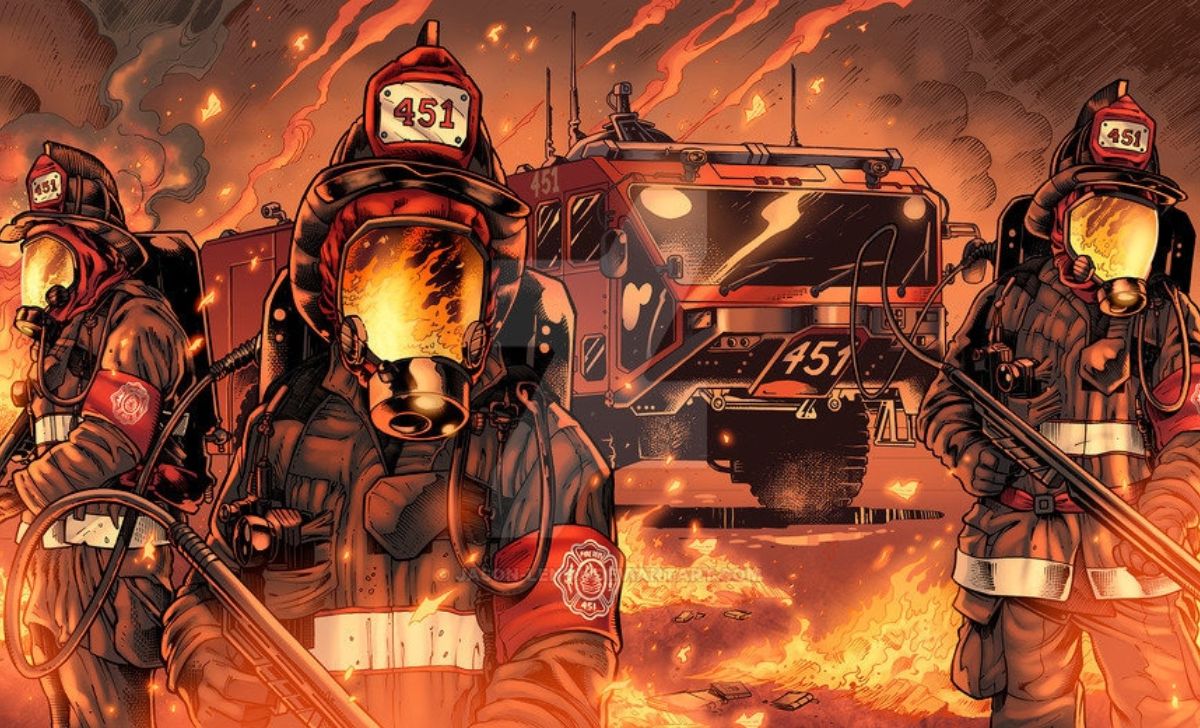
Why It Still Matters Today
Fahrenheit 451 endures because it isn’t just about burning books—it’s about burning curiosity, burning empathy, burning what makes us human. It reminds us how fragile independent thought can be, and how easily culture can turn to ash when we stop valuing it.
In an era where misinformation spreads fast, attention spans shrink, and entertainment often outweighs education, Bradbury’s warnings are more urgent than ever. Montag’s journey from complacency to rebellion challenges readers to stay curious, to question, and to preserve the stories that keep us thinking.
Final Thoughts: A Must-Read for Every Generation
Fahrenheit 451 is more than a dystopian novel—it’s a timeless wake-up call. Bradbury asks us: What happens when we stop thinking for ourselves? When we let convenience replace curiosity? When we silence uncomfortable truths?
Montag’s world shows the cost of surrendering imagination, and his rebellion reminds us how vital it is to keep that spark alive. That’s what makes Fahrenheit 451 not just worth reading, but necessary—a book to guard against forgetting, and to pass down like a torch in the dark.