

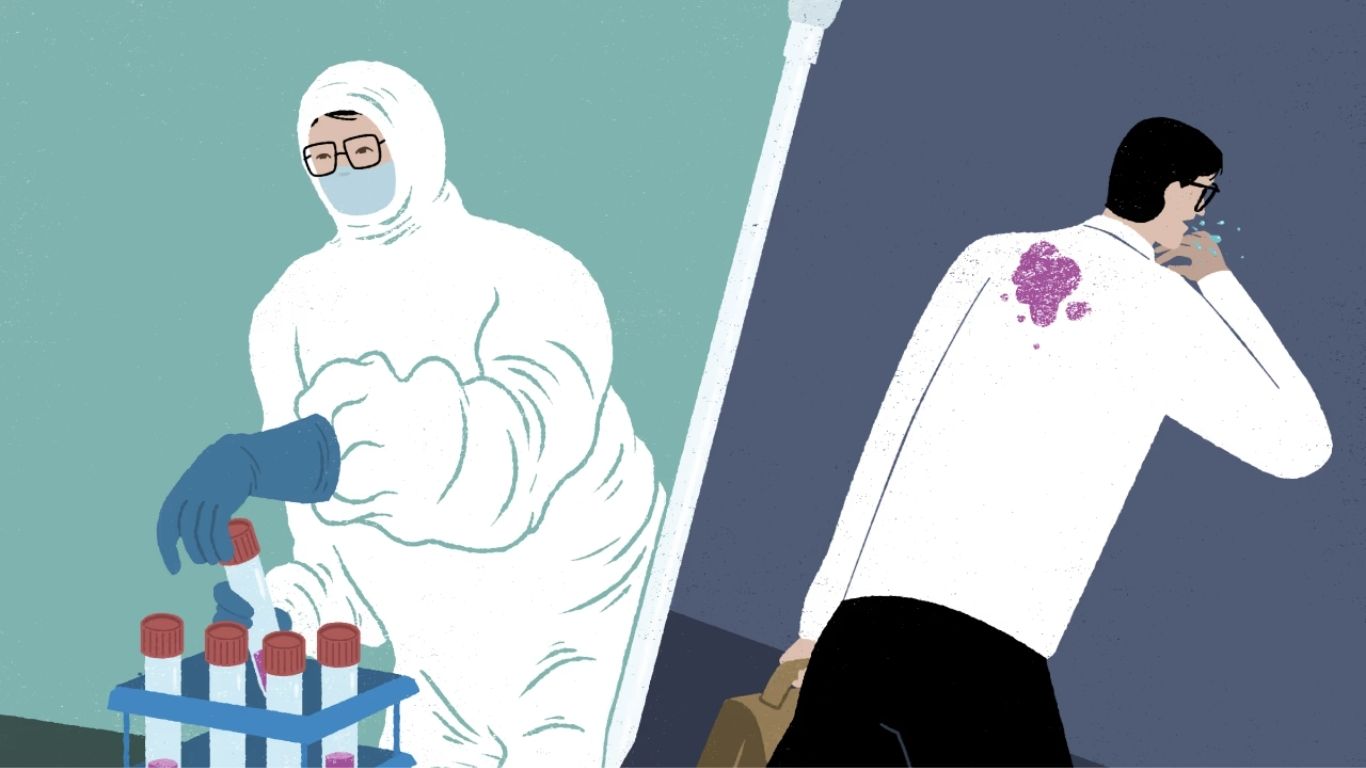
A virus slipping out of a lab or other controlled setting is not just a plot device for movies. It is a real, documented risk that sits at the uncomfortable intersection of cutting-edge science, human error, global politics, and our basic survival instincts. Some experts argue that, in the worst case, such an event could help tip humanity toward civilizational collapse or even extinction over the long term. Understanding what a virus escape could mean for humanity starts with a simple truth: viruses are relentless, and humans are fallible. When those two facts meet in the wrong way, the consequences can be enormous.
What Do We Mean by a “Virus Escape”?
The phrase “virus escape-by-lisa-harris/”>escape” usually refers to a dangerous pathogen getting out of a controlled environment where it was supposed to be contained. That might mean an accidental infection of a lab worker handling a dangerous strain, a failure in lab infrastructure like air systems or waste treatment, contaminated materials being shipped incorrectly, or a pathogen leaking from industrial or vaccine facilities.
Most high-risk discussions today focus on biosafety level 3 and 4 labs, where researchers handle highly contagious or highly lethal agents. Even here, accidents still happen. There is also a broader idea of “escape” that goes beyond labs, as modern lifestyles push the natural world and our own microbiome out of balance, potentially awakening new threats from within our bodies and ecosystems. But when people talk about “virus escape” in policy debates, they are usually thinking about the lab scenario.
Lessons from Past Lab Escapes and Near Misses
Virus escape is not a hypothetical scenario invented by alarmists. The historical record is uncomfortably clear. Over the last half-century, researchers have documented at least 435 cases of laboratory-acquired infections around the world. Between 2000 and 2024 alone, one midnight-library-by-matt-haig-book-review/”>review recorded 276 infections and eight deaths in research labs of various types, including deaths from Ebola, hantavirus, plague, bacterial meningitis, SARS, and others.
A few striking examples illustrate what can go wrong. The 1977 “Russian flu” pandemic, which killed an estimated 700,000 people, may have originated from a lab strain very similar to old viruses researchers were handling in Soviet facilities at the time. After smallpox was largely eliminated in the general population, several outbreaks in Great Britain were traced back to laboratory escapes, causing illness and deaths despite intense control efforts. A damaged pipe connecting two BSL-3 facilities leaked foot-and-mouth disease virus into surrounding soil in the UK in 2007, triggering an outbreak that cost millions in losses for livestock and agriculture. A vaccine factory in Lanzhou, China released airborne Brucella bacteria in 2019 after using expired disinfectant, infecting more than 10,000 people with brucellosis. Post-epidemic SARS lab outbreaks also occurred due to lab accidents after the original outbreak was contained.
These incidents typically stayed local or regional, often thanks to fast public-health responses and sheer luck. But they show that human error and infrastructure flaws are repeat themes.
Why an Escaped Virus Can Spiral into a Global Catastrophe
Not every escape leads to a pandemic. Many infections stop with a single lab worker or a few contacts. But when the wrong virus meets the right conditions, the outcome can be devastating. Several factors determine how bad things can get: transmissibility, allowing viruses to jump from an infected lab worker to coworkers, family, and then out into the wider community; lethality, where some strains could kill a significant fraction of those they infect; modern connectivity via air travel; and delayed detection if symptoms mimic ordinary flu.
Risk analysts try to quantify these dangers, but their estimates vary wildly. The more sobering point is this: even relatively conservative models sometimes conclude that the chance of a lab-caused pandemic is “small but finite,” while the potential impact is catastrophic.
The Special Worry: Engineered “Potential Pandemic Pathogens”
Much of the debate about virus escapes centers on gain-of-function research—experiments that intentionally make viruses more transmissible, more virulent, or better adapted to humans, often under the banner of learning how to stop them. When such experiments create “potential pandemic pathogens”—agents that are not yet in the human population but could be both highly contagious and highly deadly—the stakes go up dramatically.
Supporters argue it can help identify dangerous mutations before they arise in nature, guide vaccine design, and reveal vulnerabilities that public-health systems need to prepare for. Critics counter that the same insights could often be gained through less risky methods like surveillance in nature or computer modeling, that an accidental escape of such a tailored pathogen could be far worse than most naturally emerging diseases, and that ethical standards from human experiments should apply when research puts the entire public at stake.
Bioethicists have suggested using principles from the Nuremberg Code and later research-ethics frameworks to judge these experiments, emphasizing that such research should only proceed if the benefits are truly “fruitful results for the good of society, unprocurable by other methods,” and if the risks do not outweigh that humanitarian payoff.
Beyond the Lab: How Our Changing World Helps Viruses
Even if no engineered super-virus ever escapes a lab, humanity has created ideal conditions for viral threats of all kinds. Scientists warn that human activity is rapidly reshaping ecosystems, wiping out species, and pushing wildlife into new contact with people. This can stir up new viruses previously confined to remote regions, pathogens shifting behavior as climates change, and subtle shifts in the microbiome—the trillions of microbes that live in and on our bodies.
Combine this biological volatility with global travel, dense megacities, intensive farming, and fragmented health systems, and any dangerous virus finds a world primed for rapid spread.
How a Major Virus Escape Would Reshape Everyday Life
COVID-19 provided a painful demonstration of how a new virus can upend daily life worldwide. Yet researchers warn that we might not have seen the worst-case scenario. If an especially dangerous virus escaped—a pathogen combining high transmissibility with a significantly higher fatality rate—the consequences could be far more severe: health systems collapse, economic paralysis, political instability, fractures in global cooperation, and psychological trauma.
Some experts warn that repeated or severe disease crises could, over generations, contribute to a “gradual extinction” scenario: societies weakened to the point that other shocks become harder to survive. This is not a prediction, but a warning of what is possible if humanity continues to disturb planetary systems while underestimating biological risk.
The Ethical Question: When Do the Benefits Justify the Risk?
At the heart of the virus-escape debate lies a simple but brutal ethical question: When, if ever, is it acceptable to take a small chance of catastrophic harm to everyone in exchange for uncertain scientific benefits? Ethicists focusing on gain-of-function and PPP research highlight several key principles: research imperative, proportionality, minimization of risk, and justice and governance.
Some scientists argue that the most dangerous forms of PPP research should be paused or drastically limited unless objective, transparent risk–benefit analyses show they are clearly justified. Others maintain that carefully regulated work is necessary if we hope to stay ahead of natural pandemics. Either way, the ethical stakes are much higher than in typical lab work. Mistakes do not just affect a small group of volunteers; they can affect everyone.
Fixing the System: How to Lower the Odds
No system that involves humans will ever be perfectly safe. But there are clear steps that can shrink the risk of a catastrophic virus escape. Researchers and policy experts frequently point to several gaps and potential fixes: stronger biosafety infrastructure like upgrading air-handling systems and access controls; professionalizing biosafety as a field; global transparency and incident reporting; clear, enforceable rules for risky research; stronger general pandemic preparedness; and international norms and trust-building.
None of this eliminates the possibility of a virus escape. But it can help push the odds—and the likely damage—down to levels society is more willing to live with.
Why Talking About Virus Escapes Carefully Matters
The COVID-19 pandemic sparked fierce debate about whether SARS-CoV-2 could have come from a lab. To date, there is no strong evidence that it was engineered or deliberately released, and the scientific community remains divided on how likely a lab involvement is compared with natural spillover. Yet some critiques argue that promoting the lab-leak hypothesis as fact, without solid proof, has had real costs: it undermines trust in science, fuels conspiracy theories, and can strain international cooperation.
This does not mean difficult questions about lab safety or origins should be suppressed. Open, evidence-based scrutiny is crucial. But it does mean that speculation should be clearly labeled as such, and that public conversation should distinguish between what is known, what is plausible but unproven, and what is highly unlikely.
A Final Thought: Living with Powerful Science
Modern virology and biotechnology have given humanity extraordinary tools. They helped deliver vaccines against COVID-19 at record speed. They offer hope against cancers, viral infections once thought incurable, and future natural pandemics. The same tools, misused or mishandled, could also unleash some of the most dangerous events our species has ever faced. Researchers warn that humanity may already be “sitting on a time bomb” of viral threats, both natural and man-made, especially as environmental disruption and global interconnection intensify.
What a virus escape could mean for humanity depends less on the cruelty of nature and more on our collective choices: how carefully we design, regulate, and conduct high-risk research; how honestly we confront the limits of our own systems and our own fallibility; how willing we are to invest in unglamorous safety measures and resilient public health; how we balance scientific ambition with humility about what can go wrong.
Humanity is not doomed to be outwitted by viruses. But avoiding the darker futures sketched by pandemic risk analysts and extinction theorists will require treating biosafety as a central pillar of civilization, not a niche concern of a few specialists. In the end, the question is not just “What if a virus escapes?” It is, more deeply, what kind of relationship do we want to have with the powerful, double-edged tools of modern biology—and what price are we truly willing to pay for knowledge?